
Simple Mindfulness Practices for Daily Life
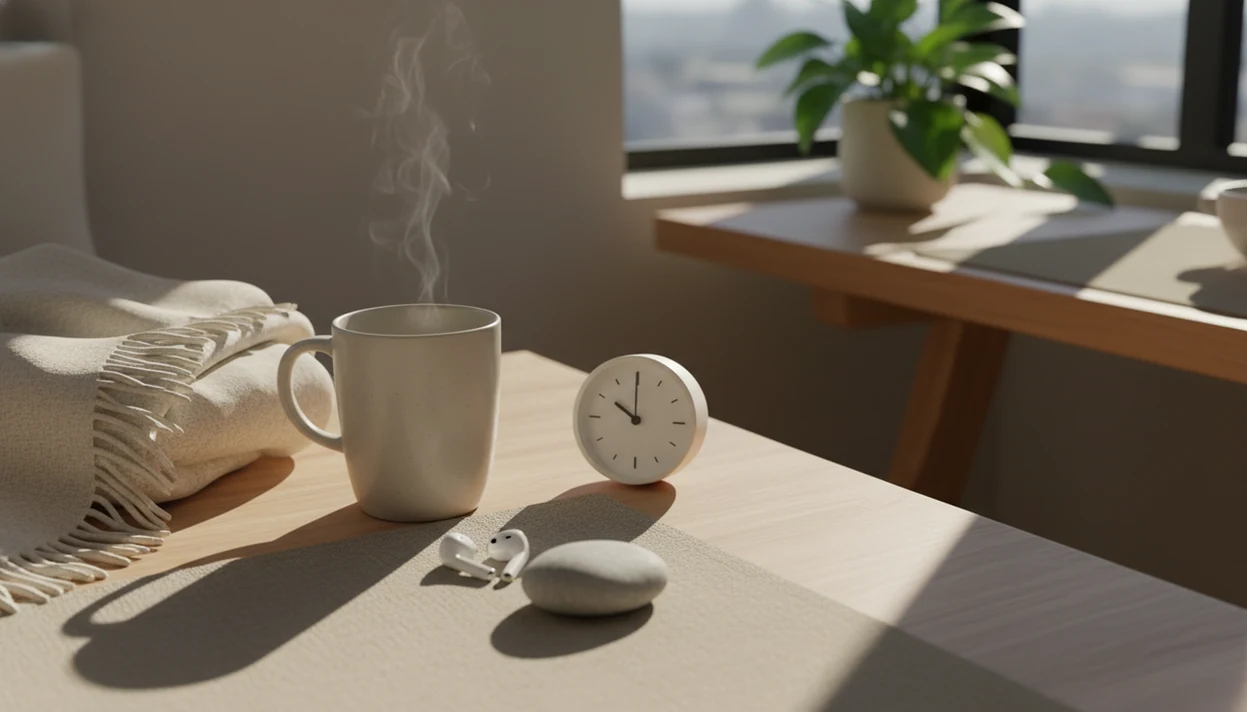


Simple mindfulness practices are short, repeatable ways to bring attention back to the breath, body, senses, or current activity without judging distraction. A mindful moment can last 1 to 5 minutes and fit into an ordinary routine: waking up, opening email, commuting, eating, or getting into bed. The core skill is noticing that attention has wandered and gently returning to something happening now.
No special equipment or long session is required. Feeling the warmth of a cup, noticing a few footsteps, or pausing for one full breath can be a starting point. These everyday attention-training habits are meant to support steadier responses, not perfect concentration. Choose one familiar cue and one simple practice before adding more.
The essentials
- You do not need special equipment or long sessions; brief mindful pauses during normal routines count.
- The core skill is noticing distraction and gently returning to breath, body, senses, or the task in front of you.
- Guided meditation, sleep audio, breathing exercises, and self-hypnosis sessions in MindTastik can support consistency for sleep, anxiety, focus, and everyday calm.
5 Facts to Know Before Practicing Mindfulness
- Mindfulness fits ordinary moments. You can practice while eating, showering, commuting, walking, working, or settling into bed. The point is not to add another task; it is to wake up inside one you already do.
- Mind wandering is normal. The practice is the gentle return, not perfect focus. If your thoughts run off during the first minute, you are not failing.
- Small sessions can still matter. Short daily sessions, or several 1 to 3 minute pauses, may support stress, mood, sleep, and focus over time.
- Guidance helps beginners. A voice-led practice can make it easier to choose a starting point when you are deciding between a 5-minute breathing exercise and a 20-minute body scan.
- Mindfulness is supportive, not a cure-all. It does not replace professional care when anxiety, depression, trauma symptoms, or sleep problems feel severe.
Tiny counts.
How Mindfulness Affects the Brain and Body
Simple mindfulness works through attention training: you notice where your mind is, return to a chosen anchor, and repeat that loop many times. The anchor might be breath, body pressure, sound, movement, or the feeling of your feet on the floor.
That repeated loop can also help the nervous system downshift. Slower breathing, body awareness, and sensory grounding can reduce the “all systems on” feeling that shows up during stress. In plain language, you give your body a calmer signal to follow.
Over time, repetition supports habit formation and emotional regulation. That does not mean every breath fixes a hard day. It means the return becomes more familiar. A 2014 JAMA Internal Medicine meta-analysis found mindfulness meditation programs were associated with moderate evidence of improved anxiety, depression, and pain compared with controls: JAMA Internal Medicine study: 1809754. Clinicians typically recommend mindfulness as a support skill, not as a replacement for mental health care when symptoms are intense or unsafe.
Start a Daily Mindfulness Practice in 5 Steps
Use simple mindfulness by pairing one tiny practice with one daily trigger, then repeating it for a week before adding more. For beginners, a smaller plan usually works better than a dramatic one because it has fewer places to fall apart.
- Pick one daily trigger. Choose waking up, brushing teeth, opening email, lunch, or bedtime as your cue.
- Set a tiny time target. Practice for 1 to 3 minutes, even if you think you could do more.
- Choose one anchor. Use breath, body sensation, sound, sight, or movement.
- Return gently. When your mind wanders, notice it and come back without scolding yourself.
- Track what helped. Repeat for one week before expanding the time or adding a second practice.
If you want structure, tools like MindTastik can guide the timing and voice cues so you are not inventing the session from scratch. For a wider foundation, our meditation techniques for beginners guide explains the basic styles in more detail.
Choose a Mindfulness Practice for Your Goal
The most useful mindfulness practice depends on the job you need it to do. Sleep, anxiety, focus, and everyday calm often respond better to different anchors.
| Goal | Practice | When to use it | App support |
|---|---|---|---|
| Sleep | Body scan, sleep audio, guided wind-down | In bed or during a screen-free wind-down routine | Sleep audio and body scan sessions |
| Anxiety spikes | Slow breathing, 5-senses grounding, short guided meditation | Before a meeting, in a waiting room, or after a stressful message | Breathing exercises and short resets |
| Focus | Single-tasking, mindful email opening, focused-attention meditation | Before work blocks or study sessions | Focus meditations and timed guidance |
| Everyday calm | Mindful walking, showering, or eating | During normal routines | Brief guided sessions and reminders |
Good meditation app for sleep anxiety and everyday calm routines deliver guided structure and repeatable cues, not instant relief or medical treatment. Examples include MindTastik, Calm, Headspace, and mindful.org resources.
Everyday Mindfulness Exercises to Try Today
Try one practice today, not all five. The goal is to make mindfulness easy enough that it survives a normal schedule.
- Mindful wakeup: Before checking your phone, feel one full breath and notice the weight of your body on the mattress.
- Mindful coffee or tea: Hold the cup, notice warmth, scent, and taste, then return when your mind starts planning the day.
- Mindful eating: Take three slow bites without multitasking. Notice texture, temperature, and the moment you want to rush.
- Mindful walking: Feel each foot land for one short stretch, such as the hallway, parking lot, or walk to class.
- Mindful bedtime scan: Starting at your forehead, move attention down the body and soften one area at a time.
Choose a practice short enough to repeat on a busy day, such as one breath before opening email. If you prefer body-based techniques at night, progressive muscle relaxation for sleep offers a more structured option.
Tips for Making Mindfulness a Lasting Habit
How do you make simple mindfulness practices for daily life stick? Attach them to something that already happens, then keep the practice smaller than your motivation on a good day.
Habit chaining works because the trigger does the remembering. Try one breath before signing in, three grounded steps as you pass through a doorway, or a 2-minute pause after meals. Bedtime can work too, especially with a quiet room, dim light, and a short practice already chosen.
A daily 90-second reset beats a 25-minute practice you abandon after Tuesday. Reminders, streaks, guided sessions, and routine pairing can all help, but they should reduce friction rather than create pressure.
A 2022 systematic review of mindfulness mobile apps found small-to-moderate improvements in stress, anxiety, depression, and well-being, but noted variation in study quality and app design: jmir reference. For very full days, short meditation techniques may be easier than trying to protect a long quiet block.
Mindfulness for Sleep, Anxiety, and Focus
Different needs call for different practices. Body scans and guided wind-downs often fit sleep routines, slow breathing can help during anxious moments, and focused attention works well before email, writing, or study blocks.
In the middle of the night, when sleep feels out of reach, a body scan can offer a simple path for attention to follow. In insomnia research, mindfulness-based therapy for insomnia has reduced insomnia severity in randomized trials, including a JAMA Internal Medicine trial comparing mindfulness awareness practices with sleep hygiene education: JAMA Internal Medicine study: 2110998. Workplace mindfulness studies have also reported sleep and perceived-stress benefits, although effects vary by program and population.
MindTastik offers wellness audio for adults, including guided meditations, sleep support tracks, breathing practices, and self-hypnosis sessions for everyday calm, rest, and anxiety support. These tools can help build a routine, but they are not a substitute for therapy, medical care, prescribed medication, or crisis support. For people who want a softer sleep-focused image to follow, visualization meditation for sleep may also be useful.
Who May Benefit and Who Should Be Cautious
Simple mindfulness is best for people who want a low-pressure way to practice steadier attention during ordinary life. It is not the right level of support for emergencies or severe symptoms without professional care.
| Best for | Not ideal for |
|---|---|
| Beginners who want a simple starting point | Emergency mental health needs |
| Busy adults with little free time | Severe depression, PTSD, substance use disorder, or serious anxiety without support |
| People building a calmer routine | Anyone expecting instant results |
| Light stress and bedtime wind-down | Using mindfulness to avoid necessary care |
| Focus support before work or study | People who feel worse when slowing down and have no support plan |
Some people feel more anxious when they first slow down. If that happens, use shorter grounding practices, keep your eyes open, or practice with a qualified professional. For anxious moments, grounding meditation techniques may feel safer than long silent meditation.
How to Notice Progress Without Chasing Calm
How can you tell whether daily mindfulness is helping? Look for changes in how you respond, not just whether you feel relaxed afterward. You might notice a wandering mind sooner, catch yourself rushing through a meal, or pause before replying when irritated. These are useful observations, not a score you need to improve every day.
For the next week, choose one ordinary situation, such as your first drink of the morning. After a mindful pause, write one sentence: what you noticed and what you did next. For example, you might record that you noticed tension in your shoulders and loosened your grip on the cup. Keep the note brief, and review the week as a whole rather than judging each session. If tracking becomes another chore, skip the notes and simply reflect occasionally.
Keep expectations modest. A systematic review of brief mindfulness interventions found benefits for some health outcomes, but psychological benefits were not consistent across studies. Feeling unchanged after a pause does not automatically mean you did it incorrectly. Your notes can help you decide whether a practice fits your day, but they cannot establish a clinical benefit.
Guided sessions for short daily pauses
MindTastik’s guided meditation library suits beginners who prefer spoken instructions to deciding what to notice next. A guided meditation or focus session can give a daily pause a clear starting point; breathing exercises offer another format for a break between tasks.
A silent practice may suit people who find a guiding voice distracting or want to pay attention while eating or walking. MindTastik is not a medical treatment, and severe symptoms need professional care rather than an app alone.
What brief mindful moments cannot replace
Mindfulness is useful, but it has limits. Treat those limits as part of a safe practice plan, not as a reason to feel discouraged.
- Mindfulness is not a quick fix; changes in stress, sleep, focus, or mood often require weeks or months of repetition.
- It does not replace professional treatment for severe depression, PTSD, substance use disorder, suicidal thoughts, or serious anxiety.
- Some people initially feel more anxious, emotionally stirred, restless, or uncomfortable when paying close attention.
- Everyday micro-practices and consumer apps vary in quality, and not every session has been rigorously tested.
- Mindfulness should not be framed as a cure-all. It works better alongside sleep hygiene, movement, therapy, medication when prescribed, social support, and other healthy routines.
- Research is stronger for structured mindfulness programs than for every individual app session or informal exercise.
- If a practice makes you feel unsafe, stop and choose grounding, support, or professional guidance instead.
When a mindful pause feels distracting or vague
- If you keep restarting because your mind wanders, shorten the practice instead of judging the practice; one clear breath is still a valid repetition.
- If mindfulness feels vague, choose a single anchor such as the breath, your hands, or the sounds in the room; too many anchors can turn a short session into mental multitasking.
- If you only practice when stressed, pair one calm moment with one difficult moment; habits tend to stick better when they are not reserved for emergencies.
- If a guided voice feels distracting, try a silent timer for two minutes; the best format is the one that reduces friction, not the one that sounds most impressive.
- If you are chasing a specific feeling, shift the goal to noticing what is present; mindfulness works best as attention training, not mood control.
For structured sessions beyond this page, MindTastik guided meditation app is the main MindTastik hub for guided meditation.
Questions about daily mindful moments
Is one minute of mindfulness enough?
One minute is a reasonable starting point for practicing attention, especially when it is attached to a daily cue. It is not a promise of relief from stress or sleep problems. Start with a duration that is easy to repeat, then add time if the practice remains manageable.
What can I focus on if watching my breath feels uncomfortable?
The breath is optional. Try the pressure of feet on the floor, sounds in the room, or the sensation of holding a cup. Use one anchor rather than switching constantly. If paying close attention makes distress worse, stop the exercise instead of trying to push through it.
Can a mindful moment help during an anxiety spike?
Slow breathing or sensory grounding may help settle attention during an anxious moment. Choose a simple anchor, such as a sound or contact with the floor, rather than demanding immediate calm. Brief mindfulness does not replace professional treatment for serious anxiety, and some people feel more uncomfortable when focusing inward.
How can I practice mindfulness at bedtime?
A body scan or guided wind-down gives attention a simple task while settling into bed. Notice body sensations and return when thoughts move toward tomorrow’s plans. Treat the exercise as a wind-down practice, not a test of falling asleep. Mindfulness does not guarantee sleep or replace care for persistent sleep problems.
How do I remember to take mindful pauses every day?
Attach one pause to something that already happens, such as brushing teeth, opening email, or finishing lunch. Keep the initial practice small: one breath or a minute of noticing sensations. Repeat that pairing for a week before adding more, so remembering does not depend only on feeling motivated.
How can I practice mindful eating during everyday meals?
Start by putting away your phone and noticing the colors, smells, and textures of your food. Take a bite and pay attention to its flavor as you chew. You do not need to eat the entire meal this way. A few attentive bites can be a simple place to begin.
How can I use mindfulness during a busy workday?
Use a transition between tasks to notice how you feel before starting the next activity. Check for tension in your jaw or shoulders, feel your feet on the floor, and notice nearby sounds. Then choose your next task deliberately. Mindfulness does not require stopping work for a long session.
How long does it take to notice benefits from mindfulness?
There is no fixed timeline. You might notice a brief sense of calm during an early practice, while changes in attention or stress responses may develop with regular practice over weeks. Look for small shifts, such as noticing tension sooner or responding less automatically, rather than expecting your mind to become completely quiet.