
Mindfulness for Jealousy: A Practical Guide to Pause, Breathe, and Respond


Mindfulness for jealousy means noticing jealous thoughts, body sensations, and comparison stories without immediately acting on them. The aim is not to erase the feeling. It is to create enough space to separate facts from fear and choose a calmer response. A tight stomach, an urge to check a phone, or a story about being replaced can be noticed without being treated as proof.
A practical sequence is to pause, breathe, name the feeling, notice the body, check the story, and choose one respectful action. That pause can interrupt snooping, accusations, or repeated reassurance-seeking. It cannot resolve deception or make an unsafe relationship safe. When jealousy involves threats, coercive control, stalking, or fear of harm, professional support and safety planning take priority over a self-guided exercise.
The essentials
- Jealousy usually becomes harmful when you fuse with the story, ruminate, snoop, accuse, or act from panic.
- A practical mindfulness sequence is: pause, breathe, name the feeling, scan the body, reality-check the story, then choose one respectful action.
- MindTastik can support the habit with guided meditation, sleep audio, breathing exercises, and self-hypnosis sessions for adults who want sleep, anxiety, and everyday calm support.
Mindfulness for Jealousy Quick Practice During a Spike
Use a 60- to 90-second jealousy pause before you text, accuse, check, withdraw, or make the whole night about one screenshot. Put both feet down, soften your jaw, and take five slow breaths.
Then say, quietly or in your head: “This is jealousy; jealousy is here; I do not have to obey it.”
That sentence matters because mindfulness creates space between the trigger and the next behavior. You are not pretending the feeling is tiny. You are giving your nervous system a minute before it drafts a message you may regret.
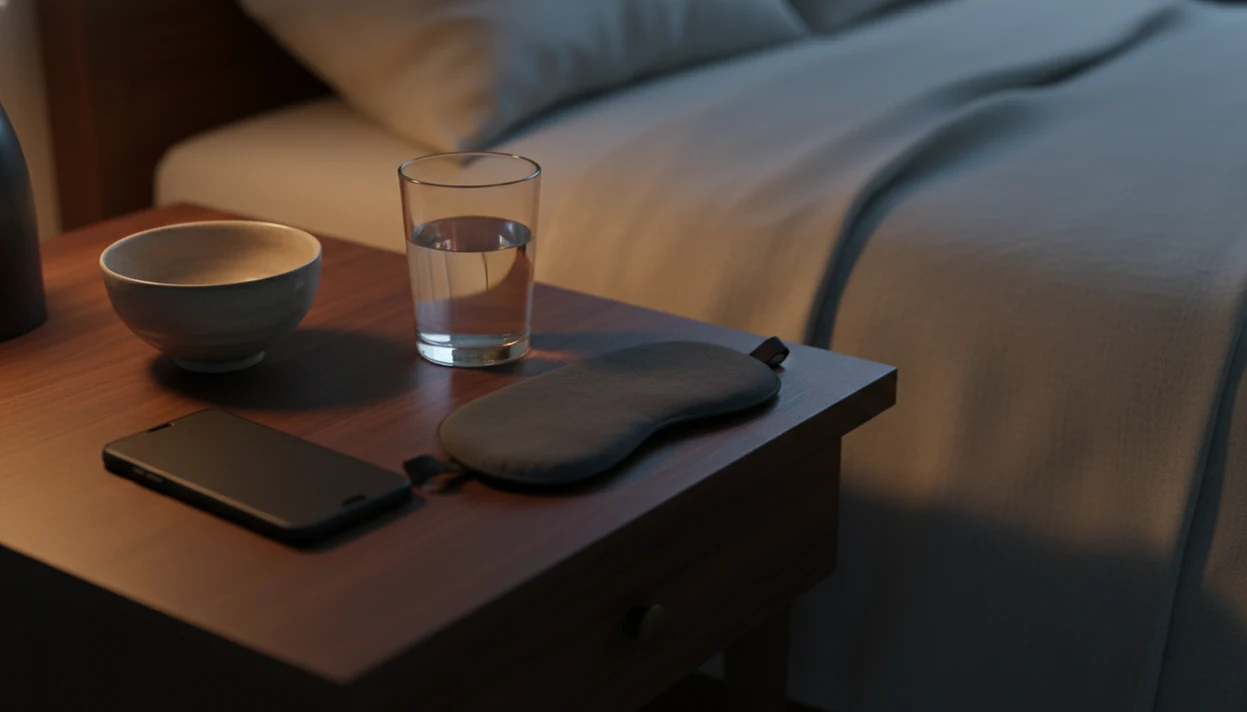
In a quiet hour, jealousy can make one unanswered message feel larger than it is.
If the wave feels too strong to self-guide, use a short guided practice. Many people do better with a voice, a timer, and one simple anchor than with trying to coach themselves while their chest is tight.
How Mindfulness for Jealousy Works in the Brain and Body
Mindfulness for jealousy works by helping you notice threat arousal, comparison thoughts, insecurity, and attention narrowing as experiences in the mind and body, not as automatic proof.
Jealousy often starts as body activation: heat in the face, a drop in the stomach, tight ribs, or a sudden need to check. The mind then builds a story. Mindfulness trains attention to label those sensations and thoughts as events. “My body is alarmed” is different from “something is definitely wrong.”
Research is indirect, but useful. A 2014 JAMA meta-analysis found mindfulness-based programs produced moderate reductions in anxiety symptoms across 47 randomized trials JAMA Internal Medicine study: 1809754. A 2019 meta-analysis also linked higher trait mindfulness with lower jealousy-related patterns such as neuroticism and insecure attachment cambridge reference: 5E0B9F9CAE4C9DCE55D51480839C3F09.
Read these findings as support for anxiety and emotion-regulation benefits, not as proof that mindfulness resolves every jealousy pattern or relationship problem.
Clinicians typically recommend mindfulness as a support for emotional regulation, not as a cure for jealousy or a replacement for therapy.
How to Use Mindfulness for Jealousy in Six Steps
The most usable mindfulness for jealousy sequence is short enough to remember when your body is already activated. Try it before sending the message, opening the app, or replaying the conversation again.
- Pause before acting. Put the phone down for one minute, even if the urge feels urgent.
- Breathe into the body. Inhale for four counts, exhale for six, and feel your feet or seat.
- Name the emotion. Say, “Jealousy is here,” or “I feel scared and compared.”
- Notice the story. Ask, “What is my mind adding to the facts?”
- Check the facts. Separate what you saw, what you know, and what you are imagining.
- Choose one values-based action. Ask a clear question, take a walk, journal, or wait before replying.
For beginners, structured meditation techniques for beginners can make this less abstract.
Do not use mindfulness to suppress real concerns. If a conversation is needed, the practice helps you enter it steadier.
When naming jealousy helps, and when to move on
Naming the feeling is a recognition step, not a requirement to keep examining it. A 2022 experiment on affect labeling found that labeling reduced distress during high-intensity aversive conditions but increased it during low-intensity conditions. The study did not test jealousy specifically. Its practical caution is useful here: repeating “I feel jealous” is not automatically calming, especially if it keeps attention fixed on a mild feeling.
After one brief label, return to the facts or the next action. For example, “I feel jealous” can be followed by “The message is unanswered; I do not yet know why.” A meta-analysis of emotion-regulation strategies found a small-to-medium average effect for changing an interpretation. This does not mean explaining away genuine concerns. It means distinguishing an observed event from a feared explanation before deciding what needs discussion.
Five Mindfulness for Jealousy Facts Most People Miss
- Mindfulness does not delete jealousy. It changes how you relate to jealousy, so the feeling has less control over your behavior. Practicing letting go with mindfulness can help you release comparison stories without dismissing real relationship concerns.
- Body cues often arrive first. A clenched stomach or fast thumb can show jealousy before the thought sounds believable.
- Jealous thoughts are mental events. They may point to a concern, but they are not automatic evidence.
- Compassion practice can soften comparison. Loving-kindness meditation for beginners gives the mind something warmer to repeat than “I’m losing.”
- Sleep changes the volume. A 2018 systematic review and meta-analysis reported that mindfulness meditation interventions can improve sleep quality compared with nonspecific active controls PubMed research: 30402912.
Poor sleep does not create every jealous reaction, but it can lower your margin. The same message that feels manageable at 3 p.m. may feel brutal after two bad nights.
Best Mindfulness for Jealousy Exercises by Situation
Different jealousy triggers need different practices. Keep the exercise small enough that you will actually use it.
| Situation | Best practice | Time needed | Why it helps |
|---|---|---|---|
| Social media comparison | 3-minute breathing | 3 minutes | Interrupts scrolling and returns attention to the body |
| Romantic jealousy | 5-minute body scan | 5 minutes | Slows the urge to accuse, check, or demand reassurance |
| Friendship jealousy | 10-minute loving-kindness | 10 minutes | Softens resentment and supports goodwill without self-erasure |
| Career envy | Mindful journaling | 7 minutes | Separates admiration, insecurity, and useful action |
| Post-argument rumination | Sleep wind-down audio | 10 to 20 minutes | Helps the mind stop rehearsing when rest is needed |
If your jealousy shows up mostly at night, visualization meditation for sleep may be easier than silent practice.
Mindfulness for Jealousy Tips That Reduce Rumination
Mindfulness for jealousy tips are most useful when they interrupt rumination early. Reflection looks for clarity. Rumination keeps replaying, checking, imagining, and interpreting until jealousy feels more true.
Start by labeling the loop: “comparison story,” “reassurance craving,” or “mind reading.” Set a no-snooping boundary before the urge peaks. Use one breath anchor, such as the nostrils, ribs, or feet on the floor.
Delay reactive messages by ten minutes. Short, yes. Long enough to matter.
Gratitude can help when it is specific, not forced. Write one real thing you value in your life today, even if jealousy is still present. After the episode, journal five notes: trigger, body cue, thought, behavior, and wiser next response. If you need a compact practice, short meditation techniques fit jealousy spikes better than long sessions.
MindTastik Support for Mindfulness for Jealousy Practice
When jealousy makes self-guided practice difficult, an app can provide structure: a voice to follow, a timer, and a clear place to begin. Someone reaching for audio in that moment often wants fewer explanations and a practice they can return to again.
MindTastik offers guided meditation, sleep audio, breathing exercises, and self-hypnosis sessions for adults looking for support with rest, anxiety, and everyday calm.
For jealousy, the most relevant MindTastik features are short breathing sessions before a reactive message, guided calm practices after a trigger, and sleep audio when nighttime rumination keeps replaying the same scene.
That can look like a short breathing exercise during a jealousy spike, sleep audio after a hard conversation, or a everyday calm session to reduce baseline reactivity. Tools like MindTastik, Calm, Headspace, and Mindful can support practice, but they do not diagnose anxiety, treat jealousy, or replace therapy.
A phone with guided audio helps most when the practice actually begins.
Best For and Not For in a Mindfulness for Jealousy Guide
Mindfulness can clarify what is happening, but it cannot make an unhealthy relationship healthy by itself. Use the fit check below before expecting a breathing exercise to carry too much.
| Best for | Not for |
|---|---|
| Mild to moderate jealousy | Abusive relationships |
| Comparison spirals | Stalking or controlling behavior |
| Anxious texting urges | Severe trauma triggers |
| Insecurity after triggers | Ongoing deception |
| People wanting better emotional regulation | Situations requiring immediate safety planning |
For mild jealousy, mindfulness usually works best when paired with honest communication and behavior boundaries. For fear, coercion, threats, or repeated boundary violations, professional help and safety support matter more than another meditation session.
A supportive practice can make your next step clearer. It should not talk you out of protecting yourself.
When to Seek Professional Help for Jealousy
Seek professional help when jealousy starts to control behavior, create fear, or put anyone’s safety at risk. Mindfulness can slow a reaction, but it is not enough for threats, monitoring, stalking, coercion, or feeling afraid of what someone may do.
Normal insecurity sounds like “I feel worried and need to talk.” Harmful jealousy crosses into checking devices, demanding access, isolating someone, making threats, tracking locations, or using panic as permission to control another person. Therapy can also be appropriate when jealousy is tied to trauma, betrayal, attachment wounds, intrusive thoughts, or obsessive loops that do not settle with ordinary reassurance.
If safety may be involved, take practical steps first:
- Name the risk honestly. Include threats, intimidation, stalking, forced access, or fear.
- Stop minimizing harm. A strong feeling does not justify controlling someone else.
- Contact support. Reach a therapist, crisis line, domestic violence service, trusted person, or emergency service if danger is immediate.
- Create distance if needed. Prioritize a safety plan over another conversation or meditation.
- Use mindfulness afterward. Let it steady your body while you get real-world help.
Guided breathing before a jealous reaction
MindTastik’s breathing exercises suit moments when jealousy creates an urge to send an accusation or check for reassurance. Guided meditation offers a voice to follow when attention keeps returning to the same feared scenario, while sleep audio may suit nighttime rumination. These sessions support a pause, not a verdict about a relationship. Persistent intrusive thoughts, loss of control, trauma symptoms, or unsafe behavior call for professional assessment rather than another audio session.
What mindfulness cannot resolve about jealousy
Mindfulness for jealousy is useful, but it has real limits.
- Evidence for jealousy specifically is indirect and often extrapolated from anxiety, emotion regulation, attachment, and mindfulness research.
- Mindfulness is not a substitute for professional therapy when jealousy is linked to trauma, abuse, coercive control, stalking, or severe mental health symptoms.
- Mindfulness will not fix deception, disrespect, incompatibility, or unsafe relationship dynamics.
- Some people initially feel more discomfort when they pay attention to jealousy, especially if the feeling has been avoided for years.
- Benefits usually require consistent practice over weeks or months, not one session.
- A calmer body does not automatically mean your concern was false.
- Guided audio can help you pause, but it cannot decide whether a relationship is trustworthy.
If jealousy leads to threats, monitoring, fear, or harm, treat that as a safety issue. Mindfulness may support steadiness, but outside help is the wiser next step.
If you are ready to move from tips to practice, MindTastik guided meditation app is where MindTastik keeps its guided meditation experience.
Questions about jealousy and mindfulness
Can mindfulness stop jealousy completely?
Mindfulness aims to change the response to jealousy, not eliminate every jealous feeling. Noticing a thought without checking, accusing, or replaying it can be a useful outcome even when discomfort remains. Evidence for jealousy specifically is indirect, so meditation should not be presented as a proven cure.
How do I calm jealousy before sending a message?
Put the phone down, feel both feet on the floor, and take five slow breaths. Name the feeling once, then separate what happened from what is being imagined. Before sending anything, check whether the message asks a clear question or makes an accusation. A pause does not require abandoning a legitimate concern.
How can I tell a jealous thought from a real relationship problem?
Separate the observation from the explanation. An unanswered message is an observation; assuming it proves rejection adds an interpretation. Repeated deception or broken boundaries still needs attention. Mindfulness can help clarify the difference, but it cannot establish what another person has done or replace an honest conversation.
Why does naming jealousy sometimes make it feel worse?
Naming an emotion is not uniformly soothing. Experimental research suggests it can reduce distress during intense activation but increase distress in milder situations. If repeated labeling makes the feeling more prominent, stop repeating the label and return to a neutral body anchor or a concrete task. Naming is only one step.
What meditation helps with jealousy from social media?
A short breathing practice can interrupt scrolling and bring attention back to body sensations. Label the comparison briefly, then put the app aside rather than continuing to gather material for the same story. Loving-kindness practice is another option for comparison and resentment, but it does not require forced goodwill or ignoring hurt.
How do I stop replaying jealous scenarios at night?
Distinguish reflection from repetition: reflection identifies a question or action, while rumination keeps replaying the same uncertainty. Write down the concern and one possible next step, then shift attention to a breath anchor or sleep wind-down audio. Persistent intrusive loops that disrupt rest may need professional support.
When does jealousy need therapy rather than meditation?
Professional help is appropriate when jealousy drives repeated monitoring, controlling behavior, intrusive thoughts, or reactions that do not settle with ordinary coping. Threats, stalking, coercion, and fear of harm require safety-focused support. Meditation can complement care, but it is not a substitute for assessment or a safety plan.