
How to Do a Walking Meditation
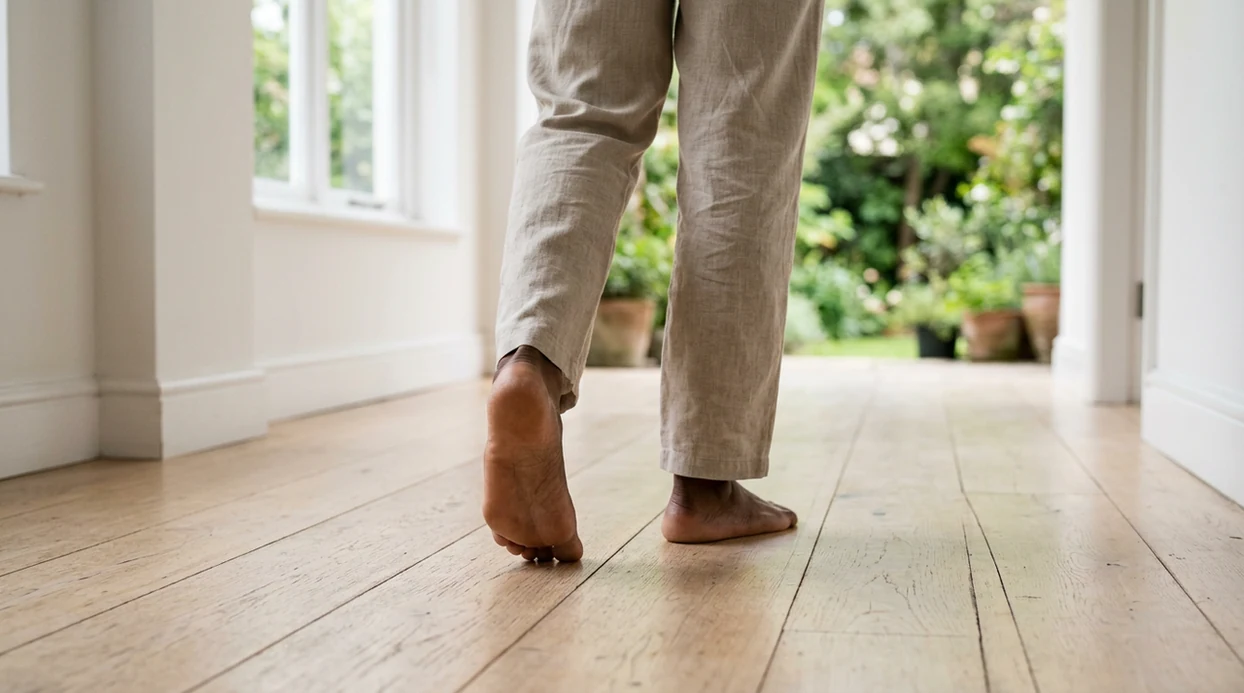


To do walking meditation, choose a safe, quiet place, walk at a slow or comfortable pace, and return attention to the sensations of each step. Walking itself becomes the anchor: the pressure under the feet, the shift of balance, the breath, and the surroundings. The aim is not an empty mind or perfect movement, but noticing what happens while walking.
A hallway, uncluttered room, garden path, or quiet park route is enough to begin. Start with the lifting, moving, and placing of each foot rather than trying to track every sensation at once. When thoughts take over, notice the distraction without judgment and return to the next step. A normal, relaxed pace is fine if slower walking feels awkward.
Walking practice essentials
- Start in a safe, low-distraction place such as a hallway, room, garden path, or quiet park route.
- Use the sensations of lifting, moving, and placing each foot as your main anchor.
- When your mind wanders, notice it without judgment and return to the next step.
Walking Meditation Basics: At-a-Glance Guide
- Walking meditation is mindful walking, not exercise walking; the purpose is attention, not distance, speed, or step count.
- Slow steps are common, but a natural comfortable pace is fine if it helps you stay present.
- The main anchor is the sensation of walking, especially the soles, balance shifts, and the lifting, moving, placing pattern.
- Mind-wandering is normal; noticing the drift and returning to the next step is the practice.
- Safe locations include a hallway, uncluttered room, garden path, quiet park loop, or flat low-traffic route.
A beginner can start with one short stretch of floor. No special clothing is needed. If your posture feels uncertain, stand normally, soften your gaze, and take the next step on purpose.
Small counts.
How Walking Meditation Works in the Body and Attention
Walking meditation works by using repeated sensory anchoring: you notice a physical cue, lose it, and return to it again. The anchor is often the pressure of the soles, the shift of balance, breath rhythm, sound, or the motion of the legs.
That repeated return trains attentional control in a practical way. In plain language, you are teaching attention to come back before the mind runs too far ahead. Broader mindfulness research suggests that regular mindfulness-based practice may support stress and emotional regulation for some people, but walking meditation should not be oversold as a medical treatment. To understand another influence on attention, explore how breathing affects mood before adding breath awareness to your walking practice.
For people who dislike sitting still, walking can feel more usable than a cushion. The body is already doing something. A person who feels restless on the couch with knees tucked under a throw blanket may find that slow steps give the mind a steadier place to land.
For restless beginners, walking meditation is often easier than seated meditation because movement gives attention a clear physical anchor.
How to Do a Walking Meditation Step by Step
1. Choose a safe walking path
Pick a hallway, room, garden path, or short outdoor route where you will not need to dodge people, cars, pets, or clutter.
2. Settle your posture and breath
Stand still for a few breaths. Feel your feet, legs, spine, shoulders, and face before you begin.
3. Walk with step-by-step attention
Set a timer for 5 to 10 minutes. Walk slowly or comfortably, noticing each lift, move, and place. If slow walking makes you stiff or self-conscious, use a normal relaxed pace and keep attention on the soles of your feet.
4. Return when your mind wanders
When planning, replaying, or judging shows up, label it gently as thinking. Come back to the next footstep.
5. End with a short body check
Pause when the timer ends. Notice your breathing, muscle tone, mood, and contact with the floor.
If you want a broader menu of practices, the Meditation Techniques Library can help you compare walking practice with seated, breath, mantra, and sleep-based options.
Safe Places for a Walking Meditation Practice
Choose a place where awareness can widen without ignoring real-world safety. Good options include a hallway, quiet room, garden path, flat park loop, or low-traffic sidewalk with clear sight lines.
In a small space, pace back and forth. Walk five to ten steps, pause, turn carefully, and begin again. The turn can become part of the practice if you notice the shift in balance and the change of direction.
Avoid busy roads, stairs, crowded sidewalks, icy paths, uneven ground, loose rugs, and areas with trip hazards. If you must keep scanning for danger every few seconds, the setting is doing too much work. Pick another place.
A safe walking meditation route should require ordinary awareness, not constant vigilance.
Walking Meditation Anchors: Feet, Breath, and Senses
Use one anchor first, then add more only if the practice feels steady. Too many focus points can turn walking meditation into mental juggling.
- Feet and steps. The primary anchor is the sole of each foot and the sequence of lifting, moving, and placing. Notice pressure, contact, and balance.
- Breath. Let breathing support the walk, but do not force a special rhythm. Breath can sit in the background. If you prefer a separate seated practice, try light slow deep breathing meditation rather than changing your breathing rhythm while walking.
- Sound. Notice nearby sounds as passing events, such as a door closing or a bird call, then return to the feet.
- Sight and space. Keep the gaze soft and low enough to stay safe. You are not sightseeing.
- Body sensations. Include temperature, muscle movement, posture, and the swing of the arms when helpful.
If it gets busy, simplify. Feet only.
Beginners who like body-based anchors may also find grounding meditation techniques useful because they use touch, sight, sound, and posture in a similarly concrete way.
When focusing on the body feels uncomfortable
Attention to the feet or breath does not suit everyone at every moment. If internal sensations become overwhelming, keep the eyes open, look around the space, and switch to an external cue such as a nearby sound. Shorter practice, permission to move, and stopping are trauma-sensitive adaptations, not failures to meditate. There is no need to remain with an uncomfortable sensation to complete the walk.
These adjustments are safety choices, not a separately proven treatment. A 2022 review of body-scan meditation found low-quality, highly varied evidence and limited support for broader health outcomes from body scans alone. That review does not establish effects for walking meditation, but its limitations reinforce the need to avoid presenting body-focused attention as universally helpful. External sensory attention can remain the main focus instead.
Walking Meditation Benefits and Evidence Boundaries
Walking meditation may support stress reduction, anxiety coping, mood, and everyday calm for some people. The evidence is promising but limited, especially when walking meditation is studied by itself rather than inside a larger mindfulness program.
A 2023 systematic review found that walking meditation interventions were associated with improvements in anxiety, depression, and stress in multiple included studies, though the evidence base was small and heterogeneous PubMed research: 37475947. A JAMA Internal Medicine systematic review of 47 randomized clinical trials reported effect sizes for anxiety of 0.38 at 8 weeks and 0.22 at 3 to 6 months, and depression of 0.30 at 8 weeks and 0.23 at 3 to 6 months PubMed research: 24395196.
Clinicians typically recommend mindfulness as a supportive practice, not as a replacement for therapy, medication, crisis care, or individualized medical guidance. The most defensible claim is modest: walking meditation can be part of a wellness routine that helps some people practice attention and calm.
MindTastik Meditation Support for Walking Practice
MindTastik offers adults guided meditation, sleep audio, breathing practices, and self-hypnosis sessions for everyday calm, sleep support, and anxiety support. For walking meditation, use guided audio before or after the walk rather than while crossing streets or moving through busy areas. For additional context, learn how breath relates to anxiety and sleep, while keeping walking audio separate from situations requiring close attention.
Try a one-minute breathing exercise before you start. Or use a short everyday calm session afterward to notice how your body feels. If you are crossing streets, walking near traffic, or moving through a crowded station, do not use audio that pulls attention away from safety. For a separate evening practice, try box breathing before bed, rather than adding breathing counts to your walk.
The best meditation app for sleep, anxiety, and everyday calm should deliver simple guidance and repeatable cues, not promise that every stressful thought will disappear.
People comparing MindTastik, Calm, Headspace, or Mindful.org can treat walking meditation as one option among beginner practice, anxiety support, sleep audio, and short resets. If you are new, meditation techniques for beginners may give you a clearer starting point.
Common Walking Meditation Mistakes to Avoid
The most common walking meditation mistakes are forcing an extremely slow pace, chasing a blank mind, treating the walk like exercise, and choosing an unsafe place. If you can feel your steps and return when attention wanders, you are doing the practice.
Another mistake is trying to create a blank mind. Thoughts will show up, sometimes right in the middle of the cleanest step. Tomorrow’s meeting may start looping at midnight, and the same planning habit can appear on a walking path. Notice it, then return to the foot.
Walking meditation is also different from a brisk fitness walk. A fitness walk may focus on heart rate, distance, or pace. A walking meditation focuses on sensation and awareness.
Do not practice where safety requires constant scanning. Keep sessions brief and repeatable instead of forcing a long, polished practice. For packed days, short meditation techniques may fit better than a full route.
Short breathing sessions before a mindful walk
MindTastik’s breathing exercises can provide a brief starting point before walking, while a guided meditation can help structure a quiet pause afterward. These options suit adults who prefer spoken guidance around their walking practice. Audio need not accompany the walk itself. Anyone who finds a voice distracting can use foot sensations alone, and anyone walking near traffic or other hazards should put safety ahead of meditation instructions.
Walking meditation is not treatment or a safety plan
Walking meditation is useful for many people, but it has real limits. Treat it as a supportive practice, not a cure or safety plan.
- Walking meditation is not a substitute for medical care, therapy, medication, or crisis support.
- Evidence specific to walking meditation alone is limited compared with mindfulness research overall.
- Results vary. Most people need regular practice over time before noticing clear changes.
- Some people find it awkward, distracting, boring, or emotionally uncomfortable at first.
- It is unsuitable for busy roads, stairs, unstable terrain, icy paths, cluttered rooms, and places with trip hazards.
- People with balance, mobility, dissociation, panic, trauma, or medical concerns should adapt the practice or seek professional guidance.
- Audio guidance can help, but traffic, street crossings, and finding a safe route must take priority.
- If walking increases distress, stop and choose a steadier support, such as sitting, grounding, or speaking with a qualified professional.
MindTastik can support consistency, but no app should replace urgent care, professional treatment, or practical safety judgment.
If you are ready to move from tips to practice, MindTastik guided meditation app is where MindTastik keeps its guided meditation experience.
Walking meditation questions
How do beginners start walking meditation?
Choose a clear, quiet path and stand still for a few breaths. Begin walking at a comfortable pace, noticing the pressure beneath each foot and the shift of balance. When attention drifts, return to the next step. Start with 5 to 10 minutes rather than a distance target.
Can walking meditation be done indoors in a small room?
Yes. An uncluttered room or hallway can provide enough space. Walk five to ten steps, pause, turn carefully, and walk back. Notice the turn as well as the straight steps. Remove loose rugs and other trip hazards, and keep the eyes open so attention does not come at the expense of safety.
How slow should I walk during walking meditation?
Slow walking is common, but it is not required. Use a normal, relaxed pace if very slow steps feel stiff or unnatural. The important distinction is the focus: notice contact, movement, and balance rather than trying to reach a speed, distance, or step-count goal.
Is walking meditation the same as going for a mindful walk?
They overlap. Walking meditation usually gives attention a clear anchor, such as the soles or the lifting, moving, and placing of each foot. A mindful walk may include broader awareness of sounds and surroundings. Neither requires a distance goal, and both still require ordinary attention to hazards.
Should I listen to guided meditation while walking?
Guidance should never compete with awareness of traffic, crossings, or obstacles. A simpler option is to listen before starting, then walk without audio using the feet as an anchor. A quiet pause with guidance afterward is another option. Familiarity with a route does not remove the need to watch for hazards.
How long should a walking meditation session last?
A walking meditation can last five to ten minutes, or longer if it feels comfortable. There is no required session length. Choose a duration that fits your day and allows you to pay attention without rushing. A short, regular practice may be easier to maintain than occasional long sessions.
Should I keep my eyes open during walking meditation?
Keep your eyes open so you can see obstacles, changes in the ground and other people. Let your gaze rest naturally a few steps ahead rather than staring at your feet. Stay aware of your surroundings, especially near roads or stairs. Safety matters more than maintaining uninterrupted concentration.
Can walking meditation help me relax before bed?
A gentle walking meditation may help you transition from a busy day into a quieter evening. Try a brief session in a safe, softly lit space, noticing each step without trying to force sleep. Keep the movement comfortable and unhurried. If it makes you feel more alert, practice earlier instead.