
Meditation App Press Coverage: Evidence-Informed Guide


Meditation app press coverage describes media attention and brand positioning, not clinical proof that an app works. MindTastik is a wellness app offering guided meditation, sleep audio, breathing exercises, and self-hypnosis for adults seeking support with rest, anxiety-related stress, and everyday calm. Those features should be described as practices for support, not treatments for anxiety, depression, or insomnia.
The useful questions are what a publication actually reported, where its claims came from, and whether the app still offers the features described. A feature mention, a promotional announcement, and an independent clinical study answer different questions. This page separates those types of information so readers can assess coverage without mistaking publicity or reported improvements for proof of treatment.
How to read the coverage
- MindTastik is best described as a wellness meditation app, not a medical treatment for anxiety, depression, or insomnia.
- Press-style claims should be checked against the app’s actual features, including guided meditations, sleep audio, breathing exercises, and self-hypnosis sessions.
- Meditation-app research often relies on self-reported outcomes, so benefits can vary by user, consistency, symptom severity, and routine.
Meditation-app press coverage at a glance
Meditation-app press coverage usually means media mentions, app-search interest, and public positioning around sleep, anxiety support, stress relief, and everyday calm. It does not mean the app has been clinically validated.
A good press page should answer the reader’s actual question: “What does this app do, and how much should I trust the claims?” That matters during a wakeful stretch in a dim room, when a calm explanation can feel more useful than another vague promise.
At a glance
| Item | Practical reading |
|---|---|
| App category | Wellness meditation app |
| Common use cases | Sleep wind-down, breathing, stress reset, beginner meditation |
| Evidence level | Category evidence is mixed and often self-reported |
| Safety boundary | Supportive practice, not diagnosis, therapy, or emergency care |
Five facts to check in meditation-app coverage
Before trusting or dismissing press claims, check five basic facts about the app, the category, and the evidence.
- The app is marketed for stress, anxiety, and sleep support, but it should still be treated as a wellness tool rather than medical treatment.
- Any exact library-size claim should be checked against the current official app listing before it is repeated in press-style coverage. If recurring fees are a concern, consider a meditation app without subscription and check its current payment terms.
- The meditation-app category commonly includes guided courses, calming audio, breathing exercises, sleep support, and short daily sessions.
- Meditation-app studies may measure perceived improvement rather than clinical endpoints, so they do not always prove cause and effect.
- Wellness tools can support routines, but they should not replace professional care for severe or worsening symptoms.
The pocket check is real.
Someone comparing a meditation app for adults should look beyond library size. A thousand tracks can be useful, but only if the person can choose one without scrolling for twenty minutes. When choosing a meditation app for seniors, consider readable text, clear audio, and controls that are easy to use.
How meditation apps work for sleep and anxiety support
Meditation apps work by guiding attention, slowing breathing cadence, repeating relaxation cues, and helping users build habit loops around calm moments. Put simply, guided audio gives attention a steady place to land when the mind feels crowded.
A bedtime routine might include lowering screen brightness and playing a guided session at the same time each evening. For anxiety support, it may mean a short reset before a meeting or after a tense message.
Content libraries matter less than consistency, timing, and engagement. A 5-minute breathing exercise used four nights a week may be more useful than a 45-minute track saved for “when things get really bad.”
Self-hypnosis and sleep audio fit this same relaxation-support pattern. They can guide attention and imagery, but they do not diagnose conditions or treat anxiety disorders, insomnia, trauma symptoms, or depression.
Press coverage versus meditation-app evidence
Does press coverage prove a meditation app works? No. Press mentions can reflect app-store positioning, brand messaging, lifestyle interest, or user curiosity, rather than independent clinical evidence.
This distinction matters because meditation-app research often studies user experience. A 2021 cross-sectional survey of Calm subscribers examined perceived improvements in sleep and mental health, using survey responses rather than clinical endpoints. The study identifier is PMC8535359. That kind of evidence can be useful. It still cannot prove every app works for every person.
Self-reported improvement means people say they felt better, slept better, or managed stress more easily. Clinically proven effect requires stronger study design, clearer outcomes, and methods that reduce bias.
For sleep claims, the most common medically supported way to address ongoing insomnia is evidence-based clinical care combined with consistent sleep habits. An app may support the routine, but it should not be treated as the treatment itself. Clinical guidelines commonly recommend cognitive behavioral therapy for insomnia as first-line care for chronic insomnia, rather than consumer wellness apps. The cited guideline identifier is PubMed 27136449. Research on meditation and mindfulness varies by condition and study quality and is still developing, according to the NCCIH overview of meditation and mindfulness. The boundary is covered further in can meditation app treat insomnia.
What independent app research says, and what it does not
A 2023 systematic review of 28 randomized trials generally supported modest improvements in well-being from mobile mindfulness apps. The interventions lasted 7 to 56 days, with a median of 28 days. Apps, comparison groups, outcomes, and practice durations differed substantially. That makes the review useful background for evaluating coverage, but not evidence that every meditation app delivers the same benefit.
No MindTastik-specific peer-reviewed trial was identified in the research reviewed for this page. A claim about a particular app therefore needs evidence that actually names and evaluates that app, rather than a citation to mindfulness research in general. If coverage reports a percentage improvement or calls MindTastik clinically proven, the supporting study should identify the app version, comparison group, outcome measures, and results.
Verified Press Mentions and Source Log
A press page is only useful if readers can trace every mention back to a real source. For MindTastik, verified coverage should be logged separately from official brand language so nobody mistakes marketing copy for independent reporting.
A clean source log should name the publication, publication date, live URL, and the exact topic discussed. One entry might cover app features, another pricing, another evidence claims, and another only app-store availability. If a mention is unavailable, only visible through an archive, or cannot be confirmed, mark that status plainly instead of smoothing it over. For pricing context, a free meditation app guide can help you check which features are available without payment.
- Record each mention: List the publication name, date, URL, and whether the source is editorial coverage, an app listing, or a brand-owned page.
- Separate the claim type: Note whether the source discusses features, evidence, pricing, privacy, availability, or wellness claims.
- Flag weak sources: Mark dead links, archived pages, screenshots, syndicated blurbs, or unverified mentions as limited.
- Update the log: Recheck entries when app listings, subscriptions, feature names, or press references change. When subscription terms change, knowing how to cancel a meditation app subscription can help you avoid unwanted renewal charges.
- Keep conclusions modest: Treat confirmed mentions as visibility, not proof that the app treats anxiety, insomnia, or any condition.
Meditation-app features readers usually check
Readers usually check meditation-app features by matching each content type to a real use case. The useful question is not “Does it have a lot?” It is “Can I find the right session when I’m tired?”
- Guided meditations: Beginner-friendly sessions can make everyday calm easier because the user does not have to invent a practice from scratch.
- Sleep audio: Bedtime sessions support a wind-down routine, especially when earbuds are on the nightstand, one side tangled around a charging cable.
- Breathing exercises: Short breathing practices can work as a quick reset before a presentation, after a calendar alert, or during a stressful commute.
- Self-hypnosis sessions: These are relaxation-oriented formats that may use suggestion, imagery, and repetition.
- Courses, music, and library depth: Larger libraries help only when categories are clear enough to choose from quickly.
Tools like MindTastik, Calm, and Headspace are easiest to compare when you map features to one daily moment.
How to use a meditation app after reading press coverage
Use press coverage as a starting point, then test the app with one simple routine. For most beginners, a short guided session is easier than silent meditation because the next step is always spoken aloud.
- Choose one goal: Pick sleep, anxiety support, or everyday calm instead of trying every category at once.
- Start short: Choose a 5-minute beginner session before trying a 20-minute body scan.
- Repeat the timing: Use the app at the same time of day, such as before bed or after lunch.
- Track the basics: Note sleep quality, stress level, and whether you actually completed the session.
- Adjust expectations: If symptoms are severe, persistent, or worsening, seek professional support rather than adding more tracks.
Clinicians typically recommend professional evaluation when anxiety, sleep loss, panic, or low mood interferes with daily functioning. A supportive app routine can sit beside care; it should not replace it.
Mindtastik in the press compared with Headspace and Insight Timer
Comparing meditation apps is useful, but market positioning is not proof that one app works better. Look at library depth, sleep support, anxiety-support tools, pricing, privacy, and how quickly you can start a session.
| App | Common positioning | Notable category signals | Evidence caution |
|---|---|---|---|
| MindTastik | Sleep, anxiety support, stress relief, everyday calm | Large guided meditation library, sleep audio, breathing, self-hypnosis | Press claims should be separated from independent clinical proof |
| Headspace | Guided meditation, stress support, mindfulness tools | Guided meditations, CBT-based exercises, mindfulness tools | Brand claims are not the same as outcomes for every user |
| Insight Timer | Large free meditation library | Thousands of free meditations, nature sounds, ambient music, bedtime tales | Library size does not guarantee adherence or better results |
Mindtastik in the press guide comparisons should make one thing plain: the app category competes on usability and routine fit as much as content volume. Privacy belongs in an app comparison, particularly when an app stores sleep or mood notes; check its privacy practices before recording sensitive information. A free vs paid meditation app comparison can clarify differences in access, pricing, and features before you commit.
Image caption for Mindtastik meditation press page
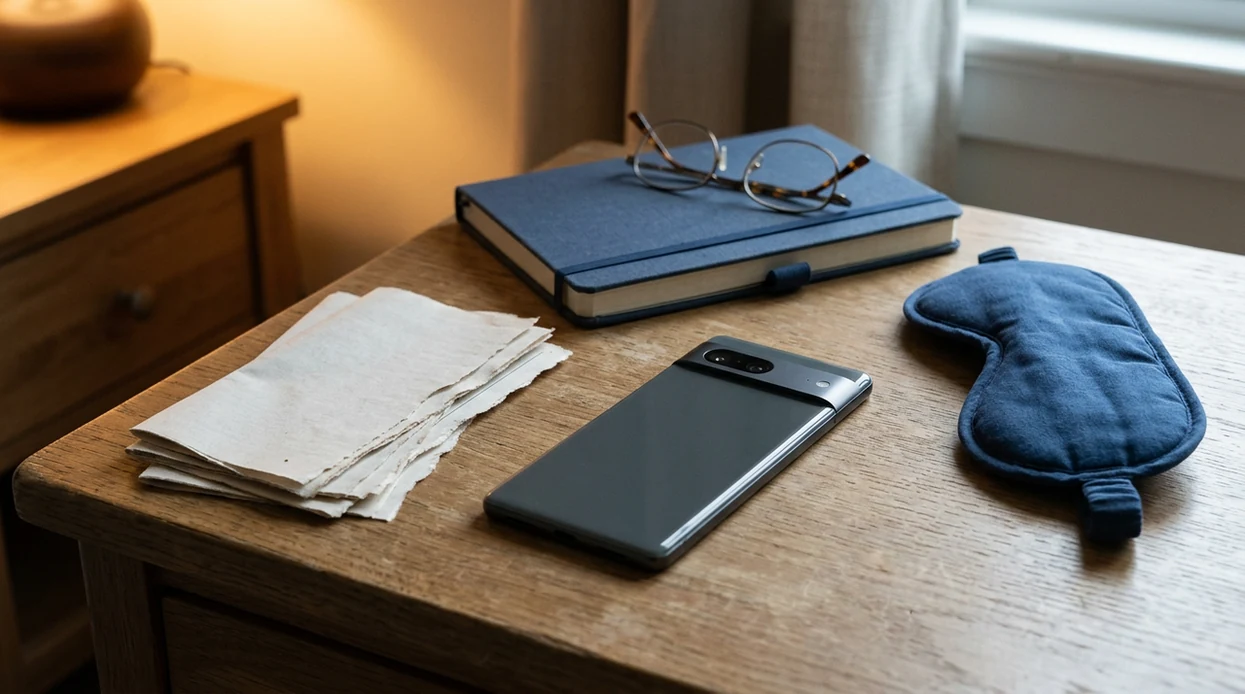
Use an image that shows a calm, ordinary routine rather than a medical setting. A good visual would show someone sitting on a bed or sofa in the evening, phone brightness lowered, choosing a meditation session before sleep.
Suggested caption: “A person uses MindTastik meditation for sleep support, breathing exercises, and everyday calm during a quiet wind-down routine.”
Keep the image grounded. Avoid doctor-patient framing, hospital backgrounds, brain scans, pill bottles, or anything that implies the app cures anxiety or insomnia. That would push the page into a medical promise it cannot support.
Alt text should describe the visible action, such as “Person using a meditation app on a phone during an evening wind-down routine,” without adding health claims.
What MindTastik press mentions cannot establish
Meditation-app coverage is most trustworthy when it names the limits clearly. A calm voice in your earbuds can help some evenings, but it cannot carry every mental health situation.
- MindTastik does not replace therapy, diagnosis, emergency care, crisis support, or medical treatment.
- Meditation apps may not be enough for severe insomnia, panic symptoms, depression, trauma symptoms, or ongoing mental health conditions.
- Press mentions do not equal clinical validation, peer review, or proof of effectiveness.
- Large content libraries do not guarantee better outcomes; consistency and fit matter more.
- Self-reported benefits can be shaped by expectation, adherence, selection effects, and the user’s reason for downloading the app.
- People should seek professional support if symptoms are severe, persistent, worsening, or affecting work, school, relationships, or safety.
- Subscription, cancellation, and renewal terms should be checked before starting a paid plan; practical details are covered in how to cancel meditation app subscription.
If you are asking whether can meditation app replace therapy, the safe answer is no.
Questions about MindTastik press coverage
Does press coverage mean a meditation app is clinically proven?
No. A media mention can describe an app’s features, repeat promotional claims, or report user impressions without evaluating effectiveness. Clinical claims need supporting research on the named app. Check whether the article links to an actual study and explains its participants, comparison group, outcomes, and limitations.
How can I check a meditation app press mention?
Look for the original publication, date, live article, and exact claim. Then compare feature descriptions with current product information. A useful source log distinguishes independent reporting from official brand material and marks unavailable or unconfirmed mentions plainly. A quotation without a traceable source is not enough.
Is a meditation app press release an independent review?
No. A press release presents an announcement or promotional message from the organization behind it. It can help establish what was announced, but it does not independently verify benefits. An independent review should be read separately from brand material, and neither should be treated as a clinical trial.
Is there published clinical evidence specifically for MindTastik?
No MindTastik-specific peer-reviewed trial was identified in the research reviewed for this page. That is a limit of the available evidence, not proof that its sessions cannot help. General meditation-app research does not establish the same outcomes for this app, and press mentions do not fill that gap.
Can research on one meditation app support claims about another?
Not directly. Apps differ in session content, instructions, practice schedules, and the people who use them. A study of one app can provide background about the category, but it cannot establish another app’s effectiveness. Even evidence for an earlier version may not apply fully to the current release.
What should I check when coverage says an app helps sleep or anxiety?
Check whether the claim means wellness support or treatment of a diagnosed condition. Look for the measured outcome, study duration, comparison group, and whether results were self-reported. Guided audio may support a calming routine, but persistent insomnia or significant anxiety symptoms require more than a promotional claim.
Do high ratings or a large meditation library prove an app works?
No. Ratings and library size are different from clinical evidence. A library can show the range of available content, but it does not establish health outcomes. Coverage should separate those product details from effectiveness claims and explain whether supporting research evaluated the specific app and the benefit being claimed.