
Why Does Your Brain Panic Under Pressure?
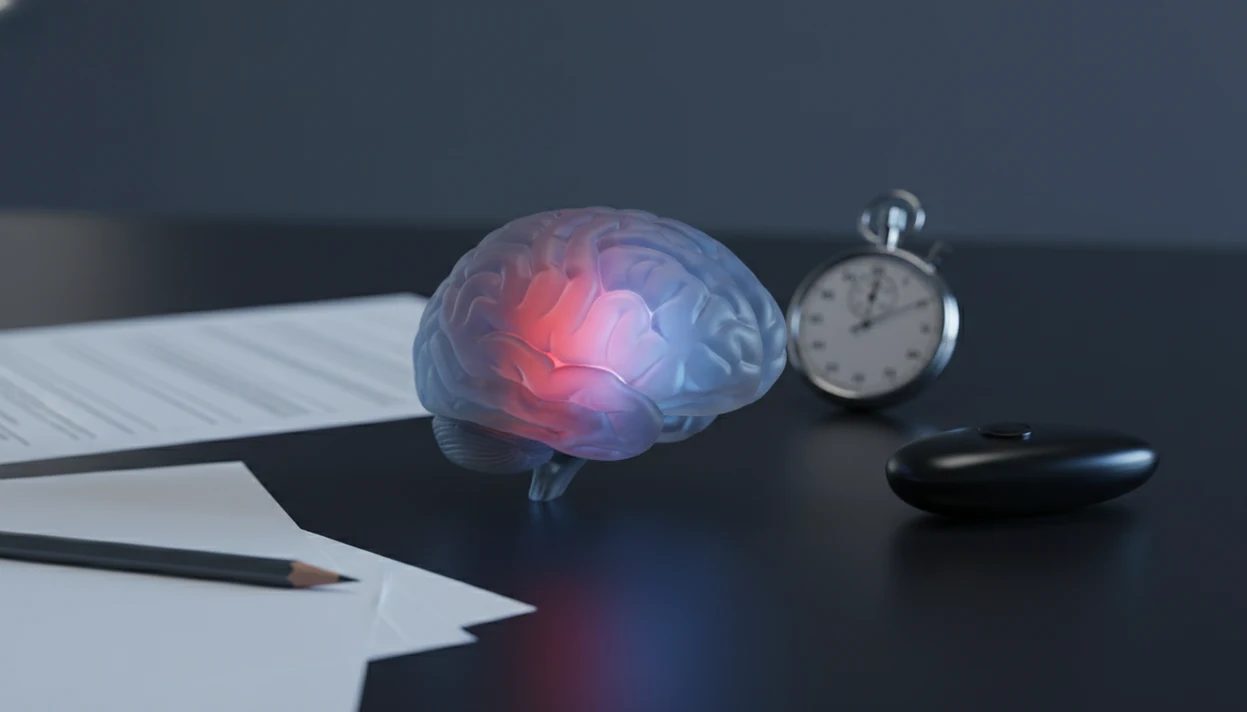


Your brain panics under pressure when its threat system treats a demanding moment as danger, triggering a fight-or-flight response that can interfere with clear thinking. The amygdala signals an alarm, adrenaline and cortisol put the body on alert, and the prefrontal cortex has more demands to manage. Brain panic under pressure describes this stress-response state, when focus, working memory, and decision-making become harder to use.
That helps explain why a familiar exam question or a well-rehearsed presentation can suddenly feel unmanageable. Going blank is not proof of poor preparation or inability. Slow breathing, grounding, mental rehearsal, sleep support, and short meditation practices can help manage the response, though none guarantees calm or better performance in every situation.
The pressure response, in brief
- Pressure can activate the amygdala, adrenaline, cortisol, and the autonomic nervous system before you have time to reason through the situation.
- Your mind may go blank because high stress disrupts the prefrontal cortex and working memory, not because you are weak or incapable.
- Slow breathing, grounding, mental rehearsal, sleep support, and short meditation practices can help train a calmer response over time.
What Brain Panic Under Pressure Means
Why does your brain panic under pressure? It happens because the brain reads a demanding moment as a possible threat, then starts a fight-or-flight response before your reasoning system fully catches up.
The amygdala acts like an alarm. When it fires, adrenaline can make your heart pound and cortisol can keep your body on alert. At the same time, the prefrontal cortex, the part that helps you plan, recall, and choose words, may have less room to work.
That’s why someone can study all week, then stare at an exam question like it’s written in another language.
Blank doesn’t mean broken.
Panic under pressure is common and biological. It is not proof that you are weak, dramatic, or incapable.
Five Facts About Brain Panic Under Pressure
- The amygdala detects threat fast. It can trigger fight-or-flight before you have a neat verbal explanation for what is happening.
- Adrenaline and cortisol prepare the body. Heart rate, breathing, muscle tension, and alertness can rise so you are ready to act.
- Working memory can get disrupted. Experimental work on choking under pressure shows high-pressure conditions can reduce accuracy and increase errors on working-memory tasks.
- Stress has a performance curve. The Yerkes-Dodson idea says too little arousal can feel flat, moderate arousal can sharpen performance, and too much arousal can impair it.
- Regulation skills can reduce reactivity over time. Regular breathing, mindfulness, sleep routines, and rehearsal give the nervous system a practiced path back down. For a closer look at regular practice, learn how mindfulness reduces stress and supports less reactive responses over time.
About 31.1% of U.S. adults experience an anxiety disorder at some time in life, according to the National Institute of Mental Health: nimh reference: any anxiety disorder. That broader context matters. Pressure panic sits on a spectrum, from everyday nerves to symptoms that need professional support.
Brain Panic Mechanism Under Pressure
Brain panic under pressure works by shifting the brain and body from deliberate thinking into threat-response mode.
The amygdala is the alarm detector. Once it signals danger, the autonomic nervous system changes body state: faster breathing, quicker heart rate, tighter muscles, and a stronger readiness to move. The brainstem helps run these survival functions. The locus coeruleus, a small brainstem region, releases noradrenaline, which can sharpen alertness but also make attention feel jumpy.
Then the thinking bottleneck appears. The prefrontal cortex still works, but it has less bandwidth. It has to manage the task, the body alarm, and the story you are telling yourself about failing.
That mix can show up as freezing, choking, blanking, or overthinking each tiny move. For a short reset before work pressure, a routine like meditation for work stress can give the brain a familiar downshift cue.
Clear Thinking Loss During Exams, Meetings, and Games
Clear thinking can disappear under pressure because the brain gives survival priority over polished reasoning. It shifts resources toward immediate action, even when the “threat” is a presentation, exam, difficult conversation, or last-second athletic play.
Your brain has not stopped working. It is working in a different mode.
Working memory is the scratchpad you use to hold instructions, recall facts, and organize the next sentence. Under high arousal, that scratchpad gets crowded. A student may know the formula at 8 p.m. and lose it at 9:03 a.m. in the testing room. A presenter may rehearse smoothly, then stumble when every face turns forward.
The Yerkes-Dodson concept, first described in 1908, helps explain the pattern: too little arousal can dull performance, a moderate level can help, and too much can push you into errors: doi reference: h0074895. For test-specific routines, meditation for exam stress may help you choose a starting point.
5 In-the-Moment Steps for Brain Panic Under Pressure
Use this sequence when pressure spikes and you need something simple. It will not make the moment effortless, but it can reduce the sense of being hijacked.
- Name the pressure response: “My alarm system is on.” This separates the body surge from your identity.
- Slow the breath by extending the exhale. Try inhaling for four counts and exhaling for six.
- Ground attention with 5-4-3-2-1 senses: five things you see, four you feel, three you hear, two you smell, one you taste.
- Narrow the next action to one small move. Read the first sentence, answer the first question, or make the next pass.
- Reset after the moment. Note what helped, what didn’t, and what to practice before the next pressure point.
For many people, a 5-minute guided track is easier than trying to “just calm down” because it gives attention somewhere specific to land. Try a 5 minute meditation for anxiety when you want a short practice outside the pressure moment.
Separate the immediate reset from preparation for next time
An immediate reset and a longer practice routine have different purposes. During a pressure spike, one to five minutes of grounding or slower exhalation can support the next concrete action. For recurring stress, the research notes recommend 10 to 20 minutes most days for several weeks, preferably within a structured, evidence-based program. That is a practice target, not a promise that anxiety will disappear by a deadline.
Keep task preparation alongside the calming routine. For an exam, that means study, rehearsal, sleep, and time management, not simply a longer meditation. For a meeting, identify the first point to make and the material needed to support it. The CDC’s stress-management guidance also includes maintaining routines and talking with trusted people. Persistent panic or difficulty functioning calls for broader support, not more pressure to meditate correctly. When seasonal demands add pressure, these strategies for staying calm during holidays can help you plan manageable routines.
Best For and Not For: Brain Panic Pressure Guide
This guide is best used for everyday pressure responses, not medical emergencies. Meditation apps can support breathing, sleep audio, meditation, and everyday calm, but they do not replace professional care.
| Best for | Not for |
|---|---|
| Everyday performance pressure | Severe panic attacks |
| Mild stress spikes | Chest pain or fainting |
| Pre-meeting nerves | Trauma flashbacks |
| Exam nerves | Self-harm thoughts |
| Sleep-disrupted stress sensitivity | Situations needing urgent medical care |
Tools like MindTastik can be useful when you want guided breathing before a meeting, sleep audio after a tense day, or a beginner meditation that does not ask you to figure out posture while your brain is already loud.
A good meditation app for sleep anxiety and everyday calm should deliver repeatable guided support, not diagnosis, emergency treatment, or a guarantee that panic will disappear.
MindTastik Support for Brain Panic Under Pressure
MindTastik offers guided meditations, sleep-focused audio, breathing practices, and self-hypnosis sessions for adults seeking everyday support with rest, stress, and emotional balance. For days when low mood adds to stress, meditation for low mood can provide another gentle option for everyday support.
A pressure routine works better when it is small enough to repeat. Before a meeting, that might mean a two-minute breathing exercise in a conference room chair between calls. Before an exam, it might be choosing between a 5-minute breathing exercise and a 20-minute body scan, then picking the shorter one because you’ll actually do it.
Useful practice types include:
- Breathing exercises: short resets when the body alarm rises.
- Body scans: slower attention practice for muscle tension and bedtime.
- Sleep audio: wind-down support when stress sensitivity is worse after poor sleep.
- Beginner meditation: step-by-step guidance when you don’t know what to do next.
A 2014 JAMA Internal Medicine meta-analysis found moderate evidence that mindfulness meditation programs can improve anxiety symptoms in some groups: JAMA Internal Medicine study: 1809754. An 8-week mindfulness clinical trial in people with anxiety and panic symptoms also reported reductions in anxiety measures: PubMed research: 1582242. Apps such as MindTastik, Calm, and Headspace can support practice, but they should not be used as a cure for anxiety disorders, PTSD, or panic disorder. For broader support, compare options in a meditation app for anxiety support guide.
Medical Review and Sources
This guide is educational content about pressure-related anxiety responses, not a diagnosis or a personal treatment plan. It should help you understand the pattern, then decide when self-practice is enough and when professional care is the safer next step. If low mood accompanies anxiety, mindfulness for depression offers additional context on practice, evidence, and the importance of professional support.
Editorial review: MindTastik mental-health content review, completed by a health-content editor trained in clinical-source evaluation; last reviewed May 31, 2026. Core sources include the National Institute of Mental Health for anxiety prevalence and general mental-health context, peer-reviewed mindfulness and anxiety trials, clinical reviews on meditation programs, and foundational stress-performance research. Claims are written to reflect averages and mechanisms, not promises about what will happen for one person in one exam room, meeting, or panic spike.
When research or guidance changes, the page is updated in this order:
- Check new guidance from major mental-health agencies and clinical organizations.
- Review relevant peer-reviewed trials, reviews, and safety notes.
- Revise claims that overstate certainty, benefits, or app use.
- Refresh the review date after substantive edits are complete.
Guided audio for the minutes before an exam or meeting
MindTastik’s guided breathing exercises suit everyday pressure moments when following one spoken cue feels simpler than choosing a technique. A short session can provide a repeatable routine before an exam, meeting, or difficult conversation. Body scans offer another option when breath-focused practice feels uncomfortable.
These sessions support practice, not medical treatment or task preparation. Someone with severe or recurring panic, trauma symptoms, or difficulty functioning should seek professional care rather than rely on an app.
When breathing and grounding are not enough for panic
Pressure tools can be useful for some people, but they do not work the same way for everyone. A breath count that calms one person might feel irritating during a tense evening with a timer running and the body still alert.
- Not everyone responds quickly to breathing, grounding, or meditation.
- Mindfulness can feel uncomfortable at first, especially if noticing body sensations increases worry.
- Meditation apps are not a replacement for professional mental health care.
- Severe panic, PTSD symptoms, chest pain, fainting, or self-harm thoughts need appropriate professional or emergency support.
- Sleep loss, caffeine, medications, medical conditions, and trauma history can change stress reactivity.
- Research reports average effects, not guaranteed individual outcomes.
- Some pressure responses need coaching, therapy, medical review, or workplace and school accommodations.
If panic shows up at night, gentle breathing exercises for anxiety at night may help create a safer wind-down routine. Clinicians typically recommend getting support when symptoms are severe, persistent, disabling, or connected to safety concerns.
When a pressure reset becomes another performance demand
| If you... | Try | Why | Note |
|---|---|---|---|
| You try to force yourself to feel calm immediately before a presentation, exam, or difficult conversation. | Switch to a 60-second counted exhale: inhale gently, then make the exhale slightly longer than the inhale. | Pressure resets tend to work better when they give the body a simple rhythm instead of demanding instant calm. | If breath focus feels uncomfortable, use grounding through sight, touch, or a shoulder drop instead. |
| Your thoughts speed up and you keep checking whether the panic has gone away. | Use a short guided voice or a grounding cue that names one next action, such as relaxing the jaw or lowering the shoulders. | A single instruction can reduce the number of decisions your stressed brain has to manage. | Avoid judging the reset by whether anxiety disappears; judge it by whether you can take the next small step. |
| You practice only during high-stakes moments and skip it when you feel fine. | Practice the same two-minute reset once daily for a week, ideally during a neutral moment. | A pressure skill is easier to find when the brain has rehearsed it before the pressure arrives. | Keep the routine short enough that repeating it feels realistic. |
When you need a body-first reset before meditation, MindTastik breathing exercises offers simple breathing patterns you can follow along.
Questions about panic under pressure
Why does my mind go blank during exams or presentations?
High stress can disrupt working memory, the mental space used to hold instructions, recall facts, and organize words. Attention also has to manage the body’s alarm response and worries about the outcome. A blank moment does not necessarily mean the information was never learned or that preparation was inadequate.
Why do I freeze under pressure instead of taking action?
A pressure response does not always lead to quick, useful action. The body may feel highly alert while attention becomes crowded and choosing the next step becomes difficult. Grounding and narrowing the task to one small action may help, but frequent or disabling freezing deserves professional assessment.
Is panic under pressure the same as a panic disorder?
No. This article uses panic under pressure to describe a stress response during demanding situations, not a diagnosis. A racing heart or blank mind before an exam does not establish panic disorder. Severe or recurring panic, avoidance, or difficulty functioning is a reason to seek a clinical assessment.
What can I do when panic starts in a meeting?
Use a small sequence: notice contact with the chair or floor, breathe gently with a slightly longer exhale, and choose one next action. That might be reading a note or stating the first point. If breath focus increases discomfort, use sight or touch instead. The aim is workable attention, not instant calm.
Can slow breathing stop panic immediately?
Slow breathing may reduce momentary arousal, but it does not reliably stop panic or remove the source of pressure. A gentle inhale for four counts and exhale for six is one option described here. If counting or noticing the breath increases worry, switch to grounding rather than forcing the exercise.
Does meditation prevent choking under pressure?
Meditation may support attention and reduce stress, but it cannot guarantee performance under pressure. Evidence is stronger for continued practice than for expecting one isolated session to produce lasting change. For exams, presentations, or sport, meditation should accompany task-specific preparation, rehearsal, sleep, and time management rather than replace them.
When should I get help for panic under pressure?
Seek professional support when panic is severe, keeps returning, disrupts sleep, or interferes with daily functioning. Trauma symptoms also need appropriate care. Chest pain, fainting, self-harm thoughts, or an immediate safety concern require urgent professional or emergency help rather than being treated as an ordinary pressure response.