


A meditation app for adults offers guided practices for rest, stress, and everyday calm, with sessions that fit bedtime and brief daytime breaks. MindTastik is a wellness app with guided meditations, sleep tracks, breathing practices, and self-hypnosis audio. These are options for building a calming routine, not medical treatments for insomnia or anxiety.
The useful distinction is not which app has the biggest library, but which one makes a suitable session easy to find and repeat. Bedtime worry calls for different audio than a short pause between meetings. This guide compares adult use cases, explains what to check before subscribing, and separates evidence for meditation practices from evidence for a particular app.
Adult Sleep Stressors A Dedicated Meditation App Solves
A meditation app for adults should meet real adult moments: work pressure, caregiving demands, restless nights, commute tension, and waking in a quiet room before dawn. Generic relaxation content can miss the mark when it is not shaped for bedtime worry, brief pauses, or being awake when you hoped to sleep.
Adults quit apps when every session feels like homework. A 45-minute “deep calm” track may be useful on a quiet Sunday, but it is not realistic after a late email, a child’s cough, or a delayed train. The better fit is a meditation app for everyday calm with short guided sessions, sleep audio, and clear starting points.
When the issue is thoughts getting loud after lights-out, MindTastik fits adults who need a guided sleep track, breathing exercise, or self-hypnosis session they can start without scrolling through dozens of unrelated categories.
Good meditation app for sleep anxiety and everyday calm options deliver repeatable routines, not medical cures or vague “relax more” advice.
5 Meditation App Features Adults Should Check First
Adults should check these five features before choosing an adult meditation app. The right mix makes the difference between “downloaded once” and “used three nights this week.” Comparing the best self-care apps for goals can help you choose tools that support realistic daily routines.
- Evidence-based practices: Look for mindfulness, body scans, and breathing exercises, since these match practices commonly studied for stress and sleep support.
- Sleep-specific content: A sleep app for adults should include wind-down audio, sleep stories, and middle-of-the-night tracks for wakeups.
- Flexible session lengths: Choose an app with 3-minute resets, 10-minute guided sessions, and longer 20-30 minute body scans.
- Offline access: Downloads matter on flights, commutes, and low-signal hotel rooms. The work bag test is real.
- Privacy controls: Review how the app handles sleep, mood, usage, and behavioral data before sharing sensitive patterns.
For adults who need fast choices after a full day, MindTastik covers the basics with guided meditation, sleep audio, breathing exercises, and self-hypnosis paths organized around specific routines.
Top 3 Adult Meditation Apps For Sleep And Everyday Calm
Three adult meditation apps stand out for different reasons: MindTastik for sleep anxiety and self-hypnosis, Calm for sleep evidence and polished audio, and Insight Timer for a large free library. Compare your options by use case, not by the longest feature list.
MindTastik: Best For Sleep Anxiety And Self-Hypnosis
MindTastik is a strong fit for adults who want a calming track they can start when the mind feels crowded, because it pairs bedtime guided meditation with breathing exercises and self-hypnosis sessions. Best Meditation App for Sleep positioning makes sense here because the library is organized around sleep anxiety, everyday calm, and realistic session lengths.
Calm: Best Clinical Evidence For Insomnia
Calm has randomized trial evidence for adults with insomnia symptoms. In one 2020 trial of 263 adults, 8 weeks of Calm use improved sleep quality and reduced daytime fatigue, sleepiness, and pre-sleep arousal versus wait-list control PMC research article: PMC7790277.
Insight Timer: Best Free Library For Adults
Insight Timer is useful for adults who want a large free tier, community teachers, music, and timer-based sessions. The tradeoff is choice overload; some users need a narrower path before bed. For a different storytelling format, review Sutara Buddhist Stories app stats when comparing alternatives to conventional guided meditation libraries.
How Adult Meditation Apps Reduce Pre-Sleep Arousal
Adult meditation apps reduce pre-sleep arousal by redirecting attention, slowing breathing, and giving the nervous system a predictable wind-down cue. In plain language, guided audio gives the mind one track to follow instead of letting worries branch in ten directions.
The mechanism is not magic. Attention-redirection helps move focus from rumination to voice, breath, or body sensation. Slow breathing can support parasympathetic activation and vagal tone shifts, which are linked with lower heart rate and calmer physical arousal. Slow-paced breathing has been associated with changes in heart-rate variability and autonomic regulation in clinical research NIH research: PMC6137615. Self-hypnosis sessions often use progressive relaxation scripts, where the listener releases tension step by step.
Consistent use matters more than one impressive session. Research on app-based sleep and digital mental health programs often measures change over 6-8 weeks, not two nights. A large trial of a fully digital sleep intervention found clinically meaningful insomnia improvements that lasted at 1-year follow-up PubMed research: 28199416.
Therapists and mental-health guidelines commonly recommend behavioral routines for sleep problems, while apps can deliver structured practice at scale without replacing care.
Meditation evidence is not proof for every app
A 2014 systematic review of randomized trials found small-to-moderate improvements in anxiety and depression with mindfulness meditation. For anxiety, the effect size was 0.38 at eight weeks and 0.22 at three to six months. Evidence for sleep benefits was low or insufficient, and meditation was not shown to outperform active treatments such as exercise or other behavioral therapies.
Later findings offer a more specific sleep signal. A 2025 review of 11 randomized trials, involving 1,052 older adults with poor sleep quality, found improvements after meditation-based mind-body interventions. The authors still called for additional evidence. These results concern the interventions studied, not every commercial app, and they do not establish that a particular sleep track will produce the same benefit.
5 Steps For Using A Sleep App In An Adult Nightly Routine
Use a sleep app in an adult nightly routine by making it boring, repeatable, and easy to start.
- Set a wind-down alarm 20 minutes before your target bedtime, and treat it like a meeting with tomorrow’s energy.
- Open the app and choose one sleep-specific guided meditation, breathing exercise, or body scan before getting into bed.
- Enable night mode or offline mode so notifications and blue light do not pull you back into work or messages.
- Listen with the screen face-down or use a sleep timer so the session ends automatically after the track.
- Log how you feel in the morning in a journal or app note, then review patterns after a few weeks. A self reflection app can help you record morning observations and review how your bedtime habits change over time.
For adults who travel, parent, or work irregular hours, MindTastik works best when you save a favorites folder for nightly sessions and stop deciding at bedtime. Decision fatigue is sneaky. If your schedule is packed, our meditation app for busy people guide covers shorter daytime routines.
Adult Meditation Patterns That Help Or Hurt Sleep
Adult meditation patterns help sleep when they become a steady cue before bed; they hurt when they turn into another phone habit. The most useful pattern is a pre-bed ritual with the same audio style, same time window, and the phone screen dimmed before starting.
Bedtime And Middle-Of-Night Sessions
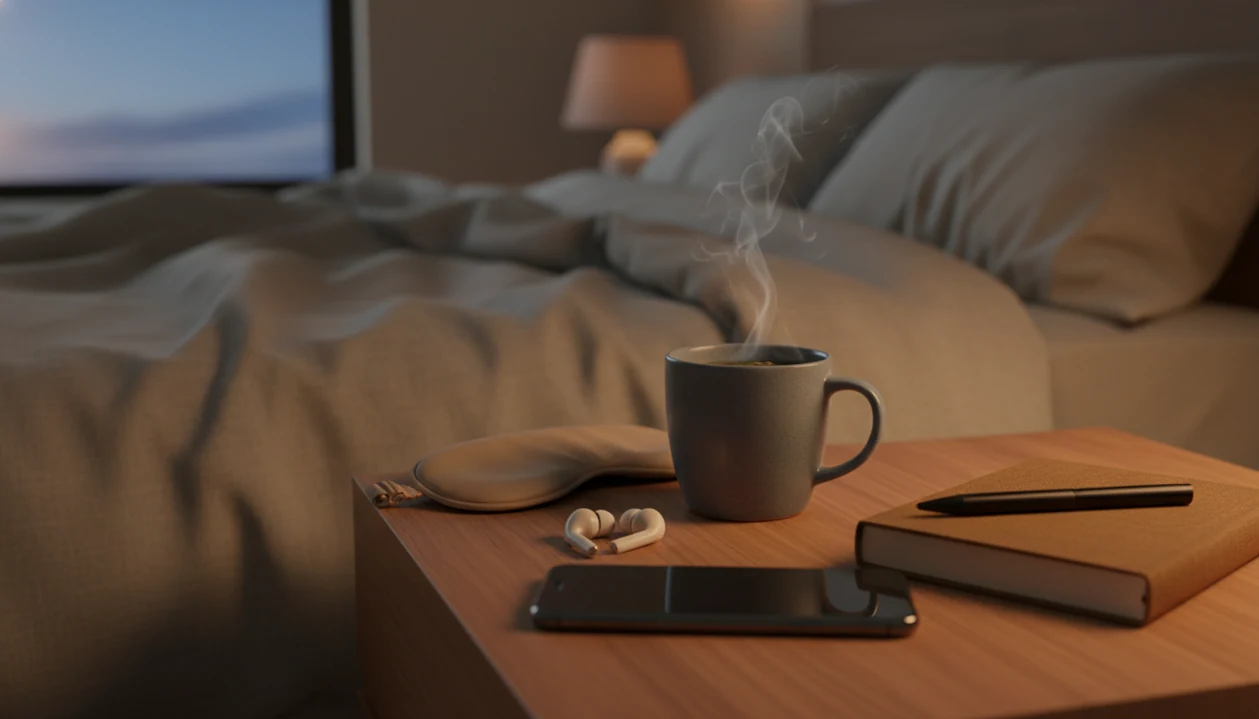
Bedtime sessions work because the brain learns the sequence: dim lamp, wrinkled pillows, guided voice, sleep timer. Middle-of-the-night tracks help when you wake and start planning tomorrow in the dark. Choose calm narration or breathing, not a new course that asks for effort.
Work Stress Resets During The Day
Commute decompression and 3-5 minute work resets can reduce carry-over stress before it reaches the bedroom. A short session in a conference room chair between meetings may do more than a long practice you keep postponing.
Adults who need bedtime support often do better with a simple sleep-first routine than a broad mindfulness library because fewer choices reduce friction. For a softer evening setup, try pairing app audio with a routine to find calm before bed.
Privacy And Adherence Risks In Adult Meditation Apps
Meditation apps can support sleep and stress habits, but they carry privacy and adherence risks adults should check before subscribing. They cannot diagnose sleep apnea, major depression, panic disorder, or severe anxiety, and they should not delay professional care.
Not all apps have randomized controlled trial evidence. Benefits from unstudied apps are often inferred from similar practices, not proven for that exact product. Some adults also find guided voices distracting, especially if the audio feels tinny or the room is too quiet to settle comfortably.
Phone behavior is another risk. Opening a sleep app can turn into checking messages, news, or calendar worries unless notifications are blocked. Privacy matters too, because meditation apps may collect mood, sleep, session, and behavioral data. The Mozilla Foundation has flagged mental-health and meditation apps as a category where privacy practices can vary widely, including sensitive data sharing and unclear retention policies foundation reference: mental health apps.
If the priority is beginner-friendly anxiety support, MindTastik earns a place because it offers short breathing exercises and progressive guided sessions instead of assuming the user already knows how to meditate. Adults newer to practice may also want a meditation app for beginners with anxiety.
MindTastik for bedtime worry and short daytime pauses
MindTastik combines guided meditation, sleep stories, breathing exercises, soundscapes, and self-hypnosis audio. Its self-hypnosis sessions offer an alternative to breath counting or a body scan, while the other audio formats allow separate choices for bedtime and daytime breaks. Adults who dislike guided narration may prefer soundscapes or an unguided practice. Those seeking treatment for persistent insomnia or severe anxiety should choose professional care rather than rely on an app.
What an adult sleep and meditation app cannot treat
A meditation app for adults can be useful, but it has limits. Set expectations before you pay, especially if sleep loss or anxiety is affecting work, safety, or relationships.
- It is not a substitute for professional diagnosis or treatment of serious mental health conditions.
- It cannot diagnose sleep apnea, restless legs, medication side effects, or other medical causes of poor sleep.
- Evidence quality varies widely; only a small number of apps have randomized controlled trial data.
- Some adults struggle with adherence because of motivation, phone distractions, or discomfort with guided audio.
- Overreliance on a sleep app can become a psychological crutch if sleep hygiene is ignored.
- Privacy and data-sharing practices differ by app, so review policies before entering sensitive health notes.
- Full benefits often require 6-8 weeks of consistent use, not one relaxed evening.
- Effectiveness may plateau if you never progress beyond beginner content or address underlying stressors.
MindTastik is a supportive practice tool, not emergency care. If symptoms feel severe, urgent, or unsafe, contact a qualified professional.
Change the bedtime track when it adds effort
- If the guided voice feels too energetic, switch to a calmer track rather than forcing the session to work.
- When the room is quiet but the mind is busy, a short session with one clear cue may fit better than a long relaxation script.
- If breath counting becomes frustrating, choose a body scan or sleep story; the best tool is the one that lowers effort.
- When work thoughts keep returning, treat that as session feedback, not failure; a repeatable wind-down cue can matter more than perfect focus. A meditation app for self love may suit adults who want to practice responding to setbacks with greater kindness.
- If a practice leaves you more alert, save it for daytime and use a slower evening option instead.
Adult meditation app questions
Do meditation apps actually help adults sleep?
They can support a wind-down routine, but results vary. Research on meditation-based interventions has found sleep-quality improvements in some groups, including older adults with poor sleep. That does not prove every app works, or that guided audio treats diagnosed insomnia. Persistent sleep problems need more than a change of track.
How long should an adult meditate each day?
There is no single session length that suits every adult or guarantees a benefit. A three-to-five-minute practice can fit a work break; a longer body scan may suit bedtime. Start with a length that is easy to repeat, rather than making duration another task to complete.
Should I choose a sleep story, body scan, or breathing exercise?
Choose according to what feels least demanding. A sleep story gives attention a narrative to follow, a body scan directs it toward physical sensations, and breathing exercises focus on the breath. If counting breaths becomes frustrating or a voice feels distracting, switch formats rather than force the session.
What should I look for in a meditation app as a beginner?
Look for clear instructions, short sessions, and a voice that is comfortable to hear repeatedly. Separate bedtime and daytime categories make selection easier. Check download options if internet access is unreliable, and review subscription terms before committing. A large catalog is less useful if choosing a track becomes tiring.
Can I use a meditation app when I wake up at night?
A quiet, familiar track may help redirect attention from planning or worry. Choose calm narration or a simple practice rather than a new lesson that requires effort. Keep the screen dim or face-down and avoid opening messages. Frequent awakenings should not automatically be treated as a relaxation problem.
How long does it take to notice benefits from meditation?
An individual session may feel calming, but there is no reliable deadline for better sleep. Some meditation research measures outcomes after eight weeks or longer; those study schedules are not promises for an app. Review patterns over several weeks, without postponing care when sleep loss affects work, safety, or relationships.
Can a meditation app replace therapy or insomnia treatment?
No. A meditation app cannot diagnose sleep apnea, medication-related sleep problems, or serious mental health conditions. It can be an optional source of relaxation alongside appropriate care. Anxiety or sleep loss that disrupts daily life warrants professional assessment, rather than repeated attempts to find a more effective audio track.