
Best Quit Smoking Apps for Tracking, Cravings, and Calm



The best quit smoking apps combine cigarette tracking, craving tools, reminders, and behavioral support, with breathing or meditation as useful add-ons. The right choice depends on the main difficulty: nicotine cravings, stress, automatic habits, motivation, or a need for community support. A useful app helps record triggers and prepare a response, rather than simply count smoke-free days.
Apps belong alongside proven cessation support, such as quitlines, counseling, nicotine replacement, or clinician guidance when needed. Meditation and sleep audio can support calmer routines during a quit attempt, but they are not stand-alone treatments for nicotine dependence. Start by comparing the tools available during a craving, the effort required to log it, and the privacy policy for those sensitive records.
Choosing a quit-smoking app
- Choose a quit smoking app for your main trigger: cravings, stress, habit loops, money motivation, or community support.
- Mobile-phone cessation support can improve long-term quit rates, but apps work best when paired with evidence-based help like quitlines, counseling, or nicotine replacement.
- Meditation, breathing, and sleep audio can support craving control and relapse prevention, but they are adjuncts rather than stand-alone nicotine addiction treatment.
How the top quit smoking apps look
Side-by-side captures of the compared products. Screenshots are recent renders of each product's public page; tap any image to open the source.
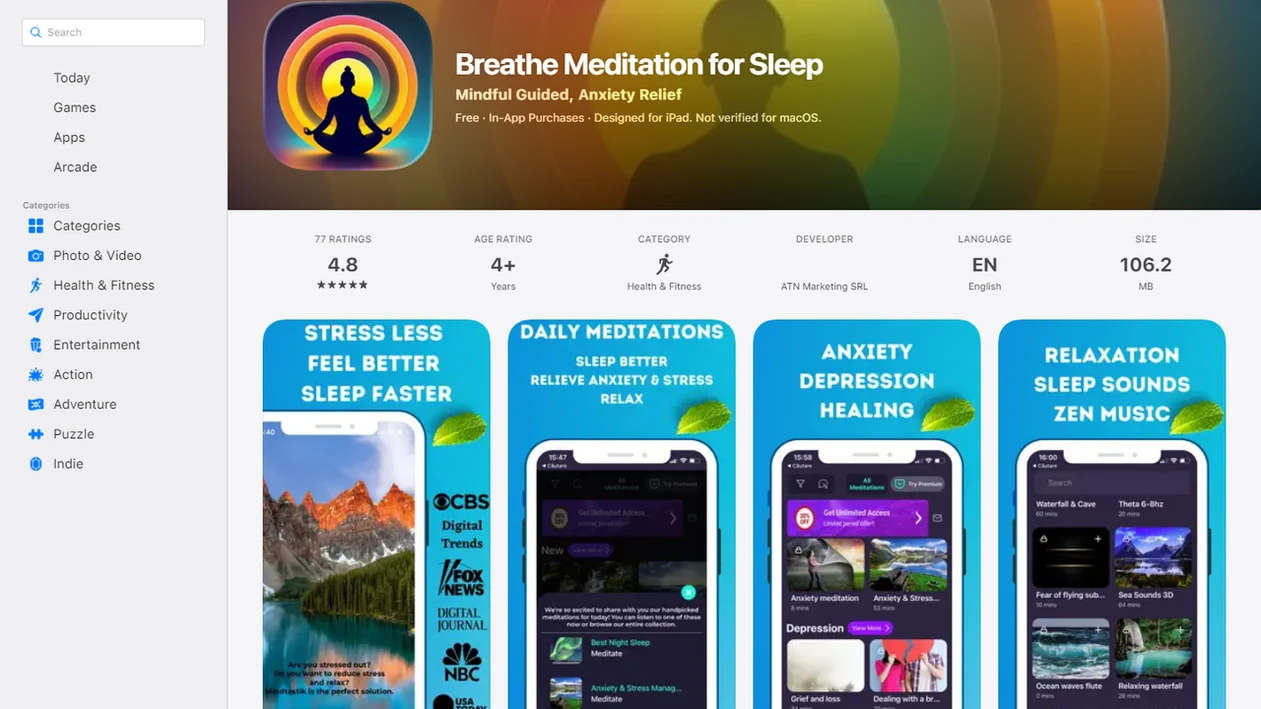
Best quit smoking apps at a glance
The right quit smoking app depends on what makes you reach for a cigarette. Some people need a quit tracker app with numbers; others need coaching, community, or a short reset when stress spikes after dinner.
| App type | Examples | Best fit | Helpful features | Caution |
|---|---|---|---|---|
| Public-health app | CDC quitSTART | Evidence-informed quitting basics | Tips, challenges, craving support | May feel less customizable |
| Tracker app | Smoke Free, EasyQuit | Stats, streaks, money saved | Smoke-free days, cigarettes avoided | Tracking alone may not be enough |
| Gamified app | Kwit | Motivation through missions | Levels, achievements, prompts | Fun features are not the same as evidence |
| Community/coaching app | Various coaching apps | Accountability | Messages, groups, expert input | Check cost and credential claims |
| Meditation support app | MindTastik | Stress, sleep, breathing, self-hypnosis | Guided sessions, wind-down audio | Not a cigarette tracker or medical cessation treatment |
A dimmed phone screen before bedtime can matter. If the app is too busy at 11:40 p.m., most people stop using it.
Five facts about quit smoking apps
Quit smoking apps are most useful when they turn a vague goal into daily behavior. The strongest ones help you notice triggers, plan responses, and recover after slips without shame.
- Behavior-change tools matter: logging, goals, reminders, urge tracking, tailored feedback, and coping plans are more useful than a pretty dashboard alone.
- Mobile-phone cessation interventions can significantly increase long-term quit rates compared with minimal support, according to a 2019 Cochrane review Cochrane review.
- About 70% of adult smokers in the U.S. say they want to quit completely, but wanting to quit is not the same as having enough support.
- Apps are strongest when combined with quitlines, counseling, nicotine replacement, or clinician support.
- Stress, anxiety, sleep disruption, and low mood can drive relapse, so calming tools can be useful adjuncts.
The pocket check is real. A good app gives you something else to do in that moment. If curiosity helps redirect your attention, reading about glass meteorites and tektite myths offers a brief distraction while an urge passes.
How quit smoking apps work behind the scenes
Quit smoking apps work by combining self-monitoring, cue recognition, goal setting, reinforcement, reminders, and relapse planning into one phone-based routine. In plain language, they help you see the habit loop before it runs on autopilot.
A user logs cigarettes, cravings, mood, sleep, and high-risk times. The app then looks for patterns and prompts coping actions when risk is higher, such as after meals, during work stress, or near bedtime. Streaks, money saved, health milestones, and missions can reinforce motivation because they make progress visible.
Not all gamification is equal, though. Evidence-informed features teach coping skills and adjust to behavior; cosmetic badges only decorate the screen. Meditation and breathing features target the stress response that often rides along with cravings. For a deeper plain-language look at habit loops, read how meditation breaks the addiction cycle.
How to use quit smoking apps with meditation support
Use a dedicated quit smoking app for tracking and cessation planning, then add calming audio for the stress moments that tracking alone does not solve. For someone choosing between a 5-minute breathing exercise and a 20-minute body scan, the shorter option often wins during an urge.
- Set a quit date or cut-down goal in a quit smoking app.
- Log cravings, cigarettes, triggers, mood, sleep, and high-risk times each day.
- Match trigger patterns to coping actions, such as walking after meals or delaying the first cigarette. During walks, a rock identifier app can give you something concrete to notice besides familiar smoking cues.
- Use a short breathing exercise, guided meditation, sleep audio, or self-hypnosis session during urges, evening stress, or pre-sleep restlessness.
- Review weekly patterns and reset the plan after slips instead of deleting the app.
- Add quitline, counseling, NRT, or medical support for heavy dependence, repeated relapse, pregnancy, serious health issues, or mental health concerns.
For smoking-specific audio routines, the stop smoking meditation how to quit smoking guide is a practical next step.
Best quit smoking apps for cravings, streaks, and motivation
People asking for the best quit smoking apps usually want the right fit for their habit and triggers. A free quit smoking tracker app may help one person, while another needs coaching, public-health guidance, or calmer evenings.
- Best for evidence-informed public-health support: CDC quitSTART is a common choice for people comparing a quitSTART app review with other free options.
- Best for statistics and streaks: Smoke Free and EasyQuit smoking app style tools often show smoke-free days, money saved, cigarettes avoided, and health milestones.
- Best for gamified missions: Kwit may fit people who like challenges, levels, and daily prompts.
- Best for community or coaching: Coaching apps can help when accountability matters more than charts.
- Best companion for stress and sleep: A meditation-support app can help with breathing, guided sessions, and bedtime wind-downs around quitting.
Free quit smoking apps for Android and iOS vary in quality. Vaping cessation may need similar behavior support, but the device habits and nicotine patterns can differ.
Smoke Free and Kwit offer different ways to handle cravings
Smoke Free's listing describes craving tips, a craving-location map, notes for identifying patterns, and progress graphs. Those features make it an option for someone who wants to examine where urges happen and record the circumstances around them. The Smoke Free App Store listing describes these tools, but the supplied information does not establish current subscription prices or trial terms.
Kwit puts more emphasis on actions during an urge: its listing describes CBT-based craving-management tools, guided breathing, mini-games, and motivation cards. That is a different approach from reviewing a location map or progress graph. The Kwit App Store listing provides the feature descriptions. These descriptions help distinguish the apps' functions; they do not establish that either app produces better quit rates.
How We Chose the Best Quit Smoking Apps
We chose the best quit smoking apps by looking for practical behavior-change support first, then checking cost, claims, privacy, and daily usability. Streaks can motivate, but they did not outweigh tools that help someone plan for cravings and recover after a slip.
- Prioritize apps with evidence-informed features, such as self-monitoring, trigger awareness, coping prompts, reminders, and relapse planning, over dashboards that only award badges.
- Check whether each app supports cigarette or nicotine tracking, craving plans, timed nudges, quit-date or cut-down goals, and a clear way to reset after relapse without shame.
- Review privacy policies for sensitive health data, advertising trackers, account deletion, data sharing, and whether the app asks for more information than quitting requires.
- Separate dedicated cessation apps from companion tools for meditation, sleep, breathing, or stress, because calm support is useful but not the same as a quit tracker or treatment plan.
- Compare ratings with the actual claims, in-app costs, evidence language, and update history instead of treating star scores as proof that an app works.
The goal was not to find the flashiest app. It was to identify tools someone might still open during a hard craving.
Evidence behind quit smoking apps and behavioral support
Apps should be treated as one part of a quit plan, not proof that willpower alone is enough. Per the CDC, about 11.5% of U.S. adults, nearly 29 million people, were current cigarette smokers in 2021 CDC guidance: index.htm.
The quit attempt gap is the hard part. The CDC has reported that about 55% of adult smokers made a quit attempt in the past year, but only about 7.5% successfully quit. According to a Cochrane review, mobile-phone cessation support can significantly increase long-term quit rates compared with minimal support. Comprehensive behavioral support combined with pharmacotherapy can double or more the chances of quitting compared with minimal or no support.
Clinicians typically recommend combining behavioral support with approved cessation medication or nicotine replacement when dependence is significant. The most common medically supported way to quit smoking is behavioral support combined with pharmacotherapy, because it addresses both habit patterns and nicotine withdrawal.
When to Get Professional Help for Quitting Smoking
Get professional help when smoking feels medically risky, withdrawal feels unmanageable, or app support is not enough to keep you safe and moving forward. A quit smoking app can support the plan, but it should not stand in for clinical cessation care.
- Ask a clinician for guidance if you smoke heavily, are pregnant, have heart or lung disease, or have relapsed several times despite serious quit attempts.
- Add evidence-based support when cravings, irritability, insomnia, or concentration problems are strong; quitlines, counseling, nicotine replacement therapy, and prescription medication can reduce the load.
- Call urgent or emergency services for chest pain, severe trouble breathing, fainting, signs of stroke, or crisis symptoms such as feeling at risk of harming yourself or someone else.
- Tell a professional if you are also being treated for anxiety, depression, alcohol use, or other substance use, because quitting can affect mood, sleep, medication plans, and coping routines. For a separate look at genetics and emotional health, explore MTHFR variants and mental well-being without treating genetics as a diagnosis.
- Use apps as companions for tracking, reminders, breathing, and motivation while a clinician, counselor, or quitline helps shape the higher-stakes parts of care.
Meditation support for quit smoking stress
Meditation support can help with stress, irritability, restlessness, and disrupted sleep during a quit attempt. MindTastik may fit this companion role because it offers guided meditation, sleep audio, breathing exercises, and self-hypnosis sessions, but it is not a smoking-cessation treatment.
Many people want an audio cue they can start the moment a craving takes over. That is where a short breathing practice during an urge, a guided meditation after meals, sleep audio at night, or self-hypnosis for motivation may help. Good meditation apps for sleep, anxiety, and everyday calm offer repeatable coping routines, not a guaranteed quit-smoking cure.
MindTastik does not replace a quit smoking app, quitline, NRT, counseling, medical advice, or emergency mental health support. If you want beginner technique support, start with how to meditate before building a longer routine.
Privacy and quality checks for quit smoking apps
Quit smoking apps may collect sensitive health, behavior, mood, location, device, or purchase data. Before downloading, check whether the app makes daily use easier without asking for more information than it needs.
Use this checklist:
- Read the privacy policy for health-data handling, data sharing, and ad tracking.
- Check whether account deletion is clear and available.
- Review in-app purchases before entering personal quit data.
- Prefer apps with transparent evidence, public-health backing, clinician input, or clear behavior-change methods.
- Avoid apps that promise guaranteed quitting, unsupported success rates, shame-based messaging, or unclear data practices.
- Check accessibility, notification controls, Android and iOS availability, and offline usefulness.
- Scan review patterns, not just star ratings.
Privacy becomes important quickly. If a notification preview reveals a craving log where someone else can see it, that may be enough to make a person stop using the app.
MindTastik for stress-linked cravings and unsettled evenings
MindTastik suits the calm-support part of a quit plan: short breathing sessions during stress-linked urges, guided meditation after a familiar smoking cue, and sleep audio for unsettled evenings. Its breathing exercises offer an audio option alongside a dedicated craving tracker. Self-hypnosis audio is another relaxation option, not a smoking-cessation treatment. People primarily seeking cigarette logs, cessation coaching, or medication advice should choose a dedicated quit-smoking tool or professional support instead.
What quit smoking apps cannot do for nicotine dependence
Quit smoking apps can help, but they have real limits. A phone can prompt, track, and encourage; it cannot remove nicotine dependence by itself.
- Even strong quit smoking apps cannot replace medical advice, prescription medication, counseling, quitlines, or mental health care when needed.
- Many quit apps have not been rigorously evaluated in clinical trials, so success-rate claims should be treated cautiously.
- Apps require regular use; ignored notifications, confusing screens, or annoying prompts reduce value.
- Data privacy varies widely, and users should avoid apps that overshare or sell sensitive health data.
- Meditation, breathing, sleep stories, and calming audio can support coping but are not stand-alone cures for nicotine addiction.
- Withdrawal symptoms, heavy dependence, pregnancy, cardiovascular disease, respiratory disease, or severe anxiety and depression should prompt professional support.
- Relapse can happen even with a good app; the plan should include resets, trigger changes, and added support rather than shame.
A tight jaw and tense shoulders in the middle of the night do not mean you have failed. They can be a cue to add more support.
Use the first week's craving logs without letting streaks become pressure
The streak becomes motivating, then suddenly stressful.
After several days, a streak can feel like progress and pressure at the same time. If one slip makes the app feel punishing, switch to tracking patterns instead of perfection. A useful app should help you return to the plan, not make a lapse feel like failure.
Cravings start showing up in specific moments.
By the end of week one, urges may seem less random and more tied to coffee, driving, work breaks, or evening transitions. Use the app to tag those moments and preselect a two-minute response. The best craving tool is the one ready before the craving peaks. During outdoor work breaks, photo identifier apps for mindful nature walks can offer a simple way to focus on your surroundings.
Calm features get ignored until stress spikes.
Many people download breathing or meditation tools but wait until the hardest moment to try them. Practice once during a neutral part of the day so the exercise feels familiar later. Calm tools tend to work better when they are rehearsed, not discovered mid-craving.
If hypnosis-style audio fits your goal better than mindfulness alone, start with MindTastik self-hypnosis sessions.
Quit smoking app questions
What should I look for in a quit smoking app?
Look for quick cigarette and craving logs, trigger notes, coping prompts, and reminders that fit known high-risk times. A clear way to resume after a slip matters more than badges alone. People who need coaching or help with withdrawal should also arrange cessation support outside the app.
Do quit smoking apps actually help people quit?
An app can help turn a quit plan into daily actions by recording triggers, prompting coping responses, and making progress visible. That does not mean every app has demonstrated effectiveness. Feature descriptions and ratings are not proof of quit rates, and an app should not replace evidence-based cessation support.
Which quit smoking app has tools for cigarette cravings?
Smoke Free describes craving tips, a craving-location map, and notes for finding patterns. Kwit describes CBT-based craving tools, guided breathing, mini-games, and motivation cards. The better fit depends on whether the priority is understanding recurring triggers or having an activity ready during an urge. Neither feature list establishes superior effectiveness.
Can I use a quit smoking app with nicotine patches or gum?
An app can sit alongside nicotine replacement by helping record cravings, triggers, and smoking patterns. It should not decide medication doses or replace treatment advice. A clinician or cessation service can help select appropriate support, particularly when withdrawal is difficult or repeated quit attempts have not lasted.
Can meditation stop cigarette cravings?
Meditation or breathing may provide a pause during stress-linked urges and support a calmer evening routine. They do not remove nicotine dependence or guarantee that a craving will stop. MindTastik is one example of a companion audio app, rather than a substitute for a dedicated cessation plan.
Should I reset my quit smoking app after one cigarette?
Record the cigarette honestly and note what happened before it: the setting, mood, and trigger. If the app requires a streak reset, that counter need not erase the useful records from earlier days. Return to the quit plan and review whether stronger craving support or professional help is needed.
What privacy settings matter in a quit smoking app?
Check what the app collects, whether it shares data with third parties, and how account deletion works. Craving notes can contain sensitive health and mood information. A location-based feature deserves particular attention to location permissions. Avoid entering unnecessary personal details when the policy does not clearly explain their use.