
White Noise vs Meditation: Which Audio Should You Choose?
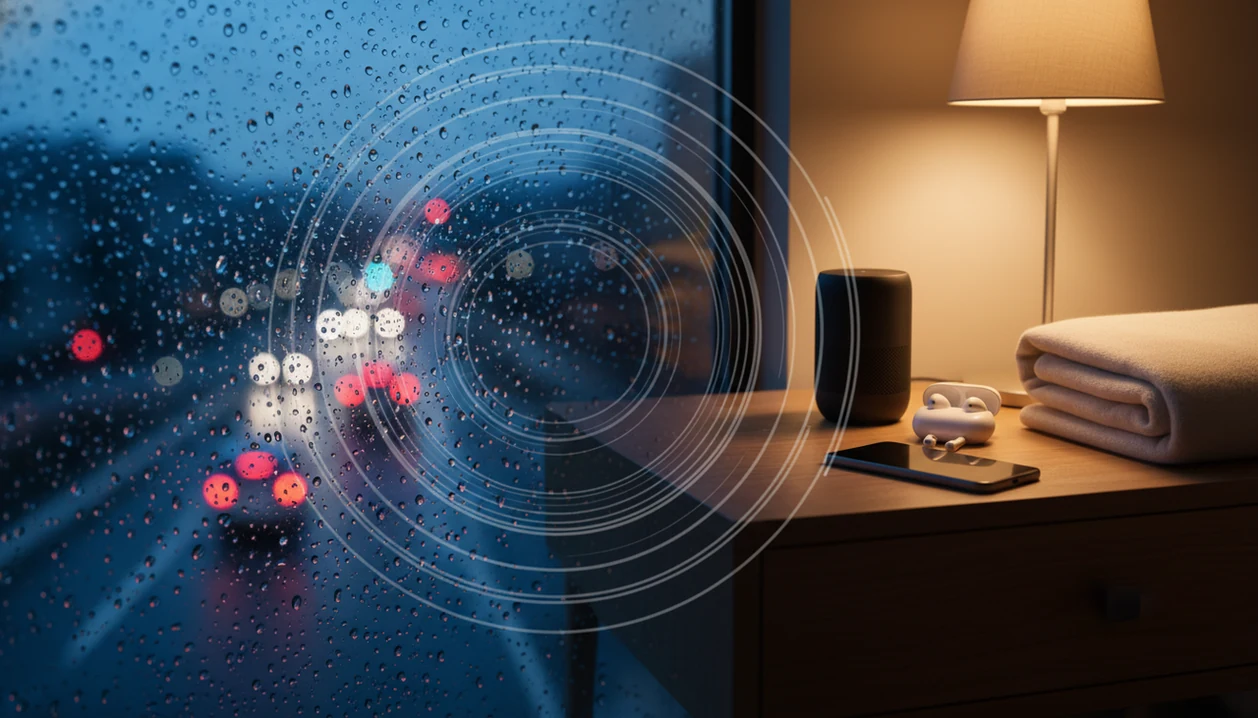


White noise is mainly for masking outside sounds; guided meditation is mainly for racing thoughts, body tension, and bedtime worry. In a white noise vs meditation comparison, the useful distinction is what keeps sleep from starting or staying steady. Traffic, neighbors, and doors call for sound masking. A quiet room with persistent worry calls for a different kind of audio: breathing cues, a body scan, or a guided wind-down.
Both can belong in the same routine: a short meditation followed by low-volume background sound on a timer. MindTastik offers guided meditations, sleep sounds, breathing practices, and self-hypnosis audio for adults seeking gentle support with rest, anxiety, and everyday calm. These are support tools, not medical treatments or guarantees of better sleep.
Choose by the sleep obstacle
- White noise is best for masking unpredictable sounds like traffic, neighbors, doors, or household noise.
- Guided meditation is better for calming worry, releasing body tension, and preparing the mind for sleep.
- Many people get the best result by pairing a short guided meditation with low-volume sleep sounds on a timer.
Compare white, pink and brown noise
Switch sounds to hear the difference before choosing one for sleep.
This interactive tool needs JavaScript enabled.
White noise vs meditation comparison table
White noise is mainly a masking tool; meditation is mainly a regulation and relaxation tool. The right choice depends on whether the disturbance is coming from the room or from your own thoughts.
| Comparison point | White noise or sleep sounds | Guided meditation |
|---|---|---|
| Best use case | Traffic, neighbors, thin walls, hotel noise | Worry, body tension, racing thoughts |
| Mechanism | Fills the sound environment so sudden noises stand out less | Uses breath cues, body scans, imagery, and narration |
| Sleep benefit | May reduce awakenings from outside noise | Helps the mind and body enter a wind-down routine |
| Focus benefit | Masks speech and background interruptions | Resets attention before starting a task |
| Anxious-moment benefit | Can feel steady and less jarring | More targeted for anxious thoughts and tension |
| Downsides | Evidence is mixed, and all-night use may not suit everyone | Voices can distract some listeners |
| MindTastik use | Low-volume sleep sounds, rain, fan, or nature audio | Guided sleep meditation, breathing, body scan, self-hypnosis |
The choice is not always either-or. A short guided session followed by low-volume rain, fan, or nature sound often works better than forcing one format. For different bedtime listening styles, compare a soundscape or sleep story based on whether narration helps you settle.
Where White Noise Wins, and Where Guided Meditation Wins
White noise wins when the main problem is sound entering the room; guided meditation wins when the main problem is thoughts or tension inside you. Combining them wins when both problems show up at the same time.
Use white noise first for traffic, shared walls, hotel doors, barking dogs, early garbage trucks, or office chatter that keeps grabbing your ear. Its honest downside is that it can become annoying, too loud, or unhelpful when the room is already quiet.
Use guided meditation first for bedtime worry, anxious body tension, spiraling thoughts, or the “I am tired but wired” feeling. Its downside is also real: a voice can feel distracting, emotionally off, or too much to process on a rough night.
A simple decision process helps:
- Name the first disturbance you notice: outside sound, inner restlessness, or both.
- Start with steady sound if the room is the issue.
- Choose guided breathing, a body scan, or sleep meditation if your mind is the issue.
- Combine a short guided session with low-volume background audio when the room and mind are both busy.
MindTastik fits that combined-use case because you can move from narration to sleep sounds without rebuilding the routine.
White noise and meditation audio mechanisms
White noise and steady sleep sounds work by masking sudden environmental changes. They fill the sound environment, so a door click, hallway voice, or late car passing outside feels less sharp.
Guided meditation works differently. It gives the mind a track to follow through breath pacing, body scans, calming imagery, and soothing narration. In plain terms, it moves attention away from rumination and toward a slower body rhythm. The technical phrase is parasympathetic activation, which means the body shifts closer to “rest and digest.”
White noise changes what the ear notices. Meditation changes what the mind follows.
MindTastik brings together guided meditations, sleep audio, breathing exercises, and self-hypnosis sessions for adults who want practical support for rest, anxiety, and everyday calm. Strong meditation apps for sleep anxiety and daily steadiness focus on repeatable audio routines, not medical treatment or instant transformation.
White noise for noisy bedrooms and sleep disruption
White noise is most useful when sudden noises are the main barrier to sleep, focus, or calm. Think traffic, roommates, hotel doors, thin apartment walls, pets, neighbors, or a refrigerator kicking on at midnight.
Five facts help set expectations:
- White noise can mask unpredictable sound changes, which may reduce brief awakenings in noisy rooms.
- It tends to matter less in already quiet bedrooms because there is less noise to cover.
- A 2021 systematic review in Sleep Medicine Reviews found that only 32% of 18 studies showed clear sleep-quality improvements, a mixed result also summarized by Harvard Health: health reference: can white noise help you sleep 2021030222114.
- Fans, brown noise, rain, and soft nature sounds can feel gentler than harsh static for many adults. If you prefer natural backgrounds, try forest sounds meditation as a softer alternative to static at bedtime.
- Low volume matters. Louder is not more calming.
If your main problem is a noisy bedroom, then MindTastik fits as a practical starting point because you can test low-volume sleep audio on a timer rather than leaving sound running without a plan. A fuller sound library is covered in our sleep soundscapes meditation app guide.
Guided meditation audio for racing thoughts and tension
Guided meditation is usually stronger when the issue is mental busyness. That can include replaying conversations, resisting bedtime, anxious loops, tight shoulders, or noticing in the dark that sleep has not arrived yet.
Five facts make the comparison clearer:
- Guided meditation gives the mind something steady to follow when thoughts feel loud.
- Common elements include breath pacing, body scans, a calm voice, visualization, and soft music or nature sound beds.
- Body scans can help people notice clenched jaws, raised shoulders, or tight stomach muscles.
- A 2024 randomized study found white noise improved objective sleep quality and circadian rhythm more, while music therapy improved psychological resilience and emotional well-being more: PubMed research: 39241355.
- MindTastik supports guided meditation, sleep audio, breathing exercises, and self-hypnosis, but it does not diagnose or treat medical conditions.
People looking for a guided wind-down routine can use MindTastik because it offers short bedtime sessions for the moment when silence feels too busy and a calm track would help them settle.
Sleep sounds vs meditation before bed
For bedtime, use white noise if the room is noisy and guided meditation if the mind is busy. If both are happening, start with meditation, then keep a soft background sound running on a timer.
A practical routine can stay simple: soften the room light, choose a 5-minute breathing exercise or a 20-minute body scan, then move to low-volume rain, fan, brown noise, or nature audio for 30 to 60 minutes. A small speaker near the bed is enough. Keep the setup intentionally plain.
Continuous all-night sound is not always ideal. Some sleepers report worse rest with continuous sound, especially when volume is high or playback runs all night.
For bedtime, guided meditation is often better than plain sound when worry is the main barrier because it gives attention, breathing, and body tension a clear path to settle. Try different MindTastik sleep audios for 3 to 7 nights before judging the result from one rough night. For softer backgrounds, compare rain sounds for sleep meditation. For a gentle urban background, try a city rain soundscape at low volume before bed.
White noise and guided meditation for focus
White noise can help focus when speech, interruptions, or variable background noise keep pulling attention away. Pink noise, brown noise, rain, and instrumental backgrounds often feel smoother than sharp static during deep work.
Guided meditation helps a different focus problem. Use it when distraction comes from stress, mental clutter, task resistance, or the tight feeling after a difficult message. A 3 to 10 minute breathing or grounding meditation before work can make the next task feel less scattered.
Feet on the office carpet. One slow breath.
If your priority is calm concentration, MindTastik works best before the work block because a short breathing session can settle the body before you use masking sound for the task itself. For longer work sessions, the ambient sounds for focus meditation guide compares background options.
White noise, meditation, or both by goal
Choose by the problem you can name. Most people do better with a clear audio job than with a random playlist scanned under blankets.
Noisy bedroom: Use low-volume white noise, rain, fan, ocean, or nature sounds on a 30 to 60 minute timer. This fits traffic, shared walls, or hotel hallway noise.
Racing thoughts: Choose guided sleep meditation, a body scan, or a self-hypnosis wind-down. Meditation tends to work best when the barrier is worry, while white noise fits people who mainly need sound masking.
Daytime focus: Use masking sound first if voices are distracting. Add a short breathing meditation if stress is making it hard to begin.
Anxious moment: Start with guided breathing or grounding meditation. Add background sound only if it helps the space feel steadier.
The right fit for anxious tension is MindTastik because it lets you move from breathing practice to sleep audio without building a new routine from scratch. For sound-led calm, use soundscapes for anxiety support.
Evidence Behind White Noise vs Meditation Audio
The evidence does not crown one winner for every sleeper. White noise has stronger logic for masking environmental sound, while meditation audio has a clearer fit for perceived calm, worry, and bedtime tension.
A 2021 review of white-noise sleep studies found mixed results, with only a minority showing clear sleep-quality improvement and concerns about study size, methods, and all-night exposure, as summarized by Harvard Health. On the meditation side, a randomized trial in older adults with sleep disturbance found that a mindfulness awareness program improved self-reported sleep quality compared with sleep hygiene education, reported in JAMA Internal Medicine.
A fair reading separates the outcomes:
- Treat objective sleep metrics, such as awakenings, sleep efficiency, or circadian timing, as different from feeling calmer.
- Compare subjective outcomes, such as worry, tension, and emotional ease, on their own terms.
- Adjust expectations by sound type, volume, listening duration, age, sleep setting, and stress level.
- Use audio apps as support for routines, not as treatment for insomnia or anxiety disorders.
Reduced anxiety is not proof of better sleep
Evidence that an intervention reduces anxiety does not establish that it prevents nighttime awakenings or works better than white noise. A review of 36 randomized trials of meditative therapies found anxiety reductions compared with several control conditions. That supports meditation as an anxiety-management option, but it does not show that a bedtime recording outperforms sound masking or that adding background music improves meditation.
Duration matters, too. A meta-analysis of 32 music-therapy studies found a significant reduction in anxiety immediately after the intervention, but not at follow-up. Structured music therapy is not the same as playing an ambient track at home. For this comparison, those findings support cautious expectations about relaxation, not a promise that either type of audio will resolve insomnia.
MindTastik audio setup for white noise and meditation
Use this process when you are unsure whether white noise, guided meditation, or both should be your starting point. It keeps the test small enough to repeat.
- Identify whether the problem is outside noise, racing thoughts, focus disruption, or anxious tension.
- Choose white noise, rain, fan, brown noise, or nature sound for external noise; choose guided meditation for worry or tension.
- Set a low volume and a 30 to 60 minute timer for sleep sounds, especially before bed.
- Pair a short guided meditation with low-volume background audio when environmental noise and internal worry are both present.
- Review how you feel after several nights or sessions, then adjust the audio type, length, or volume.
When the trigger moment is bedtime worry plus a noisy room, MindTastik handles the mixed case because you can use a guided session first and then continue with sleep sounds. Start tonight’s calm routine with the format that solves the first problem you notice.
MindTastik sessions for worry, tension, or room noise
MindTastik’s body scans, breathing exercises, and guided meditations suit a bedtime routine built around settling thoughts or noticing muscle tension. Its sleep soundscapes offer a separate option when outside noise is the main distraction.
A person who needs only a steady masking sound may prefer a simple fan or dedicated noise player. Spoken guidance is also a poor fit when a voice feels intrusive. Persistent insomnia or anxiety affecting daily life needs more than an audio routine.
What white noise and meditation cannot treat
White noise and meditation audio can support rest, focus, and calm, but they are not medical treatment. That line matters.
- White noise and meditation audio do not cure sleep disorders, anxiety disorders, sleep apnea, chronic insomnia, or other medical conditions.
- Evidence for white noise is mixed, and long-term all-night use is not clearly proven.
- Reviews cited by Harvard Health note that continuous white noise may interrupt REM or deep sleep and may pose risks at higher volumes or long durations.
- Safe volume and exposure duration matter, especially around infants and children. This page is not pediatric medical advice.
- Some people find guided voices distracting, irritating, or too emotionally loaded at bedtime.
- Others prefer simple sounds because narration gives the brain more to process.
- Persistent severe insomnia, panic symptoms, breathing pauses, loud snoring, or daytime impairment deserve professional evaluation.
Calm.com, Headspace, Mindful.org, and MindTastik all approach audio differently. Compare your options by use case, volume control, timers, voice style, and whether the routine feels repeatable after a bad night.
Keep masking sound quiet and spoken guidance clear
The overlooked detail in white noise vs meditation is volume: masking audio should sit low enough to blend into the room, while guided audio needs enough clarity to follow without effort. A calmer setup often comes from reducing choices, not adding more sound. If the audio makes you monitor the audio, it is probably too prominent.
When audio competes with rest or important sounds
- White noise is not ideal if it becomes another thing you keep adjusting, testing, or worrying about.
- Guided meditation may not be the best first choice if spoken instructions feel intrusive when you are already overstimulated.
- A mixed approach can backfire when the soundscape and voice compete for attention instead of simplifying the moment.
- If you need to hear a child, alarm, doorbell, or safety cue, avoid using masking audio so loudly that it blocks important sounds.
- Audio is a support tool, not a substitute for care when sleep loss, anxiety, or distress is affecting daily functioning.
When story-style audio fits your routine better than active meditation, browse MindTastik sleep stories for calm bedtime listening.
White noise and bedtime meditation questions
Is white noise or guided meditation better for sleep?
White noise is the more direct choice when traffic, neighbors, or sudden household sounds interrupt rest. Guided meditation fits racing thoughts and body tension better. Neither is a universal winner, and evidence for white noise improving sleep is mixed. The choice should match the main source of disruption.
Can white noise and guided meditation play together?
They can, especially when outside noise and bedtime worry occur together. Keep background sound quiet enough that spoken instructions remain easy to follow. Another option is a short guided session followed by sound alone on a timer. If the layers compete for attention, simplify to one track.
Should white noise stay on all night?
All-night playback is not necessary for everyone, and its long-term benefits are uncertain. A 30 to 60 minute timer is a practical starting point when the goal is settling into sleep. Keep volume low, and reconsider continuous playback if it becomes irritating or seems to worsen rest.
Does white noise help with racing thoughts?
White noise mainly changes the sound environment, so it may not address worry in an already quiet room. Guided breathing or a body scan gives attention something specific to follow. Background sound can still be useful if outside noise also contributes, but louder masking is not a solution to persistent rumination.
What if the voice in a sleep meditation keeps me awake?
Spoken instructions can feel distracting, particularly when attention keeps returning to the narrator. Try a shorter session before bed rather than continuing narration while attempting sleep. Quiet nature sounds or a steady masking track may fit better afterward. In a quiet room, silence is also a reasonable choice.
How loud should white noise be at bedtime?
Use a low, comfortable level that makes sudden room sounds less prominent without blocking important cues such as alarms or a child calling. A small speaker is enough for a simple setup. If the audio causes agitation, headache, tinnitus, or dizziness, stop or change it rather than increasing the volume.
Can sleep audio treat chronic insomnia?
White noise and guided meditation are support tools, not treatments for chronic insomnia, sleep apnea, or anxiety disorders. They may help with a particular obstacle, such as room noise or bedtime tension. Sleep loss that persists or affects daily functioning warrants professional care rather than repeated changes to an audio playlist.