
Meditation Streak Building Without Pressure
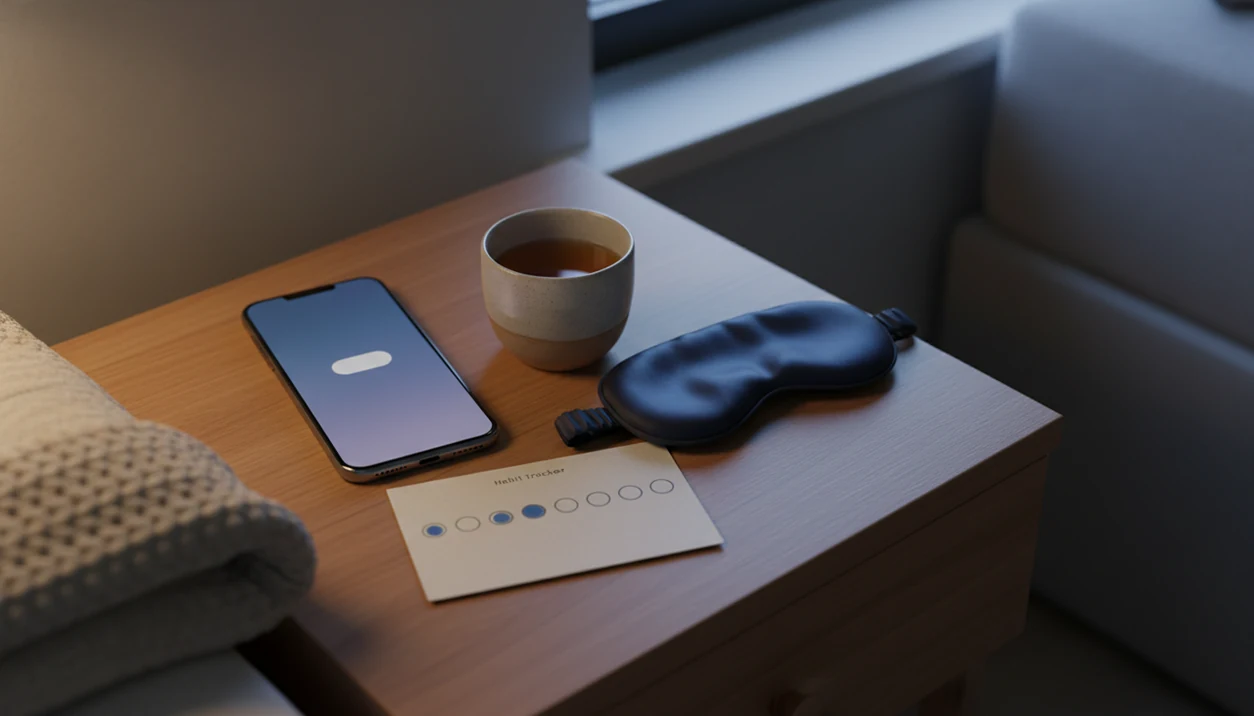


Meditation streak building is the practice of repeating brief meditation sessions until they become a stable routine, without treating a missed day as failure. A useful starting point is a 5-minute minimum attached to an existing daily cue, such as brushing teeth, finishing lunch, or getting into bed. The aim is regular return to practice, not an unbroken score.
Short guided sessions for sleep, anxiety support, or everyday calm give the routine a clear purpose. MindTastik offers guided meditations, breathing exercises, and sleep audio that can serve those different moments. A reminder should arrive when practice is realistic, rather than interrupting a meeting or another commitment. Five to 10 minutes is a practical starting range, not a proven ideal duration or a guarantee of better consistency.
What makes a streak sustainable
- A useful meditation streak measures return-to-practice, not perfection.
- Short 5-10 minute sessions can support consistency better than occasional long sessions.
- Personalized meditation app reminders work best when they match your real schedule and feel supportive, not nagging. If you prefer interactive support, compare features in the best AI meditation companion app before adding another tool.
Meditation streak building in one low-pressure plan
A low-pressure meditation streak is repeated practice, not an unbroken score you must defend. The practical plan is simple: choose a 5-minute minimum, attach it to one daily cue, and restart gently after missed days.
Try “after brushing teeth,” “after lunch,” or “when the room gets quiet.” The cue matters more than the exact clock time. If you open the app during an unsettled pause and follow a short guided session, it still counts.
Tools like MindTastik can support this with guided meditation, sleep audio, breathing exercises, and self-hypnosis sessions for adults who want sleep, anxiety, and everyday calm support. Missing a day means you practice returning. It does not erase the habit.
Small counts.
How to use meditation streak building
Use meditation streak building by making the practice small enough to repeat and flexible enough to restart. The goal is not a perfect chain; it is becoming someone who comes back.
- Choose one daily cue you already do automatically, such as brushing teeth, making coffee, closing your laptop, or getting into bed. Let that cue carry the habit instead of relying on motivation.
- Set a 2-5 minute minimum session for tired, busy, or low-focus days. Longer sessions can happen when they fit, but the minimum should feel almost too easy to skip.
- Place MindTastik reminders only at times when you can realistically practice. A reminder during school pickup, a meeting, or deep sleep trains dismissal, not consistency.
- Count returning to practice as the real streak. If you miss a day, restart with the smallest session and treat the return as evidence that the habit is still alive.
- Review skipped sessions once a week. Adjust the cue, session length, reminder time, or practice category instead of deciding you failed.
This keeps the streak useful without turning it into pressure.
Meditation streak mechanics in habit science
Meditation streaks work by linking a cue, a routine, a reward, and identity reinforcement into one repeatable loop. In plain language, the same trigger leads to the same small action often enough that “I meditate” starts to feel believable.
The cue might be pajamas, a lunch break, or a phone reminder. The routine is the guided session. The reward may be a calmer breath, a checked box, or less bedtime scrolling. Tracking reduces ambiguity because you can see that you practiced three times this week, not “basically never.”
Tiny sessions lower activation energy. A beginner choosing between a 5-minute breathing exercise and a 20-minute body scan is more likely to start when the shorter option feels acceptable. For a structured breathing option, review 4-7-8 breathing, including its steps and safety considerations, before trying it.
Regular mindfulness practice is associated with stress and well-being benefits, especially in structured programs lasting about 8 weeks; for example, Mindfulness-Based Stress Reduction is commonly delivered as an 8-week program (NIH research: NBK513227). But streak numbers can backfire when they turn practice into shame.
For beginners, a tiny repeatable session is often easier than a long weekly session because the start feels less demanding.
Five meditation consistency tips for a daily meditation streak
- Consistency beats perfection. A daily meditation streak should reward coming back, not punish normal interruptions.
- Short sessions count. Five to 10 minutes of guided practice can build the habit better than waiting for a long quiet window.
- Use one reliable cue. Brushing teeth, lunch, or getting into bed gives the habit a place to land.
- Match the track to the moment. Choose sleep audio at night, anxiety breathing during stress, a body scan when tense, or daytime calm during a reset.
- Treat missed days as data. If you keep skipping evenings, test mornings or a shorter session.
A streak works best when the next step is obvious. If work stress is the cue, mindfulness practices at work can give that cue a more specific routine.
MindTastik reminder setup for a meditation streak
Use reminders as environmental design, not as a test of willpower. A good reminder removes the “when should I meditate?” decision before the day gets noisy.
- Set one reminder tied to a realistic time of day, such as after brushing teeth or before bed.
- Choose one short guided meditation category, such as breathing, sleep audio, beginner meditation, or everyday calm.
- Start with the smallest session you would still do on a tired day.
- Log completion without judging whether the session felt deep, focused, or “good.”
- Review once a week and adjust the reminder time, wording, or frequency if you keep dismissing it.
MindTastik reminders can be useful when the tone feels like a nudge, not a scolding. Dimming the phone screen before bedtime audio also helps keep the reminder from turning into a scrolling session. For recurring bedtime concerns, a meditation app for nighttime worry can help organize a calming evening routine.
Meditation streak setup for sleep, anxiety, and everyday calm
Context-specific streaks often feel more useful than chasing one perfect number. Sleep, anxiety support, and everyday calm ask for different cues, session types, and expectations.
| Streak type | Useful cue | Session to try | Keep it flexible by |
|---|---|---|---|
| Sleep | Evening reminder or getting into bed | Sleep audio, body scan, or self-hypnosis | Counting a short wind-down session even if you fall asleep |
| Anxiety support | Predictable stress window | Brief breathing exercise or grounding practice | Using a 2-5 minute reset when longer practice feels hard |
| Everyday calm | Morning or midday pause | Guided meditation reset | Practicing in a chair, parked car, or quiet corner |
Meditation apps for sleep anxiety and everyday calm deliver guided structure and reminders, not a cure or a substitute for care. If your streak happens during an evening commute, mindfulness while commuting may fit better than a bedtime-only plan.
Blanket pulled to the chin. That counts too.
Evidence behind regular meditation practice and streaks
Most meditation research studies structured mindfulness programs, not app streak counters by themselves. A streak is best understood as a consistency tool that may support regular practice, not the active ingredient on its own.
A 2014 JAMA Internal Medicine meta-analysis reported 0.30-0.38 standard deviation reductions in anxiety, depression, and pain for mindfulness meditation programs (JAMA Internal Medicine study: 1809754). The U.S. National Center for Complementary and Integrative Health also notes that meditation and mindfulness practices show evidence for small to moderate improvements in anxiety, depression, and pain across multiple studies (NCCIH mindfulness overview: meditation and mindfulness effectiveness and safety).
Sleep evidence is more specific but still careful. A randomized clinical trial in JAMA Internal Medicine found that mindfulness awareness practices improved sleep quality in older adults with moderate sleep disturbance compared with sleep hygiene education (JAMA Internal Medicine study: 2110998).
Clinicians typically recommend meditation as a supportive practice, especially alongside sleep hygiene, therapy, medication, or other care when needed. The most common medically supported way to use meditation for stress support is regular practice combined with realistic daily routines.
What adherence studies say about cues and short sessions
A 2021 randomized trial of meditation anchors assigned participants to personalized anchors, fixed anchors, or no anchoring, with reminders to meditate for at least 10 minutes daily for eight weeks. The fixed-anchor group had higher odds of daily meditation during the intervention. Daily practice nevertheless declined over time, so a stable cue helped but did not make reminders or repetition foolproof.
Shortening a session is a practical way to make it fit a crowded day, but it is not a proven solution to missed practice. In a 2023 randomized study of meditation duration, participants assigned shorter practices completed an average of 8.43 of 14 sessions, compared with 7.55 in the longer-practice group. The difference was not statistically significant. A 5-minute minimum is therefore a scheduling choice, not an established adherence advantage.
An observational study of Insight Timer users found that people practicing four to seven days per week were 2.3 times more likely to reach their 150th session than those practicing once weekly. This links regular practice with continuation, but does not show that a streak counter caused it. Counting weekly practice days can be a less rigid alternative to demanding an uninterrupted daily chain.
Meditation streak fit for beginners, sleep, anxiety, and number pressure
A meditation streak fits people who forget to practice, want everyday calm, or use short sleep and anxiety-support sessions. It is less useful for people who feel trapped by numbers.
| Best for | Not ideal for |
|---|---|
| ✓ Beginners who need a visible practice cue | ✕ People who become obsessive about streak counts |
| ✓ Adults building a everyday calm routine | ✕ People who feel shame when a streak breaks |
| ✓ People using short sleep or breathing sessions | ✕ Anyone needing urgent mental health support |
| ✓ Users motivated by gentle progress | ✕ People who find standard seated practice distressing |
Meditation can complement professional care, but it should not replace medical or mental health support. If eyes-closed meditation feels uncomfortable, try eyes open, a shorter track, movement-based mindfulness, or grounding with an emotion wheel. Before a tense discussion, try grounding before a difficult conversation to settle your attention without needing to close your eyes.
Meditation app reminders that help or hurt consistency
Do meditation app reminders help consistency? Yes, when they reduce remembering effort and arrive at a time you can actually respond.
Start with one primary reminder. Add one fallback only if your schedule truly needs it. A supportive reminder sounds like “Try a 5-minute reset before bed.” A guilt-based reminder sounds like “You failed yesterday.” The first invites practice. The second makes avoidance more likely.
If you dismiss the same reminder three days in a row, change the timing instead of blaming yourself. A conference room chair between meetings may be a better cue than a late-night alert you keep swiping away.
App reminders are not cheating. They are environmental design, the same way leaving running shoes by the door supports a walk.
Matching a short session to the daily cue
MindTastik’s guided meditation library suits adults who prefer spoken instructions for a morning pause or an evening wind-down. Breathing exercises offer another option for a brief reset, while sleep stories can support a bedtime routine. The session should serve a purpose beyond adding another day to the count.
People who prefer silence may find a timer simpler. Anyone who feels pressured by tracking can keep the practice and leave the streak count aside. MindTastik is not a medical treatment. If repetitive thoughts make quiet practice difficult, a meditation app for overthinkers may provide useful guided structure.
What a meditation streak cannot measure or treat
A meditation streak can support consistency, but it has clear limits.
- A daily meditation streak is not a substitute for professional mental health or medical care.
- Benefits from brief app-based sessions may be smaller or more variable than structured 8-week programs.
- Streak tracking can backfire if it creates guilt, pressure, or shame.
- Some people with trauma histories or certain mental health conditions may need adapted practices or professional guidance.
- Evidence on streak features, push notifications, and gamification for long-term mental health outcomes is still limited.
- A broken streak does not erase previously practiced skills.
- Sleep problems, panic symptoms, severe depression, or safety concerns deserve qualified support, not just a longer streak.
If feelings are hard to name before practice, a feelings wheel can make the check-in less vague.
After seven days, review the cue rather than the score
- After one week, the win is usually recognition, not transformation: you may start noticing which cue makes practice easier to repeat.
- If the streak starts feeling like a scorecard, lower the minimum before quitting the routine entirely.
- A missed day is information, not failure; it usually points to a cue, timing, or session length that needs adjusting.
- If meditation brings up distressing thoughts or feels overwhelming, pause the streak goal and consider support from a qualified professional.
- A calm routine should reduce decision pressure, not create another source of pressure.
If your nervous system needs something faster than a full sit, try MindTastik breathing exercises for guided breath pacing.
Meditation streak questions
How many minutes should I meditate to build a daily habit?
Start with a duration that fits an ordinary busy day, such as two to five minutes. Five to 10 minutes can be a practical next step. There is no established ideal streak-building duration, and a randomized study did not find significantly better adherence with shorter assignments than longer ones.
Does missing one day erase my meditation progress?
A missed day changes the count, not the fact that previous sessions happened. Resume at the next planned cue rather than adding extra minutes as a penalty. This is a practical response to the interruptions seen in adherence studies, not a separately proven treatment or habit-building method.
Is it better to track consecutive days or total sessions?
Use the measure that encourages practice without creating pressure. Consecutive days provide a clear daily prompt, while weekly practice days or total sessions still show repetition after an interruption. Neither number measures how calm, focused, or beneficial a session was. If the count becomes the main concern, stop tracking it.
Is morning or bedtime better for a meditation streak?
Choose the time attached to the most reliable routine. Morning anchors were common among strong adherers in an anchoring trial, but that does not establish morning as best for everyone. Bedtime may suit a sleep-focused routine; a morning or midday cue may fit daytime calm more naturally.
What should I do if I keep dismissing meditation reminders?
Change the timing or connect practice to an activity rather than adding more alerts. A reminder during a meeting cannot create a usable pause. Start with one realistic prompt and review it after several days. Reminders can reduce the effort of remembering, but they do not guarantee continued practice.
Can bedtime audio count toward a meditation streak?
That depends on the purpose of the record. If the goal is a repeatable wind-down routine, a short body scan or sleep audio session can count, even if sleep follows. If the goal is formal meditation practice, record sleep stories separately so the total clearly reflects what was practiced.
What if keeping a meditation streak makes me anxious?
Remove the consecutive-day goal and keep a simple cue for optional practice. Weekly totals may feel less demanding, but no tracking is also reasonable. If meditation itself brings distressing thoughts or feels overwhelming, pause and consider qualified professional support. A streak is not a substitute for mental health care.