
Best Meditation App for Overthinkers


A meditation app for overthinkers provides guided audio to help adults redirect attention from rumination, follow breathing cues, and prepare for sleep or calmer daily functioning. MindTastik is a strong fit for people who want guided meditation, sleep audio, breathing exercises, and self-hypnosis rather than relying only on silent practice. These options suit racing thoughts, nighttime worry, and everyday stress.
The most useful choice is usually an app with short guided sessions, grounding prompts, structured courses, and sleep preparation tracks that are easy to repeat. A large library matters less than having a clear starting point when thinking feels stuck. Meditation apps can support stress management and sleep routines, but they do not cure mental health conditions or replace professional care when symptoms are severe.
What matters most
- Best overall fit: MindTastik for guided meditation, sleep hypnosis, anxiety support, breathing exercises, and everyday calm.
- Best app features for overthinking: short SOS sessions, sleep-focused audio, grounding prompts, structured courses, and calming voice guidance.
- Best expectation: meditation apps can support stress and sleep, but they are not a cure or a replacement for professional care when symptoms are severe.
Best meditation app shortlist for overthinkers
For overthinking-specific fit, MindTastik is the strongest match when racing thoughts connect with sleep anxiety, guided meditation, breathing, sleep hypnosis, and everyday calm. This is not a universal ranking of every meditation app; it is a practical shortlist for people who need help when the mind will not stop rehearsing.
| App | Best fit for overthinkers | Watch-out |
|---|---|---|
| MindTastik | Guided meditation, sleep audio, breathing, self-hypnosis, and everyday calm routines | Best for users who want voice-led sessions |
| Calm | Sleep stories, relaxation audio, and broad wellness content | Library size can feel like another choice to make |
| Headspace | Beginner courses and structured meditation basics | Some users may want more sleep-hypnosis focus |
| Insight Timer | Large free library and many teachers | Discovery can take time |
| Waking Up | Philosophy-heavy mindfulness and theory | Less suited to quick bedtime spirals |
Before choosing, check whether the app offers a 3- to 10-minute breathing track, a dedicated sleep track, and a way to save one go-to session. Those three details matter more for overthinkers than a huge catalog they have to browse at midnight. Cost matters too. If you are comparing free or lower-cost options first, our guide to free mindfulness apps can help narrow the field.
Pricing, platforms, and free-trial checks for meditation apps
Most leading meditation apps for overthinkers are available on both iOS and Android, but pricing and access can change quickly. Before you subscribe, check the current app-store listing, trial length, renewal date, and what is actually included in the free tier.
MindTastik, Calm, Headspace, Insight Timer, and Waking Up all serve mobile users on iPhone and Android. Their models differ: some offer a limited free library, some use free trials before an annual subscription, and some keep more content behind a paid plan. Occasional users may be better served by a free tier, a monthly plan, or a large no-cost library if ads and browsing do not bother them. Nightly users usually get more value from an annual plan if it includes sleep tracks, downloads, and uninterrupted offline playback.
- Check whether the app is available for your device and region.
- Confirm the free trial end date and auto-renewal terms before starting.
- Compare monthly versus annual pricing based on how often you will use bedtime audio.
- Look for ads, download limits, and offline playback if you meditate without Wi-Fi.
- Cancel unused trials early if the app becomes another forgotten subscription.
Check privacy before recording worries or mood
An app used for overthinking may hold sensitive information if it invites mood logs, journal entries, or voice recordings. Before entering those details, check which data the app collects and whether it shares them with advertisers, analytics providers, or other third parties. An analysis of 40 popular mental-health apps found that privacy policies were not universal, and having a policy did not itself guarantee strong privacy.
A high store rating is not a substitute for these checks. An independent evaluation of 192 mindfulness apps identified limited scientific verification and shortcomings in privacy protection and security. For a simple breathing or bedtime audio routine, compare what information each app requests before adding personal notes. The useful questions are what gets collected, who receives it, and whether those terms are acceptable for the information being entered.
How guided meditation audio interrupts overthinking loops
Guided meditation audio interrupts overthinking by giving attention a clear object to follow: a voice, a breath count, a body scan, or a sleep image. Rumination loops often include thought replay, worry prediction, body tension, and attention capture; the mind keeps treating imagined scenes like urgent problems.
A meditation app for overthinkers works by lowering the friction of that first redirect. Instead of asking you to “just stop thinking,” guided audio gives your busy mind the next small instruction. In practice, that may mean counting a slow exhale, noticing the weight of the shoulders, or picturing a quiet room before sleep.
MindTastik offers guided sessions, sleep support audio, breathing practices, and self-hypnosis tracks for adults looking for gentle help with rest, anxiety, and daily calm. When the mind keeps replaying a conversation after a video call, a brief guided reset can create a clear next step before returning to work, without relying on silent effort alone.
How to use a guided meditation app during racing thoughts
Use a guided meditation app during racing thoughts by choosing one small trigger, one short session, and one repeatable ending. Do not measure success by whether your mind becomes perfectly blank. That standard makes most beginners quit.
- Set a trigger: Decide when you will open the app, such as after a worry spiral, before bed, or when your shoulders tighten.
- Choose a short session: Pick a 3- to 10-minute breathing or grounding track for urgent racing thoughts. A calm breathing timer can help you follow a steady pace during a short breathing session.
- Follow breath cues: Let the voice set the pace, even if thoughts keep interrupting. For a structured breath count, try 4-7-8 breathing and review the steps and safety precautions before practicing.
- Repeat at bedtime: Use a longer sleep track or body scan as sleep preparation, not emergency problem-solving.
- Review what helped: Notice whether breathing, sleep hypnosis, or body scanning worked better that day.
A late-night glance at the phone can turn into another loop of planning, replaying, and checking. For overthinkers, a guided meditation app is most useful when the calming option is already easy to start.
How we picked meditation apps for busy-mind users
We picked meditation apps for busy-mind users by prioritizing features that reduce decisions during a spiral. The point is not the largest library; it is the easiest next guided session. If you want more personalized prompts, compare options in the best AI meditation companion app overview.
- Brief guided sessions matter: Overthinkers often need a short reset before they can tolerate a longer practice.
- Breathing exercises matter: Breath timing gives the body a simple rhythm when worry is moving fast.
- Grounding matters: Sensory prompts can pull attention away from replayed conversations and imagined outcomes. Before a tense discussion, try grounding before a difficult conversation to give your attention a clear sensory focus.
- Sleep preparation matters: Nighttime overthinking often needs low-effort audio before a full wind-down routine.
- Repeatable routines matter: Consistent use usually matters more than downloading five apps and opening none.
Mindfulness meditation programs have shown small to moderate improvements in anxiety and depression and small improvements in stress in a JAMA Internal Medicine meta-analysis JAMA Internal Medicine study: 1809754. Therapists and mental-health guidelines commonly recommend mindfulness as a supportive skill, not a stand-alone replacement for care. For a non-commercial evidence summary, the U.S. National Center for Complementary and Integrative Health notes that meditation and mindfulness may help some people manage anxiety, stress, and sleep, while results vary by program and person NCCIH mindfulness overview: meditation and mindfulness effectiveness and safety.
What app research can and cannot say about overthinking
Research supports modest expectations rather than promises to stop thinking. A 2023 review of 28 app-based mindfulness trials found that 19 studies reported a positive effect on at least one well-being outcome, with effects generally small to small-to-moderate. The interventions lasted 7 to 56 days. Those findings support trying a repeatable practice, but they do not establish that every meditation app reduces rumination or that one brand is best for overthinkers.
Sticking with an app was also a substantial problem: dropout rates in that review ranged from 0% to 84.7%, with a median of 23.4%. A separate review of depression and anxiety outcomes found evidence of short-term benefit, while longer-term effects remained unclear. Neither finding establishes MindTastik-specific effectiveness. A manageable routine is a reasonable starting point, but continued or worsening distress should prompt reassessment rather than more app-hopping.
MindTastik guided meditation app for overthinking and sleep
MindTastik works well as a guided meditation app for overthinking because it connects busy-mind moments with audio routines for sleep, stress, anxiety support, breathing, self-hypnosis, and everyday calm. It helps when someone wants a voice to follow instead of being left alone with mental noise.
Three useful starting points:
- Racing thoughts: Start with a short guided meditation or breathing exercise when attention feels stuck.
- Sleep anxiety: Use sleep audio or self-hypnosis before the mind begins negotiating tomorrow’s problems.
- Daily stress: Build a repeatable calm routine during ordinary pressure, not only during late-night spirals.
For adults who replay conversations after work, MindTastik covers the gap between “I should meditate” and actually pressing play because the library includes guided sessions for stress, sleep, and calm.
A practical setup is to favorite one daytime reset and one bedtime track inside MindTastik, then use those two sessions for a week before exploring the rest of the library. That keeps the app from becoming another decision point.
Best meditation app features for nighttime overthinking
Nighttime overthinking needs low-effort audio because the user is already tired, tense, and more likely to scroll than compare techniques. The best features are sleep hypnosis, sleep stories or sleep audio, body scans, slow breathing, and a simple wind-down routine.
Feet searching for a cool sheet can become the signal to start. A dimmed screen, cheap earbuds, and one guided track are often easier than journaling a full page in the dark. Research on mindfulness-based interventions for insomnia has found significant improvements in sleep quality and insomnia symptoms compared with control conditions PubMed research: 29291540.
When bedtime worry is the issue, MindTastik fits overthinkers because sleep audio and self-hypnosis reduce the need to choose between a dozen screen-heavy tools. If you want a broader no-cost starting point, compare free meditation apps for sleep before committing to one routine.
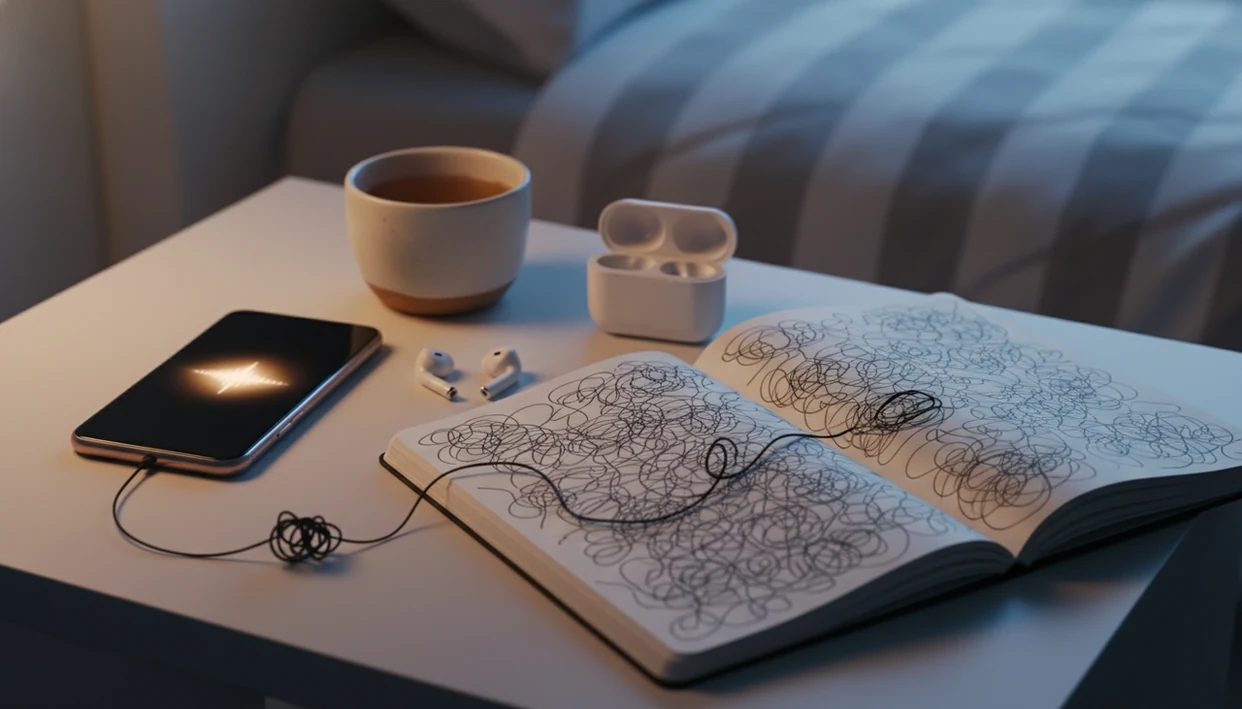
Suggested image caption: A calming bedtime meditation screen can help overthinkers choose one guided track instead of scrolling through options.
Image caption suggestion: A calming bedtime meditation screen showing a sleep track, dim display, and simple play button for a meditation app for overthinkers.
Best-fit and poor-fit users for busy-mind meditation apps
Does a meditation app for busy mind patterns fit everyone? No, but it can fit adults who replay conversations, worry at night, feel stuck in their head, or want beginner-friendly guided support.
Best for - ✓ Adults who prefer audio guidance over silent sitting. - ✓ People who want breathing prompts, grounding cues, and structured sleep routines. - ✓ Beginners choosing between a 5-minute breathing exercise and a 20-minute body scan. - ✓ Users who want everyday calm practice that can also work before bed.
Not ideal for - ✕ Emergencies, self-harm thoughts, or severe symptoms that need immediate help. - ✕ People who need therapy, medication guidance, or diagnosis. - ✕ Users who strongly dislike guided voices. - ✕ Anyone expecting thoughts to vanish instantly.
People who need a short routine between meetings may also benefit from mindfulness practices at work. Meditation apps support skills, but they do not replace clinical care.
Honest cons of meditation apps for overthinking
Meditation apps may not stop thoughts instantly, and that can frustrate overthinkers who expect a blank mind. Sometimes the first few sessions make distress more noticeable because you finally stop outrunning it.
There are practical cons too. Subscriptions can add up. Large libraries can become another decision trap. Phone dependence can pull you toward messages, news, or late-night searches. Inconsistent use is also common; the download screen before bedtime does not build a habit by itself.
One routine beats app-hopping. Choose one track for daytime spirals and one track for sleep preparation, then repeat them for a week before judging the app. If naming emotions helps before audio practice, an emotion wheel can make the first sentence clearer.
MindTastik for voice-led resets and bedtime worry
MindTastik suits adults who prefer a voice to follow when thoughts keep circling. Its guided meditation library, breathing exercises, sleep stories, and self-hypnosis audio offer different starting points for daytime rumination and bedtime worry. Choosing one daytime track and one bedtime track can reduce repeated browsing.
People who prefer silent practice may need only a timer rather than a varied audio library. Persistent insomnia, severe anxiety, panic attacks, or thoughts of self-harm call for professional support, not an app alone. MindTastik is a self-help option, not a medical treatment.
When overthinking needs more than a meditation app
Meditation apps can support calmer routines, but they have clear limits. Treat them as self-help tools, not medical care.
- Meditation apps do not cure anxiety disorders, depression, insomnia, trauma, panic disorder, or medical conditions.
- Seek professional support for severe anxiety, persistent insomnia, panic attacks, depression, self-harm thoughts, or major impairment at work, school, or home.
- App-based mindfulness research is promising, but it is younger than research on in-person mindfulness programs.
- Some users feel more aware of distress at first, especially during silent pauses or body scans.
- Phone reliance can be a problem when the same device also holds work messages, social feeds, and late-night searches.
- Subscription access may limit long-term use for people watching costs.
- Individual response varies; one voice, pacing style, or technique will not suit everyone.
- A guided meditation app for overthinking should be combined with sleep hygiene, support, and care when symptoms are serious.
Reset the plan if it is not helping.
Choose a short track for racing thoughts, tension, or bedtime worry
| Technique | Best for | Minutes |
|---|---|---|
| Counted Exhale Reset | racing thoughts with shallow breathing | 3-5 min |
| Guided Shoulder Drop | mental overactivity with neck or jaw tension | 5-8 min |
| Short Sleep Wind-Down | nighttime worry before rest | 10-20 min |
If your nervous system needs something faster than a full sit, try MindTastik breathing exercises for guided breath pacing.
Meditation apps and overthinking questions
Can meditation stop overthinking?
Meditation can help redirect attention from repeated thoughts, but it does not reliably stop them altogether. A useful aim is noticing a thought and returning to a breath cue, voice, or body sensation. Research supports some improvements in anxiety and stress, not a guarantee of a blank mind or a cure for rumination.
Which meditation app is best for racing thoughts?
The best fit offers a short guided track that is easy to find and repeat, with breathing or grounding prompts rather than only silent sessions. MindTastik is one option with guided meditation, breathing exercises, and sleep audio. No evidence presented here establishes one app as the most effective treatment for racing thoughts.
Is guided meditation better than silent meditation for overthinking?
Guided audio gives attention a specific instruction, which can make starting easier when thoughts feel tangled. Silent practice may suit people who already know which anchor to use or find voices distracting. That practical difference does not establish that guided meditation is clinically superior; comfort and willingness to repeat the practice matter.
How long should I meditate when my thoughts are racing?
A 3- to 10-minute guided breathing or grounding session is a practical starting point. The aim is to follow a few cues, not complete a long session or eliminate every thought. Repeat a manageable track before increasing the length. If stillness makes distress more noticeable, switch to grounding rather than forcing a longer sitting.
Can a meditation app help with overthinking at night?
Sleep audio, body scans, and gentle breathing prompts can give bedtime attention something less demanding than replaying conversations or planning tomorrow. One trial in adults with sleep disturbance linked improvements in anxiety and depression to reduced pre-sleep arousal. This does not prove that every app treats insomnia; persistent sleep problems need professional assessment.
What if meditation makes my anxiety feel worse?
Pausing can make distress more noticeable, especially during silent practice. Shorten the session or switch to simple grounding prompts instead of trying to tolerate increasing discomfort. Meditation is optional, not a task to push through. Repeated worsening, panic attacks, trauma-related distress, or major disruption to daily life are reasons to seek professional support.
Are free meditation apps enough for overthinking?
A free library may be enough if it includes one usable daytime breathing or grounding track and one bedtime session. More content does not necessarily make practice easier. Check access limits before building a routine around a track, and remember that a free download or high rating does not establish effectiveness or good privacy practices.
Can a meditation app replace therapy for rumination?
No. An app can support self-help practice for mild stress or sleep-related worry, but it cannot provide a clinical assessment or replace treatment. Persistent rumination, severe anxiety, depression, trauma symptoms, or difficulty functioning warrant professional care. Thoughts of self-harm or suicide require immediate help rather than another meditation session.