
Sleep Sounds for Meditation: Soundscapes, Noise, and Guided Bedtime Audio
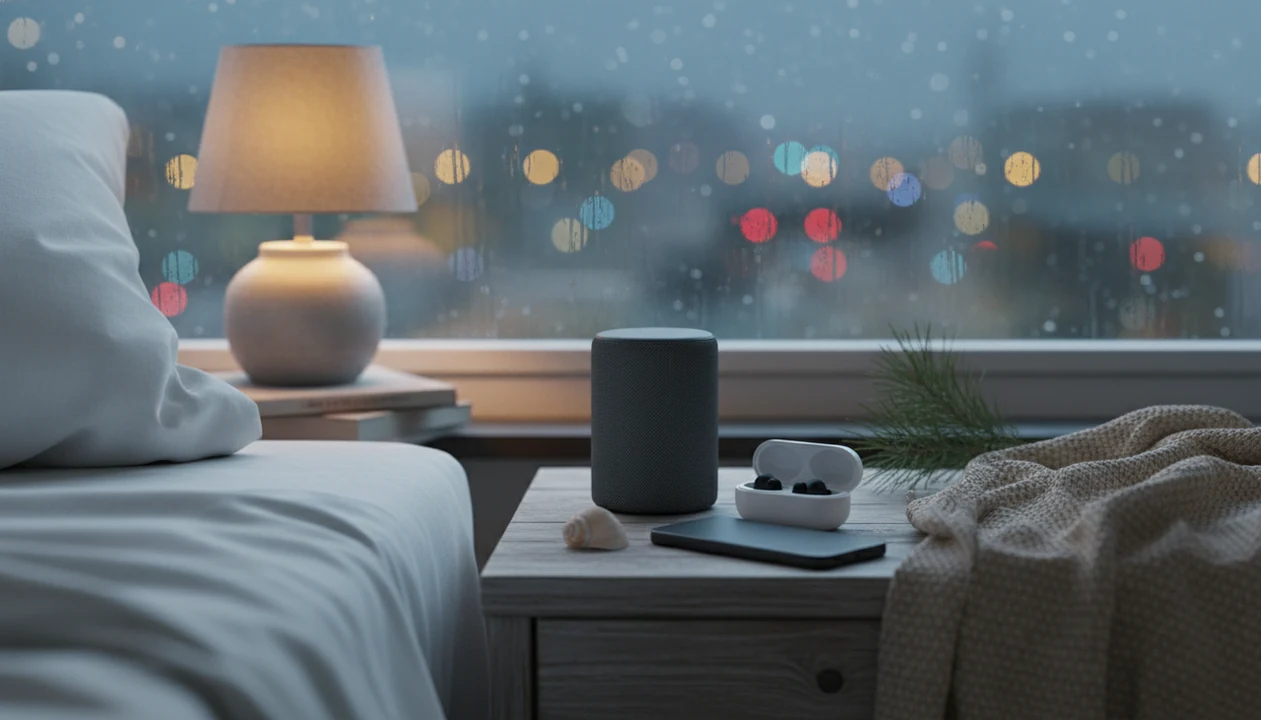


Sleep sounds for meditation are calming bedtime audio, such as rain, ocean waves, brown noise, soft music, or guided voice tracks, used to support relaxation and falling asleep. The most useful choice depends on what interrupts bedtime: steady soundscapes can soften outside noise, nature sounds can provide a soothing background, and guided meditation can give busy thoughts something simple to follow.
Start with low volume and a 30-60 minute timer rather than assuming the sound needs to play all night. A track that draws attention to drips, repeating waves, or a narrator's voice may be the wrong fit, even if it is labeled for sleep. Treat audio as one part of a consistent wind-down routine, not as a cure for insomnia.
Choose by bedtime problem
- Choose pure soundscapes when traffic, neighbors, or household noise keeps waking your attention.
- Choose guided meditation with sleep sounds when worry, rumination, or body tension is the bigger issue.
- Use low volume and a timer because loud, all-night broadband noise is not ideal for every sleeper.
Sleep Sounds for Meditation Compared by Bedtime Need
Soundscapes are usually better for masking external noise, while guided bedtime meditation audio is better for racing thoughts and sleep anxiety. The right choice depends on what keeps pulling you awake. Compare soundscapes and sleep meditation to choose background audio for noise or guided support for racing thoughts.
| Sound type | Best for | Not for | Suggested timer |
|---|---|---|---|
| Rain | Irregular traffic, roof taps, apartment noise | People who find drips distracting | 30-60 minutes |
| Ocean waves | Rhythmic settling and slow breathing | Anyone annoyed by repeating wave loops | 30-45 minutes |
| Forest soundscapes | Nature calm and softer bedtime atmosphere | Very noisy rooms needing stronger masking | 45-60 minutes |
| Brown noise | Deeper low-frequency masking | Listeners sensitive to rumble | 30-60 minutes |
| Pink noise | Softer broadband masking | People who dislike static-like texture | 30-60 minutes |
| White noise | Sharp, consistent masking | Light sleepers who find hiss harsh | 20-45 minutes |
| Soft ambient music | Emotional wind-down | Listeners who follow melody too closely | 30 minutes |
| Guided meditation with sleep sounds | Worry, body tension, rumination | People who prefer no voice | 10-30 minutes |
Tools like MindTastik can combine sleep audio, guided meditation, breathing, and self-hypnosis in one app-based routine.
Meditation Sleep Sounds in the Brain and Bedroom
Sleep sounds work by making the bedroom feel less jumpy to the brain. They create a predictable background, so one car door, hallway step, or snore is less likely to become the only thing your mind follows.
- Steady audio can mask sudden environmental changes, including traffic, hallway noise, snoring, and neighbors.
- Predictable sound gives the brain a background pattern it can ignore more easily than random interruptions.
- Nature sounds may support parasympathetic activity, the “rest-and-digest” side of the nervous system.
- A 2017 brain imaging study found nature sounds shifted activity toward a more externally focused, relaxed state compared with artificial sounds NIH research: PMC5390975.
- Sleep sounds can support relaxation, but they do not force sleep or treat sleep disorders.
In the quiet hours, a faint noise outside the room can seem sharper than it is. A steady nature sounds bedtime routine gives attention a gentler place to settle.
5 Sleep Soundscape Meditation Choices for Different Sleep Problems
If your main problem is noise, choose a soundscape; if your main problem is thoughts, choose guided audio. White noise is not automatically better than nature sounds or brown noise, especially if the hiss makes you more alert.
- Rain for irregular outside noise. Best for traffic bursts and neighbor sounds; not for people who fixate on drips. Our deeper guide to rain sounds for sleep meditation covers this fit.
- Ocean waves for rhythmic settling. Best for slow breathing; not for listeners who notice loop points.
- Brown noise for deeper masking. Best for low, steady room coverage; not for anyone who dislikes rumble.
- Forest sounds for nature calm. Best for a softer emotional tone; not for heavy noise blocking.
- Guided body scan for racing thoughts. Best when the mind keeps reviewing tomorrow; not for people who want silence.
For anxious bedtime thinkers, guided body scans are often easier than passive sound because they give attention a simple job.
Guided Meditation With Sleep Sounds Versus Passive Bedtime Audio
Guided meditation with sleep sounds means voice instructions layered over gentle background audio. Passive audio gives you a backdrop; guided audio gives your attention a path to follow.
Breathing cues, body scans, and visualization can redirect attention away from worry. That matters when the phone gets checked and locked again, even though nothing useful changed. In a 2015 JAMA Internal Medicine trial, mindfulness meditation improved sleep quality and daytime impairment more than sleep education in older adults with moderate sleep disturbances JAMA Internal Medicine study: 2110998. A 2014 JAMA Internal Medicine meta-analysis also found moderate evidence that mindfulness meditation programs can improve anxiety, depression, and pain JAMA Internal Medicine study: 1809754.
Keep bedtime tracks calm, slow, and sleep-specific. A lesson-style meditation can feel too instructional at night. The most useful guided meditation with sleep sounds is usually quiet, repetitive, and easy to stop following.
Music research shows better perceived sleep, not a proven insomnia cure
Soft music deserves a place alongside rain and noise tracks, but the research needs careful reading. A 2022 Cochrane review of music for insomnia included 13 studies with 1,007 participants in its main sleep-quality analysis. It found that music probably improves subjective sleep quality compared with no treatment or usual care. Evidence for objective sleep measures and insomnia remission was more limited.
That distinction matters when judging a bedtime track. In a 2019 trial involving 57 people with insomnia disorder, bedtime music improved perceived sleep improvement and quality of life, but objective sleep measures did not change. The difference in insomnia severity between groups did not reach conventional statistical significance. Feeling more settled or more satisfied with sleep can be useful, but it does not establish that audio treats insomnia or needs to play all night.
5 Bedtime Steps for Using Sleep Sounds for Meditation
Use sleep sounds as a small routine, not as another thing to manage in bed. The goal is fewer decisions after the light is off.
- Pick one audio type based on the main barrier to sleep: noise, worry, body tension, or restlessness.
- Set a 30-60 minute timer instead of defaulting to all-night playback.
- Lower the volume until it blends with the room, just loud enough to soften interruptions.
- Start the track after dimming the screen, then put the phone face down or out of reach.
- Repeat the same setup for several nights before judging whether it helps.
Choosing bedtime audio can feel like its own small ritual. A speaker set to low volume in a dark room may be enough to make the next few minutes feel less scattered.
For most beginners, one repeated bedtime track is easier than browsing a large library every night because it reduces decision-making when the brain is already tired. For deeper rest, compare soundscapes for deep sleep and choose steady audio that stays comfortably in the background.
MindTastik Bedtime Meditation Audio in a Nightly Wind-Down Routine
MindTastik offers guided wellness audio for adults who want support with sleep, anxiety, and everyday calm through meditation, breathing exercises, sleep tracks, and self-hypnosis sessions. For people comparing bedtime meditation audio, MindTastik is an option when they want guided voice tracks, calming soundscapes, breathing exercises, and a repeatable wind-down routine in one place. In a bedtime routine, the helpful part is structure: choose a session, press play, and avoid bouncing between random videos.
An app routine can replace scrolling, TV in bed, or searching for “one more” track at midnight. You might pair a short guided session with a soft background soundscape, then let the timer end without touching the screen again.
Some nights need only rain. Other nights need a voice saying where to place attention.
MindTastik can support wind-down, calm, and consistency. It is not a cure for insomnia or anxiety disorders, and it should not replace care from a qualified clinician.
Sleep Sounds for Meditation Safety, Volume, and Timer Settings
Louder is not better for sleep sounds. If the audio covers the room but makes your ears feel busy, it is probably too high.
Continuous broadband noise, including white noise or pink noise, may reduce REM sleep or increase wakefulness in some people when played all night at moderate volume. A safer starting point is low volume, a 30-60 minute timer, and nature-forward soundscapes when they feel pleasant. Clinicians typically recommend addressing persistent sleep problems with sleep habits, medical review when needed, and evidence-based care rather than relying on audio alone.
Headphones can also be awkward for side sleepers. They may create volume risk if the phone is set too high, especially when sleepy eyes miss the slider. If you compare synthetic noise and guided practice, the white noise vs meditation question is less about winning and more about fit.
Per the CDC, adults who usually sleep less than 7 hours per night are more likely to report chronic conditions including heart attack, asthma, and depression CDC guidance: adults sleep facts and stats.html. Sleep sounds do not prevent those conditions, but better routines are worth taking seriously.
MindTastik sessions for noise, worry, and bedtime tension
MindTastik's sleep soundscapes suit adults who want a steady background at bedtime. Its guided meditations, sleep stories, and breathing exercises offer alternatives when worry or tension matters more than outside noise.
A simple audio track may be enough for someone who only wants rain or soft music without an app library. Persistent insomnia calls for assessment and appropriate care, not more session choices. MindTastik is not a medical treatment.
What sleep sounds cannot fix
Sleep sounds and bedtime meditation audio can make nights feel more manageable, but they have clear limits. Roughly 30% of adults report short-term insomnia symptoms, and about 10% meet criteria for chronic insomnia NIH research: NBK526136, which is one reason simple sleep aids are so appealing.
- Sleep sounds do not replace medical care for chronic insomnia, sleep apnea, severe anxiety, depression, PTSD, or other significant conditions.
- They cannot fully offset poor sleep hygiene, including late caffeine, irregular bedtimes, alcohol disruption, or screens in bed.
- Some people find white noise, pink noise, or brown noise irritating, harsh, or overstimulating.
- Continuous all-night audio may not be ideal for every sleeper, especially at moderate or high volume.
- Guided meditation may feel distracting for people who prefer silence or minimal sound.
- A track that helps during travel may not work at home, and the reverse can happen too.
- If sleep problems persist, talk with a qualified health professional rather than adding more audio layers.
Simple tools help most when the bigger routine supports them.
Before Bed
If the room is quiet but your mind is loud
A plain rain loop may not give your attention enough structure. A gentle sleep story or body scan can work better because it gives the mind one simple path to follow while the body settles.
If every sound in the house feels sharper at night
Steady ambient audio tends to be more useful than dramatic music because it can soften small interruptions without demanding attention. Keep the volume low enough that you could still hear your own slow exhale.
If you keep changing tracks after the dim lamp is off
The problem may be decision fatigue, not the sound itself. Pick one bedtime option before you reach the pillow, then give it several nights before judging it.
On nights when guided practice feels like too much effort, MindTastik sleep stories offers low-stimulus audio you can play in the background.
Sleep sounds and bedtime meditation questions
What are the best sleep sounds for meditation?
There is no single best sound for every bedtime problem. Steady rain or noise can help soften outside interruptions, while ocean waves or soft music may suit relaxation. Guided meditation is a better fit when thoughts need direction. A sound that becomes distracting is not a useful choice, regardless of its label.
Is rain good for sleep meditation?
Rain can provide a steady background that softens irregular traffic or household noise. It is less useful when individual drips attract attention. Start quietly with a timer, and choose another track if the rain becomes something to monitor. Its practical appeal does not mean it is a proven treatment for insomnia.
Does guided meditation help more than plain sleep sounds?
Guided meditation provides instructions, such as breathing cues or a body scan, that can redirect attention from worry. Plain soundscapes provide background audio without instructions and may be enough when outside noise is the main problem. A narrator can also become distracting, so guided audio is not automatically the better option.
Is it safe to sleep with headphones playing meditation audio?
Headphones can be uncomfortable for side sleepers, and prolonged louder listening can damage hearing. Cleveland Clinic recommends low volume, a timer, and avoiding noise-cancelling modes while sleeping. A low-volume speaker may be simpler if headphones interfere with comfort. Sleep audio should not require tolerating pressure, irritation, or excessive volume.
Can sleep sounds cure insomnia?
Sleep sounds are not a cure for insomnia. Music research suggests benefits for perceived sleep quality, but evidence for objective sleep changes and insomnia remission is more limited. Persistent sleep problems need appropriate assessment and care, particularly when sleep apnea or another condition may be involved. Audio can remain a supporting bedtime habit.
How can sleep sounds help with racing thoughts during meditation?
A steady background sound can give your attention a simple place to rest when thoughts feel busy. Focus gently on the sound or your breathing, and return to it whenever your mind wanders. The goal is not to stop every thought, but to notice thoughts without following them.
Should I match my breathing to sleep sounds during meditation?
You do not need to synchronize your breathing with the audio. Let your breath settle into a comfortable, natural rhythm while the sounds remain in the background. If counting breaths helps you focus, try it gently, without holding your breath or forcing a pace that feels uncomfortable.
Can I become dependent on sleep sounds to fall asleep?
Sleep sounds can become a familiar bedtime cue, so sleeping without them may initially feel different. This does not necessarily mean addiction or harmful dependence. If you want more flexibility, gradually reduce their use and keep other calming habits, such as a consistent bedtime and a short meditation practice.