
Best Soundscapes for Deep Sleep Preparation
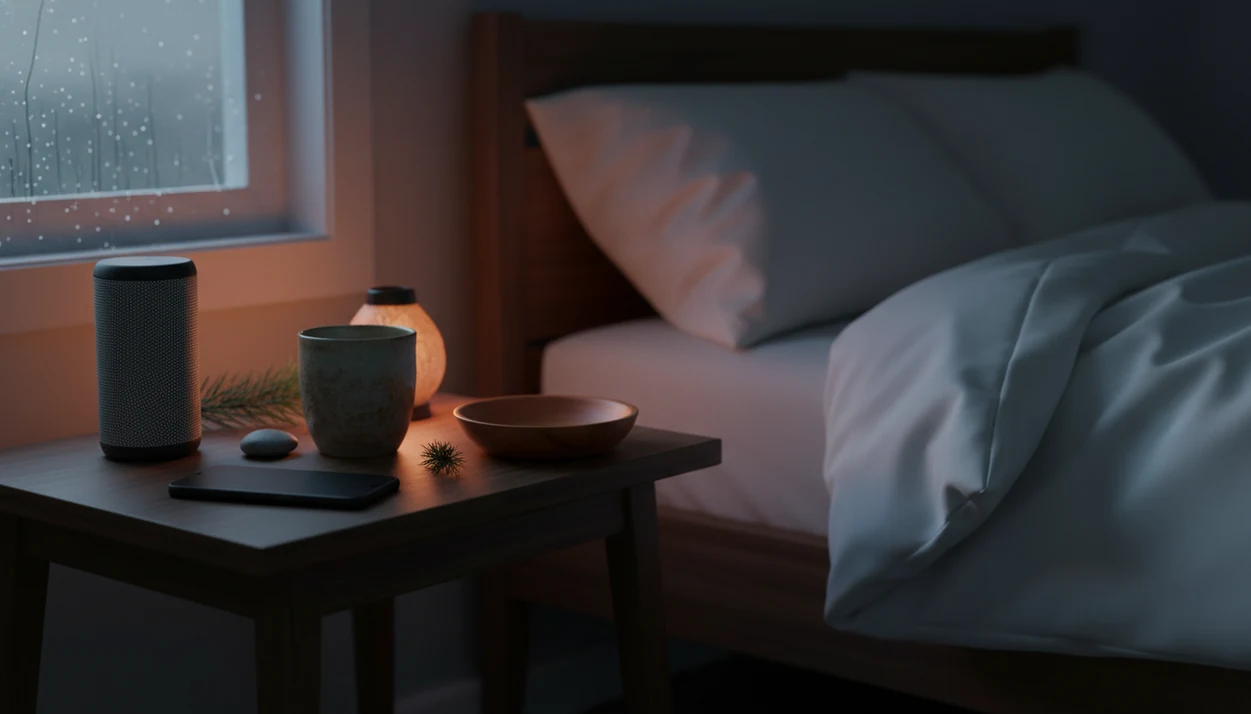


The best soundscapes for deep sleep preparation are steady, low-surprise sounds such as rain, gentle ocean waves, brown noise, forest ambience, and guided sleep audio. They can soften disruptive background noise and provide a familiar cue for relaxation, but they do not treat insomnia, sleep apnea, or other sleep disorders. No single sound is best for everyone.
Brown noise often feels lower and softer than white noise. Rain and ocean recordings are better bedtime choices when they avoid dramatic crashes, thunder, or sudden volume changes. MindTastik offers guided sleep sessions, breathing practices, and self-hypnosis audio for adults seeking support with rest and stress. Pairing a familiar track with dim lights, screens put away, and low volume keeps the routine simple.
What matters most
- Rain, ocean, brown noise, forest ambience, and guided sleep audio are the strongest starting points for most bedtime routines.
- Brown noise often feels softer and deeper than white noise, while rain and ocean sounds work best when their rhythm feels predictable rather than dramatic.
- Sleep soundscapes work best with dim lights, screens away, low volume, and a repeatable wind-down routine.
Best sleep soundscapes at a glance
Effective sleep soundscapes are quiet, predictable, and low in sudden changes. No sound type is universally best, because the right choice depends on your room, your nervous system, and what your brain stops checking.
| Soundscape type | Best use case | Not-for use case | Ideal sleeper profile |
|---|---|---|---|
| Rain | Mild street noise, soft wind-down | People who find water sounds alerting | Anxious sleepers who like steady texture |
| Ocean | Slower rhythm and open space | People who track each wave crash | Sleepers who relax with gentle cycles |
| Brown noise | Stronger masking and low-frequency calm | People who dislike constant mechanical sound | City sleepers, light sleepers, restless thinkers |
| Forest ambience | Natural calm in a quiet room | Rooms with sharp outside noise | People who like subtle birds, leaves, or night air |
| Guided audio | Racing thoughts before sleep | People who wake up when hearing words | Beginners who need something to follow |
Quiet audio usually works better than dramatic playlists. If you keep checking the time in a dark room, the track may be too attention-grabbing, too loud, or mixed with too much late-night scrolling.
Rain soundscapes for steady deep sleep preparation
Rain soundscapes work well when you want a familiar, continuous layer that softens small household or street sounds. In the rain vs ocean sounds for sleep comparison, rain usually feels more even, while ocean feels more spacious and cyclical.
Rain is easy to live with. It can sit behind a bedtime routine without asking for attention. A soft shower track also pairs well with a rain sounds for sleep meditation routine when the goal is simple settling, not entertainment.
Best for
- Anxious sleepers: Rain gives the mind one plain texture to rest on.
- Light household noise: It can blur a distant TV, hallway steps, or soft traffic.
- Bedtime repeaters: The same rain track can become a learned cue.
Not for
- Water-sensitive listeners: Some people hear rain and start noticing pipes, windows, or weather.
- High-noise rooms: Rain may not mask sirens, bass, or loud neighbors.
- People needing silence: Constant texture can still feel like stimulation.
Ocean soundscapes for rhythmic bedtime calm
Ocean soundscapes can feel grounding when the waves are slow, rounded, and not too cinematic. Rain vs ocean sounds for sleep is less about which is better and more about whether your body prefers steady texture or a repeating swell.
Gentle ocean audio gives a room a wider feeling. That can help if bedtime feels tight or boxed in. But some wave tracks have sharp crashes, seagulls, or sudden volume changes, which can pull attention back into listening mode.
Best for
- Slower breathers: Wave cycles can match a longer exhale.
- People who like open sound fields: Ocean audio feels less enclosed than rain.
- Wind-down routines: A calm wave track fits well with a nature sounds bedtime routine.
Not for
- Pattern-watchers: If you wait for each wave, it may keep you alert.
- Sensitive sleepers: Sudden crashes can feel bigger in the dark.
- People who dislike changing sound: Rain or brown noise may be easier.
Brown noise for bedtime calm and noise masking
Brown noise for bedtime calm is a deep, steady sound that emphasizes lower frequencies more than white noise. In plain terms, white noise can sound bright and hissy, pink noise feels more balanced, and brown noise often feels softer, lower, and heavier.
For some sleepers, brown noise is the “stop noticing the hallway” option. It can help mask city noise, sounds from a partner moving, elevator hum, or small clicks that become more noticeable in a quiet bedroom. A 2021 randomized ICU trial found that white noise reduced sleep latency and increased total sleep time compared with usual care, suggesting stable sound can help mask environmental disturbance PubMed research: 34058832.
Best for
- City noise: It can soften traffic and building sounds.
- Partner movement: It may reduce the contrast of sheets, doors, or footsteps.
- Pre-sleep rumination: The low, constant layer gives thoughts less empty space.
Not for
- Mechanical-sound haters: Some people hear it as a fan or engine.
- Very quiet rooms: It may feel unnecessary.
- High-volume users: Louder is not better. Comfort matters more.
Guided sleep audio in a deep sleep soundscape app
Guided sleep audio helps most when the main barrier is mental arousal, not silence. A deep sleep soundscape app can pair ambient sound with guided meditation, breathing, body scans, or self-hypnosis so you have something calm to follow.
That matters for someone who wants a calm track ready when bedtime feels mentally crowded. Music-at-bedtime evidence is encouraging but not definitive: a systematic review and meta-analysis of 10 studies with 557 adults found improved self-reported sleep quality with music interventions PubMed research: 23673128. A small 2005 randomized trial in older adults also reported better sleep quality after 45 minutes of relaxing music at bedtime for three weeks PubMed research: 15660547.
MindTastik is an option when you want guided sleep audio, breathing exercises, and ambient tracks in one routine; Calm and Headspace are broader alternatives, and none should replace therapy, medical care, or treatment for sleep disorders.
Best for
- Racing thoughts: Words can give the mind a safe track.
- Beginners: A body scan removes the “what do I do now?” problem.
- Bedtime anxiety: Breathing plus sound can feel more structured than ambience alone.
Not for
- Word-sensitive sleepers: Some people become more alert when someone speaks.
- Audio browsers: Too many choices can turn bedtime into app shopping.
- People needing clinical care: Guided audio is support, not diagnosis or treatment.
Deep sleep soundscape mechanisms in a bedtime routine
Deep sleep soundscapes work by reducing contrast, creating predictability, and pairing a repeated sound with a wind-down routine. The mechanism is not loudness; it is comfort, consistency, and fewer surprise spikes for the brain to check.
- Masking: Steady audio narrows the gap between silence and sudden noise, so a door click may feel less sharp.
- Predictability: Low-surprise sound gives the brain fewer changes to monitor.
- Conditioning: Repeating the same track at bedtime can become a learned cue, a simple habit loop.
- Relaxation cueing: Breathwork, soft music, or guided audio can signal “downshift” without claiming medical treatment.
- Context: CDC survey data reported that 14.5% of U.S. adults had trouble falling asleep most days or every day in the past 30 days in 2020, so soundscapes should be framed as support rather than treatment CDC guidance: db436.htm.
The most useful soundscape is often the one boring enough to disappear after the first few minutes.
6 steps to use soundscapes for deep sleep preparation
Use soundscapes as a repeatable routine, not a nightly search project. For most sleepers, one calm track at low volume beats scrolling through ten options with bright eyes and a tense jaw.
- Choose one sound type for three to five nights, such as rain, ocean, brown noise, forest ambience, or guided audio.
- Set the volume low enough that it blends into the room instead of covering every sound aggressively.
- Dim the screen before pressing play, then place the phone face down or away from the pillow.
- Pair the sound with breathing, meditation, or self-hypnosis if thoughts are the main problem.
- Use a timer or all-night mode based on your room; timers fit quiet rooms, while all-night playback may help noisy spaces.
- Review after several nights and switch only if the sound feels distracting, sharp, or too interesting.
A small speaker at low volume can be easier to manage than sound playing directly in the ears. Keep the audio gentle, silence alerts before bed, and choose a steady rhythm that does not ask for much attention. MindTastik sleep audio, breathing exercises, and self-hypnosis sessions can fit this routine if you prefer guided support.
Headphone volume and timers for bedtime listening
Headphone playback needs a separate safety check from choosing a pleasant sound. Cleveland Clinic’s advice on sleeping with headphones is to keep volume at about half or lower, quiet enough that a nearby person could still be heard. It also recommends a timer rather than overnight headphone playback and advises avoiding noise-cancelling modes while asleep.
Those recommendations are precautions, not a reason to make the sound louder until every disturbance disappears. Houston Methodist’s audiology guidance also recommends device volume at or below approximately 50% and cautions that prolonged exposure to louder sleep sounds or music can damage hearing. For bedtime listening, choose a quiet setting and an end time before settling down.
Evidence for Sleep Soundscapes and Noise Masking
The best evidence for sleep soundscapes is strongest around steady noise masking and more mixed around preferred “relaxing” sounds. White noise studies suggest that a stable sound layer can reduce the impact of environmental disruption, especially in noisy settings.
It helps to separate the claims. Music and guided audio are usually studied as relaxation tools: they may improve perceived sleep quality by lowering arousal, giving the mind structure, or supporting a bedtime habit. Nature sounds are often chosen because people like them, not because rain, waves, or forests have one proven sleep mechanism for everyone. Brown noise may feel better than white noise for some listeners, but it has less direct sleep research behind it than white noise. Consider white noise versus meditation when deciding whether noise masking or structured relaxation better matches your bedtime needs.
Use the evidence practically:
- Treat masking as support, especially for traffic, hallway noise, partner movement, or a room that feels too quiet between sudden sounds.
- Test music or guidance separately, because words and melodies calm some people and wake others up.
- Keep preference in the decision, since the brain relaxes more easily with sound it does not monitor or resist.
- Seek clinical help when sleep problems are severe, persistent, unsafe, or linked with breathing pauses, daytime impairment, or significant anxiety.
Feeling better rested is not proof of more deep sleep
Sleep-quality ratings and measured sleep stages answer different questions. The 2022 Cochrane review of music for insomnia found that music probably improves subjective sleep quality, but evidence for objective sleep measures and insomnia remission was more limited. That supports a modest claim about feeling that sleep has improved, not a promise that a recording increases deep sleep.
A 2019 trial involving 57 people with insomnia disorder makes the distinction concrete. Bedtime music improved perceived sleep improvement and quality of life, but objective sleep measures did not change, and the difference in insomnia severity did not reach conventional statistical significance. These findings concern music, not proof that rain, waves, or brown noise produce the same effects.
When guided audio fits better than background sound
MindTastik’s sleep stories, guided meditations, breathing exercises, and self-hypnosis sessions suit evenings when busy thoughts need something quiet to follow. Its sleep soundscapes offer a less verbal option when household noise is the main distraction.
A spoken session is not always the better choice. People who keep listening for the next instruction may prefer a steady ambient track or silence. Persistent sleep difficulty calls for professional assessment rather than a different audio library; MindTastik is not a medical treatment. Comparing guided meditation and soundscapes can help you choose between spoken guidance and steady ambient audio.
What sleep soundscapes cannot treat
Soundscapes can support a wind-down routine, but they have real limits.
- Soundscapes do not diagnose or treat chronic insomnia, sleep apnea, restless legs, depression, or anxiety disorders.
- Some people find constant sound overstimulating, especially when the room is already quiet.
- Binaural beats and brainwave-entrainment claims have limited and mixed evidence; treat strong “deep sleep frequency” claims carefully.
- High volume can disturb sleep and may risk hearing problems, especially with in-ear playback.
- Blue light and notifications can undo the benefit of bedtime audio, so screen settings matter.
- Sound can mask important noises, such as alarms, children, pets, or safety alerts.
- Ongoing severe sleep problems, breathing pauses, daytime impairment, or safety concerns deserve professional care.
If sleep is becoming unsafe, don’t troubleshoot only with audio.
When to replace rain or brown noise with a body scan or silence
- Choose a body scan instead of rain when your main problem is physical tension; attention on the jaw, shoulders, and slow exhale may make the soundscape feel less like background noise.
- Choose a sleep story instead of brown noise when racing thoughts need something gentle to follow; a simple narrative can give the mind a softer track.
- Choose silence or a very quiet timer when sound starts feeling like another thing to monitor; the best bedtime tool should reduce decisions, not add them.
- Choose offline audio when travel, spotty Wi-Fi, or a shared room could interrupt playback; a broken loop can be more alerting than no sound at all.
Before Bed
A simple routine might start with a dim lamp, a chosen soundscape, and one slow exhale before getting into bed. If you are choosing between a sleep story and ambient sound, use the story when thoughts feel busy and the steady sound when the room itself feels disruptive. A bedtime routine works best when the next step is obvious.
When Sleep Won't Come
If you feel more awake after 20 minutes, switching tracks repeatedly may make the bed feel like a control panel. It can be better to pause the audio, keep the lights low, and return only when drowsiness comes back. Soundscapes can support relaxation, but persistent sleep trouble deserves a conversation with a qualified professional.
If you want narration instead of instruction at bedtime, MindTastik sleep stories is a practical place to start inside MindTastik.
Sleep soundscape questions
What is the best soundscape for deep sleep?
There is no universally best soundscape, and a relaxing recording is not proof of increased deep sleep. Steady rain, gentle waves, brown noise, and quiet forest ambience are reasonable starting points. Choose a track with few sudden changes that becomes easy to ignore rather than one that keeps drawing attention.
Is rain or ocean sound better for sleeping?
Rain usually provides a more continuous texture, while ocean recordings rise and fall with each wave. Rain may suit someone who finds wave crashes distracting. Gentle ocean audio may suit someone who prefers a repeating rhythm. Avoid thunder, sharp crashes, or abrupt volume changes if they make listening more active.
Is brown noise better than white noise for sleep?
Brown noise emphasizes lower frequencies and often sounds deeper and softer than the brighter hiss of white noise. That difference can make it more comfortable for some listeners, but it does not establish that brown noise improves sleep more. Preference and the noise in the room matter more than the label.
Should sleep sounds play all night or use a timer?
A timer is a sensible starting point when audio mainly helps with settling down. Continuous sound may suit a room with recurring disturbances, but bedtime music research does not establish that overnight playback is better. For headphones, safety guidance favors low volume and a timer rather than listening throughout the night.
Can soundscapes cure insomnia?
No. Soundscapes can support relaxation and reduce the contrast between silence and disruptive noise, but they do not treat chronic insomnia or sleep apnea. Music research shows benefits for perceived sleep quality more consistently than objective sleep measures. Persistent sleep difficulty deserves assessment by a qualified professional.
How loud should sleep soundscapes be?
Keep the sound low enough to blend into the room rather than drown out every noise. For headphones, Cleveland Clinic advises about half volume or lower, with a nearby person still audible. Prolonged louder playback can damage hearing, so increasing volume is not a good solution to a disruptive bedroom.
Why do sleep sounds sometimes keep me awake?
A sound can become another thing to monitor, especially if it contains changing waves, bird calls, or spoken instructions. Constant audio can also feel overstimulating in an already quiet room. Try a quieter, simpler track or silence. Repeatedly switching recordings may add decisions when the aim is to settle down.