
Brown Noise for Sleep: Sound Masking, Evidence, and Safe Use
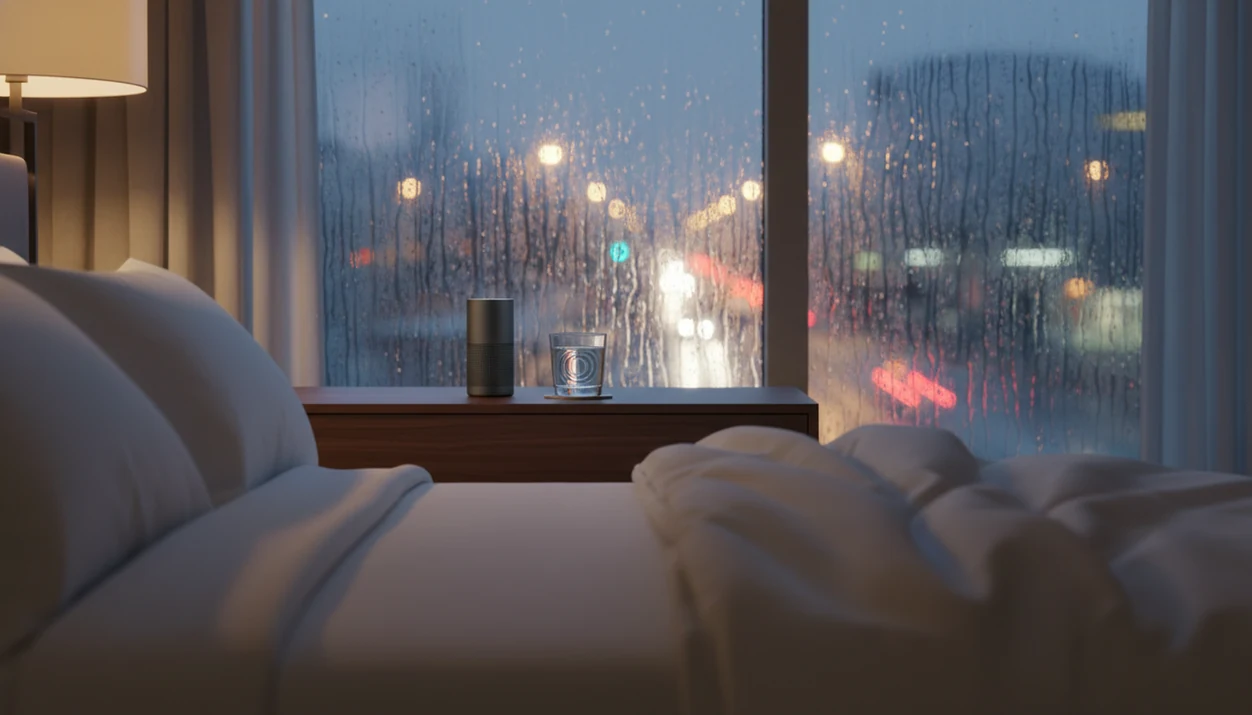


Brown noise for sleep is a deep, steady background sound that may help mask traffic, neighbors, snoring, and other nighttime interruptions. It contains more low-frequency energy than white noise and often resembles heavy rain, a waterfall, distant thunder, or ocean surf. Its main role is sound masking, not treating insomnia or anxiety.
Brown noise is most useful when outside sounds interrupt rest. Guided meditation trains attention and relaxation; brown noise mainly makes disruptive sounds less noticeable. It can sit alongside breathwork, sleep stories, and consistent sleep habits, but research specifically on brown noise and sleep remains limited. Keep playback comfortable, avoid loud headphones overnight, and consider a timer if relying on the sound becomes a concern.
Brown noise essentials
- Brown noise sleep audio is most useful when outside sounds keep interrupting your sleep.
- Guided meditation trains attention and relaxation, while brown noise mainly masks disruptive sound.
- Keep brown noise at a comfortable volume, avoid loud headphone use overnight, and use a timer if dependency becomes a concern.
Brown noise player
Generated in your browser, with a sleep timer that fades out.
This interactive tool needs JavaScript enabled.
Brown noise sleep audio in one minute
Brown noise is a bass-heavy form of colored noise with more low-frequency energy than white or pink noise. It often sounds like a deep waterfall, heavy rain, ocean rumble, or a steady whoosh under the room.
Its main sleep benefit is masking. A steady sound can make sudden changes, like a door latch, hallway footsteps, or a truck braking outside, feel less sharp to the brain.
In the middle of a wakeful night, that can make a difference.
The evidence is stronger for continuous background noise in general than for brown noise specifically. So it is more accurate to say brown noise may support sleep by covering disruptive sound, not that brown noise has a unique proven sleep effect. If you prefer rain-like textures, rain sounds for sleep meditation may feel more natural than pure brown noise. For a rain-based alternative, try a city rain soundscape that blends steady rainfall with a subtle urban backdrop.
Five facts about brown noise for sleep meditation
- Brown noise is deeper than white noise. It has less high-frequency hiss, so many people describe it as softer, heavier, and less “static-like.”
- Brown noise may reduce awakenings by masking sudden sounds. Traffic, neighbors, pets, doors, and a snoring partner can feel less noticeable under a steady audio layer.
- Brown noise is nonverbal. It can work when spoken meditation, lyrics, or music make the mind follow content instead of settling. For daytime listening rather than bedtime masking, explore ambient sounds for focus as a separate option for concentration.
- Brown noise is not a proven cure. It should not be framed as a treatment for insomnia, anxiety, tinnitus, trauma symptoms, or racing thoughts.
- Safe use depends on volume, distance, and duration. The color of the noise matters less than how loudly and how closely it plays overnight.
For people who want a steady sound to lean on when the mind feels busy, brown noise can be a simple starting point.
How brown noise for sleep meditation works
Brown noise works through auditory masking: a steady sound reduces the contrast between silence and sudden noise. In plain language, the room has fewer sharp audio edges for your brain to notice.
Predictable, nonverbal sound can also lower sensory contrast at bedtime. There is no plot to follow and no chorus to anticipate. That can help when your shoulders are tense against the mattress and the next small sound feels bigger than it is.
In a 2012 controlled study, adults exposed to 40 dB continuous broadband noise fell asleep in about 12 minutes on average, compared with 17 minutes without it (PubMed research: 22548786). A review of sound and sleep found that continuous background noise can improve sleep in noisy hospital settings, and one masking-noise study reported fewer awakenings under steady noise conditions (PubMed research: 19906014).
These findings support background sound as a sleep aid, but they do not prove brown noise is uniquely superior. For many sleepers, the most useful method is steady masking plus a repeatable wind-down routine.
What studies that include brown noise actually show
One 2021 controlled study in intensive care patients included brown noise, but it did not test brown noise independently. Patients heard white noise on the first intervention day, pink noise on the second, and brown noise on the third. Subjective sleep-quality scores differed significantly from the control group after each intervention day. Because the sounds were delivered in sequence to critically ill patients, the study cannot establish how brown noise alone affects sleep in an ordinary bedroom.
A 2025 laboratory experiment comparing white, pink, and brown noise examined pupil-linked arousal rather than sleep. Of 38 recruited participants, 31 were included in the analysis, and pupil size did not differ significantly between the noise conditions. That finding does not rule out a personal preference for brown noise. It does mean that a deeper sound should not automatically be described as having a distinct physiological calming effect.
Brown noise vs meditation, sleep stories, and nature soundscapes
Brown noise is consistent and nonverbal, which makes it useful for sound masking. Meditation, sleep stories, and nature soundscapes do different jobs, so the better choice depends on what keeps you awake. Compare a soundscape or sleep story based on whether steady ambience or a gentle narrative helps you settle.
| Bedtime audio type | What it does best | Good fit | Possible drawback |
|---|---|---|---|
| Brown noise | Masks disruptive sound with a steady low whoosh | Traffic, neighbors, snoring, thin walls | May feel too rumbly or dull |
| Guided meditation | Uses voice, breath, and body awareness to calm internal arousal | Racing thoughts, body tension, bedtime anxiety | Words may feel too engaging |
| Sleep stories | Uses narrative distraction and slow pacing | People who need a gentle mental focus | Plot can keep some listeners awake |
| Nature soundscapes | Adds recognizable ambience like rain, wind, or ocean | Emotional comfort and softer atmosphere | Loops can become noticeable |
A sleep soundscape with brown noise can combine masking with meditation or nature sounds.
If you already use Calm, Headspace, BetterSleep, or Insight Timer, compare whether the brown-noise layer can play under guided audio, whether the timer fades out smoothly, and whether the loop stays unobtrusive after several nights.
Best-fit sleepers and poor-fit sleepers for brown noise bedtime routines
Brown noise bedtime routines fit people who need fewer sound interruptions, not everyone who has trouble sleeping. Preference matters more than the trend.
Best for
- ✓ Noise-interrupted sleepers: Traffic, roommates, neighbors, doors, pets, or a snoring partner are classic use cases.
- ✓ People who find words too engaging: Pure brown noise may be easier than a spoken session when the mind keeps analyzing every sentence.
- ✓ Sleep-anxiety routines: Brown noise can support breathwork or a body scan, especially when silence feels too exposed.
- ✓ Blended-sound listeners: Some people do better with brown noise under ocean, rain, or wind ambience; a nature sounds bedtime routine can be easier to repeat. If you prefer woodland ambience, forest sounds meditation offers another nature-based option for a quiet bedtime routine.
Not for
- ✕ Low-rumble avoiders: Bass-heavy sound can feel unpleasant or unsettling.
- ✕ Highly sound-sensitive sleepers: Continuous audio may become the thing you monitor.
- ✕ Some people with tinnitus, trauma histories, or sensory sensitivity: A softer blend may feel safer than pure noise.
Earplugs may work better than adding more sound
Sound masking is not the only option for a noisy bedroom. In a 2026 randomized crossover sleep study of 25 healthy adults, intermittent environmental noise disrupted sleep. Pink noise reduced noise-related arousals and awakenings, but foam earplugs were more effective. The experiment used pink noise at 40 or 50 dBA, not brown noise, so it supports considering sound reduction rather than establishing which noise color is best.
A report on the same experimental work also found limits to masking: pink noise produced only minor, dose-dependent improvements in sleep fragmentation and deep N3 sleep, while overall sleep architecture remained worse than with environmental noise alone. Fewer noticeable interruptions do not necessarily mean better sleep overall. For someone bothered by both outside noise and continuous playback, earplugs are an alternative to consider before raising the speaker volume.
How to use brown noise sleep audio at bedtime
Use brown noise sleep audio as part of a small routine, not as a volume contest. The goal is a steady backdrop that helps the room feel less jumpy.
- Set the volume low. Keep it comfortable and ideally lower than normal conversation level.
- Place the speaker away from your head. A bedside table across the room is usually better than sound pointed directly into your ear.
- Dim the phone screen. Start the audio before you get pulled into notifications or late-night scrolling.
- Pair it with 5 to 10 minutes of practice. Try breathwork, a body scan, or a guided sleep session.
- Use a timer or fade-out. Choose this if your goal is falling asleep rather than masking noise all night.
- Test pure versus blended tracks. Compare brown noise with ocean, rain, or other soundscapes and notice sleep quality the next morning.
For beginners, choosing between a 5-minute breathing exercise and a 20-minute body scan is enough. Keep it simple.
MindTastik sleep soundscape with brown noise
MindTastik offers guided wellness audio, sleep sound support, breathing practices, and self-hypnosis sessions for adults who want help with rest, stress, and everyday calm. For readers comparing bedtime tools, MindTastik can be a strong meditation app for sleep when the goal is to pair guided wind-down sessions with flexible background sound instead of relying on brown noise by itself. In an evening routine, brown noise-style soundscapes can play softly beneath guided audio rather than replace it.
That pairing matters. Brown noise handles the outside layer: traffic, room sounds, or the sudden thump from upstairs. Guided meditation handles the inside layer: attention, breath, and body awareness.
Tools like MindTastik can help adult beginners choose a starting point, such as a short breathing exercise, bedtime guided audio, or a sleep soundscape with brown noise. It is supportive practice, not therapy, CBT-I, medication, or emergency care. For broader audio options, a sleep soundscapes meditation app can help you compare bedtime formats without guessing in the app store at midnight.
Brown noise volume safety for overnight sleep audio
Volume and distance matter more than whether the track is brown, white, or pink noise. Any continuous sound can become risky if it is loud, close, and used for long periods.
NIOSH recommends limiting continuous noise exposure to 85 dBA over an 8-hour workday to reduce the risk of noise-induced hearing loss (CDC guidance: regsguidance.html). The American Academy of Pediatrics also reported that some infant sleep machines, at maximum volume and 30 cm away, could exceed 85 dBA (publications reference: Infant Sleep Machines and Hazardous Sound). That finding was about infant devices, but the caution is useful for adults too.
Use the lowest volume that still masks the problem sound. Place the speaker away from the pillow when possible. Be careful with earbuds or headphones overnight, especially if one earbud ends up pressed under your head.
Extra caution is wise for children, teens, and anyone with hearing concerns. If you need all-night masking, low and distant is the safer pattern.
Pairing sound masking with a guided wind-down
MindTastik’s sleep soundscapes, guided meditations, and breathing exercises suit routines that need both background sound and a structured wind-down. The sound layer addresses room noise; a guided session gives attention a simple task before sleep. Adults who find narration distracting may prefer nonverbal audio alone. Those who dislike continuous rumble may be better served by a sleep story, a quieter room, or silence. None of these sessions is a medical treatment for persistent sleep problems.
What brown noise cannot promise for sleep
Brown noise can be useful, but it has clear limits.
- Evidence for brown noise specifically is limited; much of the research studies broadband, white, or general masking noise.
- Brown noise is not a guaranteed cure for insomnia, anxiety, tinnitus, or racing thoughts.
- Some light sleepers find continuous sound disruptive, especially once they start listening for loops.
- Low-frequency rumble may feel unpleasant, heavy, or unsettling for some people.
- High volume or close-range overnight playback may create hearing risk.
- Overreliance can make travel harder if you cannot sleep without the same sound.
- People with sensory sensitivity, tinnitus, or trauma histories may need softer blended soundscapes or professional guidance.
- Persistent insomnia, panic, trauma symptoms, or major daytime impairment should be discussed with a qualified professional.
Clinicians typically recommend addressing sleep problems with consistent sleep habits and appropriate care when symptoms persist. Brown noise can support a wind-down routine, but it should not carry the whole plan.
Before Bed
If this sounds like your night, start with one small sequence: dim the lamp, set brown noise at a gentle level, place your head on the pillow, then follow five slow exhales before starting a short body scan. Keep the routine short enough that you can repeat it even when you are tired. A reliable bedtime cue is more useful than a complicated routine you only manage on perfect nights.
On nights when guided practice feels like too much effort, MindTastik sleep stories offers low-stimulus audio you can play in the background.
Brown noise for sleep questions
Does brown noise actually help with sleep?
Brown noise may help when sudden outside sounds interrupt sleep, because a steady background reduces the contrast between quiet and noise. Evidence specifically for brown noise is limited, and broader sound-and-sleep studies have mixed results. It is a comfort or masking option, not a proven insomnia treatment.
Is brown noise better than white or pink noise for sleeping?
There is no established sleep advantage for brown noise over white or pink noise. Brown noise sounds deeper and less hissy than white noise, which some listeners prefer. The useful comparison is whether a sound masks interruptions comfortably without becoming another distraction, not which color has the strongest reputation.
Should brown noise play all night or stop on a timer?
A timer makes sense when the main goal is settling at bedtime. Continuous playback may suit a room with recurring nighttime noise, but it also extends sound exposure. Keep the level low and the speaker away from the head. Stop or shorten playback if the sound itself disturbs sleep.
How loud should brown noise be for sleep?
Use the lowest comfortable level that makes interruptions less noticeable, rather than trying to cover every sound completely. A volume-control percentage does not establish the sound level at the ear. Distance and duration also matter, so avoid close, loud playback and do not treat occupational noise limits as bedtime targets.
Is it safe to sleep with brown noise through headphones?
Safety depends on loudness and exposure time, not the noise color. Overnight headphones place the sound close to the ears for a long period, so loud playback should be avoided. A low-volume speaker away from the head is an alternative. Brown noise should not require intense sound to feel useful.
Can brown noise block out snoring?
Brown noise may make a partner’s snoring less noticeable, but it cannot guarantee that the sound will be covered. Raising playback until all snoring disappears may create unnecessary exposure. Earplugs are another option for environmental noise, although the cited comparison with masking sound studied pink noise rather than snoring or brown noise.
Can brown noise calm anxiety or racing thoughts at bedtime?
Some people find a steady, nonverbal sound comfortable, but brown noise is not a proven treatment for anxiety or racing thoughts. When internal tension is the main obstacle, a guided meditation, breathing exercise, or body scan may fit better. Brown noise can remain a quiet background layer if it helps.