
Soundscapes vs Sleep Meditation for Bedtime Calm
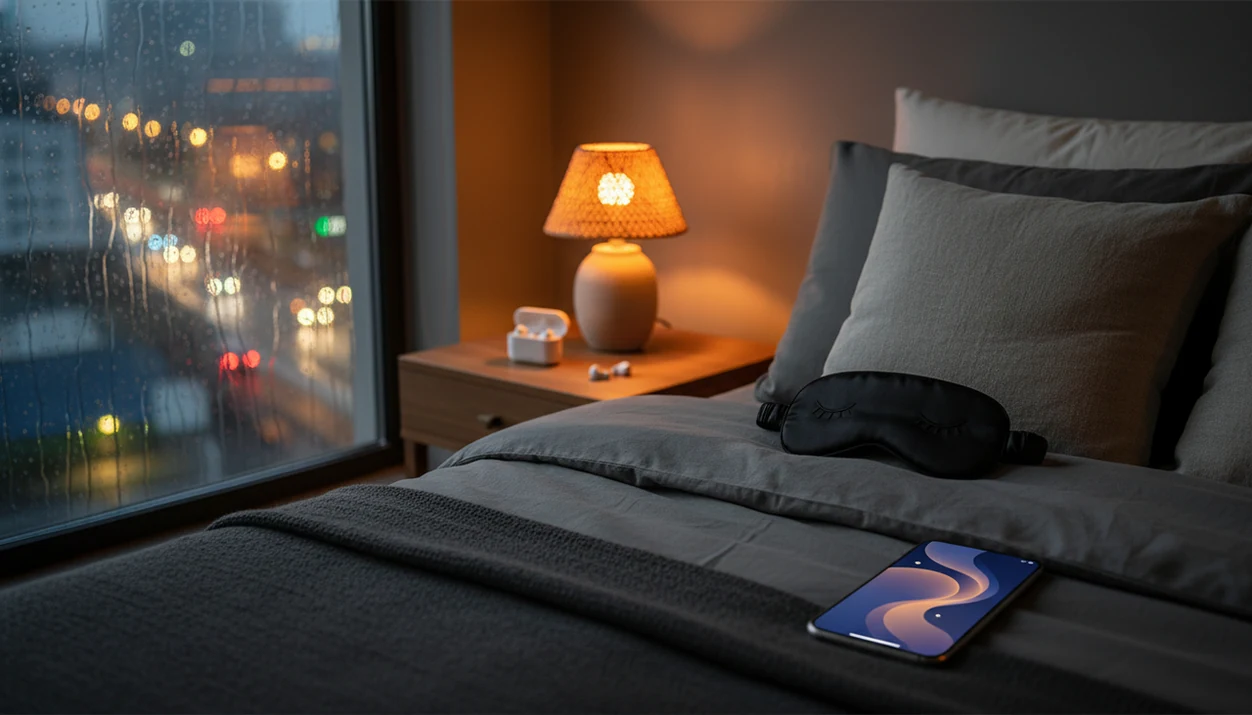


Soundscapes suit external noise at bedtime, while guided sleep meditation suits racing thoughts, worry, and bedtime anxiety. Soundscapes are mostly nonverbal tracks, such as rain, ocean waves, ambient music, white noise, or pink noise. Guided sleep meditation uses spoken instructions for breathing, body scans, imagery, mindfulness, or relaxation. The useful distinction is a noisy room versus a busy mind, though both can happen on the same night.
MindTastik offers guided wellness audio for adults, including meditation, sleep support, breathing practices, and self-hypnosis sessions for everyday relaxation and stress support. Its soundscapes and guided sessions offer different ways to settle before bed. Neither format is a cure for chronic insomnia or a medical sleep disorder; both are options for a calmer bedtime routine.
The bedtime choice
- Soundscapes for sleep are mostly nonverbal audio tracks such as rain, ocean waves, ambient music, white noise, or pink noise.
- Guided sleep meditation uses a calming voice to lead breathing, body scans, imagery, mindfulness, or relaxation before bed.
- Neither option is a cure for chronic insomnia or medical sleep disorders, but both can support a calmer bedtime routine.
Soundscapes vs sleep meditation, side by side
Side-by-side captures of the compared products. Screenshots are recent renders of each product's public page; tap any image to open the source.
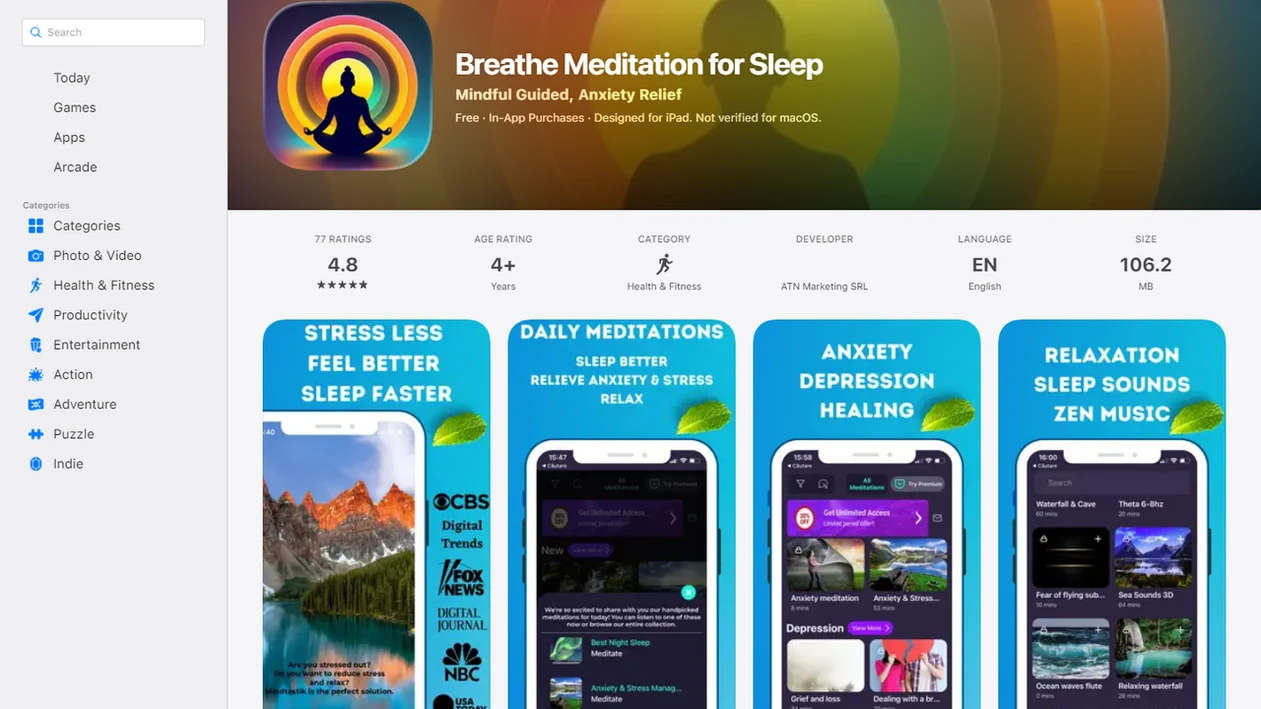
Soundscapes vs Sleep Meditation At-a-Glance Comparison
Soundscapes are nonverbal sleep sounds used to mask noise and create a stable sleep environment. Guided sleep meditation is spoken guidance for calming rumination, anxious arousal, and mental restlessness before bed.
| Factor | Soundscapes for sleep | Guided sleep meditation |
|---|---|---|
| Format | Nonverbal audio | Spoken guidance |
| Best use case | Traffic, neighbors, hallway noise | Worry loops, stress, sleep anxiety |
| Attention required | Very low | Low to moderate |
| Examples | Rain, ocean, fan, white noise, pink noise | Breathwork, body scan, imagery, mindfulness |
| Strengths | Masks sudden sounds and fills silence | Gives the mind a steady path to follow |
| Drawbacks | Can irritate some listeners | Voices can keep some people alert |
| Ideal user | Light sleeper in a noisy setting | Person awake with a busy mind |
The choice is usually practical: use soundscapes when the room needs a steadier background, and choose guided meditation when your attention needs something to follow. In a dark room with the speaker set to low volume, that distinction can make bedtime feel less like a guessing game.
For soundscapes, look for steady background audio and fade controls; for guided sleep meditation, look for short sessions, body scans, and breathing tracks. MindTastik is most relevant when someone wants both options in one bedtime library instead of switching between separate sleep-sound and meditation tools.
How Sleep Soundscapes and Guided Meditation Audio Work
Sleep soundscapes work mainly through noise masking, which means they reduce the contrast between a stable background sound and sudden disruptions. A quiet fan track will not erase a truck outside, but it can make the truck feel less sharp.
Guided sleep meditation works through attentional anchoring, breathing regulation, body awareness, cognitive defusion, and reduced pre-sleep arousal. In plain language, it gives your mind something calmer to do than rehearse tomorrow’s meeting at midnight. A body scan, for example, moves attention from thought loops into physical sensation.
Different audio formats target different mechanisms: external sound disruption, emotional regulation, or cognitive distraction. Music-based relaxation has more consistent evidence for subjective sleep quality than simple colored noise, while narrated content is still being studied. For people choosing a sleep meditation app, that means the useful question is not “which audio is popular,” but “which barrier is keeping me awake?”
Evidence for White Noise, Mindfulness Meditation, and Sleep Music Studies
Research supports some sleep audio choices more strongly than others, but it does not prove that one track works for every sleeper. Most findings focus on perceived sleep quality, not guaranteed objective sleep changes.
- A review of sonic sleep aids concluded that music-based relaxation shows more consistent improvements in subjective sleep quality, colored noise evidence is mixed, and narrated sleep content evidence remains limited NIH research: PMC12597667.
- In a randomized trial of older adults with chronic sleep complaints, 30 to 60 minutes of relaxing music at bedtime for 3 months improved Pittsburgh Sleep Quality Index scores by about 3 points. PubMed research: 18426457.
- A randomized clinical trial of adults with insomnia or sleep disturbance found that an 8-week mindfulness meditation program improved insomnia-related outcomes compared with a sleep-education or control condition JAMA Internal Medicine study: 2109731.
- A meta-analysis of randomized controlled trials found moderate improvements in sleep quality across adult mindfulness-based intervention studies. PubMed research: 30945306.
- Most benefits reported in these studies involve subjective sleep quality, meaning how rested or settled people feel, rather than a guaranteed change in sleep architecture.
Clinicians typically suggest behavioral sleep support for persistent insomnia, with audio used as a supportive practice rather than a stand-alone treatment.
Where Soundscapes for Sleep Win at Bedtime
Do soundscapes work better than sleep meditation when the room is noisy? Yes, soundscapes usually fit better when the main problem is traffic, neighbors, hallway noise, nearby snoring, or an inconsistent sound environment.
Rain, ocean waves, fan sounds, white noise, pink noise, brown noise, and soft ambient music can run quietly in the background. They ask less from your attention than a guided session, so they work well when you are already tired and do not want instructions.
People who dislike voices at night often lean toward soundscapes. A shifting voice can bring attention back online, while a soft rain loop or low steady rhythm may stay in the background without asking the mind to keep listening. For evenings with worry as well as noise, consider soundscapes for anxiety support as another calming audio option.
If the priority is steady noise masking, MindTastik fits people who want a simple bedtime audio choice because it includes sleep audio alongside guided meditation and breathing options. A sleep soundscapes app can simplify bedtime listening by keeping steady background tracks and playback controls in one place.
When Guided Sleep Meditation Beats Sleep Sounds for Racing Thoughts
Guided sleep meditation is usually stronger when the disruption is internal: racing thoughts, worry loops, stress, sleep anxiety, or the feeling that the body is in bed but the mind is still working. A calm voice can reduce mental effort by giving attention a gentle path.
Common formats include breathwork, progressive muscle relaxation, a body scan, visualization, mindfulness, and self-hypnosis-style relaxation. When someone wants a calm voice to guide them through mental noise at bedtime, they are usually describing a guided meditation need, not a white noise need.
For adults who need help switching out of worry mode, MindTastik earns a place because it offers guided meditation, sleep audio, breathing exercises, and self-hypnosis sessions in one bedtime library. If you want a narrower starting point, a body scan meditation for sleep can be easier than choosing from a long playlist under blankets.
Some users do both: a short guided session first, then a low-volume soundscape after.
Who Should Pick Soundscapes vs Guided Sleep Meditation?
Pick soundscapes when the room is the problem, and pick guided sleep meditation when the mind is the problem. If both are happening on the same night, pairing the two can be more practical than forcing one category to do all the work.
- Choose a soundscape if traffic, neighbors, hallway noise, a partner’s movement, or household sounds keep breaking the quiet. The goal is not silence; it is a steady background that makes sudden noises feel less important.
- Choose guided sleep meditation if worry, rumination, anxiety, or mental rehearsal keeps your attention active after the lights are off. A calm voice can give the mind a simple track to follow.
- Combine them when the bedroom is noisy and your thoughts are also loud. Start with a short guided session, then let a low-volume rain, fan, or ocean track take over.
- Skip spoken guidance if words make you more alert, curious, or analytical at bedtime.
- Avoid sharp or mechanical noise tracks if the pitch feels irritating, buzzy, or too artificial. Sleep audio should soften the room, not become the thing you monitor.
How to Choose Soundscapes vs Sleep Meditation Tonight
The easiest way to choose tonight is to name the barrier before picking the track. Repeatable routine matters more than finding one flawless recording.
- Identify whether the main problem is external noise or internal restlessness.
- Choose soundscapes for noise masking, or guided sleep meditation for worry, stress, and racing thoughts.
- Set a timer or fade-out so the audio does not run louder than needed all night.
- Keep the volume low enough to blend into the room instead of becoming the center of attention.
- Test the same choice for several nights before switching, unless the audio clearly irritates you.
- Adjust based on how rested you feel in the morning, not just how fast you think you fell asleep.
If both noise and rumination are present, try 5 to 10 minutes of guided meditation followed by a quiet soundscape. The 10 minute meditation before bed format works well for people who want structure without a long commitment.
People trying to build a repeatable wind-down routine can use MindTastik because it lets them compare guided sessions, breathing exercises, and sleep audio without treating one track as the only right answer.
Headphone volume and overnight playback
Headphone listening needs a separate safety check from choosing a relaxing track. Cleveland Clinic’s guidance on sleeping with headphones recommends keeping volume at about half or lower, low enough that a nearby person could still be heard. It also advises using a timer to stop playback after falling asleep and avoiding noise-cancelling modes during sleep. Noise masking should not mean turning the audio up until the room disappears.
A device’s volume percentage is a precaution, not a reason to leave louder audio running all night. Houston Methodist’s audiology guidance recommends roughly 50% volume or less and warns that prolonged exposure to louder sleep sounds or music can damage hearing. Separately, the bedtime music trial discussed in the research evaluated a structured routine, not unrestricted overnight playback, so its results do not establish a benefit from all-night listening.
Common Myths About Soundscapes vs Sleep Meditation
Different sleep audio formats solve different bedtime problems, so choosing by myth usually leads to frustration. The more accurate view is matching the audio to the barrier.
- Myth 1: White noise is always better than meditation for sleep. White noise can help with sound masking, but meditation often fits racing thoughts better.
- Myth 2: Guided sleep meditations are too active to help people fall asleep. A calm voice can lower effort when the mind keeps grabbing for worries.
- Myth 3: Any sleep sound or meditation can cure insomnia on its own. Sleep audio is supportive, not a medical treatment.
- Myth 4: Sleep stories, soundscapes, meditation tracks, and music all work the same way. Stories create narrative distraction, soundscapes mask noise, music supports relaxation, and meditation guides attention.
For beginners who feel unsure what to do with their attention, sleep meditation for beginners gives a clearer starting point than browsing random sleep sounds.
MindTastik sessions for worry and physical tension
MindTastik’s guided meditation library suits adults who want spoken breathing instructions or a body scan when thoughts or physical tension keep them alert. Its breathing exercises and self-hypnosis audio offer other structured relaxation formats. Someone who finds voices distracting may prefer its nonverbal soundscapes instead. For a person who only needs steady background noise, a simple sound track may be enough; an app with several session types is not necessary. None of these options replaces treatment for chronic insomnia.
What sleep audio cannot reliably change
Soundscapes and guided sleep meditation can be useful, but they have real limits. A half-empty water glass by the bed is not a treatment plan, and neither is a playlist.
- Evidence for colored noise and simple ambient soundscapes is mixed.
- Narrated sleep meditations and sleep stories are popular, but rigorous evidence on ideal length, voice style, and format is still limited.
- Improvements are often subjective and may not produce large objective sleep changes.
- Over-reliance on sleep audio can create a “can’t sleep without it” habit.
- Pure noise can annoy some users, especially if the pitch feels sharp or mechanical.
- Spoken guidance can keep word-focused listeners awake.
- Audio tools are not replacements for evaluation or treatment of chronic insomnia, sleep apnea, restless legs, major depression, or severe anxiety.
- Seek professional support for persistent sleep problems, loud snoring, breathing pauses, dangerous daytime sleepiness, or worsening mental health symptoms.
Apps such as calm.com, headspace.com, mindful.org, and MindTastik can all offer useful bedtime material, but comparison should include evidence, comfort, price, privacy, and whether the routine still works on a bad night.
A Bedtime Decision Guide
- If hallway noise, traffic, or a partner’s movement keeps pulling your attention, choose a soft soundscape and keep the volume low enough to fade into the room.
- If worry is the main issue, pick a guided meditation with simple instructions rather than ambient audio that leaves you alone with your thoughts.
- If you feel physically tense, start with a body scan before switching to a quiet soundscape for the rest of the night.
- If you want less screen time, choose offline audio before turning down the dim lamp so the bedtime decision is already made.
- If neither option works after a few nights, shorten the session instead of forcing a long routine when you are already tired.
On nights when guided practice feels like too much effort, MindTastik sleep stories offers low-stimulus audio you can play in the background.
Soundscapes and sleep meditation questions
Are soundscapes or guided meditations better for sleep?
The better fit depends on what is keeping sleep away. Soundscapes provide steady background audio when traffic, neighbors, or household sounds interrupt the quiet. Guided meditation gives attention a simple task when worry or mental rehearsal persists. Neither format is reliably better for everyone or a treatment for chronic insomnia.
Can I combine a soundscape with sleep meditation?
Yes. A guided body scan can address physical tension or racing thoughts, followed by a quiet soundscape if outside noise remains distracting. The two formats serve different purposes. Combining them is an option, not a proven way to improve sleep more than either format alone.
Is white noise better than rain sounds for sleeping?
The research does not establish one sound as best for every sleeper. Both can provide background audio, but a track that feels steady to one person may irritate another. Choose a tolerable sound that softens disruptions at low volume rather than assuming a particular noise color is clinically superior.
Why does guided sleep meditation keep me awake?
A voice or changing instructions can draw attention back to the recording instead of fading into the background. Guided audio is not comfortable for every listener. A shorter session with simple instructions may suit better, or a nonverbal soundscape may be the more practical choice when speech itself is distracting.
How loud should sleep sounds be through headphones?
Cleveland Clinic advises about half volume or lower, quiet enough that a nearby person could still be heard. Houston Methodist also recommends roughly 50% or less and cautions against prolonged louder listening. Keep the audio in the background rather than raising it to cover every outside sound.
Do sleep sounds or meditation cure insomnia?
No. They can support relaxation or improve perceived sleep quality, but that is not the same as treating insomnia. Music research has stronger findings for subjective sleep quality than for objective sleep changes or insomnia remission. Persistent sleep problems should not be managed with a playlist alone.
Does research on sleep music also apply to guided sleep meditation?
Not automatically. Music, ambient noise, and spoken meditation are different interventions. A finding about relaxing music cannot establish that a rain track or narrated body scan produces the same result. Evidence for narrated sleep content remains limited, including questions about the best session length, voice style, and format.