
10 Ways to Combat Jet Lag and Get Some Restful Sleep
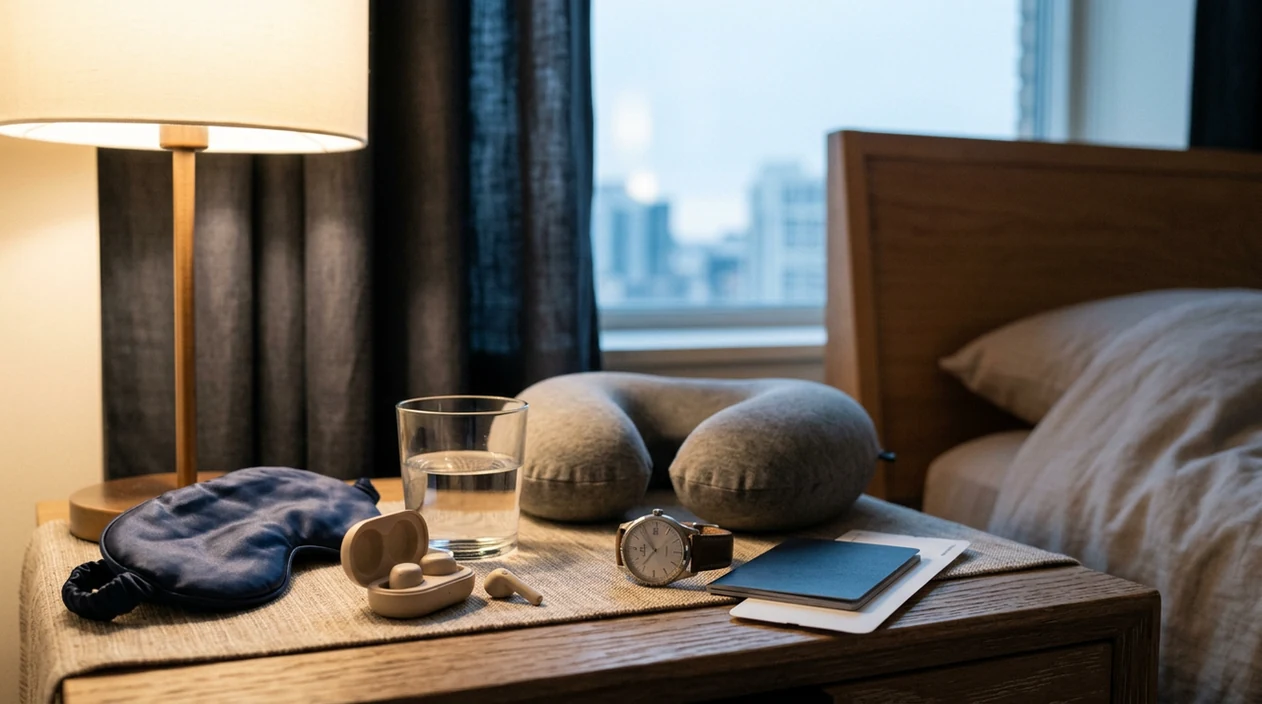


The most useful jet lag sleep tips are to shift sleep before travel, time light exposure, and follow the destination’s schedule after arrival. Jet lag is a temporary mismatch between the internal body clock and local time after rapid travel across time zones. Eastbound trips often feel harder because the body must fall asleep earlier than usual.
The ten strategies below cover schedule changes, light, hydration, alcohol and caffeine, movement, short naps, local bedtime routines, relaxation audio, cautious melatonin use, and the first mornings after landing. Light, sleep, and meal timing matter more than any single remedy. Guided meditation, breathing exercises, and body scans can help settle travel tension, but they cannot reset the body clock alone or replace medical care.
The travel sleep checklist
- Light timing, sleep timing, and meal timing matter more than any single jet lag hack.
- Eastbound trips usually feel harder because your body has to fall asleep earlier than usual.
- Guided meditation, sleep audio, breathing exercises, and body scans can support calm sleep routines, but they do not replace medical care or good circadian habits.
At-a-glance guide to 10 ways to combat jet lag and get some restful sleep
Use these 10 jet lag strategies as a compact destination-time checklist, not as a promise of instant recovery. The goal is to shorten and soften jet lag, especially during the first 24 to 72 hours.
- Pre-shift your schedule by 30 to 60 minutes per day.
- Get morning light when local daytime should begin.
- Dim evening light before the destination bedtime.
- Hydrate steadily before, during, and after flying.
- Limit alcohol because it can fragment sleep.
- Time caffeine for local morning or early afternoon.
- Move often with walks, stretches, or aisle laps.
- Take smart naps, short and early.
- Keep a local bedtime routine in the hotel.
- Use meditation or melatonin support cautiously.
Image caption suggestion: Traveler using a sleep meditation app and eye mask to support restful sleep after crossing time zones.
Small choices add up.
Five facts about jet lag, sleep, and destination-time recovery
These five facts explain why jet lag feels so physical, not just inconvenient. They also show why timing beats willpower when you are trying to sleep in a new place.
- Crossing two or more time zones can cause jet lag symptoms such as daytime sleepiness, impaired alertness, and poorer performance, often lasting 3 to 5 days after arrival. Source: CDC Yellow Book jet lag guidance, wwwnc reference: jet lag.
- More time zones usually mean stronger symptoms, and eastbound travel is often harder because the body must fall asleep earlier than usual.
- Light is the strongest body-clock reset signal because it tells the brain when to promote alertness and when to prepare for night.
- Baseline sleep problems can make travel sleep harder. Per a CDC survey, many U.S. adults already report frequent trouble falling or staying asleep. Source: CDC adult sleep facts and statistics, CDC guidance: adults sleep facts and stats.html.
- Meditation and relaxation can support sleep quality, but they cannot fully override severe circadian misalignment.
A late-night glance at the hotel clock can feel especially disorienting after a long-haul flight. Your body may still be running on a meal schedule from several time zones away.
Body clock mechanics behind jet lag symptoms
Jet lag works by separating your circadian rhythm from the clock on the wall. Your circadian rhythm is the body’s roughly 24-hour timing system, and it responds most strongly to light.
Sleep pressure is the separate “tiredness build-up” that rises the longer you stay awake. Jet lag feels rough because sleep pressure, melatonin timing, meals, body temperature, and light exposure may all be giving mixed signals. You can be exhausted and still not sleepy at local bedtime.
Research on circadian misalignment has found that shifting sleep and wake timing by about eight hours can reduce alertness and cognitive performance. That matches the lived version: standing at baggage claim, rereading the same sign twice, then forgetting which pocket holds the passport. Research on placebo sleep and cognition explores how perceived sleep quality may affect performance, a separate issue from circadian misalignment.
The body usually adjusts gradually, not instantly. For most travelers, timed light, steady wake times, and regular meals help the clock move in the right direction.
Five-step destination-time plan for jet lag recovery
Use this destination-time plan before, during, and after your trip. It gives your body repeated cues instead of one dramatic overnight reset.
- Set your destination wake time before travel, then plan your first morning around it.
- Shift sleep and meals by 30 to 60 minutes per day when your schedule allows.
- Choose bright light or dim light based on local time, not how your body feels.
- Protect the first local bedtime with wind-down audio, low light, and no late caffeine. For another relaxation option before local bedtime, try the Navy SEAL sleep method without expecting guaranteed results.
- Reset each morning with a fixed wake time, daylight, hydration, and gentle movement.
For eastbound travel, morning light after arrival often helps pull the body earlier. For westbound travel, staying awake a little later may be the easier task.
The most common medically supported way to reduce jet lag is timed light exposure combined with destination-time sleep and wake routines.
Before-flight sleep timing for jet lag prevention
What should you do before departure to reduce jet lag? Move bedtime, wake time, and meals toward the destination schedule for several days when practical, and do not start the trip sleep-deprived.
Eastbound trip timing
Eastbound trips often mean you need to fall asleep earlier than your body expects. Try moving bedtime and dinner earlier in small steps. Even 30 minutes per night can make the first hotel bedtime feel less abrupt.
A calming meditation or breathing exercise before bed can help if pre-flight anxiety shows up. Tools like MindTastik can be useful here, especially when the suitcase is open and your brain keeps replaying the airport checklist.
Westbound trip timing
Westbound trips usually ask the body to stay awake later. Shift bedtime and meals later by small amounts when possible. Avoid the trap of packing until midnight, then calling it “jet lag prep.”
For anxious sleepers, a simple how to meditate before bed routine can make the night before travel less scattered.
During-flight habits for better sleep after landing
In-flight choices can either support destination time or make the first night harder. Change your phone or watch to the destination time once you board, then use that clock for meals, caffeine, and sleep attempts.
Drink water steadily, choose lighter meals, and walk or stretch when the seatbelt sign allows. Alcohol may make you drowsy at first, but it can fragment sleep and worsen dehydration. Caffeine is useful only when it supports destination daytime alertness. Skip it near local bedtime.
Pack the boring gear. Eye mask, earplugs, neck support.
Offline sleep audio or a breathing session can help when cabin lights, announcements, and seatmates keep interrupting. If you normally use body scan meditation for sleep, download one before boarding so Wi-Fi does not decide your sleep plan.
After-arrival light, naps, caffeine, and local bedtime
What matters most after arrival? Get light, naps, caffeine, and bedtime aligned with local time, especially during the first three days.
Morning daylight is especially useful when adapting to an earlier schedule. Step outside soon after waking, even if you only walk around the block near the hotel. At night, avoid bright screens and intense light close to bedtime. Screen brightness lowered to minimum is a small but real cue.
Jet lag waking at 3 a.m.
If you wake at 3 a.m., keep lights low and avoid turning the moment into a full work session. Try quiet breathing, a body scan, or a short audio practice. If you are wide awake, get out of bed briefly, then return when sleepy. You can also practice the Navy SEAL 2-minute sleep technique to ease tension, though it cannot reset circadian timing.
Short naps versus long naps
Short naps of 20 to 30 minutes, taken early, can reduce the worst fog. Long or late naps can push local bedtime away and stretch jet lag into another day.
For long trips, a 10 minute meditation before bed can mark the shift from travel mode to sleep mode.
Lower screen brightness is not the whole bedtime plan
Dimming a phone addresses light, but it does not remove the stimulation of messages, work, or scrolling. A 2025 study of U.S. adults associated daily pre-sleep screen use with shorter sleep, later bedtimes, and poorer sleep quality. Because the study was cross-sectional, it cannot show that screens caused those differences, and it did not establish a treatment for travel-related jet lag.
A practical hotel routine separates a screens-off time from lights-out. Finish messages and the next day’s arrangements before the wind-down period, then replace scrolling with reading, gentle stretching, or quiet audio. NHS sleep guidance recommends relaxing activities during the hour to 90 minutes before bed. If using sleep audio, select the session first and put the screen aside rather than browsing in bed.
MindTastik meditation support for travel sleep and jet lag anxiety
MindTastik offers guided meditations, sleep tracks, breathing practices, and self-hypnosis sessions for adults looking for everyday support with rest, stress, and calm. It may help when travel tension keeps the body alert long after the room goes dark.
Guided sleep meditation, body scans, breathing exercises, and calming audio may ease travel-related alertness in hotels or unfamiliar beds. That can be helpful when the room is still but your mind keeps circling, or when a downloaded session and headphones make rest feel more within reach.
The U.S. National Center for Complementary and Integrative Health reports that meditation approaches are associated with small to moderate improvements in sleep quality and insomnia symptoms in adults. Still, meditation is not a treatment for medical sleep disorders, severe anxiety, or circadian rhythm disorders. The “Best Meditation App for Sleep” is the one you will actually use consistently and safely.
Melatonin, sleep aids, and safety boundaries for jet lag
Melatonin may help some long-haul travelers, but timing matters as much as dose. According to a Cochrane review, 0.5 to 5 mg oral melatonin taken near the target destination bedtime can reduce jet lag for many travelers crossing five or more time zones, especially eastward: cochrane reference: DEPRESSN melatonin prevention and treatment jet lag.
Poorly timed melatonin may worsen schedule confusion. Taking it at the wrong body-clock phase can nudge sleep in the wrong direction, which is the opposite of what you want after a long flight.
Speak with a clinician before using melatonin if you are pregnant, treating a child, managing psychiatric conditions, taking regular medications, or using sedatives. Prescription sleeping pills deserve even more caution. They can cause next-day grogginess, falls, medication interactions, and dependence risk.
Start with light timing, a steady wake time, hydration, movement, and a calm bedtime routine before considering sleep aids. Simple, but not always easy.
Calming travel tension at local bedtime
MindTastik’s body scans, breathing exercises, and guided meditations suit the part of jet lag that involves tension or racing thoughts in an unfamiliar room. A session from the guided meditation library can provide one quiet activity before the planned local bedtime, rather than another reason to keep checking the clock.
Travelers who need help choosing light exposure or melatonin timing should seek advice beyond an audio app. Persistent sleep problems also need assessment. MindTastik is not a medical treatment, and relaxation does not replace destination-time sleep and light cues.
What jet lag routines cannot fix overnight
Jet lag advice works best when it respects biology. No strategy can completely prevent jet lag across several time zones, and symptoms may still last several days even with good planning.
- No schedule shift, app, supplement, or flight habit guarantees instant recovery.
- Meditation can support calm and sleep quality, but it cannot fully reset the circadian clock by itself.
- Melatonin response varies by person, dose, timing, travel direction, and number of time zones crossed.
- Long or late naps can prolong jet lag by delaying local bedtime.
- Alcohol and late caffeine can make sleep worse, even when they feel helpful short term.
- People with heart disease, severe sleep apnea, psychiatric disorders, pregnancy, complex medication routines, or major health concerns should ask a clinician before supplements or sleep aids.
- Severe insomnia, panic symptoms, confusion, chest pain, or breathing problems need medical guidance, not travel hacks.
If sleep problems were already present before the trip, resources on insomnia meditation mindfulness may help with calm routines, but diagnosed conditions still need appropriate care.
Short audio options for hotel bedtime and early waking
| Technique | Best for | Minutes |
|---|---|---|
| Guided body scan | settling travel tension before local bedtime | 8-12 min |
| Soft sleep story | quieting an alert mind in an unfamiliar room | 10-20 min |
| Slow exhale breathing | short reset after an early-morning wake-up | 3-5 min |
If you want narration instead of instruction at bedtime, MindTastik sleep stories is a practical place to start inside MindTastik.
Jet lag sleep questions
How can I fall asleep at local bedtime when I’m jet lagged?
Keep the room dim and use a simple wind-down routine, such as quiet reading, breathing, or a body scan. Avoid late caffeine and alcohol as a sleep aid. Feeling exhausted does not always mean the body clock is ready for sleep, so relaxation may help with tension without making sleep immediate.
How long does jet lag usually last?
Symptoms often last several days, with the article’s guidance describing three to five days after arrival. Recovery varies with the number of time zones crossed, travel direction, and sleep timing. A consistent local wake time and planned light exposure support adjustment, but no routine guarantees recovery by a particular day.
Why is jet lag usually worse when flying east?
Eastbound travel usually requires falling asleep and waking earlier than the body expects. That earlier schedule can be harder to adopt than the later schedule often needed after westbound travel. Moving bedtime, wake time, and meals earlier in small steps before departure may make the change less abrupt.
Should I take a nap after a long flight?
A short, early nap can help with daytime sleepiness, but a long or late nap may make local bedtime harder. Plan naps around the destination clock rather than the departure clock. Napping is a temporary aid for tiredness, not a substitute for establishing a local sleep schedule.
Does melatonin help with jet lag?
Melatonin may help some travelers, particularly after crossing several time zones, but timing matters as much as dose. Taking it at the wrong body-clock phase can shift sleep in the wrong direction. Discuss its use with a clinician when pregnant, considering it for a child, or managing a medical condition.
Why do I wake up at 3 a.m. after changing time zones?
The internal body clock may still be following the departure schedule, even though the local clock says it is nighttime. Keep lights low and avoid starting work or scrolling. Quiet breathing or a body scan may help with alertness, but early waking can continue while the sleep schedule adjusts.
Can coffee help me recover from jet lag?
Caffeine can support alertness during destination daytime, but it does not reset the body clock. Keep it to the local morning or early afternoon rather than using it to push through the evening. Caffeine near local bedtime may make the first nights harder, even when travel has left the body tired.
How should I change my sleep schedule before an eastbound flight?
When practical, move bedtime, wake time, and meals earlier by 30 to 60 minutes per day for several days before departure. Keep enough time for sleep rather than shortening the night to force an earlier wake-up. The aim is a smaller schedule change on arrival, not starting the trip sleep-deprived.