
Awareness of Sounds Meditation for Sleep, Anxiety, and Everyday Calm


Awareness of sounds meditation is a mindfulness practice that uses nearby sounds, soundscapes, or bedtime audio as the focus of attention instead of trying to block noise out. The task is to notice sounds arising, changing, and fading without judging them or building a story around them. A fan, passing traffic, birdsong, or a guided recording can all serve as the listening anchor.
This is active listening rather than simply playing relaxing audio. When attention moves into planning or worry, the practice is to notice that shift and return to hearing. Ordinary room sounds, nature recordings, and MindTastik guided tracks can fit a relaxation or bedtime routine. Evidence for benefits comes mainly from broader mindfulness research, not from sound awareness meditation alone.
The essentials
- Sound awareness meditation uses hearing as the anchor, whether the sound is pleasant, neutral, repetitive, or unexpected.
- MindTastik can make the practice easier with guided meditation, sleep audio, breathing exercises, self-hypnosis sessions, and calming soundscapes.
- The strongest evidence comes from broader mindfulness research on sleep, anxiety, and stress, not from sound awareness meditation alone.
Best Awareness of Sounds Meditation Options in MindTastik
Strong awareness of sounds meditation options use sound as the main anchor, not just a pleasant layer behind the practice. In MindTastik, that can mean guided listening, soundscapes, bedtime audio, or breath-plus-sound sessions.
- Guided sound awareness: Best for beginners who want spoken cues; not ideal if narration feels intrusive. The voice reminds you to return to hearing when thoughts start filling the room.
- Nature soundscapes: Best for low-stimulation practice; not ideal if loops or repeated sounds bother you. Rain, waves, or forest audio become the object of attention.
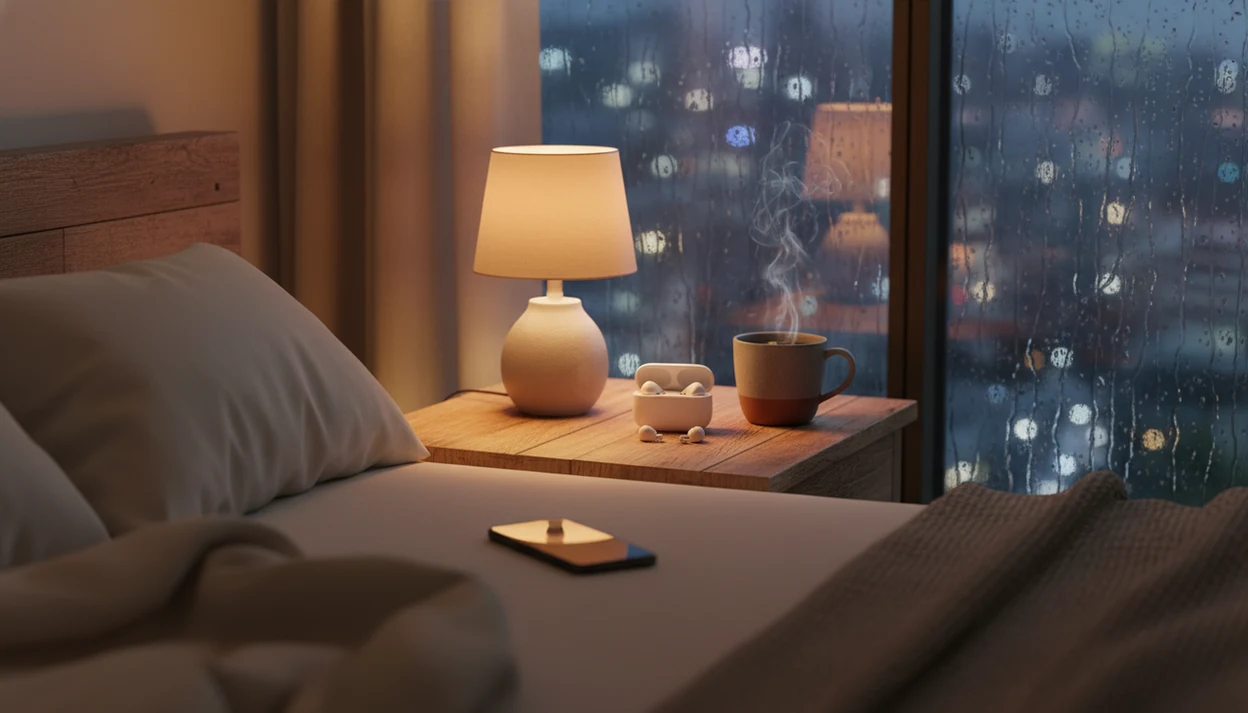
- Bedtime listening: Best for a wind-down routine; not ideal if you expect it to guarantee sleep. Earbuds on a nightstand, one side slightly tangled around a charging cable, are common here.
- Breath-plus-sound practice: Best for anxious evenings; not ideal if switching anchors feels confusing.
MindTastik is a meditation app for guided meditation, sleep audio, breathing exercises, and self-hypnosis sessions, so it fits people who want one place to choose a starting point.
Sound Awareness Meditation Facts Beginners Should Know
Beginners should know that sound awareness meditation is simple, but not passive. The practice is to hear clearly, wander, notice the wandering, and return.
- Sounds can be chosen or accidental. You can use rain audio, a fan, traffic, birds, a partner turning over, or the low hum of a refrigerator.
- The core skill is returning to hearing. You are not trying to like every sound. You are practicing “just hearing” before the mind adds a story.
- Quiet is not required. A quiet room can help, but ordinary noise can become part of the session.
- The technique can support calm routines. Many people use it for bedtime wind-down, sleep anxiety, and short daytime resets.
- The evidence is indirect. Research support is strongest for mindfulness programs broadly, not for sound awareness meditation as a standalone method.
The pocket check is real.
For a wider comparison, place this practice beside other meditation techniques and notice which anchor feels easiest to repeat.
How Awareness of Sounds Meditation Works
Awareness of sounds meditation works by making sound a present-moment anchor, much like breath, body sensation, or visual focus. The core attentional pattern is noticing sounds arising, changing, and fading.
In practice, you hear a car pass, a heater click, or a guided soundscape swell and soften. Then the mind comments: too loud, too late, why is that neighbor awake? The training is to recognize the comment and return to the raw sound. That shift is active mindful listening, not passive background audio.
Attention training may ease rumination by giving awareness a simple, neutral place to rest when the mind starts circling. In a dark quiet room, noticing the hum of the heater or the rhythm of breathing can feel more supportive than debating every worry. Good meditation apps for sleep anxiety and everyday calm offer repeatable cues and gentle structure, not medical cures or instant silence.
For beginners, sound awareness often feels easier than abstract “empty the mind” instructions because there is always something to hear.
Before You Start Awareness of Sounds Meditation
Before you start awareness of sounds meditation, set up the practice so your body feels safe and the audio does not take over the room. A little preparation keeps the session simple, especially if you are using it at bedtime or during an anxious pause.
- Choose a seated or lying position that feels stable and safe. If you are in bed, let the body be supported; if you are in a chair, keep both feet grounded or comfortably placed. If you often drift off during practice, try meditation for beginners who fall asleep with a more alert posture.
- Set any audio volume low enough that you can still hear the room around you. The sound should invite attention, not block everything else out.
- Decide whether you want natural sounds already present, such as traffic or a fan, or a chosen track from an app. Either can work.
- Notice your reaction early. If a sound feels triggering, irritating, or overstimulating, stop the session, lower the volume, or switch to breath, body sensation, or another anchor. If difficult reactions persist, ACT for beginners offers ways to relate to thoughts and feelings without fighting them.
- Keep the first round short. Two to five minutes is enough to learn the pattern without turning it into another task to finish.
How to Use a Listening Meditation Technique at Bedtime
A listening meditation technique at bedtime works best when it is quiet in structure, not necessarily quiet in the room. Keep the routine short enough that you do not start negotiating with yourself.
- Set the volume low enough that the audio blends with the room rather than taking it over.
- Choose a MindTastik soundscape or guided track that feels soft, steady, and familiar.
- Notice layers of sound, such as the closest sound, the farthest sound, and the sound of breathing.
- Return to hearing when the mind wanders into tomorrow’s meeting, a text message, or a worry loop.
- End in open awareness by letting all sounds come and go without picking one.
Headphones are optional. Some people focus better with them; others relax more with open-air listening, especially if earbuds feel uncomfortable on the pillow.
If the priority is bedtime structure, MindTastik fits because a guided session can be queued before the lights go out, then reused as the same nightly workflow.
Common Mistakes in Sound Awareness Meditation
Common mistakes in sound awareness meditation usually come from trying to control the soundscape too tightly or expecting the practice to work like a switch. The safer move is to keep listening simple, low-pressure, and adjustable.
- Stop chasing perfect quiet. If the room has a fan, traffic, pipes, or a partner shifting in bed, let those sounds be part of the practice instead of treating them as interruptions.
- Keep the volume gentle. Audio that starts to feel exciting, dramatic, or immersive may pull the nervous system toward alertness rather than rest.
- Return without scoring yourself. Getting distracted is not failure; the practice is the moment you notice and come back to hearing.
- Switch anchors when a sound feels unsafe, triggering, or too personal. Breath, feet on the floor, or body contact with the bed may be steadier.
- Expect repetition, not instant repair. One session does not have to fix insomnia, anxiety, or a difficult night for it to be useful.
Awareness of Sounds Meditation vs Sound Bath vs Background Music
Awareness of sounds meditation differs from other audio-based relaxation because it requires intentional attention and returning. Background music can be calming, but sound awareness asks you to participate.
| Practice | Main focus | Best use | Limitation |
|---|---|---|---|
| Awareness of sounds meditation | Mindful listening to sounds arising and fading | Attention training, sleep wind-down, everyday calm | Requires returning when distracted |
| Sound bath meditation | Immersive tones, bowls, gongs, or vibrations | Relaxation experiences and group sessions | Less practical for quick daily use |
| Calming music | Mood support through soft audio | Rest, reading, gentle evening routines | Can become passive listening |
| White noise | Steady masking sound | Noisy rooms or sleep support | May not train attention by itself |
| Guided meditation | Spoken instruction | Beginners, structure, bedtime routines | Voice may distract some users |
Methods can be combined. A person might use white noise for the room, then practice mindful listening with a quiet guided meditation. If body-based methods feel easier, progressive muscle relaxation for sleep may be a better anchor.
Evidence Behind Awareness of Sounds Meditation
The evidence for awareness of sounds meditation is promising but mostly indirect. Research is stronger for mindfulness practices improving sleep quality, stress awareness, and emotion regulation than for sound awareness as its own tested method.
A fair reading separates the layers. First, mindfulness research suggests that training attention and returning from distraction can support some people with stress and sleep routines. Second, clinical sleep guidance still treats persistent insomnia as a health concern that may need structured care, not just a calming track. Third, mindfulness safety summaries note that meditation is usually low risk for many people, but responses vary and distress can come up.
Use the evidence in this order:
- Treat sound awareness as a supportive habit, especially for bedtime consistency or daily decompression.
- Notice whether it actually helps your body soften, or whether the audio keeps you alert.
- Avoid reading app audio as a medical treatment for insomnia, anxiety disorders, trauma symptoms, or depression.
- Seek professional care when symptoms are severe, worsening, long-lasting, unsafe, or disrupting work, relationships, or basic rest.
MindTastik can provide structure and repeatable cues, but it should not be framed as a cure.
What a forest-sound study found, and what it did not
A 2025 controlled laboratory study of recorded forest soundscapes compared sounds including birdsong, running water, wind, and rain with industrial soundscapes. The forest recordings improved mood, perceived restoration, and cognitive measures. That finding gives nature audio a more specific research basis than simply calling it relaxing, but it does not establish that every recording helps every listener.
The same study found no significant changes in heart rate, blood pressure, heart-rate variability, salivary cortisol, or secretory immunoglobulin A. Feeling more restored is therefore not evidence that these physiological measures changed. The study also does not establish that deliberate sound awareness treats insomnia or anxiety disorders. Recorded nature sounds remain an optional attention aid, not a proven physiological treatment.
Best for Sleep Anxiety: Meditation Using Sounds in Bed
Can meditation using sounds help when anxiety gets louder at night? It may support relaxation and bedtime consistency by giving the mind a neutral anchor during the pre-sleep window, but it should not be treated as a cure for insomnia or anxiety disorders.
Traffic, neighbors, partner sounds, pipes, pets, and household hums can feel like proof that sleep will not happen. Sound awareness changes the instruction. Instead of “make it stop,” the practice becomes “hear it, notice the reaction, return.” That can soften the fight around noise.
A 2019 systematic review and meta-analysis of 18 randomized controlled trials found that mindfulness meditation improved sleep quality versus controls, but the authors noted variation in intervention types and study quality (PubMed research: 30575050). Sound awareness is a supportive practice, not a cure for chronic insomnia; severe or persistent symptoms need qualified clinical support (NCCIH guidance on relaxation practices and safety).
After the phone is checked and locked again, when the room still feels too awake, use any bedtime audio as a repeatable cue rather than a promise that sleep will arrive on command.
Best for Everyday Calm: Sound Awareness Meditation Between Tasks
Sound awareness meditation can also work as a short reset between tasks. Two to five minutes is often enough to interrupt the rush from one demand to the next.
Try it before a meeting, after commuting, between school pickup and dinner, or during a break when your shoulders have climbed up without permission. You can practice seated, standing, or lying down. No cushion required. Knees still under a cafe table, breath counted once, then the hiss of the espresso machine becomes the anchor.
MindTastik guided meditation or breathing exercises can be paired with listening when plain silence feels too open-ended. For people who want quick options, short meditation techniques may help make the habit easier to repeat.
On days the calendar leaves no clean pause, MindTastik fits because a 2-minute breathing exercise can lead into sound awareness without asking for a full session.
How We Picked MindTastik Sound Awareness Meditation Routines
We picked sound awareness routines by looking for beginner clarity, low stimulation, repeatability, bedtime suitability, and emotional safety. The point is not to impress the listener; it is to help attention settle.
Consistent app audio can help beginners stay oriented because the structure does not change every night. That matters when someone is choosing between a 5-minute breathing exercise and a 20-minute body scan in an app library while already tired. Too many choices can keep the mind awake.
We avoided harsh sounds, abrupt transitions, crowded narration, and instructions that ask for too much analysis. The best routine depends on time of day, sound sensitivity, and sleep goals. A person using sound awareness after lunch may need brightness and alertness. A person in bed needs softness and fewer decisions.
If you are still learning the basics, meditation techniques for beginners can make the first week feel less awkward.
Honest Cons of Meditation Using Sounds
Meditation using sounds is useful for many people, but it is not the right anchor for everyone. Some listeners find audio distracting, irritating, or overstimulating.
Certain sounds can bring up memories, stress, grief, or sensory discomfort. A rain track may calm one person and annoy another. A low drone may feel soothing on Monday and unbearable on Thursday. Shared rooms add another layer, especially when partner sounds, hallway noise, or children waking up are unpredictable.
Sound awareness can also feel harder for people who strongly prefer breath meditation, body scans, mantra practice, or silence. That is not a failure. It is information.
If the condition is noise sensitivity, then MindTastik works best when the user can choose softer soundscapes, lower volume, or a non-audio alternative such as breathing practice. For some people, grounding meditation techniques may feel steadier than listening.
Choosing guidance or a steady soundscape
MindTastik’s guided meditations suit beginners who want spoken reminders to return to listening. Its sleep soundscapes offer another option for an evening routine when narration feels intrusive. The sound needs to remain the focus of attention, not just background audio.
People who find recorded loops irritating may prefer ordinary room sounds without an app. If listening increases tension or alertness, a breathing exercise or body-focused meditation may be a better fit. MindTastik is not a medical treatment for insomnia or anxiety.
When listening increases distress or does not help sleep
Awareness of sounds meditation has real limits, especially when people are using it for sleep anxiety or emotional distress. It can support a wind-down routine, but it should stay in the category of supportive practice.
- Evidence specific to awareness of sounds meditation is limited.
- Most support is inferred from broader mindfulness-based intervention research.
- It is not a cure for insomnia, anxiety disorders, trauma-related sleep problems, or major mental health conditions.
- People with severe, worsening, or disruptive symptoms should seek support from a qualified professional.
- Some sounds may feel triggering, uncomfortable, irritating, or overstimulating.
- Headphones can help focus, but they can also cause pressure, heat, or a feeling of being closed in.
- Benefits vary by person, consistency, environment, stress level, and sleep habits.
- A calming track cannot replace sleep hygiene, medical guidance, therapy, medication, or emergency care when those are needed.
Therapists and mental-health guidelines commonly recommend mindfulness as a possible support skill for stress awareness and emotion regulation, not as a stand-alone fix for serious symptoms. The National Center for Complementary and Integrative Health summarizes meditation and mindfulness as potentially helpful for stress and some mental-health symptoms, while also noting that evidence quality and individual response vary (NCCIH mindfulness overview: meditation and mindfulness effectiveness and safety).
For structured sessions beyond this page, MindTastik guided meditation app is the main MindTastik hub for guided meditation.
Sound awareness meditation questions
How do I start awareness of sounds meditation?
Sit or lie in a supported position and listen to the sounds already present. Notice a sound beginning, changing, and fading. When thoughts take over, return to hearing without judging the distraction. Start with a brief, comfortable session rather than trying to maintain uninterrupted concentration.
Can I meditate with traffic or noisy neighbors?
Yes. Traffic, footsteps, pipes, and other ordinary sounds can become the focus of listening rather than interruptions. Notice the sound and the reaction it brings, then return to hearing. This does not mean tolerating distress indefinitely. If noise keeps increasing tension, choose another attention anchor or a different setting.
Is sound awareness meditation the same as listening to music?
No. Music can play in the background while attention stays elsewhere. Sound awareness involves deliberately noticing what is heard and returning when attention wanders. Music or a soundscape can be used, but the mindful listening is the practice, not the recording itself.
Can sound awareness meditation help with sleep anxiety?
It may provide a neutral focus during bedtime worry and reduce the effort spent fighting ordinary noise. Keep the routine simple and the volume gentle. Evidence specific to this technique is limited, and it is not a cure for insomnia or anxiety disorders. Persistent or disruptive symptoms need professional support.
What sounds are best for sound awareness meditation?
There is no single best sound. A fan, rain, birds, traffic, or a soft guided recording can work if listening feels manageable. Choose something that does not demand constant decisions or feel overstimulating. Recorded loops and narration bother some listeners, so ordinary room sounds are a valid alternative.
Do I need headphones for listening meditation?
No. Listening to the room requires no audio equipment, and a recording can play quietly through a speaker. Keep any audio gentle enough to hear the surroundings. Avoid noise-blocking headphones near traffic. Headphones are an optional way to hear a recording, not a requirement for the technique.
What should I do if listening to sounds makes me anxious?
Stop or switch activities if distress increases. A breathing exercise, body-focused practice, or visual focus with eyes open may feel more comfortable. There is no need to force a listening session to continue. Severe or persistent anxiety, intrusive thoughts, or other distress warrants support from a qualified professional.
Is sound awareness meditation the same as a sound bath?
No. A sound bath centers on an immersive experience of tones, bowls, gongs, or vibrations. Sound awareness meditation centers on attention: hearing sounds change and returning after distraction. It can use ordinary household noise and does not require instruments, a group session, or a specially arranged sound environment.