
Tips for Falling Asleep: A Practical Nightly Guide
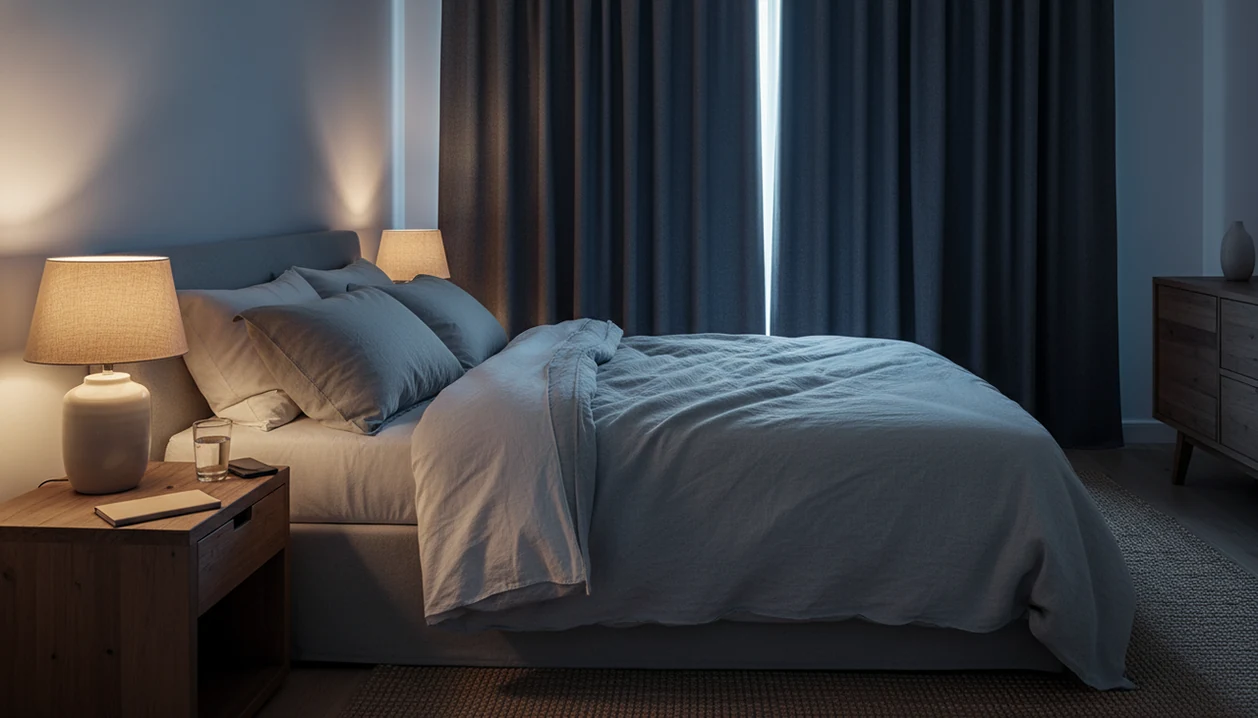


The most useful tips for falling asleep are a consistent sleep schedule, a dark and comfortably cool bedroom, fewer stimulating activities before bed, and a calming routine when thoughts keep racing. These sleep-hygiene and relaxation habits aim to reduce nighttime alertness, rather than force sleep. Breathing, body scanning, journaling, or guided meditation can provide a quiet transition from the day.
Start with sleep timing and the bedroom before adding more techniques. A repeatable 10- to 20-minute routine is a practical starting point, not a deadline for falling asleep. If sleep does not come, switch to a calm, low-stimulation activity until drowsiness returns. Persistent sleep trouble or symptoms such as gasping awake need more than another bedtime routine.
What matters tonight
- Start with your schedule and sleep environment before trying advanced sleep tricks.
- Use a repeatable 10- to 20-minute wind-down routine with breathing, body scanning, journaling, or guided sleep audio. For a simple structure, try a 10-minute wind-down routine that gives you time to settle before bed.
- If you cannot sleep, stop forcing it and switch to calm, low-stimulation activities until drowsiness returns.
7 quick tips for falling asleep tonight
Falling asleep is easier when your body clock, bedroom environment, and nervous system all get the same message: rest is next. Start with a steady bedtime and wake time, even on weekends when possible.
- Keep your wake time consistent.
- Make the room dark, quiet, and comfortably cool.
- Stop screens 30 to 60 minutes before bed.
- Avoid late caffeine, especially after afternoon.
- Skip heavy meals close to bedtime.
- Use slow breathing or a short body scan.
- Play gentle guided meditation if thoughts keep looping.
The CDC reports that about one-third of adults get less than 7 hours of sleep in a typical 24-hour period, below the recommended amount CDC guidance: adults.html. No tip guarantees instant sleep, but a repeated routine reduces friction over time.
A dark room helps more than willpower.
What screen-reduction research actually shows
A 2025 study of U.S. adults found that daily screen use before sleep was associated with later bedtimes, shorter sleep, and a higher prevalence of poor sleep quality. Because the study was cross-sectional, it cannot establish that screens caused those differences. It supports reducing bedtime screen use as a reasonable starting point, not a promise that a screen cutoff will resolve insomnia.
A 2025 randomized pilot trial offers more direct evidence. An online intervention addressing bedtime procrastination and evening device use reduced daily pre-sleep device use by an average of 23.4 minutes and increased sleep duration by 12.7 minutes after the intervention. Those are modest improvements, and the intervention addressed more than screen exposure alone. The finding supports changing evening habits without treating a phone cutoff as a cure.
5 facts behind effective tips for falling asleep
Effective sleep advice works because it lowers alertness and makes sleep feel predictable. Before adding gadgets or advanced tracking, get these five basics in place.
- Fact 1: A regular sleep and wake time strengthens the circadian rhythm, your internal timing system.
- Fact 2: A dark, quiet, comfortably cool bedroom reduces the interruptions that keep you half-alert.
- Fact 3: Screens, caffeine, alcohol, and heavy meals can keep the brain or body activated.
- Fact 4: Mindfulness and guided meditation can support relaxation and anxiety reduction for many people.
- Fact 5: Trying harder to sleep often increases frustration, which can make the bed feel like a problem-solving station.
The NHLBI estimates that 50 to 70 million Americans have ongoing sleep disorders or sleep-related problems nhlbi reference: sleep deprivation. For a broader checklist, start with sleep hygiene before changing everything at once.
Body clock mechanics behind tips for falling asleep
Sleep onset depends on three systems working together: circadian rhythm, homeostatic sleep pressure, and nervous-system downshifting. Circadian rhythm sets the timing, sleep pressure builds the longer you are awake, and the nervous system has to move from alert mode toward rest.
Light, room temperature, caffeine, stress, and rumination can all interfere with that shift. Bright light tells the brain it is still daytime. Caffeine blocks sleepiness signals. Stress keeps the body scanning for unfinished business, even when the room is quiet.
Breathing exercises, body scans, meditation, and sleep audio can lower arousal by giving attention a soft anchor. Instead of arguing with thoughts, you follow a voice, breath count, or physical sensation. In a randomized clinical trial, mindfulness-based therapy for insomnia improved insomnia severity and sleep quality compared with an active control group JAMA Internal Medicine study: 2110998.
For people with racing thoughts, a soft attention anchor is often easier than trying to empty the mind.
5-step nightly routine for tips for falling asleep
Use this routine when you want a clear starting point, not another long list. It fits well after brushing teeth, setting the alarm, and deciding the day is done.
- Set a consistent bedtime and wake time, then protect the wake time first.
- Dim lights and put screens away 30 to 60 minutes before bed.
- Prepare a cool, dark, quiet bedroom with comfortable bedding and fewer alerts.
- Release thoughts with one short journal note, tomorrow list, or gratitude prompt.
- Play guided breathing, a body scan, meditation, self-hypnosis, or a sleep story at low volume. If meditation suits you, a 10-minute meditation before bed can serve as the quiet center of your evening routine.
If you like guided audio, tools like MindTastik can guide the audio portion without asking you to design the routine at 11:40 p.m. A fuller bedtime routine for adults can help if your nights feel inconsistent.
Keep the volume boring.
Racing mind tips for falling asleep
When your mind is racing, the goal is to reduce arousal rather than win an argument with your thoughts. You are not trying to prove every worry wrong at midnight.
Try slow breathing, a body scan, worry parking, gratitude, or guided meditation. Worry parking means writing one sentence about the concern and one next action for tomorrow. Then stop negotiating with it.
Checking the time, replaying the day, or trying to solve tomorrow from the pillow can train the body to stay alert. A middle-of-the-night peek at the clock rarely settles anything. It often turns rest into a deadline.
Short daytime anxiety check-ins can also reduce nighttime rumination. A calendar alert before a guided reset may feel small, but it gives stress somewhere else to go. MindTastik can support sleep, anxiety, focus, and everyday calm, while the deeper pattern may also need a calming night routine for racing thoughts.
Tips for falling asleep fit chart: best for and not for
Sleep hygiene and meditation are useful for many people, but they are not medical diagnosis or treatment. Use this chart to decide whether a routine is enough or whether you may need more support.
| Situation | Best fit | Not enough when |
|---|---|---|
| Occasional stress-related sleeplessness | A 10-minute breathing or body scan routine | Anxiety feels unmanageable or unsafe |
| Screen-related late-night alertness | Screen cutoff, dim lights, and low-stimulation audio | Work or gaming keeps pushing bedtime later |
| Irregular routines | Fixed wake time and a simple nightly sequence | Shift work or caregiving makes sleep timing unstable |
| Waking after sleep | Quiet reset, low light, and no clock checking | Awakenings happen with gasping, pain, or panic |
Sleep apnea symptoms, severe chronic insomnia, restless legs, or safety-critical sleepiness warrant professional guidance. Clinicians typically recommend evaluation when sleep problems persist or impair daytime function.
When to seek professional help for sleep problems
Seek professional help when sleep trouble keeps persisting and affects your daytime life, or when symptoms suggest something more than ordinary stress. Chronic insomnia generally means repeated difficulty falling asleep, staying asleep, or waking too early, paired with daytime impairment such as fatigue, poor focus, irritability, or reduced functioning.
Red flags deserve more than another bedtime hack: gasping or choking awake, loud snoring, restless legs, panic episodes, or pain that repeatedly interrupts sleep. Meditation, sleep hygiene, and guided audio can support relaxation, but they do not diagnose or treat sleep disorders such as sleep apnea, restless legs syndrome, panic disorder, chronic pain, or clinical insomnia.
- Track the pattern for a week or two, including bedtime, wake time, awakenings, naps, caffeine, and daytime sleepiness.
- Contact a primary care clinician if sleep problems last for weeks, keep returning, or interfere with work, mood, driving, or caregiving.
- Ask about a sleep specialist if snoring, gasping, restless legs, unusual movements, or severe insomnia are part of the picture.
- Treat drowsy driving, unsafe sleepiness at work, or feeling unable to stay awake safely as urgent safety concerns.
If sleep feels medically risky, do not wait for the perfect routine.
5 common mistakes with falling-asleep tips
Small mistakes can turn a good routine into another thing to monitor. Replace each one with a simpler behavior.
- Trying harder in bed: Lying still and forcing sleep often raises alertness. Get quiet, breathe slowly, or do a low-light reset until drowsy.
- Using alcohol as a sleep aid: Alcohol may cause drowsiness at first, but it can disrupt later sleep. Choose herbal tea, reading, or calm audio instead.
- Scrolling in bed: Stimulating content keeps the brain engaged. Put the phone face-down on the nightstand before the routine starts.
- Expecting audio to work like medicine: Meditation supports relaxation, but it is not a sedative. Use it as one part of a steady habit.
- Switching tracks repeatedly: Monitoring whether audio is “working” keeps attention sharp. Pick one track from what to listen to before bed and let it play.
The pocket check is real.
MindTastik sleep audio support for tips for falling asleep
Guided meditation, sleep audio, breathing exercises, and self-hypnosis sessions can support adults who want help with sleep, anxiety, and everyday calm. They can fit the part of the routine where you would otherwise scroll, overthink, or keep changing your plan.
Practical options include a bedtime body scan, a breathing session, a sleep story, self-hypnosis audio, or a daytime calm break. If someone wants one simple track to steady the mind after lights-out, they usually need fewer choices, not a giant library at midnight.
Alternatives such as Calm, Headspace, and Insight Timer offer similar guided sleep audio, so the better choice is usually the one with a bedtime format you will actually repeat.
A 2021 survey of Calm users reported perceived improvements in sleep and mental health among many respondents jmir reference. That is encouraging, but it does not mean any app treats insomnia, replaces care, or guarantees quick sleep. For some readers, Best Meditation App for Sleep simply means the one they will use consistently.
Guided audio for the last part of bedtime
MindTastik’s breathing exercises, bedtime body scans, and sleep stories suit adults who want a quiet alternative to scrolling or replaying tomorrow’s tasks. Choose one session before settling down, rather than browsing for the perfect track after lights-out.
Audio is optional. A paper book or a quiet routine may fit better when using a phone leads to more checking. Persistent insomnia, gasping awake, or sleep-disrupting pain calls for professional assessment, not a different recording.
When bedtime habits are not enough
Falling-asleep tips work best when expectations stay realistic. They are support tools, not a substitute for medical care.
- Falling-asleep tips cannot diagnose or treat medical sleep disorders.
- Benefits from mindfulness, breathing, and guided audio may build over days or weeks.
- Irregular schedules, late caffeine, bright rooms, and noise can overpower app-based support.
- Long audio can backfire if you keep checking the phone or changing tracks.
- Claims such as guaranteed sleep in 2 minutes are usually overhyped.
- Persistent insomnia, loud snoring, gasping, restless legs, or daytime impairment warrant professional medical advice.
- If bedtime routines become another source of pressure, simplify them.
Start with the smallest repeatable change. A nighttime wind-down routine is more useful when it feels doable on an ordinary Tuesday, not just on an ideal night.
When Sleep Won't Come
If you have been lying awake for a while, the goal is not to force sleep harder; it is to reduce pressure and give your body a quieter target. A dim lamp, a slow exhale, or a gentle body scan may be more useful than another round of clock-checking. This is not the best moment for intense self-improvement; it is a moment for lowering the amount your brain has to process.
Match the practice to tension or racing thoughts
A body scan may fit when tension is obvious in the shoulders, jaw, or stomach, while a sleep story may fit better when thoughts keep jumping from one concern to another. Breathing exercises can be useful when the body feels keyed up, but they may feel frustrating if you are trying to control every breath perfectly. Choose the smallest practice that matches tonight’s problem, not the practice that sounds most impressive.
When story-style audio fits your routine better than active meditation, browse MindTastik sleep stories for calm bedtime listening.
Falling asleep questions
What helps with falling asleep faster?
Start with a consistent wake time, a dark and comfortably cool bedroom, and fewer stimulating activities before bed. Add one short relaxation practice, such as slow breathing or a body scan. There is no reliable promise of sleep within a set number of minutes, and monitoring the time can add pressure.
Should I get out of bed if I cannot sleep?
If lying awake turns into frustration or an effort to force sleep, a quiet reset can help reduce the pressure. Choose a low-stimulation activity in dim light and return to bed when drowsiness returns. Avoid turning the break into scrolling, work, or repeated clock-checking.
How long before bed should I stop using screens?
A practical starting point is to put screens away 30 to 60 minutes before bed. NHS guidance recommends a broader wind-down period of 60 to 90 minutes. Set a screens-off time separate from lights-out, and replace scrolling with reading, gentle stretching, or another quiet activity.
How can I calm racing thoughts at bedtime?
Write one sentence about the concern and one next action for tomorrow, then stop trying to solve it in bed. Slow breathing, a body scan, or guided audio can give attention a quieter task. If anxiety feels unmanageable or regularly disrupts sleep, seek support beyond a bedtime practice.
Does meditation help with falling asleep?
Meditation can be a relaxing wind-down activity, particularly when bedtime involves tension or repetitive thoughts. It is not a sedative and does not guarantee sleep. Keep it within a broader routine that addresses timing, light, and stimulation. Persistent insomnia may need assessment and treatment such as cognitive behavioral therapy for insomnia.
What bedroom temperature is best for falling asleep?
Aim for a comfortably cool room rather than a rigid temperature target. Sleep guidance recommends avoiding excessive heat or cold, alongside keeping the bedroom dark and quiet. Bedding and room temperature should allow comfortable rest without leaving the body too hot or too cold.
Can alcohol help me fall asleep?
Alcohol may cause drowsiness at first, but it can disrupt sleep later in the night. That makes it a poor bedtime sleep aid, even when falling asleep initially seems easier. A quiet activity, reading, or calm audio is a better fit for a repeatable wind-down routine.
When should I seek help for trouble falling asleep?
Seek professional help when sleep trouble persists and affects daytime concentration, mood, energy, or functioning. Loud snoring, gasping or choking awake, restless legs, panic episodes, and recurring pain also deserve assessment. Sleep hygiene and meditation can support relaxation, but they cannot diagnose or treat a medical sleep disorder.