
Deep Sleep Meditation for Bedtime Preparation


Deep sleep meditation is guided bedtime audio that uses breathing, body relaxation, and calming attention shifts to prepare the mind and body for sleep. Common techniques include body scans, gentle breathwork, and quiet imagery. The aim is to reduce nighttime arousal, not to force sleep or guarantee a particular sleep stage.
A repeatable routine can make the audio a familiar wind-down cue: choose a session before bed, dim the lights, lower phone brightness, and listen with the screen dark. A consistent sleep schedule still matters. Guided meditation, sleep audio, breathing exercises, and self-hypnosis can support bedtime preparation, but they are not medical treatments for insomnia, sleep apnea, or severe anxiety. Persistent sleep problems need professional care.
Bedtime essentials
- Use deep sleep guided meditation as a repeatable wind-down cue, not as a promise to force sleep.
- Bedtime deep sleep audio works best with dim lights, low phone brightness, audio-only playback, and a consistent sleep schedule.
- A sleep meditation app can support sleep preparation with guided meditation, sleep audio, breathing exercises, and self-hypnosis sessions, but persistent sleep problems need professional care.
Deep sleep meditation for bedtime preparation: the 5 facts that matter
- Deep sleep meditation is guided bedtime audio for relaxation and sleep preparation, not a cure for insomnia or medical sleep disorders.
- Common ingredients include breathwork, body scans, progressive muscle release, calming imagery, and practice letting racing thoughts pass.
- The goal is to reduce arousal and sleep effort, not to “knock out” the brain on command.
- A 2019 meta-analysis of randomized trials found mindfulness-based interventions improved sleep quality with a medium effect size (PubMed: PubMed research: 31043168).
- Apps work best when paired with sleep hygiene, including regular timing, dim light, and less late-night scrolling.
For many people, the helpful change is modest. The phone rests out of reach, the room stays cool, and the sleep story begins. Now there is a gentle rhythm to follow instead of another reason to stay alert.
Deep sleep guided meditation effects on the nervous system
Deep sleep guided meditation works by lowering cognitive arousal and physical tension before sleep. In plain terms, it gives the mind a calmer target than worry, clock-checking, or trying hard to fall asleep.
Slower breathing can nudge the body toward parasympathetic activity, the rest-and-digest side of the nervous system. Muscle relaxation reduces the bracing that builds in the jaw, shoulders, and stomach. Body scanning shifts attention away from sleep monitoring, which is the habit of checking whether sleep has arrived yet.
Still, meditation does not manufacture deep sleep stages on command. Clinicians typically recommend structured relaxation as one part of evidence-based insomnia care, and the American Academy of Sleep Medicine includes relaxation-based therapies in chronic insomnia treatment guidance. The most common medically supported way to address chronic insomnia is cognitive behavioral therapy for insomnia, sometimes combined with relaxation practice, rather than relying on audio alone.
In the middle of the night, trying harder can make rest feel farther away.
“Deep sleep” audio is not the same as deep sleep
In sleep medicine, deep sleep means stage N3, also called slow-wave sleep. It is characterized by high-amplitude, low-frequency delta brain activity. Normal adult sleep moves through NREM and REM stages in cycles of about 80 to 100 minutes, according to the National Academies’ account of sleep physiology. A track labeled “deep sleep meditation” describes its bedtime purpose, not a measured change in brain activity.
A consumer sleep tracker cannot reliably establish that a meditation increased N3 sleep. A review of wearable sleep technology found that agreement is generally better for sleep versus wakefulness than for individual sleep stages. The AASM’s guidance on sleep technology recommends looking at trends such as duration and regularity, checking data in the morning, and avoiding repeated attention to a single sleep score.
Bedtime deep sleep audio routine in a sleep meditation app
Does bedtime deep sleep audio work better when you set it up before getting into bed? Usually, yes, because the goal is to reduce decisions once you are sleepy.
- Set the room first. Dim the lights, lower the thermostat if needed, and put the phone in dark mode with low brightness. For a gentle introduction, try pre-sleep meditation for beginners after setting up a quiet, dim bedroom.
- Silence interruptions. Turn on do-not-disturb, set a comfortable volume, and place the phone where you will not keep touching it.
- Choose one familiar session. Pick a 10- to 30-minute deep sleep guided meditation before you lie down, not while browsing in bed.
- Use audio-only playback. Let the voice guide breathing, body relaxation, and attention away from worries without watching the screen.
- Repeat the same pattern. Use the same order nightly so the routine becomes a bedtime cue, not a nightly search for instant results. A sleep meditation playlist for beginners can make choosing familiar sessions easier and reduce browsing before bed.
If you want a fuller sequence, a bedtime routine for adults can help you place meditation after light, hygiene, and screen changes.
5 deep sleep guided meditation styles for nighttime relaxation
Sleep-friendly meditation should feel gentle, repetitive, and low-effort. Analytical or insight-heavy practices may be useful during the day, but they can be too activating when the room is dark and the mind is already busy. If you are new to bedtime practice, start with sleep meditation for beginners and keep sessions simple.
- Breath counting: A simple count gives the mind a soft anchor without much thinking.
- Body scan: Attention moves through the body, often from feet to head, releasing tension in sections.
- Progressive muscle relaxation: You tense and relax muscle groups to notice the difference between holding and letting go.
- Calming imagery: A guide describes a safe, quiet scene that keeps attention away from worry loops.
- Self-hypnosis-style sleep suggestions: Repeated phrases support rest, heaviness, and letting the day end.
Some people prefer a voice-led session. Others want ambient sound with only light prompts. Tools like MindTastik, Calm, and Headspace offer guided meditation, sleep audio, breathing exercises, and self-hypnosis-style options, but these styles should be treated as relaxation supports, not medical treatments.
Deep sleep meditation versus sleep hygiene habits
Deep sleep meditation supports a wind-down ritual, but it cannot cancel out late caffeine, irregular bedtimes, or bright screen use. Sleep disorders are common, too: about 50 to 70 million U.S. adults have a chronic sleep or wakefulness disorder (NHLBI: nhlbi reference: sleep deprivation), and insomnia symptoms are often summarized as affecting roughly 30% of adults short term and about 10% chronically (American Academy of Sleep Medicine: aasm reference: insomnia.pdf).
| Habit | What it helps | How meditation supports it |
|---|---|---|
| Consistent schedule | Trains sleep and wake timing | Gives the same cue at the same point each night |
| Caffeine timing | Reduces stimulant effects near bedtime | Makes relaxation easier when the body is not wired |
| Light exposure | Supports circadian rhythm | Works better after lights are dimmed |
| Screen reduction | Lowers mental and visual stimulation | Replaces scrolling with audio-only attention |
| Wind-down routine | Creates a predictable transition | Adds structure when thoughts get loud |
A sleep meditation app can support a nighttime wind-down routine, not replace the basics. For adults with uneven schedules, sleep meditation usually works best when bedtime timing is steady, while short breathing tracks fit nights when there is only a narrow window to reset. A weekend sleep routine with meditation can help you maintain familiar bedtime cues when your schedule changes.
Relaxation meditation for sleep: best-fit adults and caution cases
Relaxation meditation for sleep fits adults who want a low-screen way to prepare for bed. It is less appropriate as a stand-alone answer for persistent, severe, or medically complex sleep problems.
Best for
| Best-fit adult | Why it may help |
|---|---|
| Adults reducing bedtime scrolling | Audio gives the mind something to follow without a bright feed |
| People with racing thoughts | Repetitive guidance can interrupt worry loops gently |
| Beginners | Guided audio removes the guesswork of silent meditation |
| Routine-builders | The same track can become a reliable sleep cue |
Not for
| Caution case | Better next step |
|---|---|
| A guaranteed one-minute sleep fix | Use realistic expectations and routine practice |
| Suspected sleep apnea or restless legs | Ask a qualified health professional |
| Severe anxiety, trauma distress, or depression | Consider professional mental health support |
| Chronic pain disrupting sleep | Discuss pain and sleep care with a clinician |
MindTastik sleep meditation app routine for low-screen wind-down
MindTastik offers wellness audio for adults, including guided meditation, sleep tracks, breathing practices, and self-hypnosis sessions for support with rest, anxious moments, and everyday calm. For bedtime, it helps to pick the session before settling under the blanket.
A simple setup works: pick guided meditation if thoughts are busy, sleep audio if you want a longer wind-down, breathing exercises if the body feels keyed up, or self-hypnosis-style sessions if repeated suggestions feel soothing. Keep the volume low. Use familiar tracks. Start at about the same time.
A pillow adjusted twice, a weighted blanket pulled into place, the room a little cooler than usual. That is normal. Start the session before browsing takes over. Guided audio can support relaxation and bedtime preparation, but it does not diagnose or treat insomnia, sleep apnea, anxiety disorders, or other medical conditions.
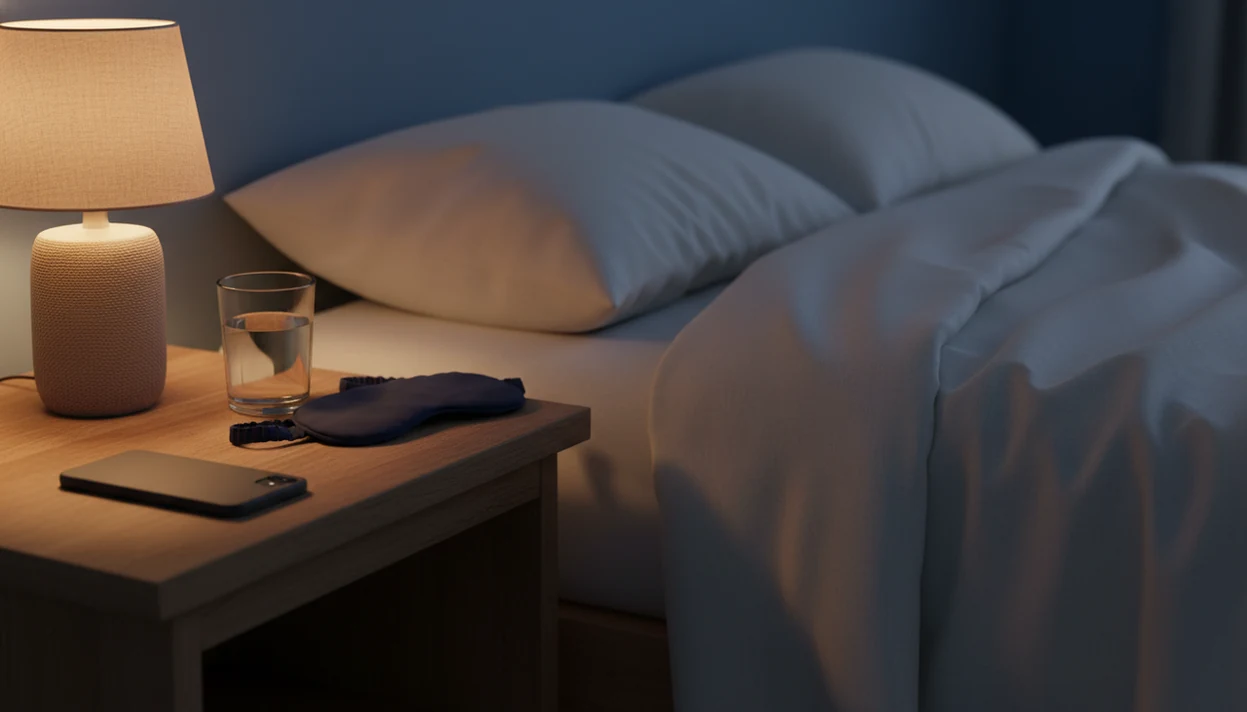
Image caption: bedtime deep sleep audio setup
The visual should show a quiet bedside setup: dim lighting, a phone face-down or with the screen dark, and soft audio playing without the person staring into a bright display. A glass of water, a closed book, or folded pajamas can signal bedtime without making the image feel staged.
Caption: Bedtime deep sleep audio playing softly with the phone screen dark, supporting deep sleep meditation for a low-screen wind-down.
Avoid medical devices, therapy claims, or imagery that suggests the audio is treating a disorder. The behavior matters more than the device: set the session, lower the brightness, start listening, and stop scrolling. If the screen keeps pulling attention back, a screen-free bedtime meditation setup may be easier to repeat.
MindTastik sessions for a quieter bedtime
MindTastik’s guided meditation library suits adults who prefer a voice-led body scan or calming attention practice before sleep. Breathing exercises are another option when physical tension is the main distraction; sleep stories may suit people who prefer a gentle narrative to instructions. Choose the session before settling into bed, then keep the screen dark and the volume low.
The app is a bedtime relaxation option, not a medical treatment. Adults with persistent sleeplessness, breathing pauses, severe anxiety, or discomfort during quiet meditation should seek appropriate professional guidance rather than rely on audio alone.
What bedtime meditation cannot treat or guarantee
Deep sleep meditation has real limits, and those limits matter when sleep is getting worse.
- It does not treat sleep apnea, restless legs syndrome, depression, chronic pain, or other medical causes of poor sleep.
- It may not help immediately. Some people need days or weeks before the routine feels familiar.
- Severe anxiety, panic, or trauma histories can make quiet eyes-closed practices uncomfortable.
- Bright smartphone use in bed can undermine the benefit if the app leads to scrolling.
- Audio alone may disappoint if caffeine, alcohol, irregular schedules, stress, or late-night screens remain unchanged.
- Tracks that guarantee deep sleep, instant sleep, or a specific number of hours should be viewed skeptically.
- Persistent insomnia, suspected sleep apnea, or worsening nighttime anxiety should be discussed with a qualified health professional.
If meditation makes you feel more alert, stop forcing it. A shorter breathing track or a different meditation before sleep checklist may fit better.
When story-style audio fits your routine better than active meditation, browse MindTastik sleep stories for calm bedtime listening.
Deep sleep meditation questions
Does deep sleep meditation actually put the brain into deep sleep?
Not on command. Deep sleep is stage N3, a sleep stage defined by slow-wave brain activity. Bedtime meditation aims to reduce worry and physical tension before natural sleep. The name of an audio track does not establish that it produces N3 sleep or increases time spent in that stage.
How long should a deep sleep meditation session last?
A 10- to 30-minute guided session is a practical starting point for bedtime preparation. Longer is not necessarily better. The useful length is one that stays gentle and does not turn listening into another task. Choosing the track before getting into bed also avoids browsing when already sleepy.
What type of meditation is best for racing thoughts at bedtime?
Breath counting, a guided body scan, or calming imagery can give attention a simple target instead of a worry loop. A sleep story is another option when a narrative feels easier to follow. Analytical practices and intense self-reflection may be too activating at bedtime.
Can deep sleep meditation cure chronic insomnia?
No. Meditation can support relaxation and a bedtime routine, but it is not a cure for chronic insomnia or medical sleep disorders. Persistent or severe sleeplessness needs professional assessment. Loud snoring or breathing pauses also call for care rather than treating the problem as ordinary bedtime tension.
Can sleep meditation help after waking up during the night?
A familiar, gentle session can provide a calming focus after waking, without promising a quick return to sleep. Keep playback quiet and avoid searching through tracks or checking sleep scores. Brief awakenings can occur during normal sleep; frequent or prolonged waking deserves attention if sleep remains poor.
Why does my sleep tracker show little deep sleep after meditation?
Consumer trackers estimate sleep stages rather than measuring them directly with laboratory sleep recordings. Their stage estimates are generally less reliable than their broad sleep-versus-wake estimates. A single low deep-sleep reading cannot establish that meditation failed. Longer-term patterns in sleep duration and regularity are more useful than one nightly score.