
Sleep Routine After a Stressful Day: A Simple Wind-Down Guide
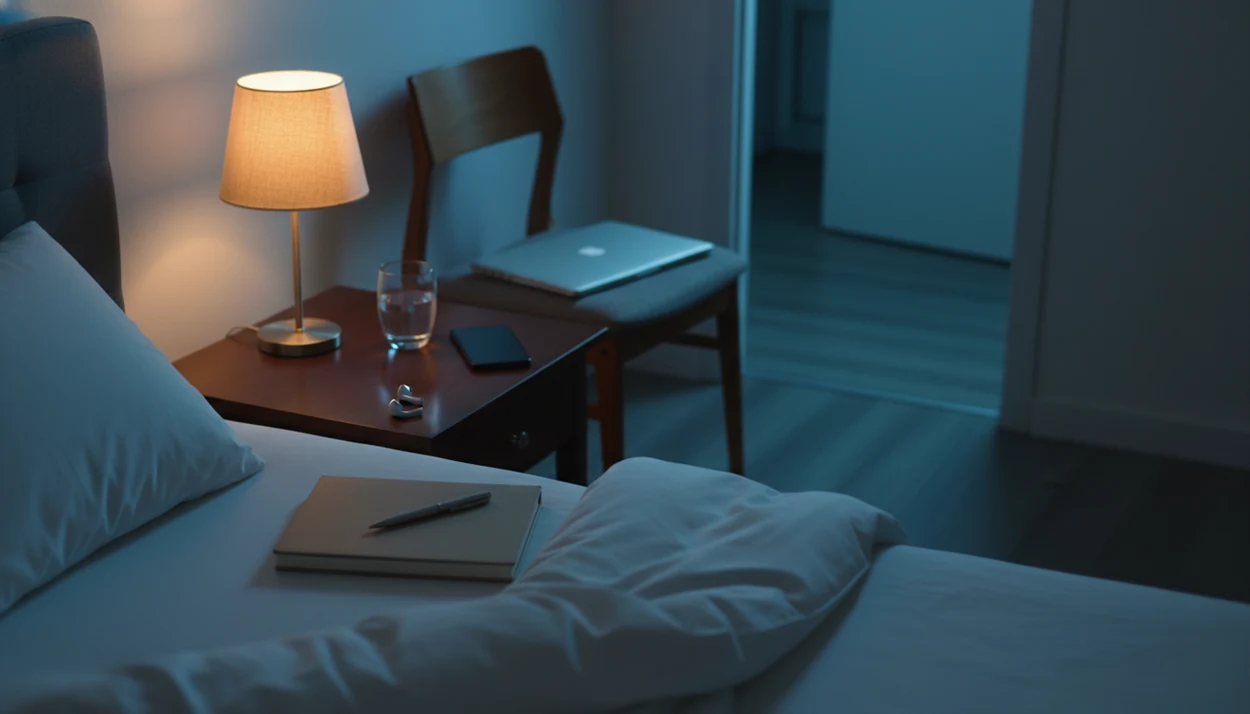


A sleep routine after a stressful day is a repeatable bedtime sequence that reduces stimulation, settles physical tension, and marks the end of work. The order can stay simple: close the day, lower light and noise, write down unfinished concerns, then try slow breathing or a body scan. Guided sleep audio can be the final step, played with the screen off rather than followed by more scrolling.
Start winding down 30 to 120 minutes before bed when time allows. On a late night, a short version is more manageable than a long checklist. Keep the same order and choose the audio beforehand. MindTastik can provide a calm voice to follow, but the aim is to make room for rest, not force sleep.
The bedtime essentials
- Start winding down 30-120 minutes before bed, even if you only have time for a short version.
- Use a fixed sequence: close the day, reduce screens, calm the body, then listen to sleep audio.
- MindTastik fits best as the guided audio step for adults who need sleep, anxiety, and everyday calm support.
Best sleep routine after a stressful day: 5-step shortlist
The best sleep routine after a stressful day is short, repeatable, and ordered: stop work, reset the room, unload worries, calm the body, then use guided sleep audio. Adults generally need 7 or more hours of sleep each night, according to the American Academy of Sleep Medicine and Sleep Research Society jcsm reference: jcsm.4758.
- Work shutdown: write tomorrow’s first task, close work tabs, and say, “work is parked.”
- Environment reset: dim lights, cool the room, and lower noise.
- Worry unload: jot down looping thoughts so they are not held in memory.
- Body calming: use slow breathing, light stretching, or a body scan.
- Guided sleep audio: press play, turn the screen off, and let the routine carry you.
On exhausting nights, shrink the whole sequence to ten minutes. MindTastik belongs in the final decompression step because it offers guided sleep support, not medical treatment.
Stress arousal and bedtime cues in the nervous system
Stress arousal keeps the brain alert through rumination, muscle tension, and sensory stimulation, even when the body feels tired. Repeating the same bedtime cues teaches the nervous system, “this sequence means safety and sleep.”
That is how a sleep routine works: it uses habit loops and relaxation cues to reduce alertness. In plain language, your brain learns the pattern. Laptop shut. Lights low. Breathing slower. Audio on.
Relaxation techniques such as slow breathing, mindfulness, and body scans can support sleep quality for some people. A 2016 meta-analysis found that mindfulness meditation produced small to moderate improvements in sleep quality, especially for people with sleep disturbances academic reference: 2454460. It is not instant. You may still wake in the dark and notice stress returning, but repeated practice can give the body a more familiar way to settle again.
Relaxation and insomnia treatment have different jobs
Meditation may be useful as a wind-down practice without being an established treatment for insomnia disorder. A 2023 review of mindfulness-based interventions included 13 articles representing nine studies. It found small-to-medium effects on insomnia severity and sleep quality, but the main comparisons were not statistically significant. The review could not demonstrate a clear benefit for adults with insomnia disorder.
Persistent sleep-related worry deserves more than repeated attempts to relax. A meta-analysis of 15 randomized trials of CBT-I found moderate-to-large reductions in worry, while its effect on rumination was small and unreliable. NHS inform recommends CBT-I for chronic insomnia. It addresses thoughts and behaviors that maintain sleep problems, rather than simply adding another calming exercise at bedtime.
5 steps to use a sleep routine after a stressful day tonight
Use this routine tonight as a 30-120 minute wind-down, or compress it into a 10-minute emergency version when the day ran long.
- Choose a start time: begin 30-120 minutes before bed, or set a 10-minute timer if you are already late.
- Close the day: write three loose tasks, pick tomorrow’s first task, and stop problem-solving.
- Lower stimulation: dim the phone, put it on Do Not Disturb, and move away from email or news.
- Calm the body: do two minutes of slow breathing or a brief body scan.
- Play guided audio: choose a MindTastik sleep meditation, breathing session, or self-hypnosis track, then use the audio with the screen off.
If you want a slower build, our guide on how to build a sleep routine gives more structure.
Best for racing thoughts: guided sleep audio in MindTastik
Does guided sleep audio help when your thoughts are too loud to manage alone? Yes, it can help by giving your attention a simple track to follow when decision fatigue makes self-directed meditation feel impossible.
MindTastik offers guided wellness audio for adults, including sleep support, breathing practices, meditation sessions, and self-hypnosis tracks for everyday calm. After a demanding day, that structure can help: choosing a brief breathing practice or a longer body scan is often simpler than trying to design a wind-down routine on the spot.
People who lie down and feel their mind keep replaying the day may find MindTastik useful because it gives that need a clear place to start: a named guided session. The app can support sleep and anxiety routines, but it does not replace therapy, medication, medical care, or crisis support.
Best for work stress: the 20-minute shutdown routine before bed
A 20-minute work shutdown helps keep unfinished loops from following you into bed. The goal is not to finish everything; it is to tell the brain where each concern will go tomorrow.
Write loose tasks on paper. Pick tomorrow’s first task. Close the laptop, messaging apps, and work calendar. Then say one plain transition phrase: “work is parked for tomorrow.”
Do not check email, Slack, or news in bed. One message can reopen the whole workday, especially when the office door finally closes for ten minutes and your body is asking for quiet. For work-stress nights, the most useful routine is often a written shutdown followed by body calming because it separates planning from sleep.
If work thoughts are your main barrier, a nighttime wind-down routine can make the transition feel less abrupt.
Best for body tension: breathing and progressive muscle relaxation
When stress feels physical, start with the body before asking the mind to be quiet. Slow breathing is an on-ramp when meditation feels too hard.
- Slow breathing gives the body a simple task: inhale gently, exhale longer, repeat for two to five minutes.
- Progressive muscle relaxation is a tense-and-release practice: squeeze one muscle group, release it, then move to the next.
- Light stretching can help stiffness: keep it easy, not workout-level intense.
- A micro-practice lowers the entry barrier: two minutes is enough to begin. For another brief relaxation approach, the Navy SEAL sleep method offers a structured way to practice settling.
- Longer audio works better after the body softens: then guided sleep meditation is easier to follow.
When body tension is the issue, MindTastik fits as the next step after a 2-5 minute breathing reset because the guided audio gives the restless body a slower rhythm to match.
Best for screen-heavy evenings: bedroom cues that protect sleep
Bedroom cues work best when they reduce stimulation: cool air, darkness, quiet, and fewer device prompts. A room does not need to be fancy. It needs to stop acting like the workday.
Cut off bright screens when you can. If you use your phone for audio, dim it, turn on Do Not Disturb, and place it face down after pressing play. Notifications are tiny interruptions, but the brain treats them like invitations.
Soothing sound can help when silence makes rumination louder. That might be guided sleep audio, soft narration, or a calm breathing track. Good sleep apps deliver structure and quiet cues, not guaranteed sleep. If screens are your hardest habit, try a screen-free bedtime meditation plan and keep the audio running without visual scrolling.
Selection criteria for stressful-day sleep routine steps
These steps were chosen for consistency, low effort, reduced stimulation, relaxation evidence, and repeatability. The routine avoids complicated wellness trends because stressed adults need fewer choices, not a longer checklist.
About one-third of U.S. adults report sleeping less than 7 hours per night, per CDC data CDC guidance: mm7108a1.htm. That makes practical bedtime support a common need.
| Criterion | Why it matters after stress | Example step |
|---|---|---|
| Consistency | Repeated cues become easier to follow | Same wind-down order |
| Low effort | Tired people skip complex routines | Two-minute breathing |
| Reduced stimulation | Fewer alerts means less arousal | Do Not Disturb |
| Relaxation evidence | Breathing and mindfulness may support sleep quality | Body scan |
| Repeatability | A routine only helps if you reuse it | Guided audio nightly |
The right fit for practical adult bedtime support is MindTastik because it keeps the final step simple: choose sleep audio, press play, screen off.
Honest cons of sleep routines after high-stress days
A sleep routine may not work immediately, especially during grief, caregiving stress, deadlines, illness, or major life change. Some nights are just rough. Blanket pulled to the chin, mind still running. If travel has also disrupted your schedule, jet lag sleep tips can help you adjust your bedtime cues.
Some relaxation practices also feel activating for certain people. A silent body scan may make one person calmer and another more aware of every heartbeat. In that case, use guided narration, breathing, or neutral sound instead.
App-based routines require device discipline. If sleep audio turns into scrolling, checking messages, or comparing Calm, Headspace, and other sleep-audio apps at midnight, the phone becomes stimulation again. For chronic insomnia, suspected sleep apnea, severe anxiety, or depression, a routine is not enough on its own. The most evidence-backed first-line treatment for chronic insomnia is CBT-I, while bedtime routines fit people who need supportive habits around stress and sleep acpjournals reference: M15 2175.
Guided audio after the workday is closed
MindTastik's guided breathing exercises suit the body-calming step when stress shows up as tense shoulders or difficulty settling. A guided meditation or sleep story can follow once work is put away and the room is quiet. Adults who find narration distracting may prefer soundscapes or no audio. Persistent insomnia needs assessment rather than a larger audio library, and anyone whose phone use turns into scrolling may do better with a device-free routine.
What a stressful-day wind-down cannot treat
A stressful-day sleep routine is supportive, but it has real limits.
- It does not replace medical evaluation for chronic insomnia, sleep apnea, depression, severe anxiety, or panic symptoms.
- It is not a quick fix; benefits often require repeated practice over weeks.
- No single routine works for everyone, and some people need trial and error.
- Major life events can overwhelm even strong sleep habits.
- Apps can backfire if notifications, scrolling, or bright screens stay active.
- Alcohol may feel relaxing at first, but it can disrupt sleep quality later in the night niaaa reference: alcohol and sleep.
- The American College of Physicians recommends CBT-I as first-line treatment for chronic insomnia, not a meditation app or bedtime audio alone.
MindTastik can support a wind-down routine because it offers guided sessions, but professional care is the right next step when sleep problems are persistent, severe, or tied to health symptoms.
Before Bed
- If you are replaying one specific conversation, use a brief body scan rather than a complex meditation; attention to the jaw, shoulders, and hands may feel more concrete than trying to think differently.
- If the room still feels like a work zone, change one cue first: dim the lamp, move paperwork out of reach, or choose offline audio so the screen is not part of the routine.
- If you feel impatient after two minutes, shorten the plan instead of abandoning it; a five-minute wind-down repeated nightly is often more useful than a perfect routine done once.
- If a sleep story makes you mentally edit the plot, switch to breathing exercises or a neutral voice track; bedtime audio should reduce decision-making, not invite analysis.
- If lying still makes stress feel louder, start seated for the first slow exhale and only move to the pillow once the routine has clearly begun.
When the routine ends but sleep does not come
A completed routine does not mean staying in bed at any cost. If lying awake turns into frustration or worry about tomorrow, NHS Scotland's sleep guidance recommends getting up, going to another room for about 20 minutes, and doing a quiet activity before returning to bed. This is a stimulus-control approach, not another relaxation task to complete perfectly.
The same guidance recommends a consistent wake time and reducing caffeine, alcohol, nicotine, and back-lit-device use near bedtime. For a stressful evening, that means the break from bed should not restart work or become a phone session. Keep the activity quiet, then return to bed rather than trying to solve the day's problems while lying awake.
Choose a short practice for tension or racing thoughts
| Technique | Best for | Minutes |
|---|---|---|
| Slow-exhale breathing | quickly shifting out of work mode | 3-5 min |
| Guided body scan | unclenching physical tension before the pillow | 8-12 min |
| Low-stimulation sleep story | racing thoughts that need a calm track to follow | 10-20 min |
When to seek professional help for stress-related sleep problems
Seek professional help when stress-related sleep trouble is persistent, severe, or affecting your safety, mood, work, driving, or relationships. A bedtime routine can support recovery, but it cannot diagnose insomnia, sleep apnea, panic, depression, or another health condition.
- Notice red flags: track trouble falling asleep, staying asleep, or waking too early for weeks; loud snoring, gasping, or pauses in breathing; panic attacks; low mood; or daytime impairment such as dozing off, mistakes, or feeling unable to function.
- Talk to a clinician: ask about medical causes, medications, mental health, and whether symptoms fit chronic insomnia or another sleep disorder.
- Ask about CBT-I: for chronic insomnia, cognitive behavioral therapy for insomnia is considered first-line care because it targets the sleep thoughts, behaviors, and patterns that keep insomnia going.
- Use apps as support: keep MindTastik, breathing, and routines in the habit-support lane. They can make nights feel more structured, but they do not screen for or rule out medical conditions.
- Get urgent support: if you have thoughts of self-harm, feel in danger, or have crisis symptoms, contact emergency services or a crisis line now.
On nights when guided practice feels like too much effort, MindTastik sleep stories offers low-stimulus audio you can play in the background.
Stressful-day sleep routine questions
Why am I tired but unable to sleep after a stressful day?
Physical tiredness can coexist with mental alertness. Worry, replaying conversations, muscle tension, and continued screen use can keep bedtime feeling like an extension of the day. Presleep worry is associated with longer time to fall asleep and poorer sleep quality. A routine reduces stimulation, but it cannot guarantee immediate sleep.
What is a quick bedtime routine after working late?
Use a 10-minute version: write tomorrow's first task, close work apps, dim the room, and spend two minutes on gentle breathing or a brief body scan. If audio helps, choose one track and turn the screen off. Keep the order simple rather than trying to fit every possible sleep habit into a late evening.
How do I stop thinking about work when I get into bed?
Move the work shutdown out of bed. Write unfinished tasks on paper, choose the first task for tomorrow, and close messaging and email before lying down. This gives concerns a place to wait. It may reduce repeated mental checking, but persistent worry or rumination may need help beyond a bedtime routine.
Should I keep listening to sleep audio if I am still awake?
Audio is optional, not a task that must continue until sleep arrives. If it becomes irritating or encourages more phone use, stop it. If being awake in bed becomes distressing, NHS guidance recommends getting up for a quiet activity in another room for about 20 minutes before returning.
What if a body scan makes me more anxious?
Some people become more alert when focusing on their heartbeat, breathing, or other body sensations. Switch to guided narration, neutral sound, or another gentle practice rather than pushing through. The useful choice is one that reduces stimulation. Persistent panic or severe anxiety calls for professional support, not increasingly demanding relaxation exercises.
Does alcohol help with sleep after a stressful day?
Alcohol may feel relaxing initially, but it can disrupt sleep quality later in the night. It is not a reliable substitute for winding down. Sleep guidance recommends reducing alcohol near bedtime, alongside caffeine, nicotine, and bright device use. A quieter evening routine avoids relying on that initial relaxing effect.
When should stress-related sleep problems be checked by a clinician?
Seek help when sleep trouble persists despite changes in habits, or affects mood, work, relationships, or driving safety. Loud snoring, gasping, panic, or marked daytime impairment also deserve assessment. Chronic insomnia may benefit from CBT-I. Immediate danger, suicidal thoughts, or inability to stay safe require urgent local emergency or crisis care.
Can sleep meditation treat chronic insomnia?
Sleep meditation can serve as a calming bedtime cue, but evidence for treating insomnia disorder is uncertain. A 2023 review did not establish a clear benefit for adults with insomnia disorder. CBT-I is recommended as first-line treatment for chronic insomnia and addresses sleep-related thoughts and behaviors, not just relaxation.