
Sleep Meditation in 10 Minutes
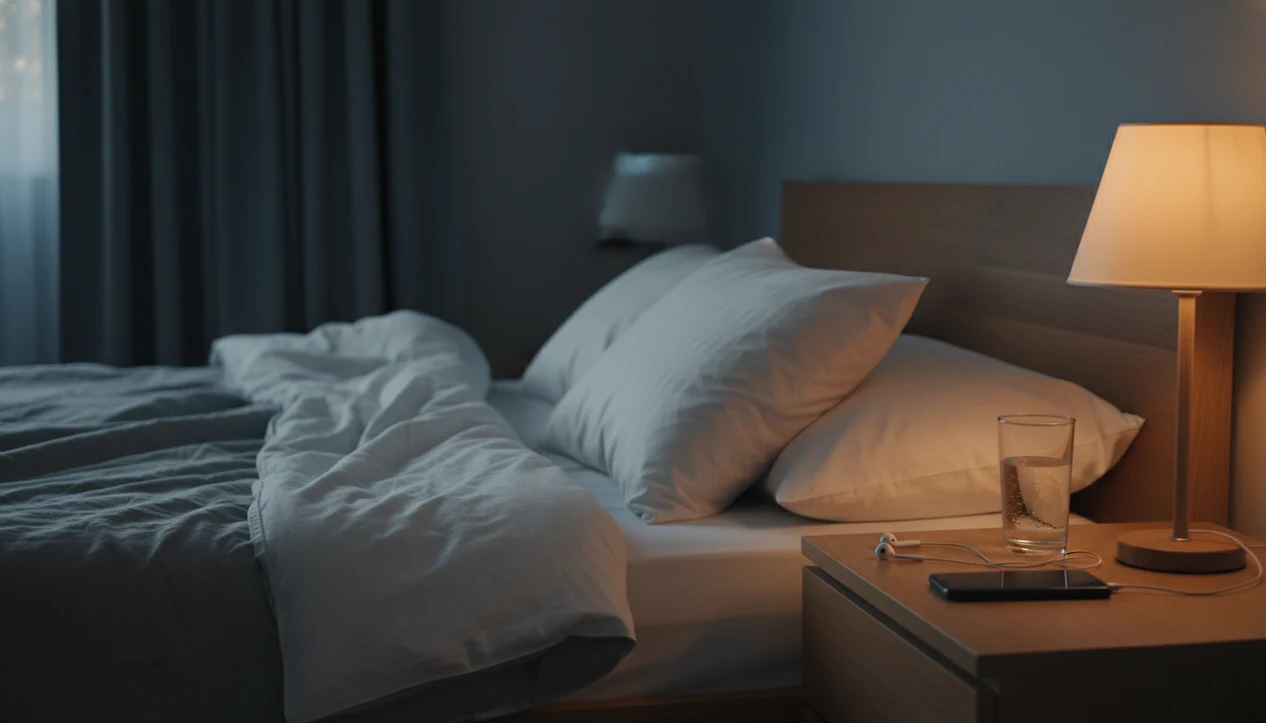


A 10-minute sleep meditation is a short guided bedtime practice that uses slow breathing, a body scan, and quiet narration to help the body settle before sleep. It offers a low-stimulation transition from thinking to resting, not a guarantee of falling asleep before the audio ends. The simplest structure starts with breathing, moves through bodily sensations, and finishes with fewer words or silence.
This practice fits the moment when the lights are low and the next step is sleep. Lying down, keeping the volume low, and avoiding screen scrolling help preserve that quiet setting. Repeating the same track can provide a familiar bedtime cue. Short meditation may support bedtime stress and mild sleep anxiety, but it is not medical treatment for chronic sleep disorders.
The bedtime essentials
- Use a 10 minute sleep meditation when you are already in bed and want a simple, repeatable sleep cue.
- The best structure is breath first, body scan second, then minimal words or silence at the end.
- Short sleep meditation can support sleep anxiety and bedtime stress, but it is not a medical treatment for chronic sleep disorders.
10 Minute Sleep Meditation Structure for Bedtime
A guided sleep meditation 10 min track is a short bedtime practice that moves attention from thinking to resting. It is different from a full evening routine because it happens when the lights are already low, the body is still, and the next step is sleep.
A simple structure looks like this: 2 minutes of slow breathing, 4 minutes of body scan, 2 minutes of calming phrase or imagery, then 2 minutes of quiet fade. The last part matters. Too much instruction near the end can keep the mind listening for the next cue. You can also try deep sleep meditation for another gentle approach to breathing, body awareness, and bedtime relaxation.
The goal is reduced arousal, not forcing sleep. If tomorrow’s meeting starts looping at midnight, the track gives your mind one gentle lane to follow.
A low-stimulation bedtime audio app can fit here when you want a short track instead of a long lesson.
How Sleep Meditation in 10 Minutes Works
Short sleep meditation works by lowering cognitive arousal and physical tension before sleep. In plain language, it gives the brain fewer problems to solve and the body fewer signals to brace against.
- Slow breathing can support parasympathetic activation, the body’s “settle down” mode.
- Predictable narration reduces decision-making, which helps when the mind is busy.
- Body awareness shifts attention from abstract worries to concrete sensations.
- Repetition can turn the same audio into a learned bedtime cue over time.
- Many sleep meditations end with silence or sparse words so the listener does not need to stay alert.
Adults generally need 7 or more hours of sleep per night, according to the American Academy of Sleep Medicine sleepeducation reference: healthy sleep habits. The CDC also reports that about 1 in 3 U.S. adults do not regularly get enough sleep CDC guidance: adults sleep facts and stats.html. A 10-minute track does not solve every sleep problem, but it can make the transition into rest feel less abrupt.
What the research says about a 10-minute session
A 2018 review of 18 randomized trials involving 1,654 adults with clinically significant sleep disturbance found a moderate improvement in sleep quality compared with nonspecific active controls. Evidence that meditation was better than specific active treatments was low-strength. That distinction matters: the findings support meditation as a possible aid, not as a replacement for established sleep treatment.
The studies did not establish that one 10-minute bedtime recording reliably brings on sleep. In the same review’s practice schedules, group sessions lasted 1 to 2.5 hours weekly over 2 to 16 weeks. Among the 12 trials specifying a daily home-practice target, recommendations ranged from 15 to 60 minutes. Ten minutes is a manageable starting point, but its appeal is practicality rather than a proven clinical threshold.
How to Use Guided Sleep Meditation 10 Min Audio
Set up the audio before you feel fully sleepy. The small decision of dimming the phone screen before starting bedtime audio can prevent one more scroll, one more message, one more bright hit of stimulation.
- Set the track before getting into bed, or add it to a nightly queue.
- Lie down in a comfortable position with the room as dark as you can make it.
- Lower the volume so the voice is easy to hear but not interesting.
- Follow the breath and body cues without trying to perform them correctly.
- Let the ending fade without checking the clock or restarting the track.
If you are building a larger routine, pair the audio with consistent sleep hygiene. Calm and Headspace also offer short bedtime audio; choose the option with the least screen fuss at night.
10 Minute Bedtime Audio Timeline
A 10 minute bedtime audio track should become less stimulating as it goes. The ending should feel like a ramp down, not a class you have to finish.
| Time | What happens | Why it helps |
|---|---|---|
| 0-2 minutes | Slow breathing | Gives the mind a simple rhythm |
| 2-6 minutes | Body scan | Releases attention from planning and worry |
| 6-8 minutes | Release phrases | Repeats a calm cue without adding new ideas |
| 8-10 minutes | Quiet fade | Lets the listener rest without waiting for instructions |
Some people prefer almost no voice by the final minutes. That is normal. If narration keeps catching your attention, try minimal guidance, soft sound, or a track from a screen-free bedtime meditation routine.
Less talking can be better.
10 Minute Guided Sleep Meditation Script
Lie down comfortably, letting the bed hold your weight. This 10 minute guided sleep meditation script gives you a quiet path through breath, body, and release without trying to make sleep happen on command.
- Begin with the first 2 minutes by noticing the breath. Breathe in softly. Breathe out a little longer. Let the jaw loosen. Let the shoulders drop. Nothing to fix.
- Move through minutes 2 to 6 with a slow body scan. Feel the forehead, eyes, cheeks, throat, chest, belly, hips, legs, and feet. At each place, soften what can soften. Leave the rest alone.
- Use minutes 6 to 8 for simple release phrases. Say silently: “The day can wait.” “The body can rest.” “This breath is enough.” Let each phrase grow lighter.
- Let minutes 8 to 10 become more spacious. Fewer words. More quiet. Feel the blanket, the pillow, the dark room, the easy rise and fall of breathing.
- Rest here now. Soft breath. Quiet room.
Best Uses and Cautions for Short Sleep Meditation
Short sleep meditation fits best when the problem is bedtime arousal, not an unexplained or severe sleep issue. The CDC reports that more than 50 million U.S. adults have a sleep disorder CDC guidance: data statistics.html, so persistent symptoms deserve more than a phone audio fix.
Best for
- ✓ Bedtime rumination, when the same thought keeps circling.
- ✓ Mild sleep anxiety, especially the “I just need something to play when my thoughts get loud” kind.
- ✓ A repeatable sleep cue you can use most nights.
- ✓ Beginners who dislike 30-minute sessions.
- ✓ People choosing between a 5-minute breathing exercise and a 20-minute body scan.
Not for
- ✕ Diagnosing chronic insomnia.
- ✕ Sleep apnea symptoms, such as gasping or loud snoring.
- ✕ Restless legs, nighttime panic, or severe sleep disruption.
- ✕ Replacing help from a qualified clinician when symptoms continue.
Good meditation app for sleep anxiety and everyday calm support delivers repeatable guidance and low-stimulation practice, not a cure or a guarantee.
When to Get Help for Sleep Problems
Get help when sleep problems are persistent, worsening, or paired with breathing symptoms or severe daytime impairment. Meditation can support relaxation, but it does not diagnose insomnia, sleep apnea, or any other sleep disorder.
A short track is useful when the body is wired and the mind is noisy. It is not the right tool for sorting out chronic insomnia, loud snoring, waking up gasping, or feeling so sleepy during the day that driving, work, parenting, or basic tasks feel unsafe. Those patterns deserve a conversation with a qualified clinician, especially if they are new, getting stronger, or not improving with basic routine changes.
- Notice symptoms that keep repeating for weeks, not just one rough night.
- Watch for loud snoring, gasping, pauses in breathing, or morning headaches.
- Contact a clinician if daytime sleepiness is severe or your sleep keeps getting worse.
- Use meditation as a calming support while you seek proper guidance, not as a test or diagnosis.
- Review the Limitations below for the bigger picture on what a 10-minute practice can and cannot do.
Sleep Meditation 10 Minutes vs Before-Bed Meditation
A 10-minute sleep meditation is usually done in bed, with eyes closed and a quiet ending. Before-bed meditation is broader and may include journaling, seated breathwork, gratitude practice, or a longer nighttime wind-down routine.
| Practice | Where it usually happens | Effort level | Best fit |
|---|---|---|---|
| 10-minute sleep meditation | In bed | Low | Resting, settling, reducing arousal |
| Before-bed meditation | Chair, cushion, or bed | Low to moderate | Evening reflection or routine-building |
| Longer wind-down routine | Bedroom or living room | Moderate | People who need more transition time |
For people already under the covers, a 10-minute sleep meditation is often easier than a broader routine because it requires less movement, less planning, and less screen interaction.
MindTastik 10 Minute Sleep Meditation Audio
For app-based practice, select one short track before getting into bed, set the volume low, and place the phone face down so no further menu choices are needed. In a sleep-anxiety wind-down workflow, a short track can become the same nightly cue: earbuds in, volume low, phone face down, follow the first breath.
The useful part is the repeatability. Not drama.
A beginner-friendly 10 minute sleep meditation should avoid bright screens, complicated choices, and energetic narration. MindTastik can be used when you want calm pacing and short bedtime guidance, but it should not be treated as a cure for insomnia or a replacement for medical care.
Sleep Meditation Image Caption for a 10 Minute Routine
Suggested image caption: “A dark bedroom set up for a 10 minute sleep meditation, with a phone face down, low-volume audio playing, and pillows ready for a quiet bedtime wind-down.”
The image should suggest bedtime support, not guarantee an outcome. A soft lamp near rumpled pillows feels more honest than a bright, overly styled wellness scene. If a phone is included, show a sleep story paused on the screen or tucked partly under a blanket so it looks like part of an ordinary wind-down.
The caption can support image SEO while staying honest. It describes the routine: dark room, low sound, no scrolling, and a short sleep meditation. It does not imply the person will fall asleep on command.
Choosing MindTastik audio for a short bedtime wind-down
MindTastik’s guided meditation library is an option for listeners who prefer spoken breathing and body-awareness cues. For this routine, choose guidance with calm pacing and fewer instructions toward the end. The app also includes breathing exercises, sleep stories, and soundscapes.
Listeners who keep following every word may prefer soundscapes to narration. Those who want a screen-free script can use the one on this page instead. Persistent insomnia or breathing symptoms need clinical attention, not a different audio selection. MindTastik is not a medical treatment.
What a 10-minute sleep meditation cannot treat
A 10-minute sleep meditation is a supportive practice, but it has real limits.
- It may not work instantly, and it may not help every night.
- It is not a treatment by itself for chronic insomnia, sleep apnea, restless legs, or diagnosed sleep disorders.
- Voice guidance can distract some listeners, especially if the narrator speaks too much near the end.
- Results are usually weaker when you scroll, multitask, watch the clock, or keep the room bright.
- Sleep problems linked to pain, breathing symptoms, panic, medication changes, or major mood changes should be discussed with a qualified clinician.
- A short track cannot replace a consistent schedule, a calming bedroom, or broader habits from a bedtime routine for adults.
- If you are awake at 2:13 a.m. checking the lock screen again, restarting the audio repeatedly may become another task instead of a rest cue.
Reset gently.
When Sleep Won't Come
If this sounds like you, the problem may not be the meditation length; it may be the amount of stimulation that came right before it. A 10-minute sleep meditation tends to work best when it follows a simple cue, such as placing your head on the pillow, turning away from bright light, and letting the first few breaths be intentionally unproductive. The less you ask the session to fix, the more room it has to become a repeatable bedtime signal.
If the audio ends and sleep still has not come
Being awake at the end does not mean the session needs to be repeated immediately. Let the audio stop rather than reopening menus or checking how many minutes remain until morning. The purpose is a quieter transition into rest, not completing recordings until sleep happens. If narration has kept attention active, less spoken guidance may suit the next bedtime better.
If wakefulness continues, Kingston and Richmond NHS sleep guidance advises leaving bed for a short relaxing activity after approximately 30 minutes without falling asleep. Treat that timing as approximate, not a reason to watch the clock. A quiet activity such as reading offers an alternative to repeatedly restarting the track. Persistent or worsening sleep difficulty still warrants a conversation with a qualified clinician.
When story-style audio fits your routine better than active meditation, browse MindTastik sleep stories for calm bedtime listening.
10-minute sleep meditation questions
Can a 10-minute meditation make me fall asleep?
It may help reduce bedtime worry and physical tension, but it cannot guarantee sleep within ten minutes. The useful goal is to settle rather than force an outcome. Regular practice may support sleep quality, while persistent sleep problems need assessment beyond a relaxation recording.
Should I do sleep meditation lying down in bed?
Lying down in bed suits a meditation intended to end in sleep. Keep the room dark and the audio quiet, with the track selected beforehand. A seated practice earlier in the evening is another option when the aim is winding down rather than going directly to sleep.
What should a 10-minute sleep meditation include?
A simple sequence is two minutes of slow breathing, four minutes of body scanning, two minutes of a calming phrase or imagery, and two minutes of quiet fading. This is a practical format, not a clinically established formula. Fewer instructions near the end leave less to keep listening for.
Is guided meditation or quiet sound better for sleep?
Spoken guidance can help when thoughts keep circling because it provides a simple focus. Quiet sound may suit listeners who find themselves waiting for each instruction or following the narration too closely. Neither format guarantees sleep. Choose the one that requires less attention at the end of the session.
Does a 10-minute sleep meditation replace a bedtime routine?
No. It can be the final part of a routine, but it does not replace consistent sleep and wake times or a quiet bedroom. Sleep guidance recommends allowing time to wind down before bed. The meditation works best as one repeatable cue, rather than an attempt to cancel out a stimulating evening.
When should I start a 10-minute sleep meditation?
Try starting after your usual bedtime preparations, when you can settle down without more tasks to finish. Dim the lights and silence notifications before you begin. There is no exact timing that works for everyone, so choose a point in your evening when meditation feels easy to repeat rather than another obligation.
How do I stop racing thoughts during sleep meditation?
You do not need to stop every thought for meditation to be useful. When you notice your mind planning, worrying, or replaying the day, gently return attention to your breathing or the guide's voice. If a practical concern keeps returning, write a brief reminder before meditating so you can leave it until tomorrow.
Should I use headphones for a 10-minute sleep meditation?
Headphones are optional. A quiet speaker may be more comfortable if you expect to fall asleep while listening. If you prefer headphones, keep the volume low and avoid anything that causes pressure or discomfort when lying down. Set the audio to stop automatically so it does not continue playing throughout the night.