
7 Best Crystals for Stress Healing Crystals: Evidence-Informed Guide
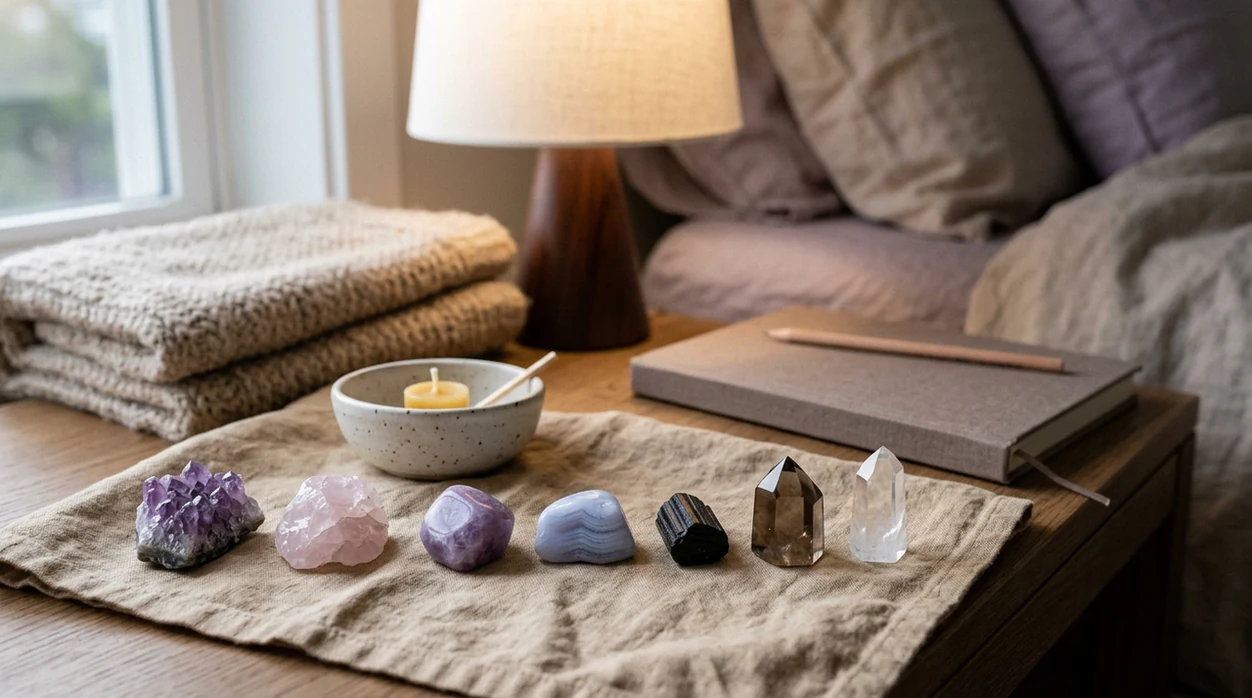


The best crystals for stress rituals commonly include amethyst, rose quartz, lepidolite, blue lace agate, black tourmaline, smoky quartz, and clear quartz, but none is established as a stress treatment. Their traditional meanings can help give a relaxation routine a personal focus. The better-supported part is the meditation, breathing, or sleep practice paired with the stone, not a demonstrated healing property of the mineral.
This guide explains the seven stones’ common associations and how to use them as reminders to pause, notice physical sensations, or settle into bedtime. A crystal is optional: one familiar object can serve as a cue. Keep stones out of drinking water and children’s reach, and do not replace therapy, medication, or care for persistent anxiety, depression, panic attacks, or insomnia with a crystal ritual.
What matters most
- Use crystals as calming objects for intention, grounding, or sensory focus, not as treatment for anxiety disorders, panic attacks, insomnia, or depression.
- The most useful routine pairs a crystal with slow breathing, mindfulness meditation, sleep audio, or a short MindTastik session.
- Avoid unsafe crystal practices such as drinking crystal elixirs, giving small stones to children, or stopping therapy or medication because of crystal advice.
How 7 best crystals look
Side-by-side captures of the compared products. Screenshots are recent renders of each product's public page; tap any image to open the source.
7 Best Crystals for Stress Healing Crystals at a Glance
The seven commonly named stress healing crystals are amethyst, rose quartz, lepidolite, blue lace agate, black tourmaline, smoky quartz, and clear quartz. Their meanings are traditional or anecdotal, while meditation and breathing practices have stronger research support.
| Crystal | Common meaning | Best use in a calm routine | Routine pairing |
|---|---|---|---|
| Amethyst | Calm, sleep, quiet mind | Bedtime wind-down | Sleep meditation |
| Rose quartz | Self-compassion, softness | Emotional safety cue | Loving-kindness practice |
| Lepidolite | Transition, balance | Grounding during change | 10-minute breathing |
| Blue lace agate | Gentle speech | Pre-conversation pause | Short reset |
| Black tourmaline | Boundaries, protection | End-of-work ritual | Boundary breath |
| Smoky quartz | Grounding, release | Body awareness | Body scan |
| Clear quartz | Clarity, intention | Morning focus | Intention meditation |
A stone on the nightstand can remind you to dim the phone screen and stop scrolling. This guide is for adult wellness routines, not medical treatment.
5 Facts About 7 Best Crystals for Stress Healing Crystals
These five facts separate popular crystal language from evidence-informed stress support. Crystals may be meaningful, but the strongest wellness case is the routine around them.
- Crystal healing is complementary. The U.S. National Center for Complementary and Integrative Health notes insufficient evidence for crystal therapy as a stress treatment NCCIH mindfulness overview.
- The seven stones are traditional picks. Amethyst, rose quartz, lepidolite, blue lace agate, black tourmaline, smoky quartz, and clear quartz are common in wellness traditions, not clinically proven stress tools.
- Meditation is the better-supported mechanism. A 2014 JAMA meta-analysis found mindfulness meditation programs produced small to moderate improvements in anxiety, depression, and pain JAMA Internal Medicine study: 1809754.
- Crystals should not replace care. They are not substitutes for therapy, medication, crisis support, or professional guidance.
- Safety still matters. Risks include choking hazards, dust inhalation, toxic minerals, contamination, and unsafe elixirs.
Keep the stone. Don’t outsource your care to it.
How 7 Best Crystals for Stress Healing Crystals Work in a Calm Routine
Crystals may work in a calm routine as tactile anchors, visual cues, intention objects, or reminders to pause. Any calming effect is likely mediated by ritual, attention, expectation, personal meaning, and relaxation practice, not scientifically proven crystal energy.
In mindfulness terms, the stone becomes an attentional cue. That means it gives your wandering mind something simple to return to, like the breath, the palm, or the weight of the body. A 2018 randomized trial reported that one 10-minute mindfulness session reduced state anxiety in college students compared with a control condition PubMed research: 29358936. The 2014 mindfulness meta-analysis also supports meditation as a modest but real tool for anxiety symptoms.
For many adults, holding a smooth stone is easier than “clearing the mind.” Fidgeting hands in a lap have somewhere to settle. For beginners, that small physical cue can make a guided session feel less abstract.
How to Use 7 Best Crystals for Stress Healing Crystals in a Meditation Routine
Use one crystal at a time so the routine stays simple. The point is to create a repeatable cue for breathing, meditation, or sleep audio.
- Choose one stone that matches the moment, such as amethyst before bed or smoky quartz for grounding. If you are curious about moldavite for enlightenment, keep the practice grounded in ordinary breathing and realistic expectations.
- Set a plain intention, like “I am practicing steadiness for ten minutes.”
- Hold the crystal in your hand or place it nearby, never in your mouth, water, or a child’s reach.
- Start a 10-minute guided meditation, breathing exercise, or sleep audio session.
- Notice one physical detail, such as texture, temperature, breath pace, or shoulder tension.
- Store the stone somewhere consistent, like a bedside dish or desk drawer.
For a deeper crystal meditation routine, the how to meditate with crystals 10 best meditation crystals guide gives more starting points.
When a crystal meditation makes anxiety worse
A calming ritual does not feel calming to everyone. The NCCIH overview of meditation safety notes that some people report increased anxiety, intrusive thoughts, or emotional distress, and that research on harms remains incomplete. These concerns apply to the meditation practice, not to evidence of crystal energy. A stone should not become a reason to push through an uncomfortable session.
If focusing inward increases distress, stop the session rather than extending it or changing crystals. Set the stone aside and return attention to the room or an ordinary activity. Repeated distress, significant anxiety, or symptoms that disrupt daily life deserve discussion with a qualified clinician. Crystal rituals and meditation can remain optional supports, but neither needs to be continued when it feels unhelpful.
Amethyst and Rose Quartz for Stress Healing Crystals
Amethyst and rose quartz are two of the most familiar stress healing crystals because they fit common emotional needs: sleep, quiet, softness, and self-kindness. Neither stone cures anxiety, panic attacks, grief, trauma, or insomnia.
Amethyst for bedtime calm
Amethyst is commonly associated with calm, sleep, and quieting overthinking. It works best as a bedtime cue when paired with a sleep meditation or evening body scan. Try placing it near the bed, setting a sleep timer for twenty minutes, and letting the guided audio carry the structure.
In a quiet corner before dawn, a stone on a mat can be a cue to pause. That is often a better moment for a simple routine than for adding more crystals.
Rose quartz for self-compassion
Rose quartz is commonly linked with self-compassion, emotional softness, and safety. Pair it with loving-kindness meditation or slow self-compassion breathing. If your interest is heart-centered practice, the heart chakra everything you need to know covers that theme in more detail. For another self-compassion exercise, talk with your younger self and reflect gently on what you needed as a child.
Lepidolite and Blue Lace Agate for Stress Healing Crystals
Lepidolite and blue lace agate are often recommended for anxious thoughts, emotional steadiness, and communication stress. Use them as prompts for grounding and slower speech, not as substitutes for professional support.
Lepidolite for emotional transitions
Lepidolite is traditionally linked with transition, emotional balance, and soothing anxious energy. It contains lithium as a mineral component, but that does not make it medication. Do not ingest it, powder it, or treat it as a psychiatric treatment.
Use lepidolite during a grounding meditation when change feels too loud. One useful practice is naming five things you can see, then returning to the breath.
Blue lace agate for communication stress
Blue lace agate is commonly associated with gentle speech, nervous-system softness, and tension relief. Before a difficult conversation, hold it for three slow breaths and decide what you need to say plainly.
If anxiety symptoms are persistent, intense, or disrupting daily life, seek professional support.
Black Tourmaline, Smoky Quartz, and Clear Quartz for Stress Healing Crystals
Black tourmaline, smoky quartz, and clear quartz are usually framed as grounding, boundary, and clarity stones. They can support rituals, but no crystal is a shield from trauma, panic, unsafe people, or harmful environments.
Black tourmaline for boundary rituals
Black tourmaline is traditionally used for protection, boundaries, and feeling grounded. Pair it with a boundary-setting breath practice after work. Mute the Slack pings, place the stone on your desk, and exhale longer than you inhale.
Smoky quartz for grounding practice
Smoky quartz is commonly used for grounding, stress release, and reconnecting with the body. Pair it with a body scan, especially when stress feels floaty or scattered.
Clear quartz for intention setting
Clear quartz is commonly used for clarity, intention-setting, and focus. Use it with morning intention meditation before opening email. For zodiac-based crystal lists, compare this with the crystals for gemini top 10 you should use guide.
MindTastik Meditation Guide for Crystals, Anxiety, and Everyday Calm
How can crystals fit into a meditation routine for anxiety and everyday calm? MindTastik offers guided meditations, sleep audio, breathing exercises, and self-hypnosis sessions for adults seeking gentle support for rest, stress, and daily emotional balance.
Guided meditation gives the ritual structure. Breathing exercises give the body something measurable to do. Sleep audio can turn a stone on the nightstand into a pre-sleep cue, instead of another reason to check the phone.
Anxiety and stress management are large public health needs; NIMH estimated that 9.5% of U.S. adults had a past-year anxiety disorder in 2019-2020 nimh reference: any anxiety disorder. Use crystal rituals for morning intention, a mid-day reset, or a pre-sleep wind-down.
Crystal Bracelets, Kits, and Amazon Stress Healing Crystals
Crystal bracelets can work as wearable reminders to pause, breathe, and soften your shoulders. A bracelet is easy to notice when your palm presses against a desk edge before a tense message.
Kits may be convenient, but they are not inherently more effective than one meaningful stone. Price, rarity, size, or a dramatic product name does not prove stronger stress-relief effects. Look for clear labeling, reputable sellers, smooth edges, and safe sizing. Avoid chipped stones that scratch skin.
Be skeptical of medical claims, guaranteed anxiety-cure promises, or instructions to make crystal elixirs. Those are red flags, especially when a seller implies you can replace therapy or medication.
If you like structured stone sets, compare them with your actual routine. One smooth amethyst beside earbuds on a nightstand may be more useful than twenty stones you never touch.
When to Seek Professional Help for Stress or Anxiety
Seek professional help when stress or anxiety is intense, persistent, unsafe, or getting in the way of daily life. Crystals, meditation, and sleep audio can be optional wellness supports, but they are not treatment for mental health conditions.
A smooth stone may help you remember to breathe; a licensed clinician can assess symptoms, offer therapy, discuss medication options when appropriate, and help you make a plan. Pay attention to panic attacks, trauma symptoms, depression, severe insomnia, substance misuse, or functional impairment such as missing work, avoiding basic tasks, or withdrawing from people you normally trust.
- Contact a therapist, primary care clinician, psychiatrist, or other licensed mental health professional if symptoms last more than a couple of weeks or keep returning.
- Seek urgent medical help if panic, sleeplessness, or depression feels unmanageable, especially with chest pain, fainting, confusion, or not sleeping for days.
- Call local emergency services or a crisis line immediately if you might harm yourself or someone else, feel unable to stay safe, or are in danger.
- Use crystals only as calming cues alongside care, not as a reason to delay therapy, medication, or emergency support.
Guided audio gives a crystal ritual a clear task
MindTastik’s guided meditation library can supply the practice behind a crystal ritual: a voice-led pause while the stone serves as a tactile cue. Breathing exercises suit daytime tension, while sleep stories or soundscapes suit an evening wind-down.
The app is optional, and the crystal is too. Adults who prefer silence can use a simple breathing routine instead. Persistent anxiety, panic attacks, or severe sleep problems call for qualified care, not a different stone or more audio.
What crystals cannot do for stress or anxiety
Crystal routines can be calming for some adults, but the limits need to be clear. The ritual may help; the stone itself is not proven medical care.
- No high-quality evidence shows specific crystals directly reduce stress hormones or treat anxiety disorders beyond placebo.
- NCCIH notes insufficient evidence for crystal therapy specifically.
- Crystals are not regulated like medicines, and sourcing, labeling, and claims vary.
- Over-reliance can delay therapy, medical care, or crisis support.
- Do not stop medication or therapy because of a crystal routine.
- Avoid drinking crystal elixirs or placing stones in water intended for consumption.
- Keep small crystals away from children and pets because they can be choking hazards.
- Avoid sanding, drilling, or powdering stones unless you understand dust and mineral safety.
- Seek professional help for persistent anxiety, panic attacks, depression, trauma symptoms, or severe insomnia.
The most common medically supported way to manage significant anxiety symptoms is professional assessment combined with evidence-based care and supportive daily habits.
Three short practices to pair with a crystal
| Technique | Best for | Minutes |
|---|---|---|
| 4-count inhale, 6-count exhale | physical tension and shallow breathing | 3-5 min |
| Crystal-in-hand grounding scan | racing thoughts and restlessness | 5-8 min |
| Short guided voice reset | decision fatigue and anxious spirals | 7-12 min |
Questions about crystals and stress
Which crystal is best for stress and anxiety?
No crystal has been established as the best treatment for stress or anxiety. Amethyst, rose quartz, and smoky quartz are common ritual choices, with traditional associations of calm, self-compassion, and grounding. Choose by comfort and personal meaning, not claims of stronger healing energy.
Do crystals actually help with anxiety?
A crystal may feel reassuring as a familiar object or reminder to pause, but that does not establish a crystal-specific treatment effect. Meditation has better research support for anxiety. Persistent symptoms, panic attacks, or anxiety that interferes with daily activities need professional assessment rather than reliance on a stone.
What crystal is used for overthinking?
Amethyst is traditionally associated with a quiet mind, while smoky quartz is commonly used as a grounding cue. Neither has been shown to stop overthinking. A practical use is to notice the stone’s texture while returning attention to breathing, without expecting thoughts to disappear.
How do you use a crystal during meditation?
Hold one intact stone comfortably or place it nearby. Notice its weight or texture, then begin a short breathing exercise or guided meditation. When attention wanders, return to the breath or physical sensation. Keep the stone out of the mouth, drinking water, and children’s reach.
Does wearing a crystal bracelet reduce stress?
A bracelet can act as a visible or tactile reminder to pause, release shoulder tension, or breathe more slowly. There is no established crystal-specific stress benefit from wearing it. Comfortable sizing and smooth, intact beads matter more for this use than rarity, price, or the number of stones.
Can lepidolite work like lithium medication?
No. Lepidolite contains lithium as a mineral component, but holding or wearing it is not equivalent to taking prescribed medication. It should not be ingested, powdered, or used as a psychiatric treatment. Medication changes belong with the prescribing clinician, not with advice from a crystal seller.
Is crystal-infused drinking water safe?
Avoid putting crystals directly into drinking water. Mineral identity, contamination, and chemical stability can be uncertain, and some specimens contain hazardous materials. A stress ritual does not require ingestion or an elixir. Keep the stone beside the glass rather than inside it, away from food preparation.
Can amethyst help with sleep?
Amethyst is traditionally associated with sleep and calm, but it is not an established insomnia treatment. It can serve as a bedside reminder to start a wind-down routine. Meditation may improve sleep quality for some people, but persistent insomnia needs assessment and may require evidence-based treatment.