
Healing Crystals for Focus and Concentration: Best Ways to Increase Clarity
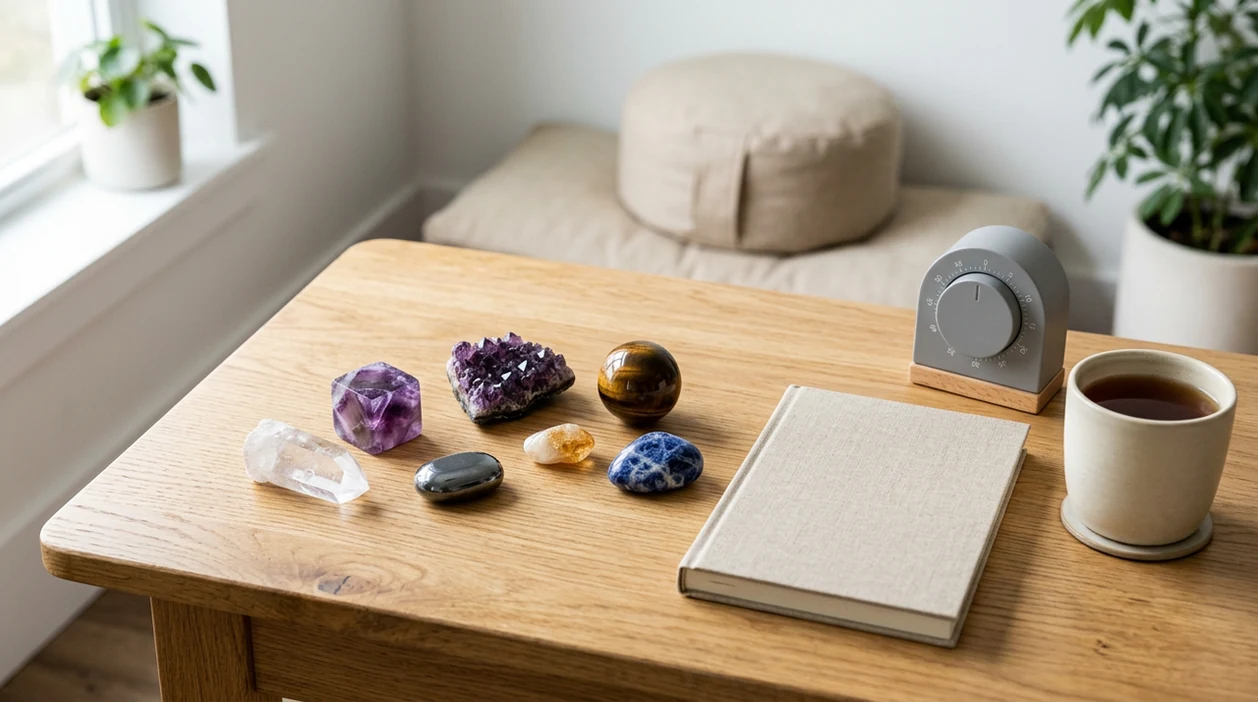


Crystals for focus and concentration are natural stones used as tactile mindfulness cues, not proven treatments for attention problems. Clear quartz, fluorite, amethyst, hematite, citrine, tiger’s eye, and sodalite are common choices for rituals built around clarity, calm, motivation, or grounding. Those associations are traditional or anecdotal, rather than evidence that a particular mineral improves thinking.
A practical routine gives the stone a small, specific role: mark the start of a task, prompt a pause, or accompany mindful breathing. Short guided meditation, adequate sleep, movement, and structured work blocks belong alongside that ritual, not behind it. The useful question is whether the object helps make a repeatable habit easier, rather than whether it has a special power.
The essentials
- Crystals are not scientifically proven to directly improve attention, but they can work as physical reminders to pause, breathe, and refocus.
- Clear quartz, fluorite, amethyst, hematite, citrine, tiger’s eye, and sodalite are the most commonly used stones for focus, clarity, motivation, and grounding.
- For best results, combine a crystal ritual with evidence-informed habits such as mindfulness meditation, good sleep, time-blocking, movement, and professional care when needed.
How healing crystals look
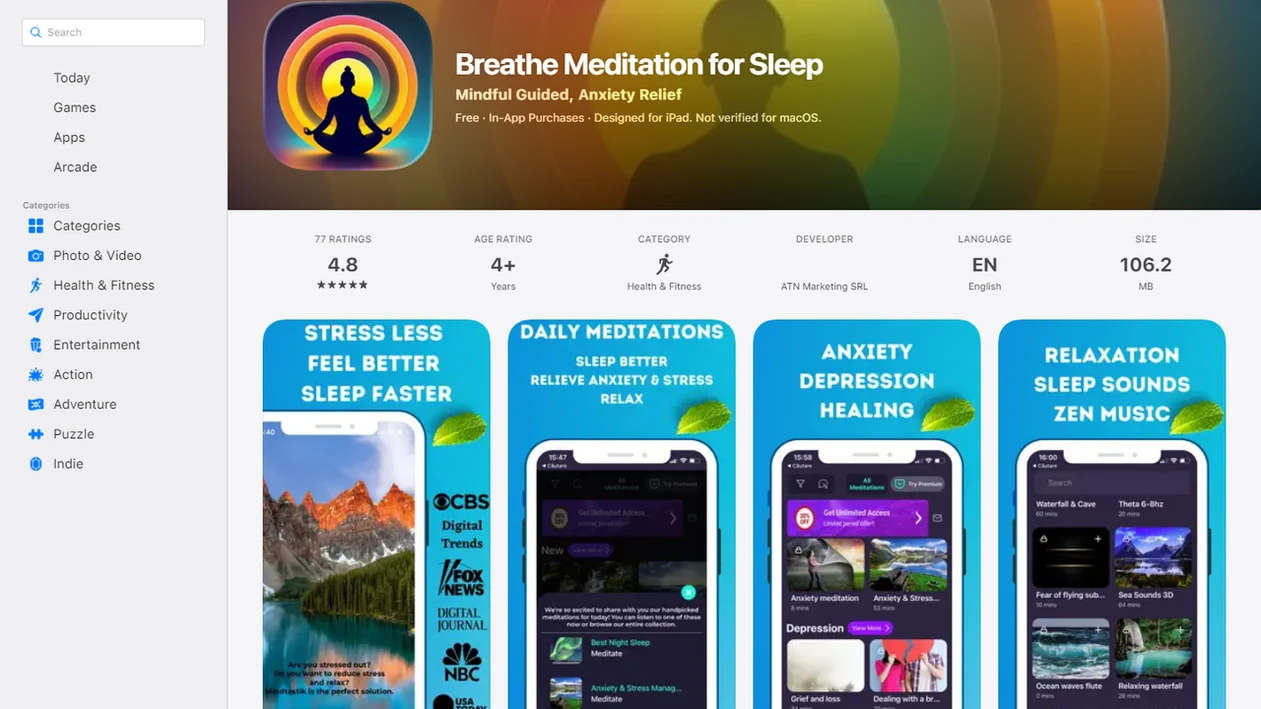
Side-by-side captures of the compared products. Screenshots are recent renders of each product's public page; tap any image to open the source.
7 healing crystals for focus and concentration at a glance
The seven crystals most often used for focus are clear quartz, fluorite, amethyst, hematite, citrine, tiger’s eye, and sodalite. Their meanings are traditional or anecdotal, so use them as supportive focus cues rather than clinically proven attention tools.
| Crystal | Traditional focus use | Common placement | Caution notes |
|---|---|---|---|
| Clear quartz | Clarity, intention | Desk, meditation cushion | Not a medical treatment |
| Fluorite | Study, organization | Study space, notebook | Keep dry if unsure of finish |
| Amethyst | Calm, steady attention | Jewelry, desk | Avoid cure claims |
| Hematite | Grounding, scattered focus | Pocket, keyboard side | Small pieces can be choking risks |
| Citrine | Motivation, optimism | Desk, planner | Color-treated stones are common |
| Tiger’s eye | Confidence, task completion | Bracelet, pocket | Use as a reminder, not proof |
| Sodalite | Clear thinking, communication | Study space, work bag | Avoid ingestive use |
A stone on the desk can mark the start of one task. A stone in a pocket can remind you not to open another tab yet. Small rituals help because they make the invisible decision visible.
5 evidence facts about crystals and concentration
Crystals are not proven to sharpen concentration directly, but they can sit inside a focus routine that uses stronger evidence-based habits. The practical value is usually in the cue, not the mineral.
- Fact 1: No high-quality clinical evidence proves that crystals directly improve attention, executive function, or concentration.
- Fact 2: Crystals can function as mindfulness anchors, habit cues, or sensory grounding objects during work, study, or meditation.
- Fact 3: Mindfulness meditation has stronger evidence for attention and executive function than crystal use, including small-to-moderate benefits in a JAMA Internal Medicine meta-analysis.
- Fact 4: Concentration difficulty is common; about 14.6% of U.S. adults report serious difficulty concentrating, remembering, or making decisions, per the CDC CDC guidance: db381.htm.
- Fact 5: Crystals should not replace care for ADHD, anxiety, depression, persistent brain fog, sleep problems, or medication questions.
For someone losing the breath count after four, the stone can simply say, start again. That is modest, but useful.
How healing crystals for focus and concentration work
Healing crystals for focus and concentration work best as tactile cues, not as biologically proven concentration enhancers. The stone gives your hand and eyes a repeatable signal: pause, breathe, name the task, and begin.
The likely mechanism is behavioral, not mineral-based. Ritual repetition can support habit formation, which means the brain starts linking the same cue with the same action. Intention setting narrows the next step from “be productive” to “write the first paragraph.” Placebo and expectation may also matter; if you believe the object helps you settle, that belief can change effort and attention without proving that the crystal itself changes brain function. Sensory grounding is simpler: the cool, smooth, or weighted feel of a stone brings attention back to the present moment. Mindfulness does something similar by training awareness of breath, body, and wandering thoughts. Evidence is stronger for meditation, sleep, time-blocking, movement, and reducing distractions than for crystal effects. If focus problems are persistent, worsening, new, or impairing work, school, driving, safety, mood, or sleep, self-help rituals should give way to professional evaluation.
Mindfulness anchors in crystal focus rituals
A crystal focus ritual works best when the stone is used as a tactile cue for attention, breath awareness, and task intention. It does not need a claim about altered brain chemistry to be useful.
The likely mechanisms are ritual, expectation, sensory grounding, and habit-stacking. In plain terms, you touch the same object, take the same breath, and begin the same kind of task. The body learns the pattern. Mindfulness research is stronger here than crystal research; a JAMA Internal Medicine review found mindfulness meditation can support attention and executive function JAMA Internal Medicine study: 1809754, and a PNAS study reported reduced mind-wandering after brief daily practice pnas reference: pnas.1213846110.
A guided meditation app can pair a short audio session with that physical cue. If you want a deeper crystal-meditation setup, the full how to meditate with crystals 10 best meditation crystals guide covers that practice in more detail.
The meditation review did not establish better attention
The research distinction matters here: evidence that meditation helps anxiety is not evidence that it improves concentration. The 2014 systematic review of meditation programs included 47 randomized trials and 3,515 participants. It found moderate evidence for improvements in anxiety and depression, but low or insufficient evidence for attention. That review does not support a claim of established attention or executive-function benefits.
This leaves a narrower, more useful case for a crystal ritual. A stone can serve as a personal reminder to begin a task or return to breathing, without being described as a concentration treatment. The same review did not find meditation clearly superior to established treatments such as exercise, medication, or cognitive behavioral therapy. Neither a calming experience nor a meaningful ritual establishes a crystal-specific effect.
How to use healing crystals for focus and concentration
Use one crystal, one intention, and one short audio practice before a focused work block. For many people, that is easier than building a complicated ritual they abandon by Wednesday.
- Choose one crystal for the session instead of switching between stones every few minutes.
- Set one intention before opening work or study materials, such as “finish the outline” or “review chapter three.” For a more personal intention, talk with your younger self to reflect on what makes starting a task feel difficult.
- Play a short MindTastik guided meditation, breathing exercise, or self-hypnosis session before the task begins.
- Place or hold the crystal as a tactile anchor during a 25- to 50-minute focus block.
- Reset with one minute of breathing before checking messages, changing tasks, or opening social apps.
- Review what helped and repeat the simplest version tomorrow. An AI self reflection tool can offer prompts for reviewing your routine, without replacing professional assessment of persistent attention difficulties.
The laptop fan during a five-minute pause can make the room feel louder than expected. Keep the reset boring. Boring is repeatable.
Clear quartz, fluorite, and amethyst for clarity and studying
Clear quartz, fluorite, and amethyst are the common “clarity” stones in focus rituals. Use each one with a specific behavior, because the behavior is what actually supports studying.
Clear quartz for intention setting
Clear quartz is traditionally used as a symbol of clarity and intention. Pair it with the one-task rule: write the task on paper, touch the stone, and do only that task until the timer ends.
Fluorite for study organization
Fluorite is commonly associated with organization, study, and reducing mental clutter. Place it beside your notes review stack, not in the middle of a crowded screen of meditation categories.
Amethyst for calm focus
Amethyst is often linked with calm and emotional steadiness. Pair it with three slow breaths before reading, especially when the first paragraph keeps slipping away. For chakra-based readers, the heart chakra everything you need to know explains a separate symbolic framework without treating it as medical care.
Hematite, citrine, tiger’s eye, and sodalite for focus and motivation
Hematite, citrine, tiger’s eye, and sodalite are often chosen for grounded attention, motivation, confidence, and clear thinking. Their value is strongest when each stone gets a practical placement.
Hematite for grounding
Hematite is used as a grounding object when attention feels restless or scattered. Keep it in a pocket or beside the keyboard, then touch it before returning to the task. If you are considering another symbolic stone, explore moldavite for enlightenment while keeping expectations grounded and non-medical.
Citrine for motivation
Citrine is a traditional symbol of energy, motivation, and optimism. Place it near a notebook where you list the next three actions, not twenty.
Tiger’s eye for confidence
Tiger’s eye is commonly treated as a task-completion stone. It can sit near a planner when the hard part is starting.
Sodalite for clear thinking
Sodalite is linked with clear thinking and communication. A small stone in a meditation space can mark the shift from scattered thoughts to one sentence at a time. Some readers also compare stones by personality or season, such as in a crystals for gemini top 10 you should use list.
Sleep, anxiety, and everyday calm routines with focus crystals
Poor sleep and anxiety can make concentration feel harder, even when motivation is high. A focus crystal ritual works better when the day also has sleep support, breathing space, and fewer frantic task switches.
MindTastik offers wellness support through guided meditations, sleep-focused audio, breathing practices, and self-hypnosis sessions for adults who want more ease in daily routines. For a crystal ritual, clear quartz can mark a morning focus intention, hematite can support a brief midday pause, and amethyst can belong in an evening wind-down practice.
When the night has stretched on and sleep still feels out of reach, focus may not be the only issue. It can also point to a disrupted sleep routine. Adults with serious, worsening, or life-disrupting symptoms should seek professional support instead of using crystals or apps as treatment. MindTastik can be part of a supportive wellness practice, not a diagnosis or care plan.
Crystal safety boundaries for concentration rituals
The safest way to use crystals for concentration is non-ingestive: hold them, wear them, place them nearby, or use them as meditation objects. Avoid drinking crystal elixirs unless material safety has been verified by a credible mineral safety source.
Unknown stones should not be placed in water for drinking. Some minerals can dissolve, shed particles, or contain substances that do not belong in the body. Polished coatings and dyed stones add another layer of uncertainty.
Small stones also need practical caution. Keep them away from children and pets because of choking risk, especially on desks, nightstands, and low shelves.
Crystals should not replace prescribed medication, therapy, ADHD support, sleep disorder evaluation, or medical advice. If you like symbolic stone systems, keep them in the non-medical lane. The same boundary applies to adjacent guides, including positive affirmations the importance of balance in the chakras.
Audio for the pause before a work block
MindTastik’s breathing exercises and guided meditations can accompany a crystal ritual before studying or returning to work. A stone can mark the pause; a session provides instructions for the practice. The breathing exercises are a relevant choice for a brief reset between tasks.
Adults who want guided audio may find that pairing useful. Those who prefer silence can keep the ritual to a written task and a few comfortable breaths. Persistent attention difficulties need appropriate assessment, not an app or a different stone.
What crystals cannot establish about concentration
Crystals may be meaningful, calming, or pleasant to use, but their evidence boundary is narrow. The strongest focus plan still depends on sleep, attention habits, mental health support, and realistic task design.
- There is no robust clinical evidence that crystals directly improve concentration, executive function, or brain chemistry.
- Any benefit may come from placebo effects, ritual, tactile grounding, mindfulness, expectation, or behavior change.
- Crystal meanings are not standardized, regulated, or clinically validated across traditions or sellers.
- Crystals should not replace ADHD assessment, mental health care, sleep disorder evaluation, or medical advice.
- Meditation evidence for ADHD is still limited; according to a Cochrane review Cochrane review, meditation-based interventions may help symptoms, but the evidence quality is low.
- If focus problems are persistent, worsening, or impairing work, school, relationships, driving, or safety, consult a qualified professional.
- Apps, crystals, journals, and timers can support a routine, but they cannot determine why concentration is changing.
A half-empty water glass by the bed tells the story sometimes. The issue may be fatigue, not willpower.
Workday Calm
Mistake: choosing a crystal and waiting to feel focused
Fix it by pairing the stone with a specific behavior, such as three slow breaths, a closed laptop reset, or one written priority. The action carries the routine; the crystal simply gives your attention somewhere to land.
Mistake: using the same ritual for every type of work stress
A desk pause before writing may need calm breathing, while a meeting reset may need grounding and posture. Match the practice to the moment instead of expecting one stone to fit every workday problem.
Mistake: making the setup too decorative to repeat
Keep one stone near your keyboard or notebook and use it only as a start signal. The simplest ritual is usually the one that survives a busy afternoon. Use an AI reflection journal to note which simple cues helped you feel calmer and return to your chosen task.
Questions about crystals and concentration
Which crystal is best for focus and concentration?
No crystal has been shown to be best for concentration. Clear quartz and fluorite are common choices because their traditional meanings emphasize clarity and organization. A useful choice is a stone that can stay beside a notebook and act as a consistent reminder to start one defined task.
Do crystals actually improve concentration?
There is no robust clinical evidence that crystals directly improve concentration or executive function. A stone may still be useful as a tactile reminder to pause, breathe, and return to work. Any perceived benefit could reflect expectation, ritual, or changed behavior rather than a property of the mineral.
How do I use a crystal while studying?
Place one stone beside the study materials, write a specific task, and take a few comfortable breaths before starting a timed work block. For example, the task might be reviewing one chapter rather than studying everything. Keep the stone as a start signal, not another object to rearrange when work feels difficult.
Is fluorite better than clear quartz for studying?
There is no established evidence that fluorite improves studying more than clear quartz. Fluorite is traditionally associated with organization, while clear quartz is associated with clarity and intention. Either can represent a practical action, such as sorting notes or writing the next task. The meanings are not clinically validated.
Can crystals help with ADHD?
Crystals are not an ADHD treatment and should not replace assessment or prescribed care. A stone might serve as a reminder within a routine, but that does not demonstrate improvement in ADHD symptoms. Persistent difficulties with attention, organization, or daily functioning are reasons to seek qualified clinical support.
Is crystal-infused water safe to drink?
Unknown crystals should not be placed in drinking water. Some minerals can release substances or particles, and dyes or coatings add uncertainty. A focus ritual does not require ingestion: keeping a clean, intact stone beside a notebook avoids the exposure risks associated with crystal elixirs.
What if meditation with a crystal makes me more anxious?
Stop the practice rather than trying to push through distress. Meditation can sometimes bring increased anxiety, intrusive thoughts, or emotional discomfort. A simple written task or a pause without meditation may be a better fit. Significant or persistent symptoms warrant qualified medical or mental-health care, not a more elaborate ritual.