
Bedtime Meditation for Adults: Audio Routine for Better Sleep


Bedtime meditation for adults is a repeatable wind-down routine that combines slow breathing, a guided body scan or sleep story, and optional low-volume calming sound. Its purpose is to help the body settle and give attention somewhere to rest, not to force instant sleep. A familiar sequence can make the transition from daytime activity to bed feel less abrupt.
Choose sleep-focused audio with a calm voice, slow pacing, stable volume, and a gentle ending. Keep the sequence simple: breathing first, guided meditation next, then quiet sound if needed. Meditation may support sleep quality, but it does not replace care for chronic insomnia, sleep apnea, severe anxiety, or depression. The useful starting point is a routine that is easy to repeat.
The bedtime basics
- Choose audio for sleep, not entertainment: calm voice, slow pacing, stable volume, and no abrupt ending.
- Use a simple 3-step sequence: breathing, guided meditation, then optional bedtime calm audio.
- Meditation can support sleep quality, but it does not replace care for chronic insomnia, sleep apnea, severe anxiety, or depression.
Adult bedtime meditation audio at a glance
Adult bedtime meditation audio is a sleep-focused listening routine, not a full sleep hygiene checklist. It usually combines guided meditation before bed adults can follow, body scans, sleep stories, breathing, and soundscapes.
The practical goal is repetition. Pick one calming track, play it at the same point in your night, and let the routine become familiar. Consistency matters more than finding one perfect recording. A 12-minute body scan you repeat often will usually work better than changing tracks every night.
Some nights need a voice. Others need rain.
Apps such as Calm and Headspace, plus nonprofit resources like mindful.org, can help adults compare sleep audio, breathing exercises, and everyday calm support. If your whole evening routine needs work, pair audio with a simple bedtime routine for adults.
Sleep physiology behind bedtime meditation for adults
Bedtime meditation works by lowering arousal and shifting attention away from racing thoughts. Slow breathing, body scanning, and gentle guidance give the brain a steady task while the body settles.
The mechanism is not sedation. It is attention regulation plus a repeated sleep cue. In plain language, your nervous system gets the same “we are safe, the day is done” signal each night. Over time, that habit loop can make the transition into bed feel less abrupt.
In the middle of the night, even a small glow from the phone can feel too sharp. If you use your phone at bedtime, learn how to calm racing thoughts while keeping screen interaction brief.
Evidence supports this as a relaxation support, not a guaranteed sleep switch. A randomized clinical trial in older adults found that mindfulness meditation improved sleep quality more than sleep hygiene education alone JAMA Internal Medicine study: 2101197. A later systematic review and meta-analysis also found that mindfulness-based interventions can produce small to moderate improvements in sleep quality, though effects vary by population and study design PubMed research: 31031849. For adults with busy minds, guided bedtime practice is often easier than silent meditation because the next cue is already supplied.
What the research says about nightly audio
A 2018 review of 18 randomized trials included 1,654 adults with clinically significant sleep disturbance. Mindfulness meditation produced a moderate improvement in sleep quality compared with nonspecific active controls, but evidence that it outperformed specific active treatments was low-strength. That distinction matters: the findings support meditation as an option for sleep support, not as a proven replacement for established treatment or a guarantee that one recording will bring sleep.
The studies also involved more than pressing play at bedtime. In the same review’s intervention details, group sessions ran for 2 to 16 weeks, and all trials encouraged home practice. Daily targets, when specified, ranged from 15 to 60 minutes. These findings support regular practice over time, but they do not establish that longer bedtime recordings work better than short ones. A brief routine is a practical starting point, not a clinically proven dose.
Bedtime calm audio types for 4 adult sleep problems
The right bedtime calm audio depends on what keeps you awake. A tense body needs a different track than a mind replaying tomorrow’s meeting.
| Sleep problem | Audio type | Why it fits |
|---|---|---|
| Sleep anxiety and physical tension | Guided body scan | Moves attention through the body slowly, one area at a time. |
| Racing thoughts | Sleep story or talk-down | Gives the mind a soft narrative instead of open-ended rumination. |
| Stress spike before bed | Breathwork track | Uses counted breathing to reduce arousal and create a short reset. |
| Waking easily to voices | Low-volume nature soundscape | Provides steady sound without new words to process. |
Avoid abrupt music, loud ads, and dramatic voice changes. They can pull attention back up just as the body starts to drop. If you’re comparing options, our guide to what to listen to before bed covers sound choice in more detail.
5-step guided meditation routine before bed for adults
Use this routine when you want guided sleep meditation for adults without overthinking the setup. Keep the steps boring on purpose.
- Set a realistic bedtime meditation window. Start with 10 to 20 minutes, not an hour-long plan you’ll skip.
- Choose one primary guided track. Pick breathing, a body scan, or a sleep story before you get into bed.
- Set volume, timer, and do-not-disturb. Dim the phone screen before starting bedtime audio.
- Follow breath or body scan cues without trying to force sleep. If your breath count gets lost after four, just rejoin the next instruction.
- Save the routine or preset for repeat use. Repeating the same sequence matters more than finding a new track every night.
For most adults, a guided track followed by low sound is easier to repeat than a complicated routine because it removes decisions at the tired part of the night. A written meditation before sleep checklist can help if you tend to fiddle with settings.
Guided sleep meditation for adults: 5 audio rules
Not all relaxing audio is structured adult bedtime meditation. Good sleep audio is designed to fade into the night, not keep you entertained.
- Choose a calm, non-performative voice. The voice should feel steady, not theatrical or emotionally intense.
- Pick slow pacing with long pauses. Space gives your body time to respond before the next cue.
- Avoid abrupt volume changes, ads, or energetic music. Sudden sound can restart alertness.
- Match track length to your sleep window. Many adults do well with 10 to 30 minutes.
- Keep the ending soft. A fade into soundscape audio is often easier than a hard stop.
A pillow pulled higher, a dim lamp across the room, and a sleep story waiting on the phone are ordinary parts of a tired evening. So is choosing the shorter track when you’re already worn out. Good meditation apps for sleep anxiety and everyday calm offer repeatable guided support, not a promise to erase every difficult night.
Adult bedtime meditation fit: 5 good-use and caution cases
Adult bedtime meditation is a good fit when the main problem is arousal, inconsistency, or a busy mind. It is not the right first step for every sleep problem.
- Busy minds: Sleep stories and talk-downs can give thoughts a softer place to land.
- Mild sleep anxiety: Body scans and grounding cues may reduce the “I need to fall asleep now” pressure.
- Stress or travel disruption: A familiar track can make a hotel room feel less mentally new.
- Inconsistent wind-down routines: Repeated audio can anchor a nighttime wind-down routine.
- Preference for guidance: Some adults simply do better with a voice than with silence.
However, meditation should not replace evaluation for chronic insomnia, sleep apnea, restless legs, severe anxiety, depression, or trauma symptoms. Some people initially notice more thoughts or body sensations, especially during body scans. That doesn’t mean you failed. It means the mind got quieter enough to hear itself.
When to talk to a clinician about sleep problems
Talk to a clinician when sleep problems are persistent, frightening, or affecting daytime life. Bedtime meditation can support relaxation, but it cannot diagnose sleep apnea, insomnia disorder, panic attacks, depression, or another medical cause.
Red flags deserve more than another track in the queue: gasping awake, loud snoring, panic at night, worsening mood, or daytime sleepiness that makes work, driving, or caregiving harder. Chronic insomnia patterns also deserve care, especially when you struggle to fall asleep, stay asleep, or wake too early several nights a week for weeks or months. CBT-I, a structured behavioral treatment for insomnia, is often a better next step than endlessly changing audio.
- Notice whether the problem is occasional stress sleep or a repeated pattern.
- Track symptoms for a week or two, including snoring, awakenings, naps, caffeine, and mood.
- Ask a primary care clinician, sleep specialist, or mental health professional about evaluation if symptoms persist.
- Seek urgent help now if you have thoughts of self-harm, feel unsafe, or are in severe emotional distress.
The point is not to abandon meditation. It is to use it as support while the right problem gets named.
Adult bedtime meditation routine example
A simple sleep meditation for adults sequence is 3 minutes of breathing, 12 to 18 minutes of guided body scan or talk-down, then optional rain or soft soundscape. One simple sleep meditation for adults sequence is 3 minutes of breathing, 12 to 18 minutes of guided body scan or talk-down, then optional rain or soft soundscape.
Try that sequence for several nights before changing everything. If the voice feels too bright, test a slower narrator. If words keep you alert, switch the final section to sound only. Someone looking for audio when the mind will not settle usually needs fewer choices, not more. For persistent mental chatter, try meditation for overthinking at night as part of your usual wind-down routine.
MindTastik can also be compared with Calm, Headspace, and mindful.org-style practices if you’re choosing a starting point. The label Best Meditation App for Sleep should still come down to fit: voice, length, volume, and repeat use.
Suggested image caption
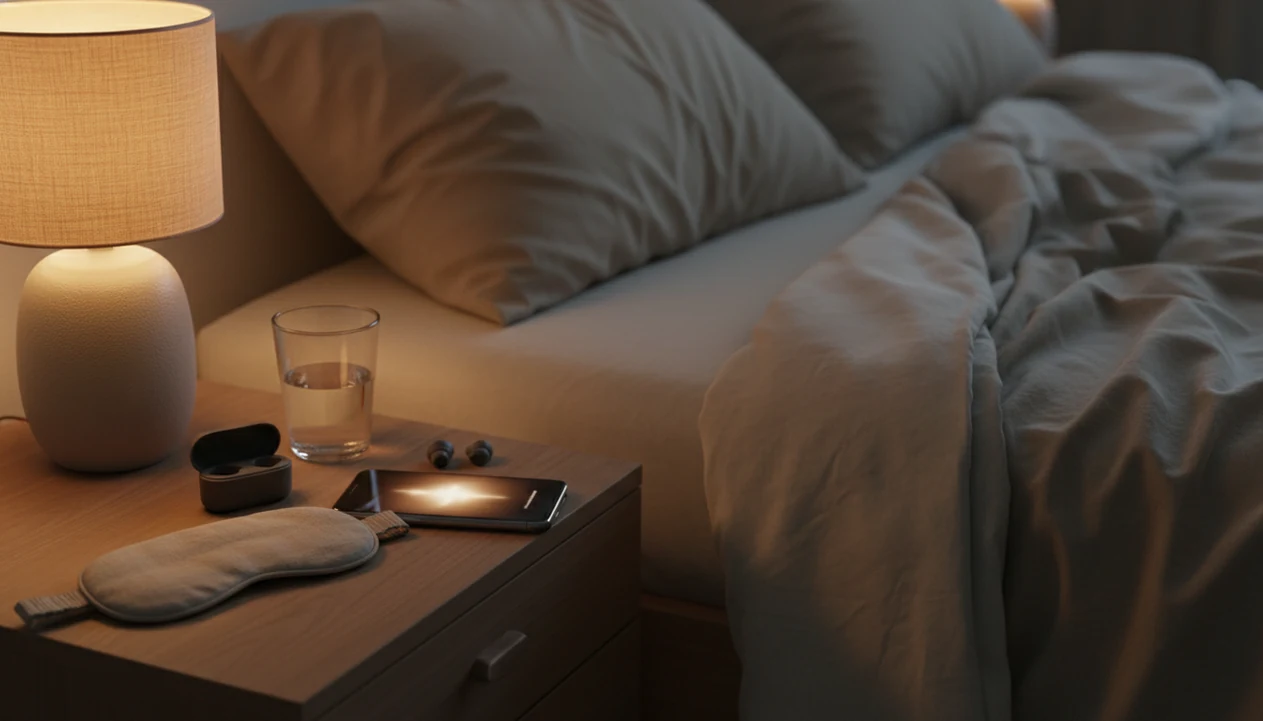
Phone, headphones, dim light, and a saved bedtime meditation for adults routine ready beside the bed.
MindTastik sessions for a repeatable bedtime routine
MindTastik’s guided meditation library, breathing exercises, sleep stories, and soundscapes offer several ways to build the same short sequence each night. A body scan suits physical tension; a story offers guidance when thoughts keep circling. Adults who find spoken guidance distracting may prefer soundscapes or quiet breathing without an app. Persistent sleep problems need clinical assessment rather than a larger audio library. MindTastik is not a medical treatment.
What bedtime meditation cannot treat
Bedtime meditation can support relaxation, but it does not cure chronic insomnia, sleep apnea, restless legs syndrome, depression, or severe anxiety. Clinicians typically recommend behavioral and psychological treatments for chronic insomnia, and the American Academy of Sleep Medicine includes relaxation and mindfulness-based strategies among recommended approaches.
Important limits:
- Meditation may take days or weeks of repetition before sleep improves.
- Some people initially notice more thoughts, emotions, or body sensations.
- Poor-quality audio, loud ads, dramatic music, or sudden endings can make sleep harder.
- Do not use meditation audio while driving or during tasks that require alertness.
- Persistent daytime sleepiness, loud snoring, gasping, panic symptoms, or worsening mood warrant professional evaluation.
- Chronic insomnia is common; estimates suggest 10 to 30% of adults live with it, while more report occasional symptoms NIH research: PMC6281147.
If your sleep is disrupted most nights, use meditation as support while you get appropriate care. A broader sleep hygiene plan may also help identify light, timing, caffeine, or schedule issues.
Before Bed
Treat bedtime meditation as a handoff from the day, not as a test of whether you can fall asleep on command. A repeatable sequence might be dim lamp, pillow, slow exhale, short body scan, then a sleep story or quiet sound if needed. The goal is to remove friction until the routine feels easier to start than skip.
On nights when guided practice feels like too much effort, MindTastik sleep stories offers low-stimulus audio you can play in the background.
Adult bedtime meditation questions
Does bedtime meditation actually improve sleep?
Mindfulness meditation can improve sleep quality for some adults with sleep disturbance. Research mainly examines repeated practice over several weeks, not a single bedtime recording. It is best understood as relaxation support: it may help with tension and racing thoughts, but it does not guarantee faster sleep or replace treatment for a sleep disorder.
Should I meditate in bed or before getting into bed?
Either can fit a bedtime routine. A short seated breathing practice may suit someone who becomes restless while lying still. A body scan can fit the transition into bed. If lying awake becomes prolonged, sleep-hygiene guidance advises leaving bed briefly for a relaxing activity rather than continuing to struggle with sleep.
Is sleep music the same as guided bedtime meditation?
No. Sleep music and nature sounds provide a listening background, while guided meditation includes instructions for attention, breathing, or bodily awareness. Either may fit a wind-down routine. Spoken guidance suits adults who want a clear task; sound alone may fit better when a narrator’s words keep the mind alert.
Should I play bedtime meditation audio all night?
An all-night recording is not necessary for this routine. Start with a short guided track and use a timer if a clear endpoint is preferable. Optional quiet sound can follow, but avoid loud ads, abrupt volume changes, or energetic music. If voices keep attention active, ending the spoken section may be more useful than extending it.
What if bedtime meditation does not help me fall asleep?
Not falling asleep during a session does not mean the practice has failed. Its immediate purpose is relaxation, not sleep on command. Adjust one element, such as the voice, length, or use of words, rather than changing everything nightly. Persistent sleep difficulty, gasping awake, loud snoring, or disruptive daytime sleepiness calls for clinical advice.
Is it okay to fall asleep during bedtime meditation?
Yes, falling asleep during bedtime meditation is generally fine when your goal is to settle down for the night. You do not need to finish the session or maintain perfect attention. If you are listening to audio, set a sleep timer and keep the volume comfortable so it is less likely to disturb you later.
How can I practice bedtime meditation without an app or recording?
Get comfortable, close your eyes if that feels good, and notice your natural breathing. Gently pay attention to where your body touches the mattress or chair. When thoughts appear, acknowledge them and return to those sensations. You can also slowly move your attention from your feet to your head, noticing tension without trying to force relaxation.
What should I do if focusing on my breathing makes me anxious at bedtime?
You do not have to focus on your breathing to meditate. Try noticing the weight of your blanket, listening to quiet sounds, or keeping your eyes open and resting your gaze on a familiar object. Let your breath stay natural. If anxiety increases, stop the exercise and choose a calming activity that feels more comfortable.