
Sleep Meditation for Waking Up at Night
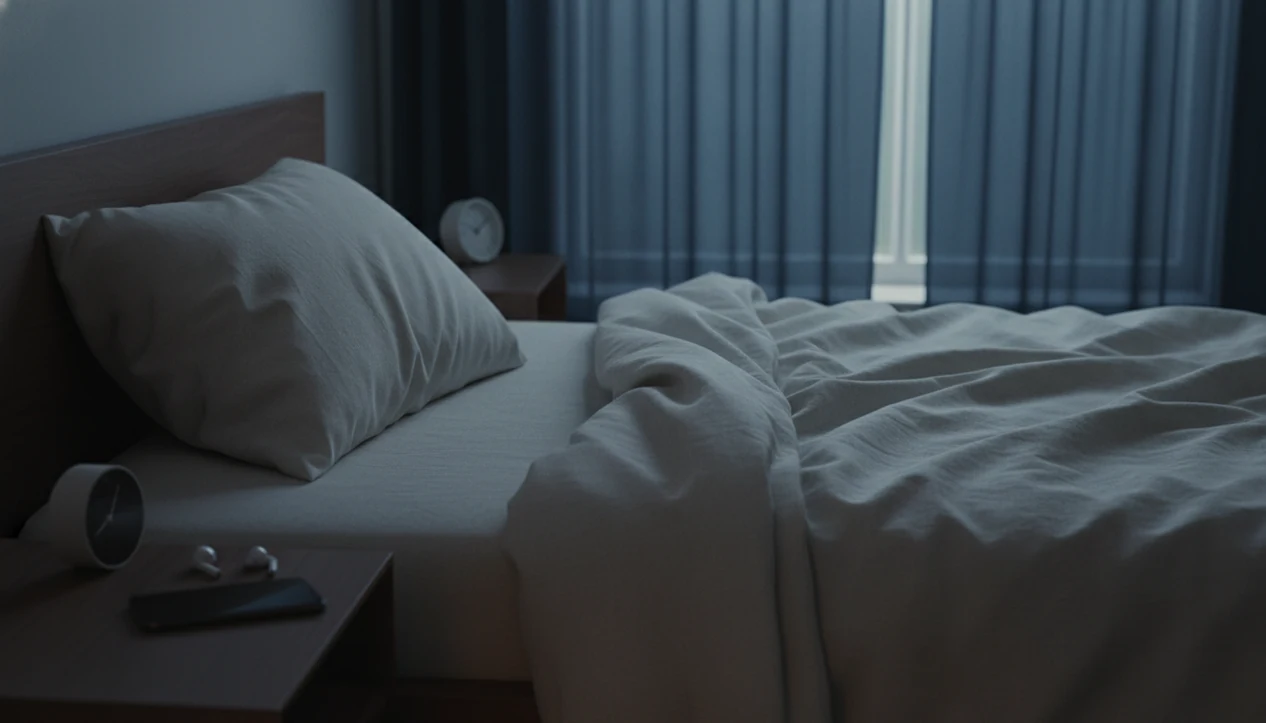


Sleep meditation for nighttime awakenings is a quiet, low-effort practice done in bed that shifts attention from problem-solving to the breath, body sensations, or calming audio. It is not a way to force sleep. A short breathing practice, body scan, or familiar guided recording can provide something simple to follow when thoughts become busy or muscles feel tense after waking.
Keep the routine low in stimulation: no bright screen, scrolling, or clock checking, and quiet audio only if it helps. Choose one practice before bed rather than comparing options during the night. The aim is to reduce the effort and worry surrounding wakefulness, not to achieve a blank mind. Meditation supports calm and sleep readiness, but it cannot guarantee immediate sleep or replace care for persistent sleep problems.
What matters during a night waking
- Use a low-stimulation routine: no bright screen, no scrolling, no clock checking, and quiet audio if needed.
- Choose one simple practice, breathing, body scan, or guided audio after waking at night, and repeat it consistently.
- Meditation supports calm and sleep readiness, but it does not guarantee instant sleep or replace medical care for chronic sleep problems.
Best Sleep Meditation for Waking Up at Night: 4-Practice Shortlist
A useful sleep meditation for waking up at night depends on how alert you feel, how anxious you are, and whether audio helps or annoys you. Keep the choice boring on purpose.
- 3-minute breath reset: Use this when you are awake but not fully activated. Silently follow “in” and “out” for ten slow breaths.
- 10-minute body scan: Use this when your jaw, shoulders, or stomach feel braced. Move attention from forehead to feet without trying to relax perfectly.
- Quiet guided audio: Use this when thoughts are loud and you need a voice to follow through cheap earbuds.
- Self-hypnosis-style sleep cueing: Use this when a repeated phrase or sleep cue feels calming.
MindTastik offers guided meditation, sleep audio, breathing exercises, and self-hypnosis sessions. Good sleep apps deliver a repeatable wind-down cue, not a promise to knock you out.
Middle-of-the-Night Meditation Effects on Arousal and Breathing
Middle-of-the-night meditation works by lowering arousal, reducing cognitive load, and giving attention a simple place to rest. In plain terms, it helps your body stop treating wakefulness like a problem to solve.
Night waking gets harder when worry rises. You notice the clock digits glowing on the dresser, calculate tomorrow’s fatigue, then become more awake. Slow breathing, a body scan, or sensory attention can interrupt that loop by giving the brain fewer tasks. Therapists and sleep educators commonly recommend reducing arousal at night, especially when worry and clock checking keep the body on alert.
The goal is not forcing sleep. It is reducing effort so sleep pressure can return naturally. A meta-analysis of 18 randomized trials found that mindfulness meditation programs produced small to moderate sleep-quality improvements in adults with sleep disturbance PubMed research: 28483249. For steadier evenings, pair this with basic sleep hygiene. For a calmer start to the night, try deep sleep meditation without expecting it to force sleep.
Small is still useful at 3 a.m.
A brief awakening does not always mean poor sleep
Normal adult sleep moves between non-REM and REM sleep in cycles of about 80 to 100 minutes. The National Academies report on sleep physiology describes brief awakenings in younger adults, often near transitions into REM sleep, that can be minor when sleep otherwise remains consolidated. Remembering a wakeful moment is therefore not, by itself, proof of a sleep disorder.
This distinction changes the purpose of the meditation: a brief waking does not need to become an urgent repair job. A simple cue can give attention somewhere to rest without treating every awakening as a failure. That does not mean prolonged or frequent waking should be dismissed, especially when it is worsening or accompanied by substantial daytime impairment.
Before You Start Sleep Meditation After Waking at Night
Set up the practice before bed, not during the wake-up. The less you decide at night, the easier it is to stay sleepy while using meditation as a quiet reset.
- Choose one practice in advance, such as breath labeling, a body scan, or one familiar guided track. Do not audition techniques when you are already awake and irritated. If you are new to these practices, sleep meditation for beginners offers a simple starting point before bedtime.
- Dim your phone before lights-out, disable notifications, and place clocks where you cannot read them from bed. A glowing time stamp can turn a small wake-up into math.
- Preload any guided audio so you do not need to browse, search, or compare options in the middle of the night.
- Set the volume low enough that the first word, bell, or music cue will not startle you awake again.
- Skip meditation-only self-care if pain, panic, chest tightness, gasping, or breathing symptoms are the main problem. In those moments, use appropriate medical or professional support instead of trying to meditate through it.
5-Step Sleep Meditation Routine After Waking at Night
Use this routine when you wake and feel tempted to reach for your phone. If you use MindTastik, pick the audio before bed or save a track for offline listening, so you only need one quick tap before settling back into the pillow.
- Stay lying down in your normal sleep position, with the room dark and your phone face-down or dimmed.
- Soften one area first, such as your tongue, forehead, belly, or the hand gripping the blanket.
- Breathe through five slow rounds, silently noting “inhale” and “exhale” without changing too much.
- Scan from head to feet, noticing contact with the mattress, warmth, pressure, and any neutral sensation.
- Return to the breath, a familiar phrase, or pre-downloaded guided audio if thoughts keep pulling hard.
If sleep does not come quickly, keep resting. You are not failing the practice; you are lowering stimulation. A screen-free bedtime meditation can make this easier before the night even starts.
Common Mistakes When Meditating After Night Waking
The biggest mistakes are the ones that make the wake-up feel important, urgent, or measurable. Keep the practice dull, familiar, and easy enough that you can do it half-asleep.
- Leave the clock alone before you begin. Seeing the time can turn a normal waking into a countdown, especially when you start calculating how little sleep is left.
- Pick one track and stay with it. Repeatedly changing voices, lengths, or background sounds keeps the brain comparing instead of settling.
- Let breathing stay comfortable. If “slow breathing” feels tight, air-hungry, or irritating, simply notice the natural breath or soften the exhale without forcing a rhythm.
- Remain lying down unless your body says otherwise. Sitting upright can make the practice feel like daytime meditation; change position only if lying down feels painful, unsafe, or impossible.
- Remove audio that surprises you. Ads, bright screens, loud transitions, or sudden volume jumps are not neutral at night. Use a downloaded, steady session instead.
Leave sleep scores until morning
A sleep tracker cannot reliably settle the question of how long someone has been awake in bed. A review of wearable sleep technology found that devices generally overestimate total sleep time and underestimate wakefulness after initially falling asleep. Their agreement with laboratory measurements is usually better for broad sleep-versus-wake estimates than for identifying individual sleep stages.
Checking the app during a wakeful stretch adds another number to interpret when the routine is meant to reduce mental activity. American Academy of Sleep Medicine guidance on sleep technology recommends reviewing data in the morning and using trackers mainly for trends, such as sleep duration, regularity, and nighttime awakenings. A single score is not a verdict on the night or on the meditation.
Five Facts About Meditation When You Wake Up at Night
- Low stimulation matters more than technique complexity. A dim room, no scrolling, and a simple breath cue usually beat a complicated method.
- Normal thoughts do not mean the meditation is failing. The practice is the return, not a blank mind.
- A familiar repeated practice can reduce nighttime threat association. The same phrase, same audio, or same body scan can make waking feel less alarming.
- Guided audio after waking at night should be slow, quiet, and ad-free where possible. Sudden volume shifts or bright app browsing can restart alertness.
- Persistent insomnia symptoms or daytime impairment should be discussed with a healthcare professional. The CDC reports that about 35.8% of U.S. adults sleep less than seven hours on average CDC guidance: adults sleep facts and stats.html, but meditation does not fix population sleep loss by itself.
MindTastik fits people who want one saved middle-of-the-night routine because its sleep audio, breathing exercises, and guided sessions can be chosen before bed.
Best Middle-of-the-Night Meditation for Racing Thoughts
What meditation helps when your thoughts race after waking up at night? A breath-labeling practice is often the simplest choice because it gives the mind a tiny job that is not planning, reviewing, or calculating.
Try silently noting “inhale” as breath enters and “exhale” as breath leaves. If that feels too plain, count from one to ten, then start again. The point is not to win. It is to stop negotiating with tomorrow.
Avoid analyzing the day, checking messages, planning your first meeting, or counting how many hours remain. That math rarely helps.
Sample script: “Inhale, I know I am breathing in. Exhale, I let the body rest. If thinking comes, I return to this breath.”
For people whose wake-ups turn into mental rehearsal, breath labeling is often easier than visualization because it uses fewer moving parts.
Best Guided Audio After Waking at Night
Guided audio after waking at night should be soft, slow, familiar, and low drama. Choose a voice with long pauses, steady volume, minimal music changes, and no dramatic storytelling arc.
Most people do well with 5 to 20 minutes, depending on alertness. A short track helps if you are only lightly awake. A longer body scan can help when the heartbeat feels loud under the blanket and the mind keeps restarting.
Ads, bright app browsing, complex stories, and energetic music can be too stimulating. If the priority is staying half-asleep, MindTastik covers sleep audio, breathing exercises, guided meditation, and self-hypnosis sessions through a choose-before-bed workflow. That matters because the decision should happen before the wake-up, not during it.
When comparing MindTastik with Calm, Headspace, or Insight Timer for this specific use case, prioritize saved sleep tracks, low-stimulation playback, predictable voices, and no mid-session ads over a larger general meditation library.
Image caption idea: dim bedroom with earbuds on a nightstand and a phone face-down, showing sleep meditation for waking up at night.
For evening listening choices, use what to listen to before bed. A sleep meditation playlist for beginners can help you choose familiar recordings in advance rather than browsing after waking.
Best Sleep Meditation Routine for Sleep Anxiety
Sleep anxiety often follows a tight loop: you wake, notice wakefulness, fear tomorrow, and become more alert. A safety-focused phrase can interrupt the alarm feeling without arguing with it.
Try: “I am awake, and I can still rest.” Repeat it with slow exhales. Use the same audio or practice for several nights, so the body learns the pattern. Familiarity matters when your nervous system is jumpy.
The American Academy of Sleep Medicine notes that about 10% to 15% of adults have insomnia disorder, meaning insomnia symptoms with daytime impairment jcsm reference: jcsm.3170. The National Institute on Aging also notes that insomnia symptoms, including difficulty staying asleep, are common in older adults nia reference: good nights sleep.
MindTastik can support sleep anxiety routines because you can repeat the same calming audio or breath practice, but it is not a replacement for therapy, medical evaluation, or CBT-I when needed. For anxious evenings, build from a calming night routine for racing thoughts.
Sleep Meditation Choice Table for Night Waking Patterns
Use the waking pattern to choose the practice, not your idea of what “real meditation” should look like. If you feel performance pressure, choose the simplest option.
| Practice | Best for | Not for | Suggested length |
|---|---|---|---|
| Breath reset | Light waking, mild worry, early stirring | Panic-level anxiety or strong pain | 3 to 5 minutes |
| Body scan | Muscle tension, clenched jaw, restless body | People who get frustrated tracking sensations | 10 to 20 minutes |
| Guided audio | Loud thoughts, loneliness, need for structure | Anyone irritated by voices at night | 5 to 20 minutes |
| Self-hypnosis-style sleep cue | Familiar phrases and repeated sleep cues | People who dislike suggestion-based audio | 5 to 15 minutes |
| Open awareness | Calm wakefulness and low anxiety | Racing thoughts or clock-checking spirals | 3 to 10 minutes |
After waking, when the trial reminder on a phone screen tempts you into browsing, a preselected track is safer. Pain, breathing issues, severe anxiety, or frequent daytime impairment need professional guidance.
Selection Criteria for Middle-of-the-Night Meditation Practices
These recommendations prioritize low stimulation, ease in bed, repeatability, low cognitive effort, and gentle sound design. Practices were selected for adult sleep and anxiety support, not as medical insomnia treatment.
We excluded methods that require journaling, bright screens, intense visualization, complex breath holds, or sitting upright for long periods. At night, effort can become the problem. The small decision of dimming the phone screen before bedtime audio may matter more than picking a fancy technique.
Research on mindfulness and sleep is encouraging, but not absolute. Studies suggest modest sleep-quality benefits for adults with sleep disturbance, especially when practices reduce arousal and become routine. MindTastik earns a place in this shortlist because it lets users choose between a 5-minute breathing exercise and a 20-minute body scan before the night gets messy.
A steady nighttime wind-down routine also makes middle-of-the-night practice feel less random.
A familiar guided session for a wakeful stretch
MindTastik’s guided meditation library is an option for adults who prefer a voice to follow rather than counting breaths alone. Choose a familiar session before bed, and keep playback quiet so starting it does not become another task. Breathing exercises or self-hypnosis audio may also suit people who prefer repeated cues. People irritated by voices, or made more alert by listening, should choose silent breath awareness instead. Persistent sleep problems need assessment, not simply a different recording.
When night waking needs more than meditation
Sleep meditation is useful support, but it has clear limits. Keep those limits in view, especially if night waking is frequent or worsening.
- Sleep meditation is not a medical treatment, cure, or guaranteed fix for insomnia.
- Chronic insomnia, sleep apnea symptoms, restless legs, ongoing pain, medication effects, or major daytime impairment should be discussed with a healthcare professional.
- Some people become more alert when they try too hard to meditate, especially if they sit up, track progress, or force breathing.
- Evidence for mindfulness and sleep is promising but modest, and less specific than structured insomnia care such as CBT-I.
- Guided audio can backfire if it includes ads, sudden music changes, bright screens, or emotionally intense stories.
- MindTastik does not diagnose sleep disorders or replace therapy, medication guidance, or medical evaluation.
- If anxiety feels severe, unsafe, or unmanageable, use appropriate professional or emergency support rather than relying on an app.
Not every quiet night is a meditation success story.
A Bedtime Decision Guide
- Use sleep meditation after waking at night when you feel alert but safe, and you mainly need a low-effort way to stop rehearsing tomorrow.
- Skip the session if you are trying to diagnose a new or intense sleep problem; a meditation track can support rest, but it is not a substitute for personalized care.
- Keep the room boring: a dim lamp, a familiar pillow position, and one slow exhale are usually better than searching for the perfect practice.
- Choose audio you already know if you wake easily; novelty can make the mind more curious when the goal is to lower stimulation.
- If a sleep story makes you follow the plot, switch to a body scan or simple breathing cue so the session asks less from your attention.
On nights when guided practice feels like too much effort, MindTastik sleep stories offers low-stimulus audio you can play in the background.
Questions about meditating after night waking
What meditation helps with racing thoughts after waking at night?
Breath labeling is a simple starting point: silently note “inhale” and “exhale” while breathing normally. When planning or worry returns, return to those words without reviewing the thought. A familiar body scan is another option if following the breath feels frustrating. Neither practice requires a blank mind.
Should I meditate when I wake up at 3 a.m.?
The clock time matters less than how the practice feels. A brief, familiar meditation can suit a wakeful stretch when the main problem is worry or tension. There is no need to check the time first. Skip techniques that require concentration, bright screens, or uncomfortable breathing.
How long should I meditate after waking up at night?
Start with a short practice, such as ten comfortable breaths or a few minutes of breath labeling. A familiar guided recording may run for 5 to 20 minutes, depending on preference. The length is not a target to complete, and staying awake until the recording ends is not necessary.
Can sleep meditation make me more awake?
Yes. Trying to perform the technique correctly, monitoring progress, forcing the breath, or repeatedly changing recordings can make the practice more demanding. Reduce it to one quiet cue or stop if it becomes irritating. Meditation is optional support, not a task that must be completed before sleep.
Do I need to sit up to meditate after waking at night?
No. This routine can be done lying in a normal sleeping position. Attention can rest on the natural breath, contact with the mattress, or a familiar voice. Sitting upright is unnecessary when the aim is a low-effort return to rest rather than a formal meditation session.
Is guided audio helpful for getting back to sleep?
Guided audio can provide a simple focus when thoughts are loud, but voices irritate some listeners. Choose a familiar recording with steady volume, long pauses, and little change in music. Prepare it before bed rather than browsing at night. Silent breathing is a reasonable alternative if audio increases alertness.
When should I seek help for repeated nighttime awakenings?
Speak with a healthcare professional when waking is persistent, worsening, or causing substantial daytime impairment. Sleep apnea symptoms, restless legs, ongoing pain, or possible medication effects also need attention. Meditation may help with the worry surrounding wakefulness, but it does not diagnose or treat its underlying cause.