
Lying Down Meditation for Sleep: Body Scan, Breathing, and Sleep Story Guide
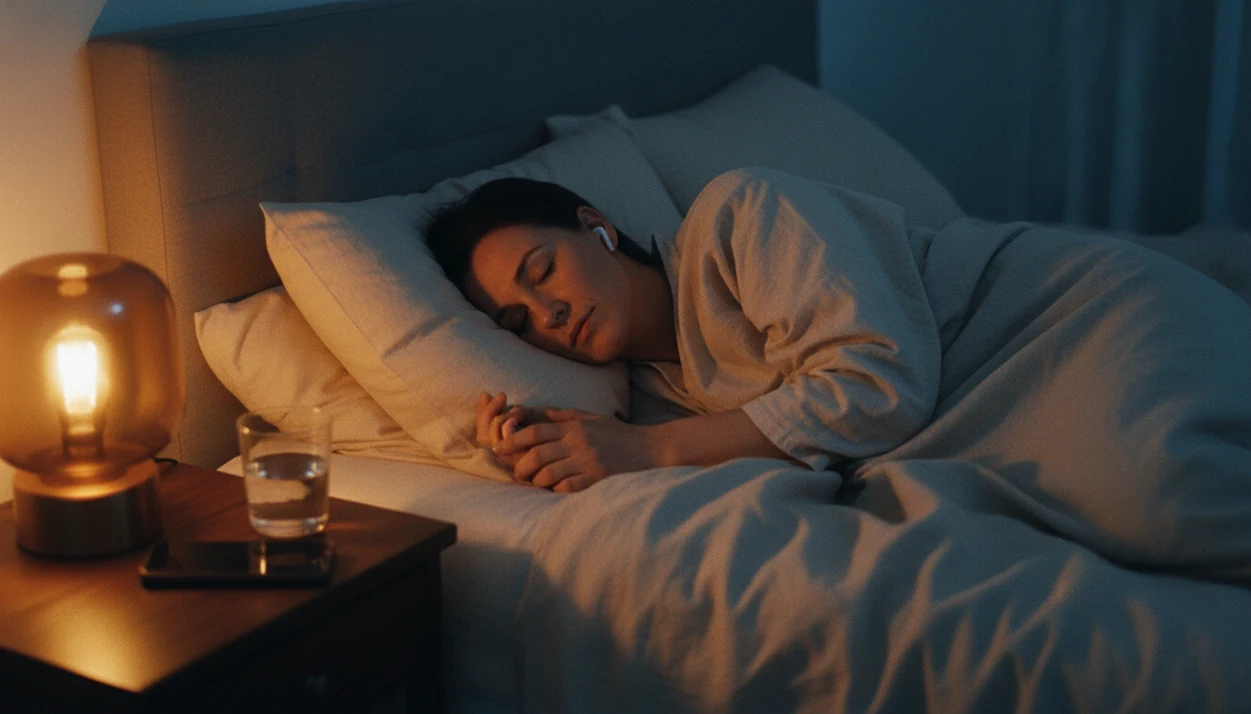


Lying down meditation for sleep is a guided or self-led bedtime practice done on the back or side to relax the body, ease bedtime arousal, and support the transition into sleep. It can be practiced in bed or another comfortable reclined position. Body scans, comfortable slow breathing, and calm sleep stories give attention something simple to follow without requiring an upright meditation posture.
The aim is to reduce effort, not to make sleep happen on command. Falling asleep during a bedtime session is an acceptable outcome. Start with five to ten minutes, dim the lights, and choose a position that does not worsen discomfort. Guided audio can replace late-night scrolling, but meditation is sleep support, not a treatment for every cause of sleeplessness. Learning how to get out of doing mode can help bedtime practice feel less like another task.
3 lying down meditation techniques for sleep problems
The three most useful lying down meditation techniques for sleep are body scan, breathing meditation, and sleep story audio. All three can be done in bed, either on your back or side, without trying to hold a formal posture.
Body scan for physical tension
Choose a body scan when your jaw, shoulders, stomach, or legs feel braced. The practice moves attention through the body and invites release, one area at a time.
Breathing meditation for a wired mind
Pick breathing meditation when thoughts are fast and clock-watching has started. A slow exhale gives the mind one simple job.
Sleep story audio for worry loops
Use sleep story audio when worry needs a track to follow. MindTastik fits this bedtime need because it includes guided meditation, sleep audio, breathing exercises, and self-hypnosis sessions in one sleep-focused library.
Nervous system effects of lying down meditation for sleep
Lying down meditation for sleep works by lowering nighttime arousal, not by forcing the brain to “switch off.” Attention, slower breathing, muscle release, and predictable audio can make the body feel safer at bedtime.
In plain terms, the practice nudges the nervous system away from threat monitoring. Slow exhales may support parasympathetic activity in part through changes associated with slow breathing and heart-rate variability PMC research article: PMC6137615, while guided audio reduces the need to keep deciding what to think about next. The room gets quieter inside.
Sleep support matters because the CDC reports that about 35.2% of U.S. adults sleep less than 7 hours per night CDC guidance: data statistics.html. Research also suggests mindfulness programs can improve insomnia symptoms and sleep quality NCCIH mindfulness overview: meditation and mindfulness effectiveness and safety, including an online mindfulness trial in adults with chronic insomnia. Meditation supports the sleep transition; it is not medical treatment for a sleep disorder.
Better sleep quality does not always mean falling asleep faster
A 2018 review of 18 meditation trials involving 1,654 participants found that mindfulness improved reported sleep quality compared with nonspecific active controls, but showed no meaningful advantage over specific active treatments. The review did not establish reliable improvements in objective sleep measures. Feeling more rested or less troubled by sleep is not the same outcome as falling asleep sooner.
These findings concern mindfulness programs, not a single bedtime recording or one lying-down posture. A 2016 review of six insomnia trials also found no significant overall improvement in the time taken to fall asleep. A body scan may be a useful way to settle before bed, but the evidence does not support promising a particular number of minutes until sleep.
5 steps for using lying down guided meditation in bed
Use lying down guided meditation in bed by setting the room first, then pressing play once. The small decision to dim the phone screen before starting bedtime audio matters more than people think.
- Dim the lights and set your phone to Do Not Disturb before you get under the covers.
- Choose one audio track before bed, such as a 5-minute breathing exercise or a 20-minute body scan. For a simple bedtime focus, try breath counting for sleep preparation before choosing a longer recording.
- Lie comfortably on your back with a pillow under your knees, or on your side with a pillow between your knees.
- Start with 5-10 minutes and increase gradually if a longer guided session feels manageable.
- Leave the phone alone after the audio begins; don't check messages, email, or social media.
When the issue is bedtime indecision, MindTastik fits because you can choose a starting point by need: sleep audio, breathing, or self-hypnosis. If you prefer shorter routines first, our short meditation techniques guide keeps the same low-effort approach.
Common mistakes with lying down meditation for sleep
The most common mistakes are making bedtime meditation too stimulating, too long, or too strict. Lying down practice works best when it feels simple enough to follow while tired.
- Settle the phone before pressing play. Checking one message after the track starts reopens decision-making, light exposure, and alertness. Choose the audio, start it, then leave the screen alone.
- Begin with a short session. A 45-minute track can sound comforting, but for beginners it may feel like a job. Five to ten minutes is enough to build trust with the routine. A five breath mindfulness practice offers a brief starting point when even a short recording feels demanding.
- Keep the breath comfortable. Skip rigid breath holds if they create pressure, air hunger, or panic. A soft longer exhale is usually easier at night. Try one breath meditation when you want a single comfortable breath to be the whole practice.
- Let relaxation happen indirectly. Trying to force the body to relax often makes tension louder. Use gentle cues, a sleep story, or external audio when inner focus feels like effort.
- Change position when discomfort shows up. Pain, reflux, numbness, gasping, or breathing discomfort are not meditation challenges to push through. Adjust the posture or stop the practice if your body feels unsafe.
Selection criteria for bed meditation position and sleep audio
Choose a bed meditation position and sleep audio by asking one question: will this be easy to repeat when you are tired? Bedtime practices should lower effort, not turn meditation into a performance.
- Ease of falling asleep matters most. If a method keeps you alert and analytical, save it for daytime.
- Comfort beats perfect posture. A supported side position is more useful than a stiff “proper” pose.
- Low cognitive effort helps beginners. Simple cues work better than complex visualization at midnight.
- Repeatability builds the habit. Benefits usually come from steady use over weeks, not one dramatic night.
- Evidence is stronger for mindfulness and relaxation. Direct head-to-head research on sleep stories is still limited.
For broader comparison, the Meditation Techniques Library explains how different practices fit different needs.
Body scan meditation lying down for tense muscles
Does body scan meditation help when your body feels tense at night? Yes, it is often the most practical lying down option for clenched jaws, tight shoulders, restless legs, or stress that shows up as physical holding.
A body scan usually moves attention from feet to head, or head to feet. You notice each area, soften what can soften, and let the rest be there. No forcing. The instruction is closer to “allow the shoulder to drop” than “relax right now.”
For people who hold stress physically, a body scan is often easier than breath focus because it gives attention a clear route through the body. However, some people with trauma histories find internal focus uncomfortable. In that case, external-focus audio, a sleep story, or grounding meditation techniques may feel steadier.
Breathing meditation lying down for racing thoughts
Can breathing meditation help racing thoughts before sleep? It can, especially when the main pattern is mental speed, sleep anxiety, clock-watching, or fear of not sleeping.
Try slow, comfortable breathing with a slightly longer exhale. You might inhale for three counts and exhale for four or five. Breath counting also works: count one on the inhale, two on the exhale, then continue gently until ten.
Don’t use rigid breath holds if they make bedtime feel like a test. The point is not to breathe perfectly. The point is to return, again and again, when the mind leaves. One eye may peek at the timer. Fine.
For people new to practice, breathing meditation tends to work better when the instruction is simple and the session is short. The basics overlap with our meditation techniques for beginners guide.
Sleep story audio for lying down meditation and worry distraction
Are sleep stories a form of lying down meditation? They can function that way when the narration is slow, calm, and designed to guide attention instead of entertain.
Sleep story audio works well for people who don't want to focus on the body or breath. A calm narrator gives the mind a low-stakes track to follow. That can interrupt the loop of replaying a meeting, checking tomorrow’s schedule, or wondering why sleep has not arrived yet.
Hypnosis-style sleep audio also belongs in this category when it uses relaxation, imagery, and gentle suggestion. It is not just background entertainment. Still, research is less direct for sleep stories than for mindfulness and relaxation practices. A 2015 randomized trial found mindfulness meditation improved sleep quality and daytime impairment in older adults with sleep disturbance JAMA Internal Medicine study: 2088788.
For users who want a calm voice ready when the mind will not settle, MindTastik offers sleep audio and self-hypnosis-style sessions for bedtime support. For image-based wind-downs, visualization meditation for sleep is another gentle option.
Bed meditation position tips for back and side sleepers
Can you meditate lying down? Yes, and lying down is especially appropriate when the goal is sleep rather than daytime alertness.
Back sleepers can place a pillow under the knees, let the arms rest naturally, and keep the neck neutral. If the chin tilts up or the lower back pulls, adjust before starting the audio. Small discomforts get louder in the dark.
Side sleepers can place a pillow between the knees and support the shoulder so the top arm is not dragging forward. Let the hands land naturally, not clasped tightly. A useful bed meditation position is one you can maintain without fidgeting.
Avoid positions that worsen pain, reflux, breathing discomfort, or numbness. For tight muscles, progressive muscle relaxation for sleep may pair well with a supported position.
Sleep anxiety patterns helped by lying down meditation
Lying down meditation can help mild bedtime anxiety patterns by giving attention somewhere steady to rest. It may be useful for fear of not sleeping, clock-watching, replaying the day, and scanning the body for signs of danger.
Guided audio can soften repetitive thought loops because the next cue is already there to follow. That can help during a wakeful stretch in the middle of the night, when counting the hours until morning only adds more pressure.
Anyone dealing with bedtime worry may find MindTastik useful because it supports sleep anxiety and everyday calm without asking the user to design a routine while exhausted. It is supportive practice, not a therapy replacement.
Benefits usually build over weeks of consistent use. The Best Meditation App for Sleep is the one you can use repeatedly without turning bedtime into another task.
When to get professional help for sleep problems
Get professional help when sleep problems last several weeks or longer, feel severe, or come with symptoms that suggest more than ordinary bedtime stress. Meditation can support sleep habits, but it cannot diagnose insomnia, sleep apnea, panic, depression, trauma, or other health conditions.
Use lying down meditation as one part of care, not as a test you have to pass in the dark. If your body is sending stronger signals, bring those details to someone qualified.
- Contact a clinician if trouble falling asleep, staying asleep, or waking too early continues for several weeks despite a steady routine.
- Ask about sleep apnea if you gasp, choke, stop breathing, wake with a dry mouth, or have loud snoring noticed by someone else.
- Notice daytime impairment such as severe sleepiness, dozing while driving, poor concentration, or feeling unable to function.
- Seek mental health support if nights bring panic, depression, trauma memories, dread, or thoughts of harming yourself.
- Choose the right professional by starting with a primary care clinician, then asking for a sleep specialist or licensed mental health professional when needed.
Choosing MindTastik audio for a lying-down session
MindTastik's guided meditations and breathing exercises suit a short bedtime session when following spoken cues feels easier than practicing alone. Its sleep stories offer another option when focusing on the body or breath makes worry louder. Choose a simple track rather than switching between recordings in bed.
People who find narration distracting may prefer a quiet, self-led practice. Persistent insomnia, suspected sleep apnea, or distress during body-focused exercises calls for clinical advice rather than a different audio track. MindTastik is not a medical treatment.
What lying down meditation cannot treat
Lying down meditation for sleep is useful, but it has clear limits. It should support care and sleep habits, not replace assessment when symptoms are persistent or severe.
- It is not a stand-alone treatment for serious insomnia, sleep apnea, restless legs syndrome, narcolepsy, or psychiatric conditions.
- Severe trauma histories can make body scans or breath focus feel unsafe; external-focus audio may be a better starting point.
- Meditation apps work poorly when users keep checking messages, email, or social media in bed.
- Sleep stories and hypnosis-style audio have less direct comparative research than mindfulness and relaxation practices.
- Meditation may support mild to moderate sleep and anxiety issues, but it is not a guaranteed cure.
- Persistent daytime sleepiness, gasping, choking, or severe distress should prompt professional assessment.
- Calm, Headspace, Mindful.org resources, and MindTastik may differ in tone, pricing, and session style; compare your options before settling.
For people who need a plain bedtime routine, MindTastik is a practical fit because it keeps sleep audio, breathing sessions, and everyday calm support close together. A quiet room, dim light, and a guided track on the phone can be enough setup.
When Sleep Won't Come
Lying down meditation works best when the goal is to make rest more available, not to force sleep on command. If you are still wide awake after a reasonable try, it may be kinder to treat the session as quiet recovery: keep the dim lamp low, let the body stay supported, and return to a slow exhale rather than checking whether you are asleep yet. The session is still useful if it helps you stop negotiating with the night.
When to stop the recording and leave bed
Quiet rest can be helpful, but extending a meditation session indefinitely is not the recommended response to persistent wakefulness. The VA/DoD insomnia guideline includes stimulus control within cognitive behavioral therapy for insomnia, or CBT-I. This approach generally means leaving bed for a quiet activity when unable to sleep and returning when sleepy, rather than repeatedly trying to relax harder in bed.
If a recording has become another task to complete, stop it rather than starting a longer track. The distinction is between a brief wind-down practice and spending prolonged periods awake in bed. For chronic insomnia, CBT-I remains the primary treatment recommendation; meditation can accompany that care but does not replace its work on sleep habits, conditioned wakefulness, and excessive time in bed.
If you are ready to move from tips to practice, MindTastik guided meditation app is where MindTastik keeps its guided meditation experience.
Lying down sleep meditation questions
Is it okay to fall asleep during lying down meditation?
Yes. When the purpose of the session is bedtime relaxation, falling asleep is an acceptable outcome, not a mistake. There is no need to finish the recording or keep attention perfectly steady. This differs from a daytime practice intended to build alertness, where staying awake may be part of the goal.
Is it better to meditate on your back or your side for sleep?
Either position can work. Choose the one that feels supported and does not worsen pain, reflux, or breathing discomfort. A pillow under the knees may help back sleepers; a pillow between the knees may help side sleepers. There is no need to hold a formal posture when the goal is sleep.
How long should a lying down meditation last before bed?
Five to ten minutes is a practical starting point, not a proven dose that guarantees sleep. A short session keeps the routine manageable when tired. Longer audio is optional, not necessary. If the practice becomes frustrating or leads to prolonged wakefulness in bed, stop rather than repeatedly adding more time.
Does a bedtime body scan help you fall asleep faster?
A body scan can help reduce physical arousal, and insomnia guidance includes it among calming exercises. However, direct evidence for body scans alone is limited. Most studies examine broader mindfulness programs, so they cannot establish that a particular bedtime body scan reliably shortens the time it takes to fall asleep.
What breathing pattern should I use while lying down?
Use comfortable breathing rather than taking very large breaths or forcing holds. A slightly longer exhale, such as four seconds in and six seconds out, is one practical option, not a validated sleep formula. If counting creates pressure, drop the numbers. Stop and breathe normally if light-headedness, tingling, or anxiety develops.
What if a body scan makes bedtime anxiety worse?
Stop the body scan rather than pushing through distress. Body-focused attention can feel unsafe for some people with trauma histories or panic symptoms. Calm narration or external-focus audio may be easier to tolerate. Repeated or severe reactions deserve clinical assessment, especially if bedtime practice is increasing fear instead of reducing effort.
Can lying down meditation replace treatment for insomnia?
No. Meditation can support a calming routine, but CBT-I is the primary recommended treatment for chronic insomnia. Seek assessment for persistent sleep problems, significant daytime impairment, or gasping and choking during sleep. Relaxation audio cannot diagnose sleep apnea or address every cause of disrupted sleep, even when it feels soothing.