
Should You Close Your Eyes When Meditating?
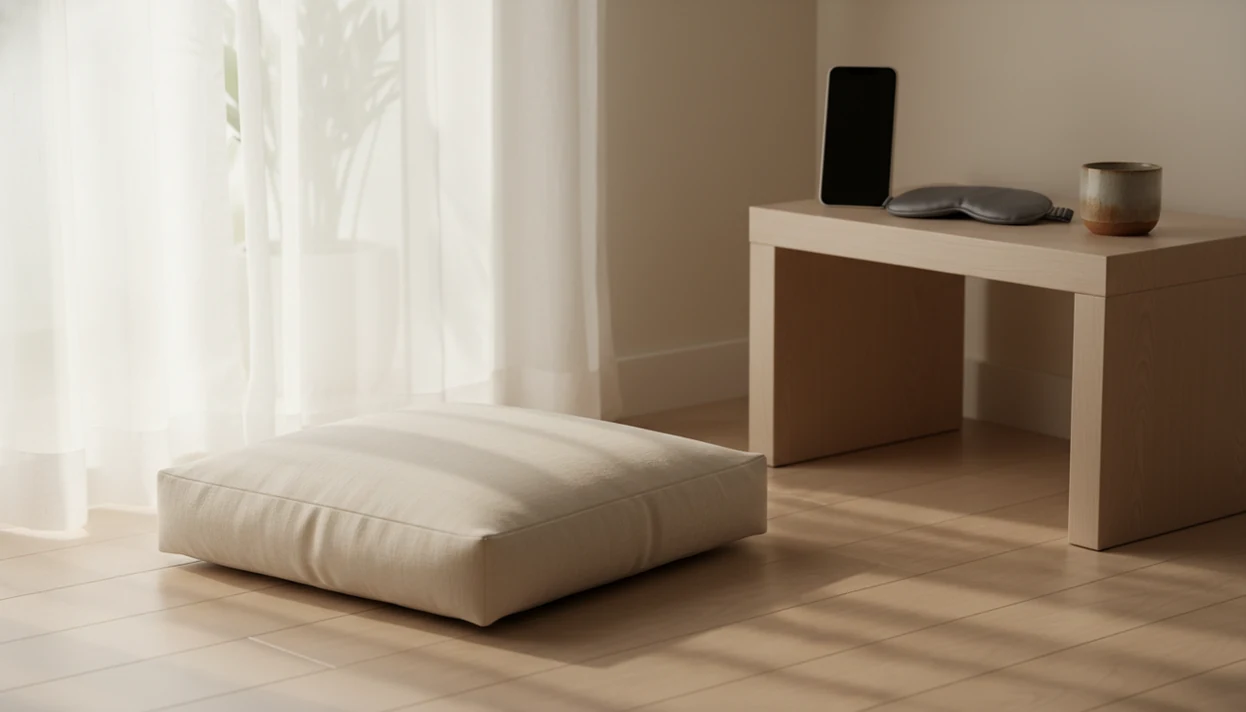


No, meditating with eyes closed is optional: eye position should match the session’s goal, comfort level, and need for alertness. Closed eyes reduce visual distractions and may suit relaxation, sleep preparation, or anxiety-focused practice. A soft open gaze can be more comfortable when closing the eyes causes uneasiness or makes daytime practice too sleepy.
Closed, half-open, and open eyes are all valid choices. For daytime focus, keeping the room in view may help; for a body scan or bedtime audio, closed eyes may make the guidance easier to follow. MindTastik offers adults guided meditations, sleep audio, breathing practices, and self-hypnosis for everyday calm, rest, and general anxiety support. Comfort and consistency matter more than forcing one eye position.
Eye position at a glance
- Eyes closed, half-open, and open-eye meditation are all valid approaches.
- Use closed eyes for deeper relaxation, soft gaze for anxiety or alertness, and open eyes for focus or daily-life mindfulness.
- Comfort and consistency matter more than forcing one eye position.
Should You Close Your Eyes When Meditating: The Practical Answer
Should you close your eyes when meditating? No. Closing your eyes is optional, not required, and it should serve the session rather than become a rule.
Closed eyes often help beginners because there is less to track. The room drops away a little. Breath, body sensations, and a calm voice become easier to notice, especially during a guided session. If you are choosing between a 5-minute breathing exercise and a 20-minute body scan, closed eyes may help you settle faster. If you are unsure which practice suits your goal, use the meditation technique picker before testing eye positions.
Open or half-open eyes are better when closed eyes make you sleepy, tense, or too inward. A soft gaze can also help during work breaks, walking practice, or daytime focus. For many people, consistent guided practice matters more than eye position. The repeatable routine is the useful part.
5 Facts About Meditation Eyes Open or Closed
- There is no single correct eye rule. Meditation traditions include closed-eye, half-open, and open-eye methods, so eye position is a tool, not a test.
- Closed eyes reduce visual stimulation. For many beginners, this makes breath counting, body scans, and meditation techniques for beginners feel less busy.
- Open eyes can support alert awareness. If you keep nodding off during practice, opening your eyes slightly may help your body stay oriented to the room.
- Half-open eyes are a practical middle ground. A relaxed downward gaze lowers stimulation without creating the total darkness that bothers some people.
- Your goal should guide the choice. Sleep, anxiety support, focus, and everyday calm may each call for a different eye position.
Small adjustment. Big difference.
How Eye Position Works in Meditation Practice
Eye position changes meditation by changing sensory load: closed eyes reduce visual input, open eyes preserve room awareness, and half-open eyes balance calm with alertness.
With eyes closed, the brain has less visual information to process. That can make breath, body sensations, and audio guidance easier to notice. It can also make inner imagery or racing thoughts feel more noticeable for some people. In a quiet room with only a steady breath to follow, stillness may feel spacious, but it does not always feel peaceful right away. If jealousy keeps drawing your attention away from the breath, try a focused practice of mindfulness for jealousy.
Open eyes keep the nervous system more oriented. In plain language, your body gets more “I am here in this room” signals. Half-open eyes soften the visual field without making practice feel sealed off.
Research supports meditation benefits for anxiety and sleep broadly: a 2014 systematic review and meta-analysis found moderate evidence for anxiety symptom improvement with mindfulness meditation programs (Goyal et al., JAMA Internal Medicine: PubMed research: 24395196), and a 2015 randomized clinical trial found mindfulness meditation improved sleep quality in older adults with sleep disturbance (Black et al., JAMA Internal Medicine: PubMed research: 25686304). These studies do not strongly compare eyes-closed versus eyes-open meditation head-to-head.
Should You Close Your Eyes When Meditating for Sleep, Anxiety, or Focus?
Match the eye position to the job of the session. Closed eyes usually fit sleep audio and body scans, while soft or open eyes often fit anxiety support, focus, and daily-life mindfulness.
| Goal | Eye position to try first | Why it may help |
|---|---|---|
| Sleep audio | Closed eyes | Reduces visual input and supports a wind-down routine |
| Anxiety support | Half-open soft gaze | Keeps grounding cues available if darkness feels uneasy |
| Focus practice | Open or half-open eyes | Helps alertness during work breaks or study |
| Walking or commuting | Open eyes | Keeps practice connected to the environment |
| Deep relaxation | Closed or half-open eyes | Lets you follow body sensations without forcing stillness |
Tools like MindTastik, Calm, and Headspace can help you test sleep, anxiety, and everyday calm practices without guessing from scratch.
What the Research Says About Eyes-Closed vs Eyes-Open Meditation
The honest answer is that research directly comparing eyes-closed and eyes-open meditation is limited. Most evidence looks at meditation programs as a whole, not whether the eyelids were closed, half-open, or softly focused.
That distinction matters. Studies and clinical reviews often support meditation as a helpful practice for anxiety symptoms, stress regulation, and sleep quality, but those findings should not be stretched into a claim that one eye position is medically superior. Eye position is more like pacing, posture, or background sound: it can change comfort and attention, but it is not the whole intervention.
For beginners, practical testing is still reasonable because the risk is usually low and the feedback is immediate.
- Try closed eyes for a sleep or body-scan session when it feels safe.
- Shift to a half-open gaze if you feel anxious, foggy, or too inward.
- Use open eyes for daytime focus, walking, or when you need alertness.
- Notice which option helps you return to practice without forcing it.
Meditation apps can support that routine with structure and reminders, but they do not replace medical care, therapy, or crisis support.
5-Step Eye Position Test for Meditation Sessions
Use this simple test for three to seven sessions before deciding what works. One session can lie to you. A short pattern is more useful.
- Set one clear goal before you begin, such as sleep, anxiety support, focus, or a short reset. Before setting your goal, try the Halt mindfulness practice to check whether hunger, anger, loneliness, or tiredness needs attention.
- Start with closed eyes if it feels safe and relaxing, especially for body scans, breath practice, or progressive muscle relaxation for sleep.
- Switch to half-open eyes if you get sleepy, uneasy, dissociated, or caught in intrusive imagery.
- Use a soft gaze toward the floor, a plain wall, or one neutral point. Don’t stare.
- Track what helps you return for the next session. Comfort and consistency are better markers than whether your eyes stayed closed.
For anxious beginners, half-open eyes are often easier than closed eyes because they preserve grounding cues while still reducing distraction.
Best Eye Position Tips for Beginner Meditation Sessions
For beginners, the best eye position is the one that keeps your face relaxed and your attention returnable. A loose jaw, soft brow, and easy eyelids matter more than a dramatic meditation pose. If you are squeezing your eyes shut, you are adding effort to a practice meant to reduce effort. You can also explore meditation for your personality type when choosing a practice that feels comfortable and repeatable.
- Relaxed eyelids: Let the eyes close naturally, as if you are resting, not bracing.
- Soft gaze: Look slightly downward instead of scanning a busy room.
- Gentle blinking: During open-eye meditation, blink normally and let the visual field blur a little.
- Neutral focus point: Pick a spot on the floor, a cushion seam, or a blank part of the wall.
- App-guided pacing: A guided session can stop you from checking the timer every minute. MindTastik includes options for sleep, breathing, and everyday calm.
Suggested image caption: relaxed closed-eye and soft-gaze meditation options
Image suggestion: A person meditating with relaxed closed eyes beside a second soft-gaze option, showing the should you close your eyes when meditating guide in practice.
Settle into a chair, then reopen the eyes gently
A stable seat removes another source of effort while comparing eye positions. Harvard Health’s meditation guidance recommends a chair with the back supported and feet flat on the floor. Floor sitting or kneeling is not necessary. This setup lets a beginner attend to the breath without also trying to tolerate hip, knee, or back discomfort.
The end of a closed-eye session deserves a brief transition, too. The NHS beginner meditation instructions recommend gently opening the eyes and remaining seated briefly before standing. For a daytime practice, that gives the session a clear finish rather than moving straight from closed eyes to activity. It is a practical closing routine, not evidence that closed-eye meditation is superior.
Common Myths About Closed Eye Meditation
Real meditation does not require closed eyes. Many people learn that way because it is simple, quiet, and familiar, but open-eye meditation can still be steady and deep.
Another myth is that sleep meditation always requires closed eyes. It often helps, especially when the phone is face-down on the nightstand and the room is dark. But if closed eyes make your thoughts feel louder, a soft gaze can be kinder. Try dimming the phone screen, choosing audio, and resting your gaze low.
Drowsiness is also normal with closed eyes. It does not mean you failed. Open the eyes slightly, sit more upright, or move to a shorter practice from a short meditation techniques routine.
Eye position should not become a performance standard. The point is noticing and returning. When thoughts are hard to release, letting go mindfulness offers another way to practice without forcing your attention.
Guided audio without a closed-eye requirement
MindTastik’s guided meditation library suits adults who prefer spoken instructions while comparing closed eyes with a soft gaze. Breathing sessions and body scans provide an attention point without requiring a fixed stare. Sleep audio is a better match when becoming drowsy is the goal, rather than something to avoid.
Someone comfortable practicing silently may need only a neutral visual point. Persistent distress, dissociation, or worsening anxiety calls for qualified support, not a different app session.
Eye position is a comfort choice, not a treatment
Eye position advice is practical, but it has real limits. Use it as a flexible meditation aid, not a health claim.
- There is limited direct clinical research comparing eyes-closed versus eyes-open meditation outcomes.
- Meditation is not a guaranteed fix for insomnia, anxiety, trauma symptoms, or medical conditions.
- Some people feel anxious, dissociated, or overwhelmed when closing their eyes.
- If distress persists, seek support from a qualified mental health or medical professional.
- Meditation apps can support routines, but they are not therapy, emergency care, or crisis support.
- Eye position should stay flexible. It is not a success metric.
- Visual discomfort, headaches, or eye strain may mean you need a softer gaze, blinking, or a break.
- If bedtime practice keeps you awake, try grounding, breath counting, or visualization meditation for sleep another night.
Seek professional care when anxiety, insomnia, panic, trauma symptoms, or low mood disrupt daily life, feel unsafe, or persist despite self-care; the National Institute of Mental Health gives similar guidance for anxiety symptoms that interfere with everyday activities: nimh reference: anxiety disorders.
If you are ready to move from tips to practice, MindTastik guided meditation app is where MindTastik keeps its guided meditation experience.
Questions about meditation eye position
Can you meditate with your eyes open?
Yes. Open-eye meditation can use the breath or body sensations as the attention point while the room remains visible. A relaxed gaze toward a plain surface limits visual distraction. It can suit daytime practice, particularly when closed eyes lead to drowsiness or uneasiness.
Is meditating with eyes closed better than keeping them open?
Neither position is established as better overall. Direct research comparing eye positions is limited, and evidence about meditation programs does not prove that closed eyes produce better outcomes. Closed eyes reduce visual input; open eyes preserve room awareness. The useful choice depends on comfort and the session’s purpose.
Why do people close their eyes during meditation?
Closing the eyes reduces visual distractions, which can make breathing, body sensations, or spoken guidance easier to follow. It often suits body scans and bedtime practice. However, it can also make thoughts or inner imagery more noticeable, so less visual input does not always mean a calmer experience.
What if closing my eyes during meditation makes me anxious?
Keeping the eyes softly open is a valid alternative. A downward gaze toward a plain surface preserves cues from the room without requiring a fixed stare. There is no need to push through distress. If anxiety, dissociation, or overwhelm persists, pause the practice and seek qualified mental health support.
Where should I look during open-eye meditation?
A neutral spot on the floor, a blank wall, or a cushion seam can work. Let the gaze rest rather than inspecting the object or scanning the room. Blink normally and keep the brow and jaw relaxed. Half-open eyes are another option if a fully open gaze feels distracting.
Why do I fall asleep when I meditate with my eyes closed?
Closed eyes can make a quiet session more restful, so drowsiness is not unusual. If the goal is daytime attention rather than sleep, try opening the eyes slightly, sitting more upright, or shortening the session. Falling asleep does not mean failure, but it changes what the session is doing.
Should beginners meditate with their eyes closed or half-open?
Either is a reasonable starting point. Closed eyes may simplify following the breath by reducing visual input. Half-open eyes offer a middle ground when darkness feels uncomfortable or sleepiness gets in the way. Compare the options over several short sessions rather than treating the first attempt as a final verdict.
Can I change eye position in the middle of meditation?
Yes. Eye position is adjustable, not a rule that must remain fixed throughout a session. Opening the eyes slightly can help when drowsiness or uneasiness appears; closing them may help when the room feels distracting. Return attention to the breath or guidance after the change, without restarting the whole session.