
Why Multitasking Makes Food Taste Bland
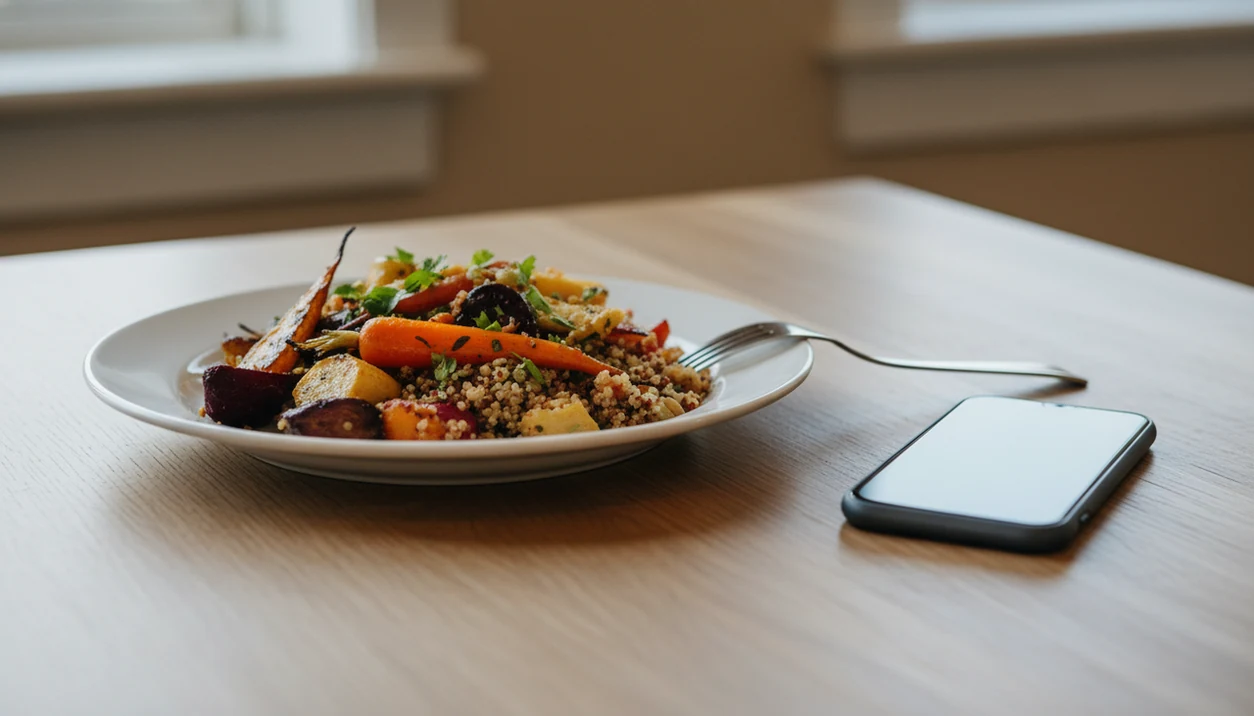


Multitasking can make food taste less intense because divided attention leaves less room to notice aroma, texture, temperature, and flavor. A meal eaten alongside email, television, or scrolling can feel less satisfying, even when the food itself has not changed. Distraction can also pull attention away from fullness cues and may contribute to eating more.
The practical response is a brief pause, not a rule that every meal must happen in silence. Setting aside a screen for the first few bites gives the food some attention. In four laboratory studies of sensory-focused eating, participants ate less of a later snack, but slower eating appeared to explain the effect. That supports a manageable habit, not a guaranteed appetite-control method.
Taste and attention: the essentials
- Distraction can reduce perceived taste intensity and make familiar foods feel less rewarding.
- Research links distracted eating with about 10% more intake during a meal and about 25% more intake later.
- A 2- to 5-minute breathing or awareness routine before eating can help train attention without turning meals into a strict ritual.
- Mental load can reduce perceived taste intensity. Tasks that pull working memory, like email or number recall, can make sweetness, saltiness, and overall flavor feel less vivid.
- Distraction can weaken taste-related brain processing. Functional MRI research suggests distracted consumption can reduce communication between the insula and orbitofrontal cortex, two areas involved in taste and reward.
- Distracted eating is linked with higher intake. A 2013 review of 24 experimental studies found about 10% more intake during a distracted meal and about 25% more later intake (PubMed).
- Smell, taste, and anticipation matter before swallowing. Cephalic phase digestive responses begin when the body notices food through cues like aroma and expectation. Considering the best diet for mental health can complement paying attention to how meals taste and feel.
- Short attention practices can help beginners. A brief breathing pause before eating is often easier than trying to make the whole meal quiet and formal. If you want more structured practice, learn what to know before a meditation retreat before committing to an extended stay.
- Two-minute breathing reset: Breathe slowly before eating and let the shoulders drop.
- Five-sense check-in: Name one thing you see, smell, feel, and taste as the meal begins.
- First-bites awareness: Keep the first few bites quiet, then decide whether background sound helps or distracts. You can apply similar attention to beverages with mindful drinking tips for moderation, especially when alcohol accompanies a meal.
- Evening wind-down link: If stress eating clusters at night, pair meals with a broader sleep hygiene routine.
A breathing pause between work and lunch
MindTastik’s guided breathing exercises can provide a pause between closing a work task and starting a meal. The purpose is to shift attention, then put the phone aside and notice the food, rather than keep listening throughout lunch.
An unguided pause is a better choice when opening an app would lead straight back to messages or scrolling. MindTastik is not a medical treatment, and a pre-meal session should not be treated as a remedy for persistent taste changes or eating difficulties. Practicing mindfulness and body positivity can keep pre-meal pauses focused on awareness rather than rigid rules or self-criticism.
What distraction research cannot explain about bland food
Mindful eating advice should stay honest. The science is useful, but it is not a complete explanation for every taste or eating concern.
- Most studies on distraction and eating are short-term lab experiments, not long-term real-world trials.
- Effects may vary by person, food type, hunger level, stress, sleep, and the type of distraction.
- Some research uses artificial tasks, such as memorizing numbers, which may not match scrolling or watching TV.
- Evidence is stronger for short-term intake and satiety than for long-term weight, sleep, or mental health outcomes.
- Reduced taste can also come from illness, medication, smell changes, dental issues, smoking, aging, or food quality.
- Mindful eating and meditation are not stand-alone treatments for obesity, eating disorders, clinical anxiety, or digestive conditions.
- People with an eating disorder history should seek professional guidance before using attention-based eating rules.
Clinicians typically recommend professional assessment when appetite, weight, anxiety, or food rules become distressing or hard to manage. If you are comparing tools for broader calm routines, the best meditation app for sleep anxiety guide can help separate support features from medical claims.
Give the first few bites room to register
The overlooked move is not eating in total silence; it is giving the first few bites enough attention to register smell, texture, and temperature. A steady breath before the first bite can make the meal feel less automatic without turning lunch into a project. Small pauses matter because taste is easier to notice before the screen, task, or conversation becomes the main event.
Questions about distraction and food taste
Why does food taste bland when I eat while distracted?
Taste is easier to notice when attention is on the meal. Messages, work tasks, and television compete with aroma, texture, temperature, and flavor. Food may therefore feel less intense or satisfying during a distracted meal. That does not necessarily mean the food has changed or that the ability to taste has been lost.
Does multitasking damage my sense of taste?
The explanation here concerns attention to flavor, not evidence that multitasking damages the sense of taste. Most eating studies examine short-term responses under controlled conditions. They cannot establish that distraction causes lasting taste changes, and distraction should not be assumed to explain food tasting bland across every setting.
Does watching TV while eating make me eat more?
Distracted eating may contribute to greater intake because less attention goes to the food, satisfaction, and fullness. It is not a guaranteed response at every meal. Hunger, the food served, and the kind of distraction can affect the result, and short laboratory studies do not fully represent everyday television habits.
How can I pay more attention to food without making meals complicated?
Put the screen aside for the first few bites. Notice the smell, temperature, texture, and flavor, then pause before taking another bite. Smaller bites can make this easier. Sensory-focused eating is a practical way to slow down, but it should not become a strict ritual or a promise of eating less.
Can paying attention to flavor reduce snacking later?
Four laboratory studies published in 2025 found that sensory attention reduced intake of a second snack. The effect disappeared after researchers statistically accounted for eating rate, suggesting that slowing down mattered more than attention alone. The finding supports trying slower eating, but does not guarantee less snacking outside the laboratory.
How long should a meal take to notice fullness?
The research summarized here does not establish a universal meal length. A more useful approach is to reduce rushing: take smaller bites, pause between them, and notice changes in pleasure and fullness. Slower eating may allow satiation to develop, but a fixed timer is not a reliable appetite-control rule.
Do I need to stop multitasking at every meal?
No. A manageable starting point is giving the first few bites undivided attention rather than trying to control every meal. The aim is to notice food and reduce automatic eating. Brief pauses are a practical habit suggestion, not an established treatment dose, and the evidence does not require complete silence.
Will a short meditation stop food cravings?
A short meditation should not be expected to stop an immediate craving reliably. A 2025 review found improvements in the longer-standing tendency to experience food cravings, but not a significant improvement in cravings occurring in the moment. A pre-meal pause can support attention without guaranteeing that hunger or cravings will disappear.