
Mindful Snacking Guide for Calmer, More Intentional Eating
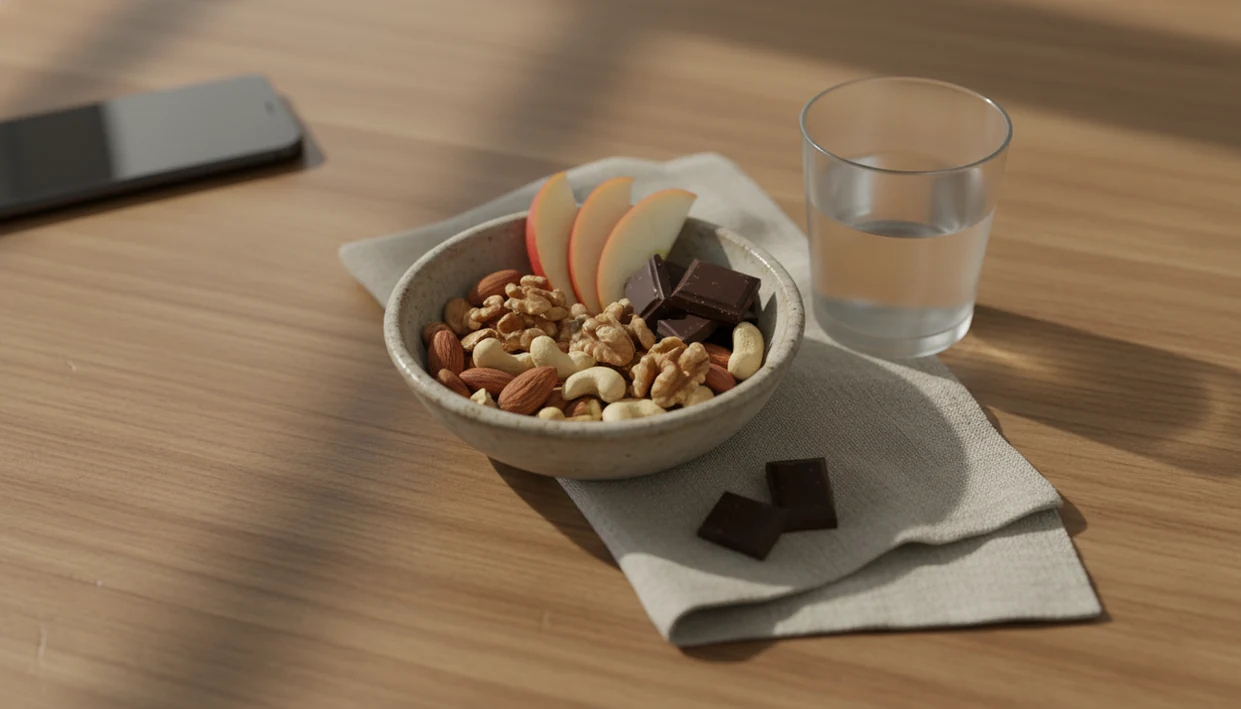


Mindful snacking means pausing before eating, noticing hunger and emotions, and paying attention to food rather than eating on autopilot. It includes food choice, portion size, taste, texture, and fullness, not just chewing slowly. Treats are not banned. The aim is to understand why a snack is happening: hunger, stress, boredom, tiredness, habit, or a need for energy.
A simple routine is to pause, breathe, choose, taste, and reflect. That pause can help make a snack decision more deliberate, but it is not a test of self-control or a guaranteed weight-loss method. Short breathing or guided meditation sessions can support the check-in, especially around stressful work breaks or an evening wind-down. They should not become a requirement before eating.
The essentials
- Use a simple pause-breathe-choose-taste-reflect routine before and during snacks.
- Mindful snacking can reduce autopilot eating, but it is not a guaranteed weight-loss method.
- MindTastik can support the pause with short breathing, sleep, anxiety, and everyday calm sessions before snack decisions.
What Is Mindful Snacking?
Mindful snacking is eating a snack with presence, hunger awareness, emotional honesty, and attention to taste, texture, smell, and fullness. It asks, “What is happening right now?” before the hand reaches again.
That does not mean chips, chocolate, crackers, or late-afternoon cookies are banned. A mindful snack can include a treat if you choose it on purpose and notice the experience.
Eating slowly is only one piece. The deeper skill is understanding why the snack is happening: hunger, stress, boredom, habit, tiredness, or a real need for energy. Snacks matter because they are not tiny side events. For many adults, they contribute a meaningful share of daily intake, mood, and energy.
Small moments add up.
Daily Energy Impact of Mindful Snacking
Mindful snacking deserves attention because snacking is common, frequent, and nutritionally significant. CDC data show that 36.6% of U.S. adults snack two or more times per day, and snacks provide about 22% of adults’ daily energy intake, according to a 2022 National Center for Health Statistics report source.
Five practical facts:
- About one in three U.S. adults reports snacking at least twice daily.
- Snacks account for roughly 22% of adults’ total daily energy intake.
- CDC data also report snacks provide about 24% of daily sugar and 23% of saturated fat.
- Distracted snacking can add calories, sugar, and saturated fat without much satisfaction.
- Mindful snacking is a daily behavior skill, not a niche wellness trend.
The keyboard snack is familiar: one hand typing, one hand reaching, no clear memory of the last bite. That is the pattern mindful snacking interrupts.
Brain and Body Cues Behind Mindful Snacking
Mindful snacking works by creating a short, intentional gap between a snack trigger and the eating response. Mindful snacking works by interrupting the cue-craving-response-reward loop that drives automatic eating. In plain terms, a trigger appears, the body wants relief, you snack, and the brain learns the pattern.
The cue might be stress after a meeting, boredom at 3:40 p.m., poor sleep, anxiety, or a screen that keeps the mind half-elsewhere. These states can mimic hunger. The body may be asking for rest, regulation, water, or a break, not always food.
A short breathing pause creates space between urge and action. Even 30 seconds can make the choice feel less automatic. For beginners, our how to meditate guide explains the same pause skill in a simple way.
Sensory attention helps too. When you notice crunch, salt, sweetness, temperature, and fullness, the snack often feels more satisfying. You can hear the bag crinkle. Then you can decide.
A brief pause may not stop an immediate craving
A craving that remains after a breathing pause does not mean the practice failed. A 2025 systematic review and meta-analysis of food cravings found that mindfulness-based interventions improved the longer-standing tendency to experience cravings compared with controls. They did not significantly improve an immediate craving episode. That distinction matters when judging what a short pre-snack session can realistically do.
The useful question after a pause is therefore not only whether the urge disappeared. It is also whether hunger, stress, habit, or tiredness became easier to recognize. A deliberate choice can still be to eat the snack, including a treat. There is no need to repeat breathing exercises until the desire for food goes away, and genuine hunger should not be turned into a prolonged reflection exercise.
Five-Step Mindful Snacking Routine
Use this five-step mindful snacking routine when you want a repeatable starting point. It works at a desk, in the kitchen, or before an evening snack.
- Pause and remove distractions. Put the phone down, step away from the screen, or sit at the table for two minutes.
- Breathe for 30 to 90 seconds. Try a slow inhale, longer exhale, and let your shoulders drop.
- Check hunger, emotion, and energy level. Ask, “Am I hungry, stressed, tired, bored, or avoiding something?”
- Choose a portion and snack that fits the moment. Put it in a bowl or on a plate instead of eating from the package.
- Taste slowly and reflect afterward. Notice flavor and fullness, then ask whether the snack helped.
For someone choosing between a 5-minute breathing exercise and a 20-minute body scan, the short reset usually fits better before food. Keep it simple.
If you use MindTastik, open one short breathing or everyday calm session before step 3, then return to the hunger-and-emotion check. The app is only a pause aid; the food choice still comes from your body cues, schedule, and needs.
Sensory attention may help mainly by slowing eating
Attention to taste and texture may help because it changes eating speed, rather than because it makes certain foods less appealing. In four laboratory studies published in 2025, sensory attention reduced intake of a second snack. That effect disappeared after researchers statistically accounted for eating rate. The finding points to slower eating as a possible explanation, not a guaranteed appetite-control effect.
For the tasting step, keep the task small: take a smaller bite, notice its temperature and texture, and pause before the next bite. Notice whether the pleasure changes as eating continues. This is especially relevant when snacks usually disappear quickly beside a screen. The laboratory findings were more pronounced among hungry participants, but they do not establish that the same effect will occur during everyday snacking.
Mindful Snacking Tips for Sleep, Anxiety, and Focus
Mindful snacking works better when timing and context match the goal. A snack before bed, during stress, or in the middle of work may need a different kind of pause.
Evening mindful snacking for sleep
For sleep, avoid heavy autopilot snacking close to bed and pair a lighter planned snack with a calmer wind-down routine. Cool sheets against restless legs can make late hunger feel louder, so check whether you need food or a bedtime reset. Our sleep hygiene checklist covers evening routines in more detail.
Stress mindful snacking for anxiety
For anxiety, breathe before deciding whether food, movement, or regulation is needed. Tools like MindTastik can offer guided meditation, sleep audio, breathing exercises, and self-hypnosis sessions when you want a short pause before the snack.
Workday mindful snacking for focus
For focus, plan a portioned snack away from screens. Meditation apps for sleep anxiety and everyday calm deliver repeatable pauses, not a medical fix or a promise that every craving disappears.
Best Mindful Snacking Choices and Autopilot Eating Patterns
The best mindful snacking choices are the ones that fit your hunger, energy, schedule, and emotional state without turning food into a moral scorecard. Treats can be included intentionally in a portion.
| Snack situation | Best for | Not ideal for |
|---|---|---|
| Afternoon energy | Yogurt, fruit with nuts, hummus with vegetables, whole-grain toast, cheese and crackers | Grazing from the pantry while deciding what you want |
| Calm evening | Lighter planned snack, herbal tea, small bowl of cereal, yogurt, fruit | Heavy autopilot snacking close to bed |
| Focus work block | Portioned snack away from screens, water nearby, planned break | Family-size bags beside the laptop |
| Treat moment | A plated cookie, chips in a bowl, chocolate eaten slowly | Scrolling while the package stays open |
For steady energy, protein and fiber usually work better than sugar alone because they slow the snack moment down and tend to satisfy longer, a pattern consistent with nutrition guidance on dietary fiber and protein-rich foods dietaryguidelines reference.
Common Mindful Snacking Mistakes
The biggest mistake is turning mindful snacking into another rulebook. If “mindful” starts meaning “only clean foods,” the practice has drifted into restriction.
Another mistake is expecting rapid weight loss from mindfulness alone. Mindful eating can support awareness, but body weight is affected by many factors, including diet quality, activity, sleep, stress, health conditions, and medications.
Some people only slow down their chewing without checking hunger or emotion. That misses the point. The question is not just “How fast am I eating?” It is also “Why am I eating right now?”
Shame is a poor teacher. Using mindfulness to judge yourself after chips or chocolate makes the next snack more tense, not more intentional. Planning helps more than willpower, especially when stress hits and the pantry is already open.
Research Evidence for Mindful Snacking and Mindful Eating
Mindful snacking is an application of mindful eating, not a separate cure. The evidence is encouraging for behavior change, but it does not support miracle claims.
A 2011 randomized controlled trial of a 6-week mindful eating program found reduced binge eating severity and depressive symptoms compared with controls. A 2014 systematic review reported small to moderate improvements in eating behaviors and weight-related outcomes across mindfulness-based interventions NIH research: PMC4362974.
That means mindful snacking may help some people notice cues, reduce autopilot eating, and make more deliberate choices. It does not mean breathing before a snack cancels out nutrition quality or guarantees weight loss.
Clinicians and registered dietitians typically recommend food awareness as one support skill, not a substitute for balanced meals, adequate sleep, mental health care, or eating-disorder treatment when needed.
A breathing pause before stress-driven snacking
MindTastik’s guided breathing exercises suit the brief pause between a stressful meeting and reaching for a snack. Guided meditations can also support a calmer evening check-in. The purpose is to notice the situation, not to suppress hunger or earn permission to eat. A few unguided breaths may be enough for people who prefer no audio. Anyone dealing with distressing, compulsive, or restrictive eating should seek qualified support rather than rely on an app, which is not a medical treatment.
What mindful snacking cannot promise
Mindful snacking is useful, but it has real limits. A supportive practice should make eating less chaotic, not more stressful.
- Mindful snacking is not a guaranteed weight-loss method.
- Results may be modest without broader changes in diet quality, physical activity, sleep, and stress.
- People with active or past eating disorders may need professional support before trying food-focused mindfulness practices.
- Mindful eating does not erase the health effects of frequent high-sugar or highly processed snacks.
- Digital mindfulness and app-supported eating routines have promising but still evolving evidence.
- Chaotic schedules, high stress, and sleep deprivation can make consistent practice difficult.
- Children, teens, pregnant people, athletes, and people with medical conditions may need individualized nutrition guidance.
If snack thoughts feel obsessive or frightening, step back from self-guided tracking. A registered dietitian or qualified mental health professional is the better starting point.
When a snack matters more than another pause
Myth: Mindful snacking means delaying food until the craving passes.
Reality: If you are genuinely hungry, delaying food can make the next choice feel more urgent and less intentional. A better option may be a quick check-in followed by a snack with enough substance to support your next few hours.
Myth: Every snack needs a meditation session first.
Reality: A short session can be useful, but it should not make eating feel complicated. For many people, one guided voice cue or three slow breaths is enough to interrupt autopilot without turning the snack into a project.
Myth: Mindful snacking is the right tool for every eating pattern.
Reality: If snacking feels distressing, secretive, compulsive, or tied to significant restriction, a simple mindfulness routine may not be enough on its own. In that case, support from a qualified professional may be more appropriate than trying to solve it with willpower or tracking.
Mindful snacking questions
How do I start mindful snacking without making it complicated?
Start with one snack rather than every eating occasion. Put the screen aside, take a few steady breaths, and identify hunger or another reason for eating. Choose a portion, then notice the first few bites. The check-in can be brief. If hunger is clear, eating matters more than extending the pause.
How can I tell hunger from stress-driven snacking?
Before eating, name what is happening: hunger, stress, boredom, tiredness, or habit. These cues can overlap, so the check-in does not need to produce a perfect answer. Its purpose is to make the choice clearer. Stress does not rule out hunger, and a pause should not become a reason to withhold food.
Can mindful snacking stop food cravings?
Not reliably in the moment. A 2025 review found improvements in the longer-standing tendency to experience food cravings, but no significant improvement in immediate craving episodes. A short pause may still help identify the trigger and make a deliberate choice. Success does not require the craving to disappear.
Does mindful snacking help with weight loss?
It is not a dependable standalone weight-loss method. Research supports changes in emotional eating, binge eating, and eating in response to outside cues more consistently than weight changes. Mindful snacking can sit alongside regular meals, portion planning, activity, sleep improvement, and appropriate treatment, rather than replace those approaches.
Can chocolate or chips be a mindful snack?
Yes. Mindful snacking describes how the choice is made and experienced, not a list of approved foods. Chocolate or chips can be chosen deliberately, portioned, and eaten with attention to taste and fullness. That does not erase nutritional differences between foods, but it avoids turning a treat into a moral judgment.
Should I meditate before every snack?
No. One brief check-in or a few breaths can be enough, and clear hunger does not need a meditation session first. Guided audio is an optional aid when stress or distraction makes the pause difficult. If the routine makes eating complicated or delays needed food, simplify it or skip the audio.
Is mindful snacking suitable for someone with an eating disorder?
People with an active or past eating disorder may need professional guidance before trying food-focused mindfulness. Snacking that feels compulsive, secretive, distressing, or tied to significant restriction needs more than a self-directed pause routine. Mindfulness may have a role in care, but it should not replace qualified support or become another food rule.