
Self Care for Caregivers: A Practical Guide for Sleep, Stress, and Everyday Calm


Self care for caregivers means protecting sleep, stress levels, and energy through rest, nourishment, boundaries, practical support, and small calming routines. It preserves the physical, emotional, and mental capacity needed for daily care. The most workable habits are small, scheduled, and included in the caregiving plan, rather than saved until every task is finished.
Interrupted sleep, anxiety, decision fatigue, isolation, and limited backup can make even basic needs difficult to meet. A short breathing break or guided meditation can provide a pause, but it cannot cover an unsafe workload. Sleep audio and other calming practices are supports, not replacements for medical care, therapy, respite care, or emergency help. A useful plan makes room for both recovery and help from other people.
What matters most
- Caregiver self care works best when it is small, scheduled, and treated as part of the caregiving plan.
- The biggest pressure points are sleep loss, anxiety spikes, decision fatigue, isolation, and lack of backup support.
- Guided meditation, sleep audio, and breathing exercises can support everyday calm, but they are not replacements for medical care, therapy, respite care, or emergency support.
Why self care for caregivers is a health strategy
Caregiver self care is a health strategy because caregiving is common, demanding, and linked with measurable strain. About 53 million U.S. adults were family caregivers in 2020, according to AARP and the National Alliance for Caregiving aarp reference: national caregiving report final.pdf.
- About one in five U.S. adults reported caring for someone with special health or functional needs, per the CDC.
- In a CDC caregiver analysis, 23% of caregivers reported fair or poor health.
- Self care protects consistency because tired caregivers make more decisions with less patience.
- Sleep, food, movement, and backup help are not rewards. They are maintenance.
- Needing care while giving care is normal, especially when the day includes medication timing, appointments, transfers, meals, and worry. Recognizing myths about self-compassion can make it easier to accept your own needs without feeling selfish for resting.
A caregiver awake in the small hours is not failing at rest. Their nervous system may still be listening for the next need. Self care offers that body a gentle route back toward ease.
How caregiver self care reduces daily stress load
Caregiver stress load builds when tasks, interrupted sleep, worry, and decision fatigue stack faster than the body can recover. Self care works by creating small recovery points before stress becomes an emergency.
Think of it as preventive care for your nervous system. A glass of water, a real meal, two minutes of slow breathing, a walk to the mailbox, or asking someone to handle one errand can reduce overload. These actions do not erase the hard parts. They lower the total load your body is carrying.
Preventive self care happens before the breaking point. Emergency coping happens when you are already shaky, angry, numb, or unable to think clearly. Both matter, but prevention is easier to repeat.
For many caregivers, guided meditation, breathing exercises, and sleep audio are useful because they remove one decision. Meditation apps that support sleep anxiety and everyday calm deliver a guided starting point, not a cure for exhaustion or unsafe workloads. If you want technique basics, our meditation techniques library explains common options plainly.
How to use a 5-step self care for caregivers guide
Use a caregiver self-care guide by choosing one small habit, placing it near an existing task, and sharing the plan with someone who can help protect it. Irregular days still count; the plan should bend without disappearing.
- Map your hardest points of the day, such as morning medications, late afternoon agitation, or bedtime cleanup.
- Choose one 5-minute option, such as breathing, stretching, eating a snack, or sitting outside without your phone.
- Schedule the habit beside something that already happens, like after breakfast dishes or before the evening medication checklist.
- Share one specific support request, such as “Can you cover Tuesday’s pharmacy pickup?” instead of “I need help.”
- Reset after interruptions by returning to the next available small break, not by waiting for an ideal day.
For busy caregivers, a 5-minute practice is often easier than a long routine because it fits between real tasks. Socked feet on a bedroom rug may be the whole setup. That is enough.
Best self care for caregivers when time is limited
The most useful self care for caregivers with limited time is short, repeatable, and easy to start without setup. One calm minute repeated daily often helps more than a long plan that never happens.
| Time available | Try this | Why it helps |
|---|---|---|
| 1 minute | Slow exhale breathing, drink water, unclench jaw and shoulders | Gives the body a quick downshift during stress |
| 5 minutes | Step outside, eat something simple, use a short guided meditation | Restores a little oxygen, fuel, and attention |
| 10 minutes | Short walk, grounding exercise, body scan, calming audio | Helps stress leave the body, not just the mind |
| 20 minutes | Sleep wind-down, longer guided meditation, shower, quiet rest | Supports recovery after heavy caregiving blocks |
Repeatability beats perfection. If a 20-minute plan keeps failing, shrink it. Tools like MindTastik may fit the 5- to 10-minute guided meditation or sleep audio slot, especially when choosing between a 5-minute breathing exercise and a 20-minute body scan feels like too much.
Self care for caregivers tips for sleep, anxiety, and focus
Caregivers often need downshifting rituals because the body can stay alert after tasks end. The goal is to signal “off duty for now,” even when the next responsibility is close.
Sleep routines after caregiving tasks
Use one consistent wind-down cue: lower the light, put the phone face-down on the nightstand, and write tomorrow’s tasks in a notebook. Calming audio can help when thoughts keep reopening the day. For a fuller routine, the sleep hygiene checklist pairs bedtime habits with meditation. Practicing bedtime meditation for your inner voice may help you respond gently to thoughts that keep the day active.
Anxiety resets during the day
Try slow-exhale breathing, then name five things you can see. A short guided session can steady the next task. If the load is too high, call backup before panic becomes the plan. Understanding types of self-talk can help you notice how your words affect stress during difficult caregiving moments.
Focus tools for caregiver decisions
Use a one-task list, a medication checklist, and decision batching. For example, group calls, refills, and appointment messages into one window. Fewer open loops mean fewer mental tabs.
Caregiver self-care checklist for a hard day
What should a caregiver do on a hard day? Start with urgent coping first, then return to preventive self care when the immediate pressure has passed.
Hard-day checklist:
- Drink water.
- Eat something with protein or fiber.
- Breathe slowly for one minute.
- Text one person: “Can you check in today?”
- Sit down for three minutes if it is safe.
- Remove one nonessential task from the day.
- Plan the next sleep window, even if it is short.
Urgent coping is for the moment when your body is already flooded. Preventive self care is the pattern that lowers how often that happens.
The hard days feel loud.
A checklist cannot solve crisis-level exhaustion. If you feel unsafe, unable to function, or at risk of harming yourself or someone else, you need immediate professional or emergency support, not another tip list.
Best-for and not-for table for caregiver meditation app support
Meditation app support can help caregivers create short calming routines, but it cannot replace practical care, clinical care, or emergency help. A meditation app may provide guided meditation, sleep audio, breathing exercises, and self-hypnosis sessions for adults who want sleep, anxiety, and everyday calm support.
| Support type | Best for | Not for |
|---|---|---|
| Short breathing breaks | One- to five-minute resets between caregiving tasks | Fixing an unsafe workload |
| Guided meditation | Beginner-friendly calm routines and stress downshifts | Replacing therapy or medical treatment |
| Sleep audio | Bedtime wind-down after a demanding day | Treating severe insomnia |
| Anxiety downshifts | Helping the body settle before the next task | Emergency mental health support |
| Self-hypnosis or habit sessions | Gentle repetition for routines and habits | Replacing respite care |
Apps such as Calm and Headspace can offer structure when a caregiver wants a calm track to follow instead of carrying the whole moment alone. For comparison help, the best meditation app for sleep anxiety guide explains app choice in more detail.
Evidence behind mindfulness and self care for caregivers
Evidence supports mindfulness as a stress-reduction support for some caregivers, but not as a cure for anxiety, depression, insomnia, grief, or caregiver overload. Clinicians typically recommend matching stress tools with sleep support, respite options, medical care when needed, and safer workload planning. Learning about mindfulness meditation myths can help caregivers set realistic expectations for meditation alongside practical and clinical support.
- A 2023 randomized clinical trial studied a mindfulness-based app for caregivers of people with Alzheimer disease and related dementias PMC research article: PMC10612010.
- At 8 weeks, the app group had about a 2.5-point greater reduction in perceived stress than the control group.
- The mindfulness app group improved by about 4.1 points on perceived stress from baseline to 8 weeks.
- The control group improved by about 1.5 points over the same period.
- The evidence points to stress reduction support, not replacement care.
For caregivers under steady strain, mindfulness usually works best when it is paired with practical help, while app-only support fits smaller daily stress resets. If you are new to practice, a simple how to meditate guide can make the first session less awkward.
Reassess support when care needs change
A self-care plan may stop being adequate as the person’s care needs change. A 2020 systematic review of dementia caregiver burden over time found that burden varied substantially. Higher risk was associated with behavioral symptoms, declining ability to manage daily activities, and poorer caregiver physical or mental health, among other factors. These findings concern dementia caregiving, but they underline a practical point: a harder care schedule calls for another look at available help, not simply a longer meditation.
When strain is difficult to describe, a structured questionnaire can give a conversation with a clinician or support service a clearer starting point. A systematic review of caregiver-burden questionnaires recommended validated measures including the Zarit Burden Interview and the Burden Scale for Family Caregivers. These assess several dimensions of burden. They can help identify when more respite, clinical care, or support-group assistance is needed, rather than treating exhaustion as a failure to maintain good habits.
Image caption for a self care for caregivers reset break
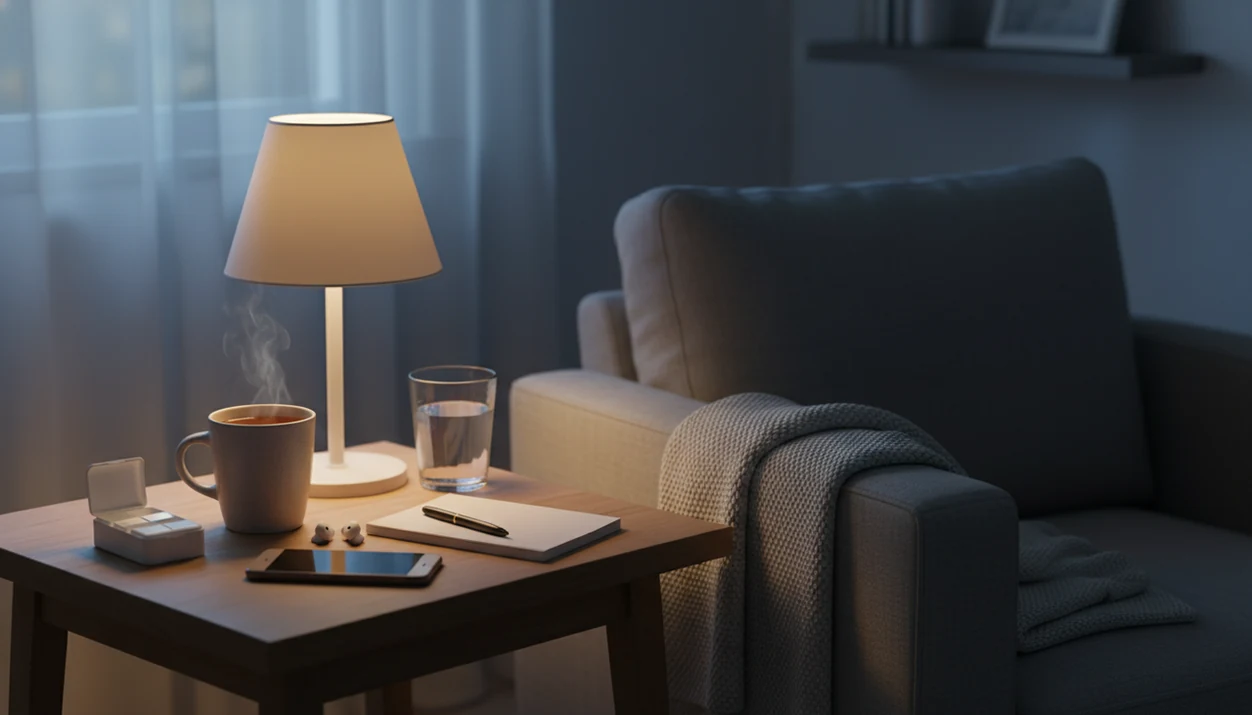
Caption: A caregiver takes a small reset break with headphones, a warm mug, and a notebook nearby, using guided audio as part of self care for caregivers and everyday calm.
The image should feel ordinary, not polished. Picture a quiet room, a phone with guided audio resting nearby, and a caregiver letting the first few breaths mark the edge between duty and sleep. The point is not that an app fixes burnout. The point is that a short pause can become easier when the next step is already chosen.
Short audio sessions between caregiving tasks
MindTastik’s guided meditation library suits caregivers who want spoken instructions during a brief pause, without having to decide how to meditate. Breathing exercises offer another option between tasks, while sleep stories may suit an evening wind-down once care responsibilities are covered. Caregivers who need someone to take over a shift, address persistent sleep problems, or help with severe distress should seek practical or clinical support rather than rely on an app.
When caregiver self care needs more support
Self care for caregivers has real value, but it cannot carry an impossible situation by itself. A supportive practice should reduce strain, not hide the fact that more help is needed.
- Self care alone cannot fix an unsustainable caregiving workload.
- Meditation apps do not replace medical care, therapy, respite care, crisis support, or emergency services.
- Quick tips may not be enough for depression, severe insomnia, grief, panic, or caregiver burnout.
- Not every breathing exercise, meditation, or sleep audio works for every caregiver.
- A perfect routine is unrealistic. Small, irregular self-care moments still count.
- Caregivers should seek professional or community support when they feel unsafe, unable to sleep, unable to function, or at risk of harming themselves or someone else.
- If caregiving includes lifting, medication management, dementia-related safety issues, or medical equipment, practical training and backup support matter.
Use self care as one layer. Not the whole safety net.
Choosing audio for a care break or bedtime
- Choose breathing exercises when your body feels rushed but your schedule is tight; a steady breath can be easier to repeat than a full meditation.
- Choose a guided meditation when your mind keeps rehearsing care decisions; the guided voice gives your attention a place to return.
- Choose a sleep story when the day is technically over but your nervous system still feels on duty.
- Choose a self-hypnosis session when you want a structured wind-down and can sit or lie down without needing to respond immediately.
- Choose reminders when you keep forgetting your own needs; the prompt is not the practice, but it can protect the practice.
Caregiver self-care questions
How can caregivers make time for self care when care is constant?
Start with one brief habit beside an existing task, such as eating a snack after preparing a meal or stretching after a medication check. Longer breaks need coverage, not just better scheduling. Ask someone to take responsibility for a specific task or time period so the break is protected.
What can a caregiver do during a five-minute break?
Choose one need rather than a checklist: drink water, eat something simple, sit outside, stretch, or listen to a short guided meditation. If care responsibilities still require attention, choose a pause that allows a prompt response. A brief break provides recovery time, but it does not replace adequate rest or backup help.
How can caregivers sleep better when they are interrupted at night?
A quiet wind-down, lower lighting, and a consistent sleep schedule where possible can support rest. Writing down tomorrow’s tasks may also make bedtime less busy mentally. If nighttime care repeatedly prevents sleep, calming audio cannot solve the interruption itself. Discuss overnight coverage and ongoing sleep problems with appropriate support or a clinician.
Can meditation reduce caregiver stress?
Research on dementia caregivers supports mindfulness as a stress-management option for some people. It does not show that meditation can remove care demands or replace clinical treatment. A short guided practice may fit between tasks, but persistent anxiety, depression, insomnia, or severe exhaustion needs more than a calming routine.
How do caregivers ask family members for help?
Make the request concrete: name the task, the day, and the time needed. For example, ask someone to cover Tuesday’s evening meal and cleanup rather than asking for general help. Include a recovery need, such as attending an appointment or resting, so support is part of the care plan rather than an occasional favor.
How can caregivers tell when self care is not enough?
Repeated exhaustion, inability to think clearly, severe sleep problems, or distress that does not ease with breaks are reasons to seek more support. An unsafe workload also needs practical changes. A clinician or caregiver support service can help assess strain, including with a validated caregiver-burden questionnaire, and discuss next steps.
Is caregiver self care selfish?
Self care preserves the caregiver’s capacity to provide care; it is not a reward that must be earned after every task is done. Meals, sleep, medical appointments, social contact, and breaks belong in the care plan. When taking a break requires coverage, arranging that coverage is part of responsible planning.