
How Do Mindfulness Apps Work?
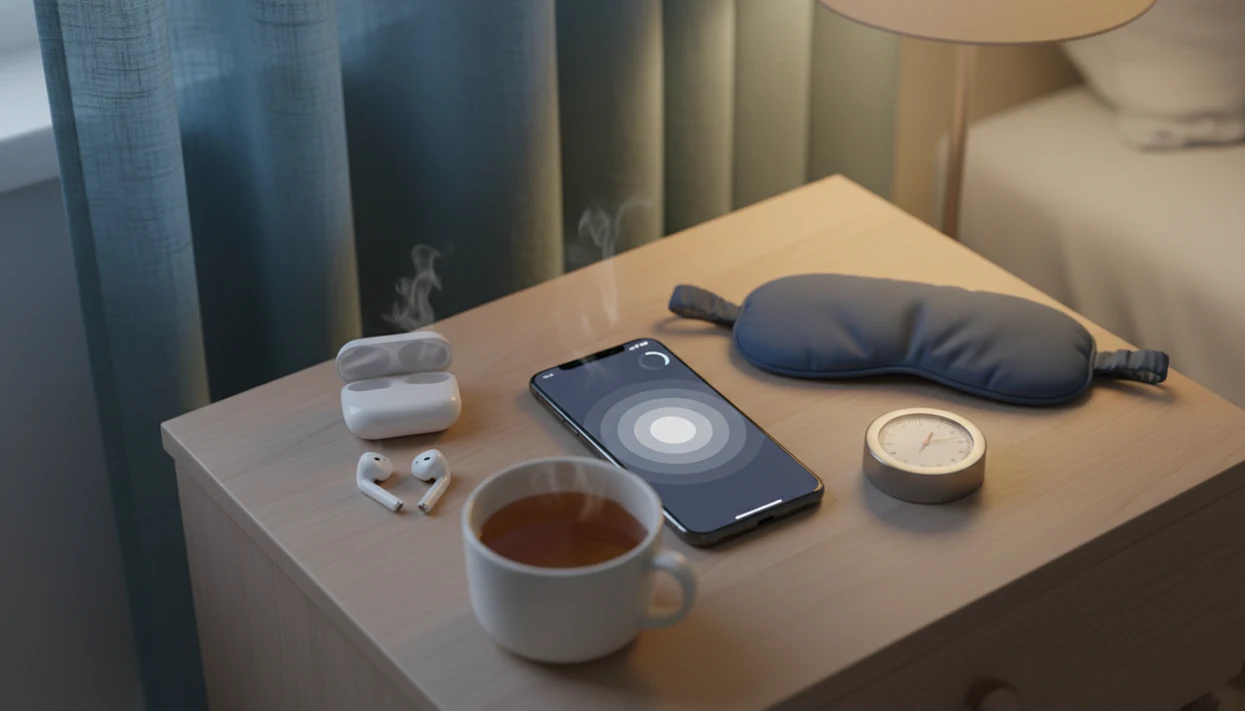


Mindfulness apps work by turning meditation skills into guided audio, breathing timers, reminders, and themed tracks for sleep, anxiety, focus, and everyday calm. A session gives attention a specific task, such as noticing the breath or scanning the body. When thoughts interrupt, the instruction is to notice the distraction and return. Reminders and progress tracking help make that practice easier to repeat.
The audio provides instructions; listening alone is not the whole practice. Repeated sessions give users opportunities to rehearse attention skills over several weeks, rather than expecting a lasting change from one or two sessions. Apps can support a routine for stress, sleep, and focus, but results vary. They are self-help tools, not replacements for professional mental health care.
The essentials
- Most mindfulness apps use guided audio, breathing exercises, timers, sleep sounds, reminders, and progress tracking to help users practice regularly.
- The strongest benefits usually come from consistent daily use over several weeks, not from one or two sessions.
- Mindfulness apps can support stress, sleep, anxiety, and focus, but they are self-help tools and not replacements for professional mental health care.
How Mindfulness Apps Use Guided Audio, Timers, and Habit Loops
Mindfulness apps work by combining guided audio, timers, themed sessions, reminders, and habit loops that make practice easier to repeat. The app gives you a cue, a short practice, and often a small reward, such as a streak or progress note.
The important part is attention. Mindfulness is not just playing soft audio while your mind runs through tomorrow’s calendar. A guided session may ask you to notice the breath, scan the body, label thoughts, or return to sounds in the room. Practicing attention also raises a social question: does meditation make you kinder in your interactions with other people?
That return is the practice.
Behavioral design features help the routine stick. Push reminders, streak counters, favorites, and session history all reduce the “what should I do now?” moment. A person choosing between a 5-minute breathing exercise and a 20-minute body scan needs less willpower when the app has already organized the next step.
A useful mindfulness app for sleep, anxiety, and everyday calm support gives users repeatable guided practice and wind-down structure; it does not diagnose conditions, provide emergency care, or guarantee symptom relief.
5 Mindfulness App Facts About Guided Sessions and Results
- Most mindfulness apps deliver pre-recorded guided meditations, breath prompts, body scans, timed bells, or sleep audio that users can start without attending a class.
- Typical sessions are short, often 5 to 15 minutes, because a small practice is easier to repeat during a commute, lunch break, or bedtime routine.
- Themed libraries help users choose sessions for sleep, anxiety, work stress, focus, or beginner practice without learning every meditation style first.
- Consistency over 1 to 8 weeks usually matters more than session length alone because mindfulness is a trainable attention habit.
- Evidence for app-based mindfulness is promising but uneven; most apps are self-help tools, and many popular products have not been tested in randomized trials. An earlier 2014 review of mindfulness apps found no randomized clinical trials evaluating their effects on mindfulness training or health indicators, so that early evidence gap should not be mistaken for a summary of current research. When comparing subscriptions, consider meditation apps worth paying for alongside the evidence, available guidance, and your practice goals.
The screen paused after a restless start is common. Beginners often assume they are “bad at meditation” because the mind wanders. In practice, noticing the wandering and returning gently is the core skill. If you want the basics without app features first, our how to meditate guide breaks the same process into plain steps.
Evidence on Mindfulness Apps for Stress, Mood, and Well-Being
Do mindfulness apps have evidence for stress, mood, and well-being? Some do, but the research is stronger for a few studied apps than for the whole app category.
A 2018 randomized controlled trial of a workplace mindfulness meditation app found that 8 weeks of use improved well-being and reduced job strain compared with controls PMC research article: PMC6215525. Other research summarized by Greater Good reported that 10 days of 10-minute Headspace use reduced depressive symptoms and increased positive emotions. The same summary described an 8-week VGZ Mindfulness Coach study that increased mindfulness and reduced psychiatric symptoms, with benefits lasting up to 4 months Greater Good science overview: can mindfulness apps change your brain. To put these findings into everyday practice, explore mindfulness practices at work that fit around meetings and breaks.
Harvard Health added an important caution: in a review of 280 mindfulness apps in the Apple App Store, only one had been experimentally studied at the time source.
Promising, not settled.
Clinicians typically recommend mindfulness apps as supportive self-help tools, especially when symptoms are mild, while severe or persistent symptoms deserve professional care.
What newer app research says about change and participation
A 2023 review of 28 randomized trials involving 5,963 adults examined psychological mechanisms, rather than only symptom outcomes. Of 67 intervention-control comparisons, 35 favored the mindfulness-app condition. That is evidence of change in some measured processes, not a claim that 53% of users improved or that every app works. The distinction matters when an app describes how its exercises are supposed to help.
Participation is a separate question. A 2023 review of mindfulness-app trials found that interventions lasted 7 to 56 days, with a median of 28 days. Attrition ranged from 0% to 84.7%, with a median of 23.4%. Downloading an app, starting a trial, and maintaining a practice are different steps. These findings support checking how often practice actually happens, rather than treating a download or streak counter as evidence of benefit.
How to Use Mindfulness Apps for Sleep, Anxiety, and Focus
The simplest way to use a mindfulness app is to choose one goal, start short, and repeat the same practice cue daily. For beginners, a 5-minute guided session is often easier than silent meditation because the voice keeps the next step clear.
- Choose one goal before opening the app, such as sleep, anxious moments, work focus, or everyday calm.
- Select a short session that fits the moment, like breathing before a meeting or audio when awake at 3 a.m.
- Practice at the same time for one week, such as after brushing teeth or before opening email.
- Use one reminder if you forget easily, but turn off extra notifications that feel noisy.
- Review what changes in plain words, such as “fell asleep faster twice” or “less tense before calls.”
In a quiet room before sleep, a short guided track can feel more useful than trying to figure everything out at once. Tools like MindTastik combine guided meditation, sleep audio, breathing exercises, and self-hypnosis for that kind of starting point, and the download meditation app page explains setup options.
Best-Fit Mindfulness App Use Cases and Safety Boundaries
Mindfulness apps fit best when the goal is skill-building, routine, and guided support. They are not designed to diagnose conditions, replace therapy, or manage crisis situations. Learning how to choose a mindfulness program can help you match the format and level of support to your needs.
| Situation | Best for | Not for |
|---|---|---|
| Beginner practice | Step-by-step guidance, short sessions, basic breath awareness | Users wanting advanced teacher feedback from day one |
| Busy adults | 5 to 10 minute resets between meetings or during travel | People unwilling to practice more than once |
| Sleep wind-down | Bedtime audio, body scans, breathing cues, sound routines | Severe insomnia without medical evaluation |
| Mild stress or anxious moments | Short resets, grounding, calmer transitions | Panic, PTSD, severe depression, or crisis support |
| Focus resets | Pre-work breathing, attention training, timed sessions | Replacing workplace mental health care or accommodations |
For sleep, anxiety support, beginner meditation, and everyday calm, MindTastik can be a gentle fit among options like Calm, Headspace, and Mindful. If you are comparing features for bedtime and anxious thoughts, the best meditation app for sleep anxiety guide may help you sort priorities.
6 Mindfulness App Tips That Improve Daily Practice Results
A mindfulness app works better when the practice feels small enough to repeat. Long sessions can wait.
Start short. Use 5 to 10 minutes at first, especially if you are restless or new to meditation.
Attach one cue. Practice after brushing teeth, before bed, or when sitting down at your desk.
Normalize wandering. When attention drifts, return to the breath or voice without turning it into a failure story. For a broader perspective on handling setbacks, these 12 laws for inner strength offer principles to consider alongside your practice.
Use guidance first. Guided sessions teach the shape of practice; short silent sits can come later.
Avoid background-only use. Relaxing audio can be pleasant, but mindfulness practice needs active attention.
Track in plain language. Write “less tense after lunch” or “still awake, but calmer,” rather than obsessing over streaks.
A phone with guided audio and a few undisturbed minutes can be enough. You do not need a perfect setup. For more non-app practices, our mindfulness exercises and techniques hub gives simple options.
MindTastik sessions for learning the basics
MindTastik’s guided meditation library suits beginners who want spoken instructions rather than an unguided timer. Breathing exercises offer another format for a brief practice, while focus sessions and sleep stories serve different goals: practicing attention and settling down at bedtime.
The useful choice is the format that matches the task, not the largest library. People who need individual feedback, help adapting practice around trauma, or treatment for persistent anxiety or insomnia should choose qualified professional support rather than relying on an app. MindTastik is not a medical treatment.
What mindfulness apps cannot measure or treat
Mindfulness apps can be useful, but they have real limits. The evidence is promising, uneven, and much stronger for some studied programs than for the average app in a store search.
- Many popular mindfulness apps have not been tested in randomized clinical trials.
- Usage metrics show that a session played; they do not prove the user practiced accurately.
- Benefits depend on self-motivation, repetition, and honest engagement.
- Apps are not stand-alone treatment for severe depression, PTSD, panic disorder, or crisis situations.
- Relaxing sounds alone are not the same as mindfulness training.
- Some users feel bored, frustrated, or more aware of difficult thoughts at first.
- Notifications can become annoying if they feel like another task instead of support.
There is also a privacy and fit question. Some people want a teacher, therapist, or group setting. Others prefer a simple audio cue they can start when mental noise feels hard to settle. Both are valid, but they are not the same kind of help.
When to Seek Professional Help Instead of Using a Mindfulness App
Use a mindfulness app as support, not as a diagnosis, treatment plan, or crisis tool. If symptoms feel intense, persistent, or unsafe, professional care should come before another session in the library.
- Contact a licensed clinician if anxiety, low mood, panic, trauma symptoms, or insomnia keep disrupting work, relationships, school, or basic routines.
- Take worsening depression seriously, especially if you feel numb, hopeless, unable to function, or no longer interested in things that usually matter.
- Get specialized help for panic attacks, PTSD symptoms, frightening memories, or body sensations that make meditation feel overwhelming instead of grounding.
- Seek urgent support immediately if you might hurt yourself or someone else, feel in immediate danger, or are making plans for self-harm. Call local emergency services or go to the nearest emergency department.
- Use mindfulness as a complement when a clinician recommends it, alongside therapy, medication, sleep evaluation, or other care.
A calm voice in your earbuds can help you breathe through a hard moment. It should not be the only support when the problem needs another human being in the room. Beyond app-based practice, learning how to make friends as an adult can help build everyday companionship and connection.
Mindfulness app questions
What happens during a guided meditation in an app?
A recorded voice gives instructions, such as noticing breathing, scanning body sensations, or observing thoughts. Pauses allow time to practice. When attention wanders, the instruction is usually to return to the chosen focus. The aim is to practice that return, not to keep the mind completely empty.
Do mindfulness apps really work?
Some studied apps have shown benefits, but evidence for one program does not establish that every app is effective. Results depend partly on repeated participation and the outcome being measured. An app can support attention practice and stress management without being a treatment for a diagnosed mental health condition.
How many minutes a day should a beginner use a mindfulness app?
A five-minute guided session is a practical starting point. Keeping the session short can make it easier to repeat at a regular time. Longer sessions can come later if the format suits the user. There is no single duration that guarantees results, and occasional long sessions do not replace regular practice.
How long does it take to notice benefits from a mindfulness app?
A single session may feel useful, but lasting benefits should not be assumed after one or two attempts. App trials have studied practice over periods ranging from seven to 56 days. A weekly check on stress, attention, or sleep is more informative than expecting a fixed deadline for improvement.
Why do mindfulness apps use reminders and streaks?
Reminders provide a cue to begin, while streaks and session histories record participation. These features can make a routine easier to repeat, but they do not measure the quality of attention or prove improvement. If notifications create pressure or distraction, a predictable daily cue can be a simpler alternative.
Is listening to sleep sounds the same as practicing mindfulness?
No. Sleep sounds can be part of a bedtime routine, but mindfulness practice involves deliberately paying attention and returning when the mind wanders. A guided body scan may combine relaxation with attention practice. Background audio alone does not show that those skills are being practiced.
Can a mindfulness app make anxiety worse?
It can for some people. Focusing inward may bring up intense emotions, flashbacks, or dissociation, particularly for people with trauma or PTSD. Stop an exercise if symptoms worsen rather than pushing through it. A trained practitioner can help adapt practice, and persistent or severe symptoms need professional assessment.
Can a mindfulness app replace therapy?
No. An app offers exercises, not an individual assessment, diagnosis, or treatment plan. It may support care, but severe depression, panic, PTSD symptoms, or persistent insomnia call for professional help. The lack of teacher feedback also matters when an exercise feels confusing, distressing, or difficult to adapt.