
Meditation for Your Personality Type: A Practical Matching Guide
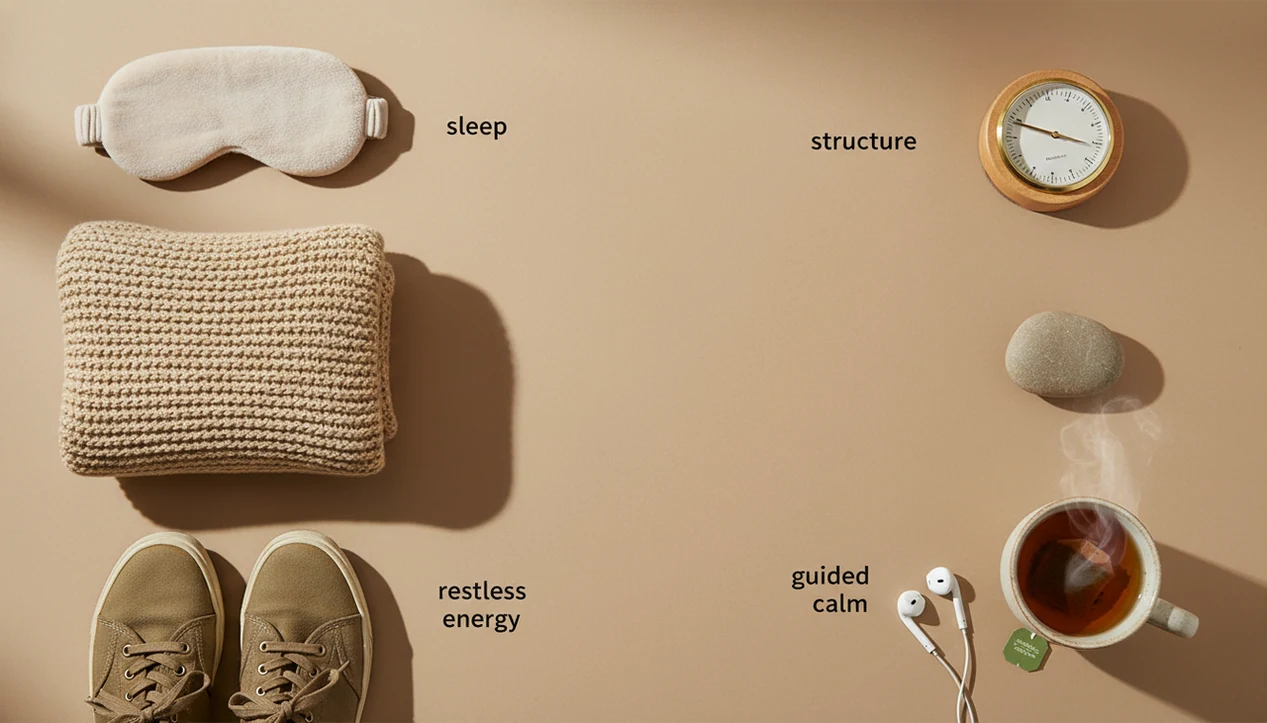


Meditation for your personality type means choosing a practice that fits your attention patterns, emotional responses, energy level, and current goal, rather than following one universal method. The useful starting point is a recurring obstacle: racing thoughts, restlessness, sensitivity, overplanning, or poor sleep. A short guided session can provide structure, while movement or a body scan may suit a different need.
These matches are starting suggestions, not fixed rules about personality. Someone who needs walking meditation during the day may prefer calming imagery at bedtime. Compare a few sessions by how manageable they feel and what changes afterward, such as calm, alertness, or sleepiness. The aim is a practice that is comfortable enough to repeat, not a personality label to live up to.
Choose by obstacle
- Anxious or perfectionistic people usually do better with short, structured guided meditations than silent sessions.
- Restless or high-energy people often need movement, breath counting, or brief focus drills before longer stillness practices.
- For sleep, body scans, calming breathwork, and soothing guided imagery are usually better fits than energizing morning meditations.
Meditation for Your Personality Type Matching Chart
The easiest way to choose meditation for your personality type is to match your main friction point with a practice that removes that friction. Don’t start with what sounds impressive. Start with what you’ll repeat when the room is quiet, the light is low, and a short session feels easier than making another decision.
| Personality tendency | Common meditation obstacle | Good starting styles | Best for | Not ideal for |
|---|---|---|---|---|
| Anxious overthinker | Racing thoughts, self-checking | Guided breathing, body scan, reassurance-based audio | Settling rumination and bedtime worry | Long silent sits at first |
| Restless high-energy type | Boredom, fidgeting | Walking meditation, breath counting, short structured sessions | Building consistency without forced stillness | 30-minute stillness goals |
| Analytical planner | Needs logic and markers | Timer-based practice, thought labels, progress tracking | Clear structure and measurable habits | Vague “just relax” audio |
| Highly sensitive feeler | Easily overstimulated | Gentle body awareness, compassion meditation, low-stimulation sleep audio | Softening emotional intensity | Loud music or intense imagery |
A meditation app can help you test sleep, anxiety, focus, and everyday calm sessions without committing to one style too early.
How Meditation for Your Personality Type Works
Meditation for your personality type works by matching a technique to the system you most need to train: attention control, emotional regulation, body awareness, the relaxation response, or sleep readiness. Personality fit means practical preference matching, not horoscope-style rules.
A guided session gives the mind fewer decisions to make. That matters for rumination-prone beginners, because silence can feel like an empty room where every thought gets louder. Guidance reduces ambiguity: breathe here, notice this, return now. Clinicians typically recommend mindfulness as a supportive practice, not as a replacement for therapy, medication, or medical care. Remembering that thoughts are not facts can help you notice anxious predictions without treating them as certain outcomes.
A meditation app can provide guided meditation, sleep audio, breathing exercises, and self-hypnosis sessions for adults who want sleep, anxiety, and everyday calm support. Research is encouraging but measured: a JAMA systematic review found mindfulness meditation programs produced moderate improvements in anxiety, depression, and pain, with smaller gains in stress and quality of life JAMA Internal Medicine study: 1809754.
For anxious beginners, guided breathing is often easier than silent meditation because it gives attention a clear job.
What research supports about matching meditation styles
Research offers some support for choosing a format by its immediate demands, rather than by a personality label. A 2025 comparison of novice meditators found greater focused attention with audio guidance than without it, and with movement-based rather than static practice. Guidance also had potential drawbacks, including greater cognitive load or autonomic arousal. These findings support trying different formats, not assigning one permanently to an anxious or restless person.
The broader evidence is more cautious about benefits. A 2014 review of 47 randomized trials found modest improvements in anxiety, depression, and pain, but low or insufficient evidence for sleep and attention benefits. It did not find meditation clearly superior to other active treatments. Feeling comfortable with a session is therefore a useful selection criterion, but it does not establish that the session will treat a health condition.
Five Meditation for Your Personality Type Facts
These five facts are the practical core of a meditation for your personality type guide. Keep them nearby when you’re choosing between a 5-minute breathing exercise and a 20-minute body scan in an app library.
- Different meditation techniques can produce different mental and physiological effects, so one person may need grounding while another needs compassion practice. When comparison fuels difficult emotions, mindfulness for jealousy offers a focused way to observe those reactions without feeding them.
- Regular practice matters more than occasional long sessions; most people build steadier benefits through repeatable sessions over days or weeks.
- Guided structure is useful for anxious, perfectionistic, or overthinking beginners because it reduces the pressure to “do meditation right.” For overthinking, the power of letting go can help you practice releasing the need to control every thought.
- Evening body scans and breathing practices can support sleep quality; a sleep trial in older adults found mindfulness improved sleep quality and insomnia symptoms compared with sleep hygiene education NIH research: PMC4394546.
- Apps can help users compare short versus long, voice versus music, and calming versus energizing sessions before settling into a routine.
Short counts.
Best Meditation for Your Personality Type by Trait
The right practice depends on the trait that most affects your day, not the label you like most. Use these as starting points, then compare them with broader meditation techniques if none feels right after a few tries.
Anxious overthinkers
Best for: guided breathing, body scans, and reassurance-based meditation. Not for: long silence when the mind already feels crowded. Someone asking for a calm voice to follow in a difficult moment usually needs structure first.
Restless high-energy types
Best for: walking meditation, short breath-counting, and active grounding. Not for: forcing stillness before the body has settled. A two-minute standing reset can beat a skipped 20-minute session.
Analytical planners
Best for: structured mindfulness, labeling thoughts, and timed intervals. Not for: vague instructions with no beginning or end. Timer-based practice usually works best when people need clear boundaries, while open-ended meditation fits people who enjoy spacious attention.
Highly sensitive feelers
Best for: compassion meditation, gentle imagery, and soft sleep audio. Not for: harsh bells, intense emotional prompts, or crowded soundscapes. Driven Type A personalities often do well with stress downshifting, exhale-lengthening breathwork, and short breaks between tasks. Between demanding tasks, the power of pause offers a brief mindfulness reset before you respond or take on more.
How to Use a Meditation for Your Personality Type Guide
Use this process to choose a starting point without turning personality into another project to overthink. It’s normal to adjust after the first few sessions.
- Pick one current goal such as sleep, anxiety support, focus, or everyday calm.
- Choose one likely pattern instead of over-identifying with a label; “restless lately” is enough.
- Test a 5- to 15-minute guided session for three to five days before switching styles.
- Log before-and-after ratings for anxiety, sleepiness, focus, or calm on a simple 1-to-10 scale.
- Adjust session length, voice, background sound, and time of day if the practice feels irritating or hard to repeat.
- Keep the style that feels repeatable, not the style that sounds most impressive.
If you’re new, meditation techniques for beginners can make the first week feel less like guessing. The most useful meditation style is the one you can repeat on an ordinary day, not the one that looks ideal on paper.
Meditation for Your Personality Type Tips for Sleep, Anxiety, and Focus
Does meditation for your personality type change what you choose for sleep, anxiety, or focus? Yes, because the goal changes the style: sleep needs downshifting, anxiety often needs grounding, and focus needs gentle attention training.
Sleep-focused sessions
For sleep, try body scans, relaxing breathwork, or guided imagery in the evening. Settle into a quiet room before starting bedtime audio, especially on nights when rest feels harder to reach. For imagery practice, visualization meditation for sleep is a natural fit.
Anxiety-support sessions
For anxiety, short guided breathing and grounding practices are usually easier than long silent sits.
Focus-support sessions
For focus, use attention training, breath counting, or structured timers. A meditation app can support experimentation across sleep audio, breathing exercises, guided meditation, and self-hypnosis sessions without claiming to treat or cure a condition.
Meditation for Your Personality Type Image Guide
Use an image that shows four calm meditation paths: guided breathing, body scan, walking meditation, and visualization. The visual should help readers understand that different practices fit different attention patterns, energy levels, and goals.
Suggested caption: Choosing a meditation style by attention pattern, energy level, and goal can make meditation for your personality type easier to repeat.
Suggested alt text: Meditation for your personality type shown as four calm paths: guided breathing, body scan, walking meditation, and visualization.
Keep the image secular, warm, and app-friendly. Avoid diagnostic charts, brain scans, therapy imagery, or anything that makes personality matching look clinical. A simple illustrated phone screen, soft colors, and four labeled practice paths are enough.
Guided audio for overthinking, focus, and bedtime
MindTastik’s guided meditation library offers a starting point for people who prefer spoken instructions to silence. Breathing exercises provide a clear focus, while gratitude and focus sessions serve different daily goals. Sleep stories offer another format for bedtime listening.
People who prefer silent practice or walking without headphones may not need an audio app. Choose according to comfort and the current goal, rather than assuming more guidance is always better. MindTastik is not a medical treatment.
Personality matching is a starting tool, not a clinical system
Personality matching can make meditation easier to start, but it has clear limits. Treat it as a practical sorting tool, not a clinical system.
- There is no standardized, clinically validated personality-based meditation system.
- MBTI-style labels can be useful reflection prompts, but they are not diagnostic categories.
- Meditation is not a replacement for medical care, therapy, medication, or crisis support.
- Some people feel more distress when sitting quietly with intense thoughts. Gentler guided practices, movement, or professional support may be safer.
- Benefits usually require repetition over days or weeks, not one session after a hard day.
- Sleep and anxiety outcomes vary by person, schedule, bedroom environment, stress level, and symptom severity.
- Commercial apps can guide practice, but they cannot guarantee results.
- If meditation worsens panic, trauma symptoms, or insomnia, stop and speak with a qualified professional.
That last part matters.
Calm, Headspace, and other meditation apps can make practice easier to access, but no app can replace personalized care when symptoms are severe.
If you are ready to move from tips to practice, MindTastik guided meditation app is where MindTastik keeps its guided meditation experience.
Questions about finding a meditation style
How do I choose a meditation style for my personality?
Start with the obstacle that most affects practice, rather than a broad personality label. Racing thoughts may make guided breathing easier to follow; restlessness may suggest walking meditation. Choose one current goal, try a short session for several days, and compare comfort and after-effects before changing styles.
What meditation is best for overthinkers?
Short guided breathing or a body scan is a reasonable starting point because the instructions give attention a clear task. Long silent sessions need not be the first step. If body-focused attention feels uncomfortable, try brief walking practice instead. No technique is proven best for everyone who overthinks.
Can I meditate if I cannot sit still?
Meditation does not have to mean sitting motionless. Walking meditation, gentle movement, or a brief standing practice can be starting options. A study of beginners found better focused attention with movement-based than static meditation, but that does not establish that movement will suit every restless person.
Does my MBTI type determine which meditation I should use?
There is no standardized, clinically validated meditation system based on MBTI types. Those labels can serve as reflection prompts, but they are not diagnostic categories or prescriptions. Current goals, comfort with guidance, energy level, and willingness to repeat the practice are more practical selection criteria.
What meditation should a perfectionist start with?
A short, structured guided session can reduce decisions about what to do next. Choose a manageable duration and treat returning after distraction as the task, rather than measuring success by a silent mind. Compare how the practice feels afterward, without turning each session into another performance score.
Should I use the same meditation for focus and sleep?
Not necessarily. Focus practice gives attention a task, while bedtime practice aims to help with settling down. Body scans, calming breathwork, and soothing imagery are reasonable bedtime options. A session that leaves someone alert may suit daytime better, even if it is comfortable and easy to follow.
When should I stop a meditation that feels uncomfortable?
Pause if a practice brings intense memories, panic, or a sense of losing control. There is no need to finish a session to prove that the style fits. Gentler guidance or movement may be alternatives, but significant distress calls for support from a qualified professional rather than further self-experimenting.