
Power of Pause Mindfulness: A Practical Guide to Calmer Reactions


Power of pause mindfulness is the practice of stopping briefly to notice breath, body, and thoughts before reacting. It creates a small gap between a trigger and a response, giving attention somewhere to settle before the next decision. A pause can last 30 to 90 seconds and involve deliberate stillness, awareness of bodily sensations, or a few unhurried breaths. The aim is not to erase an emotion, but to notice it before acting.
Useful moments include opening email, entering a meeting, answering during a difficult conversation, starting a meal, and preparing for bed. Practicing outside peak stress makes the pause part of an ordinary routine. Guided meditation or breathing audio can provide a clear prompt when improvising feels difficult.
The essentials
- A mindful pause can be as short as 30 to 90 seconds when it includes deliberate attention to breath, body, or sensations.
- Use power of pause mindfulness before emails, meetings, difficult conversations, meals, and bedtime rather than only during peak stress.
- Guided audio can support the habit with short meditations, sleep audio, breathing exercises, and self-hypnosis sessions for sleep, anxiety, and everyday calm.
Power of Pause Mindfulness Meaning in Everyday Calm
Power of pause mindfulness means creating a deliberate gap between a trigger and your reaction. That gap may be one slow breath before sending an email, or one minute of body awareness before answering someone sharply.
A mindful pause is different from ordinary distraction. Scrolling, snacking, or opening another tab may take you away from stress, but they do not ask you to notice what is happening inside you. A pause does. You stop, feel the body, name the state, and choose what comes next. You can also practice labeling thoughts meditation by naming mental events as planning, remembering, or worrying.
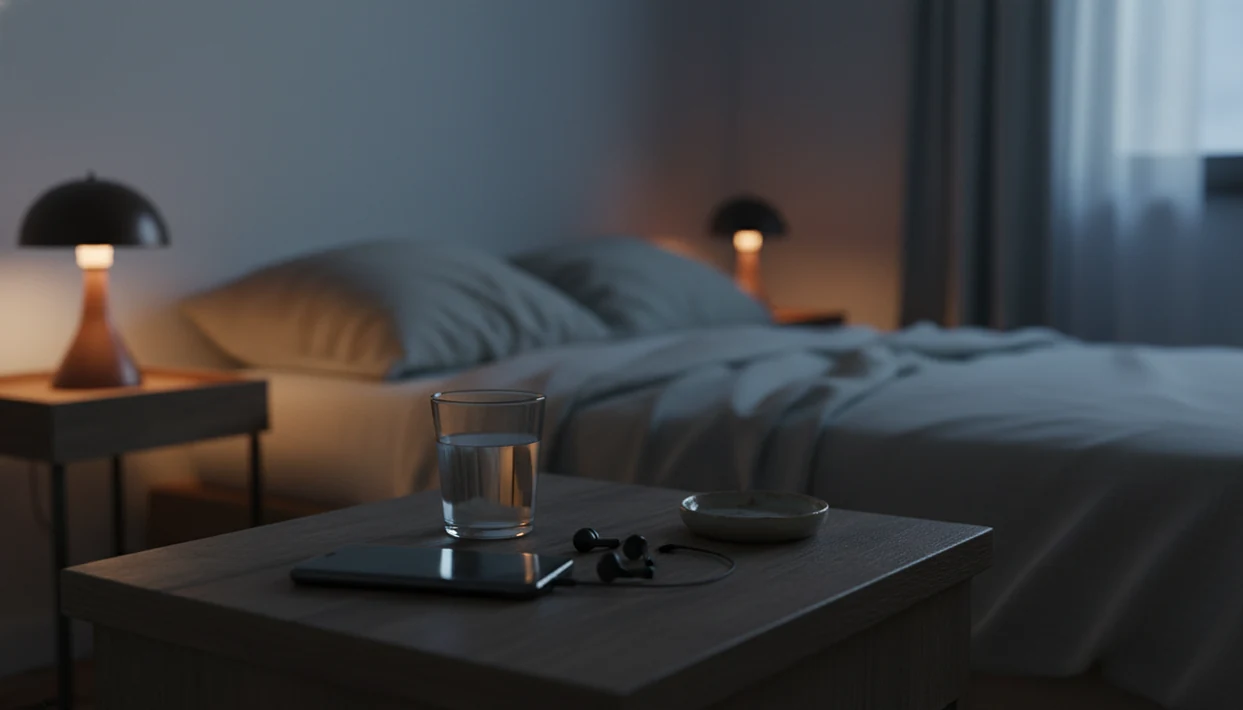
That matters in ordinary moments: tomorrow’s meeting replaying late at night, work stress after a tense call, or bedtime restlessness when the room is dim and your body has not settled yet.
Small gap. Better chance.
For beginners, this fits well alongside simple meditation techniques for beginners, because it does not require a cushion, timer, or long session.
Power of Pause Mindfulness Evidence for Anxiety, Sleep, and Stress
The evidence for power of pause mindfulness is strongest when viewed as a brief form of mindfulness, not as a separate clinical protocol. Direct studies on the exact phrase are limited, so claims should be grounded in broader mindfulness, workplace, sleep, and app-based research.
- About 31.1% of U.S. adults experience an anxiety disorder at some point in life, according to the National Institute of Mental Health: nimh reference: any anxiety disorder.
- Insomnia is common too: the American Academy of Sleep Medicine notes that short-term insomnia affects many adults, while chronic insomnia is a persistent clinical concern: sleepeducation reference: insomnia.
- A JAMA Internal Medicine meta-analysis found mindfulness meditation programs produced moderate improvements in anxiety, depression, and pain compared with controls: JAMA Internal Medicine study: 1809754.
- A Cochrane review of workplace mindfulness programs reported possible reductions in stress and improved well-being, while noting that study quality and program design vary: Cochrane review.
- A randomized smartphone mindfulness study found short daily app-based practice reduced stress and irritability compared with a waitlist group: PubMed research: 29549070.
Clinicians typically recommend mindfulness as a supportive self-regulation skill, not as a replacement for therapy, medication, sleep evaluation, or crisis care. For most people, the realistic benefit is less reactivity, not instant calm.
How Power of Pause Mindfulness Works in the Nervous System
Power of pause mindfulness works by changing the sequence from trigger → reaction into trigger → pause → noticing → response. The pause gives the brain and body a brief chance to update before the next action. Learning how thoughts form in the brain can help explain why noticing a thought creates room for a different response.
When stress spikes, the body may lean toward fight-or-flight: faster breathing, tense muscles, narrowed attention. Slow breathing and body awareness can invite a rest-and-digest shift, which means the body has more room to settle. It is not a medical treatment. It is a practical downshift.
The mechanism is simple enough to use in real life. Feel your feet. Notice the jaw. Let the exhale lengthen. Then decide whether to speak, wait, write, move, or rest.
Repeated micro-pauses can also train habit loops. The cue is stress, the routine is pausing, and the reward is a little more choice. Over time, that can support emotional regulation in ordinary places, like a train seat during the evening commute.
How to Use Power of Pause Mindfulness in 60 Seconds
Use this 60-second power of pause mindfulness script when you need a short reset at a desk, in bed, before a meeting, or before a hard conversation. The goal is not to erase emotion; the goal is to respond with more choice.
- Stop what you are doing, if it is safe, and let your eyes soften or lower.
- Feel one body contact point, such as feet on the floor, back on the chair, or hands resting.
- Breathe slowly for three rounds, with a slightly longer exhale than inhale.
- Name the current state in plain words, such as “tense,” “rushed,” “sad,” or “angry.”
- Choose the next action: send, wait, ask, stretch, close the laptop, or start bedtime audio.
That’s it.
If 60 seconds feels too long, use one breath and one body sensation. If you want more structure, short meditation techniques can help you build the same skill in small sessions.
Repeat the pause rather than chasing a longer session
A repeatable cue may be more useful than continually extending a session. A 2025 analysis of meditation dose and well-being found that practice frequency was a stronger predictor of outcomes than session length, particularly early in practice. Because the analysis used reported practice rather than randomly assigning frequency, it cannot prove that frequent pauses caused the improvements. It does support making regularity a practical priority. Simple rules of meditation can provide structure while keeping your practice flexible enough to repeat regularly.
Choose an existing transition, such as finishing a call or closing the laptop, and attach the same brief pause to it. There is no established optimal number of breaths. In a two-week randomized study of 161 participants, roughly 10-minute and 30-minute daily practices both produced improvements, without a significant duration advantage. Those sessions were longer than a mindful pause, so the findings do not establish that a few seconds produces equivalent benefits.
Power of Pause Mindfulness Tips for Work, Bedtime, and Conversations
Power of pause mindfulness adapts well because the same core move works in different settings: stop, notice, breathe, choose. Workplace mindfulness research suggests mindfulness programs may reduce distress and burnout and improve well-being, though effects vary by program, study quality, and consistency of practice: source.
Desk pause for focus
Before an email, call, or meeting, place both feet down and read the first line of your message twice. Then take one slow breath before typing. The work version is useful after a video call when your hands finally unclench.
Bedtime pause for sleep
At night, dim the phone screen before starting audio and notice one body sensation under the blanket. For bedtime restlessness, a pause often pairs well with progressive muscle relaxation for sleep.
Conversation pause for reactivity
Before replying in conflict, silently name the feeling and ask, “What response will I stand by tomorrow?” For reactive communication, one breath before speaking can prevent a whole repair conversation later. Adding compassion training meditation can help you respond to yourself and others with kindness during difficult conversations.
5 Best-Fit Scenarios and Safety Boundaries for Power of Pause Mindfulness
Power of pause mindfulness fits mild daily stress and choice points, but it is not designed for crisis care or severe symptoms. Use it as a supportive practice, and get professional help when distress is intense, persistent, or impairing.
| Scenario | Best for | Not ideal for |
|---|---|---|
| Mild daily stress | Pausing before rushing, snapping, or multitasking | Panic that feels unmanageable or unsafe |
| Racing thoughts | Noticing thought loops before sleep or work | Severe insomnia that continues for weeks |
| Focus reset | Returning attention after distraction | Replacing needed workload changes |
| Sleep wind-down | Shifting from scrolling to a calmer routine | Possible sleep apnea or medical sleep issues |
| Reactive communication | Waiting before a sharp reply | Trauma flooding or dissociation |
For people who become more distressed when turning inward, grounding meditation techniques may be a safer starting point because they use external sights, sounds, and contact points.
When to Seek Professional Help
Seek professional help when distress is intense, persistent, unsafe, or interfering with daily life. A mindful pause can support care, but it should not stand in for therapy, medication, a medical sleep evaluation, or urgent crisis support.
Panic that feels unmanageable, trauma symptoms, dissociation, depression, severe insomnia, or anxiety that changes how you work, drive, parent, eat, or connect with people deserves clinical attention. Sleep also has its own red flags: gasping awake, loud snoring, morning headaches, or daytime sleepiness can point to a sleep disorder that needs evaluation, not just a calmer bedtime routine.
- Contact a licensed therapist, psychiatrist, primary care clinician, or other qualified mental health professional if symptoms continue or worsen.
- Ask about sleep specialist referral if insomnia is severe, lasts for weeks, or includes snoring, gasping, or heavy daytime sleepiness.
- Use pauses as a companion skill alongside treatment plans, prescribed medication, or sleep testing when recommended.
- Seek urgent support immediately for thoughts of self-harm, unsafe behavior, or crisis-level distress through local emergency services or crisis resources.
MindTastik Power of Pause Mindfulness Support
Guided support can make pausing easier because the user does not have to invent the practice while stressed. A prompt, timer, short breathing session, or bedtime track can turn “I should pause” into something concrete.
MindTastik offers wellness audio for adults, including guided meditation, sleep support, breathing practices, and self-hypnosis sessions for anxiety, rest, and everyday calm. Short sessions, reminders, and consistency tracking can make it easier to practice the pause before stress builds. Some people describe the need simply: a calm voice they can start when their mind feels too crowded.
Smartphone-based mindfulness research has found reductions in stress and irritability after daily use, but the benefit depends on regular practice.
Some people compare Calm, Headspace, mindful.org resources, and MindTastik when looking for sleep support.
Guided audio for a pause before work or bed
MindTastik's guided meditations and breathing sessions suit adults who prefer spoken instructions to deciding what to do in a tense moment. Its breathing exercises offer a structured option for a work transition or evening wind-down. People who find breath attention uncomfortable may prefer a guided meditation focused on body contact or external sounds. Persistent anxiety or insomnia calls for clinical assessment, not an audio session alone; MindTastik is not a medical treatment.
What a brief mindful pause cannot treat
Power of pause mindfulness is useful, but it has clear limits. It should not be presented as a standalone treatment for severe anxiety, trauma, major depression, or insomnia disorders.
Seek urgent support if anxiety, depression, panic, trauma symptoms, or sleep loss feel unsafe, unmanageable, or are interfering with work, relationships, driving, or basic daily care. In the U.S., call or text 988 for immediate mental health crisis support.
- Brief pauses under five minutes have promising support, but the evidence is less developed than for longer mindfulness programs.
- Turning inward can feel activating for some people, especially during panic, trauma memories, or dissociation.
- App-based support only helps when used regularly; a forgotten reminder does not build the habit by itself.
- Sleep symptoms may need medical evaluation, especially with loud snoring, gasping, daytime sleepiness, or suspected sleep apnea.
- Pausing will not fix unsafe relationships, unmanageable workloads, financial stress, or untreated health conditions.
- If a pause increases distress, try grounding, open your eyes, name objects in the room, or seek professional guidance.
- Meditation can complement therapy or medical care, but it should not replace either.
A short guided track can be enough. The phone rests nearby, the room quiet, the next breath easier to follow.
When a pause becomes rehearsal for an argument
A pause can become counterproductive when it turns into silent arguing with yourself, forced calm, or a way to avoid a necessary conversation. For example, if you stop mid-conflict, hold your breath, and mentally rehearse the perfect comeback, the pause is likely adding pressure rather than creating space. A useful pause should make the next choice clearer, not make the reaction more polished. Try pairing a steady breath with one simple question: “What response would I still respect in ten minutes?” Remembering that thoughts are not facts can help you question mental rehearsals without treating every prediction as true.
For structured sessions beyond this page, MindTastik guided meditation app is the main MindTastik hub for guided meditation.
Mindful pause questions
How do I take a mindful pause before reacting?
Stop the current action if it is safe, notice one point of body contact, and take a few comfortable breaths. Name the state plainly, such as angry, tense, or rushed. Then choose a concrete next step: wait before sending, ask a question, or return to the task. Calm is not a requirement.
What is the STOP mindfulness technique?
STOP stands for Stop, Take a Breath, Observe, Proceed. It gives a brief pause a clear sequence: interrupt the action, notice bodily experience and what is happening, then decide how to continue. The cited research describes a trial protocol, not proof that one STOP cycle reliably reduces stress or treats a mental health condition.
Can a mindful pause help with anxiety?
It may help interrupt an immediate reaction and bring attention back to the present situation. Broader breathwork research suggests modest stress benefits, but those studies used structured practices, not necessarily a single breath. A pause has not been established as a standalone treatment for anxiety disorders, and persistent or impairing anxiety needs professional assessment.
Can a mindful pause help with racing thoughts at bedtime?
A pause can mark the transition from scrolling or planning to a quieter bedtime routine. Notice contact with the bed, acknowledge the thought loop, and choose the next wind-down step rather than trying to force sleep. This is a supportive habit, not an established treatment for chronic insomnia or other sleep disorders.
Is taking a pause during an argument the same as avoiding it?
Not necessarily. A useful pause makes the next response clearer; avoidance postpones the conversation without a plan to return. Briefly state the need for a moment, then return to the issue when possible. If the pause becomes silent rehearsal of a comeback, shift attention to body contact and the next constructive action.
How can I remember to take mindful pauses during a busy day?
Connect a pause to something you already do, such as washing your hands, opening your laptop, or finishing a meeting. Use that moment to notice your posture, relax any unnecessary tension, and check in with yourself. A familiar daily cue can make pausing easier to remember without adding another task to your schedule.
Can I practice a mindful pause with my eyes open?
Yes, a mindful pause does not require closing your eyes. Let your gaze rest comfortably on a nearby object, notice the sounds around you, or feel your feet touching the floor. This approach can be useful at work or in public places, where staying aware of your surroundings matters.
How is a mindful pause different from zoning out?
A mindful pause involves deliberately noticing what is happening in the present moment. Zoning out usually means your attention has wandered without you choosing it. During a pause, you might observe a sensation, emotion, or thought, then decide what to do next. The goal is awareness, not an empty mind.