
Labeling Thoughts Meditation for a Busy Mind
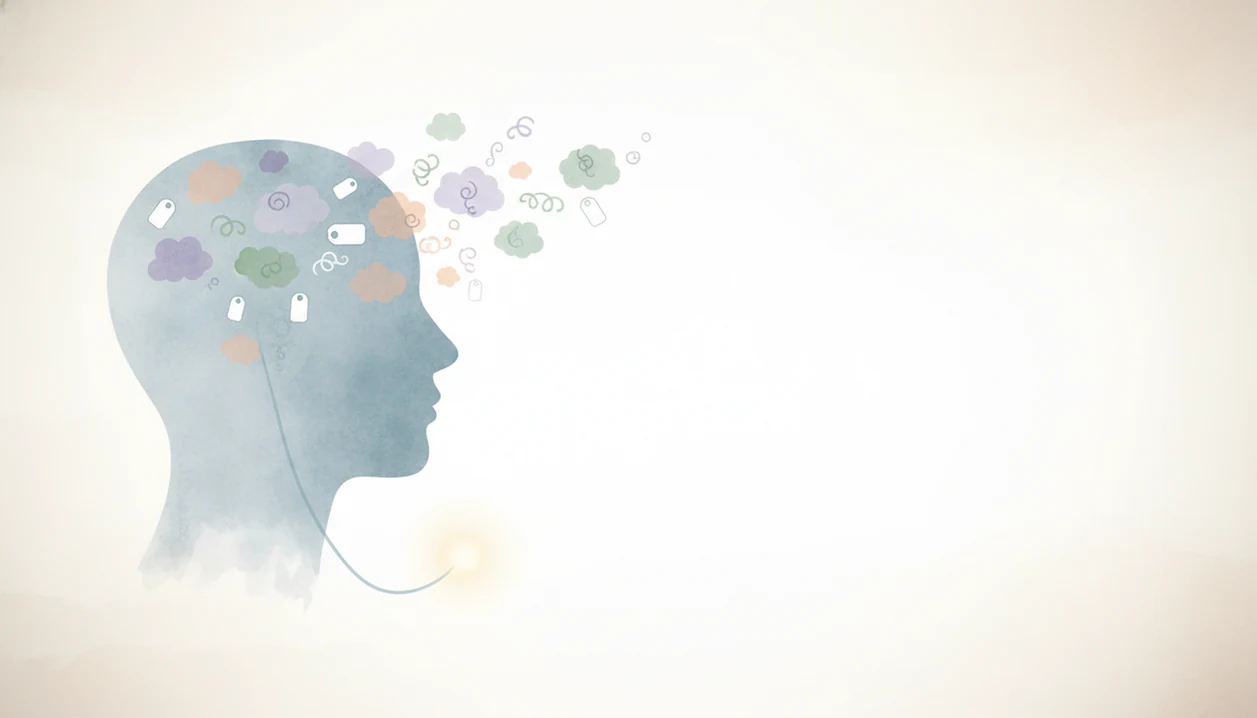


Labeling thoughts meditation is a mindfulness practice in which a thought is noticed, named silently with a short neutral label, and followed by a return to the breath or body. Labels such as “thinking,” “planning,” “worrying,” “remembering,” and “judging” describe mental activity without arguing with it. The aim is not an empty mind. It is to recognize distraction sooner and return with less struggle.
The practice follows a simple loop: notice, name, soften, return. A broad label like “thinking” is enough when choosing a more precise word becomes distracting. MindTastik offers guided meditation as a starting point for a busy mind, including before sleep. The label is a brief cue to return, not an instruction to make the thought disappear.
The essentials
- Use short labels such as “thinking,” “planning,” “worrying,” “remembering,” or “judging.”
- The goal is not to stop thoughts; the goal is to notice them sooner and return more gently.
- Labeling works best as a repeated calm loop: notice, name, soften, return.
4 Labeling Thoughts Meditation Techniques for Beginners
The four easiest labeling thoughts meditation techniques are single-word labeling, category labeling, emotion-adjacent labeling, and bedtime labeling. The best technique is the one that feels neutral, repeatable, and easy to return from.
- Single-word labeling: Say “thinking” when you notice the mind has wandered. It’s simple enough for a restless first session.
- Category labeling: Use labels like “planning,” “remembering,” “judging,” or “worrying.” This helps when thoughts arrive in familiar loops.
- Emotion-adjacent labeling: Name the mental pattern near the feeling, such as “protecting,” “anticipating,” or “comparing,” without analyzing it.
- Bedtime labeling: Use softer labels like “tomorrow,” “replaying,” or “checking,” then return to body weight or sound.
MindTastik can guide this practice through sleep, anxiety support, beginner meditation, and everyday calm sessions. The Meditation Techniques: A Practical Library compares thought labeling with related meditation methods.
5 Thought Labeling Meditation Facts People Should Know First
Thought labeling meditation works best when it stays brief and kind. These five facts prevent the practice from turning into another mental task.
- The core loop is notice, label, return. You notice attention has left, name the thought, and come back.
- Labels should be short and nonjudgmental. “Planning” helps more than “messing up again.”
- Labeling creates distance from thoughts. A thought becomes a mental event, not proof that something is wrong.
- Gentleness matters more than force. Pushing harder usually creates more thinking. You can practice compassion training meditation to support a kinder response when distraction or self-judgment appears.
- Repetition is normal. The same thought may return ten times. Label it ten times if needed.
Small loop. Big relief sometimes.
A JAMA Internal Medicine meta-analysis found mindfulness meditation programs had small to moderate effects for anxiety, depression, and pain in randomized trials JAMA Internal Medicine study: 1809754. That evidence supports mindfulness broadly, not a guaranteed result from one labeling session.
How Labeling Thoughts Meditation Works in the Mind
Labeling thoughts meditation works through metacognitive noticing, which means becoming aware of thinking instead of being fully inside the thought. In plain language, you catch the mind talking and name what it is doing. Understanding how thoughts form in the brain can help you recognize mental activity without treating every thought as fact.
That small label can create cognitive distance, also called decentering. A thought like “I forgot something important” becomes “worrying,” not an emergency siren. The anchor can be breath, body sensations, sounds in the room, or a guided meditation voice.
Research on affect labeling suggests that putting feelings into words can change activity in emotion-related brain regions, although that lab evidence is not the same as proving every meditation label will reduce anxiety or insomnia PubMed research: 17576282.
Short labels matter because long labels become analysis. If you turn “worrying” into a courtroom argument, the practice has quietly become more thinking. MindTastik sessions keep the return point clear because the voice gives you somewhere to come back to when the mind pulls away.
Good meditation apps for sleep, anxiety, and everyday calm offer repeatable support, not instant silence or medical treatment.
Before You Start Labeling Thoughts Meditation
Before you start labeling thoughts meditation, set up a small, safe practice that feels easy to repeat. The aim is not a heroic long sit; it is a clear anchor, a light label, and permission to stop if the practice feels wrong for your nervous system. Basic rules of meditation can help you keep practice safe, manageable, and focused on returning rather than performing.
- Choose one anchor before you begin: breath, body contact, room sound, or guided audio. Switching anchors every few seconds can turn the practice into another task.
- Start with three to five minutes. A short session teaches the loop without asking a busy mind to suddenly become still.
- Practice seated or lying down in a safe place. Do not use this meditation while driving, operating equipment, or doing anything that needs your full attention.
- Use one neutral label at first, such as “thinking.” Add “planning,” “worrying,” or “remembering” only when the basic loop feels steady.
- Stop if watching thoughts feels unsafe, overwhelming, dissociative, or too intense. Open your eyes, orient to the room, and seek support from a qualified professional or trusted person.
5 Steps to Use the Labeling Technique Meditation
Use the labeling technique meditation as a short, repeatable practice, not a performance test. Five minutes is enough when you’re learning.
- Set your posture, timer, and anchor. Sit, lie down, or tuck your knees under a throw blanket, then choose breath, body, sound, or a guided voice.
- Notice when attention leaves the anchor. The moment you realize you were thinking is part of the practice.
- Name the thought with a short label, such as “thinking,” “planning,” “worrying,” “remembering,” or “judging.”
- Soften judgment and return to the anchor. Try the repair phrase, “thinking, and back to breathing.”
- Repeat without scoring the session. A busy session can still be useful.
For beginners who want more structure, meditation techniques for beginners can help you choose a starting point.
Labeling Technique Meditation Labels for Common Thought Patterns
Useful labeling technique meditation labels are descriptive, not insulting. If a specific label feels complicated, “thinking” is enough.
| Thought pattern | Suggested label | Return anchor |
|---|---|---|
| Planning the day | “planning” | Breath at the nose |
| Replaying conversations | “replaying” | Feet or seat contact |
| Worrying about outcomes | “worrying” | Belly breath |
| Judging yourself | “judging” | Hands resting |
| Remembering old events | “remembering” | Room sounds |
| Fantasizing | “imagining” | Body weight |
| Problem-solving | “solving” | One slow exhale |
| Self-criticism | “criticizing” | Warmth in the chest |
Avoid labels like “stupid,” “bad,” “weak,” or “failure.” They add a second layer of stress. Also avoid over-labeling every tiny micro-thought if the practice starts feeling tense or analytical.
For people who need a faster reset between meetings, short meditation techniques may fit better than a longer sit. The STOP mindfulness technique offers a brief pause to notice your experience before choosing how to respond.
Name Your Thoughts Meditation for Sleep Anxiety
Can name your thoughts meditation help with sleep anxiety? It can support a calmer bedtime routine by giving racing thoughts a simple notice-and-return loop, but it is not a treatment for insomnia or anxiety disorders.
In the middle of the night, checking the time can restart the whole mental loop. Labeling keeps the moment simple: “planning,” “tomorrow,” “replaying,” “checking,” or “worrying.” From there, guide attention back to the weight of the body, the rise of the belly, nearby sound, or a quiet sleep meditation.
MindTastik offers adult wellness support through guided meditations, sleep audio, breathing practices, and self-hypnosis sessions for sleep, anxiety, and everyday calm. In a JAMA Network Open trial, an app-based mindfulness program reduced GAD-7 anxiety scores by -5.0 points versus -3.9 for control, a 1.1-point greater improvement PMC research article: PMC8114136. Meditation apps can support a routine, but they are not a substitute for professional care.
That is why MindTastik is presented here as an option for adults who want guided labeling practice at bedtime, not as a medical treatment.
Best For and Not For Thought Labeling Meditation
Thought labeling meditation fits people who want a light, repeatable way to meet busy thoughts. It is not ideal when observing thoughts alone feels unsafe, overwhelming, or urgent.
| Best for | Not for |
|---|---|
| ✅ Beginners learning to notice mind-wandering | ❌ People seeking instant mental silence |
| ✅ Busy minds that jump between tasks | ❌ People who become more distressed observing thoughts alone |
| ✅ Mild everyday worry | ❌ Anyone needing urgent mental health support |
| ✅ Bedtime rumination | ❌ Panic, severe trauma, or intrusive rumination without support |
| ✅ Short app-guided sessions | ❌ People who need medication, therapy, or crisis care |
| ✅ People who dislike forcing concentration | ❌ Anyone using meditation to avoid needed help |
For adults who need a gentle bedtime cue, MindTastik fits because guided sleep audio gives the mind a voice and anchor to return to. Small app-guided sessions may be easier to repeat than silent practice, but completion rates and outcomes vary by study design, app, and user motivation.
Common Mistakes in Labeling Thoughts Meditation
The most common mistake in labeling thoughts meditation is trying to empty the mind. A better goal is noticing sooner, labeling lightly, and returning without making the thought a project.
Avoid judgmental labels such as “stupid,” “bad,” “weak,” or “failure.” Those words are not labels; they are attacks. Also avoid debating the thought after labeling it. If the mind says, “What if tomorrow goes badly?” the practice is not to prove or disprove it. Label “worrying,” then return. For recurring harsh thoughts, explore mindfulness for negative thinking as another way to respond without arguing with your mind.
Again. That’s normal.
Repeating the same label many times is not a failed session. It is the session. Thought labels name mental content, emotion labels name feelings like sadness or fear, and body-state labels name sensations like tightness or warmth. If you get tangled, use the repair phrase: “thinking, and back to breathing.” For body-heavy stress, grounding meditation techniques may feel more concrete.
Evidence Behind Thought Labeling Meditation
The evidence is strongest for mindfulness programs overall, not for thought labeling as a stand-alone micro-technique. Labeling is a practical piece of that wider training, and it should be treated as support, not a promise of sleep or anxiety relief.
Here is the cleaner way to map the evidence to the practice:
- Separate broad mindfulness findings from the tiny “name it and return” move. Program-level studies often include meditation, education, body awareness, and home practice.
- Use mindfulness evidence for the bigger claims. Research on structured mindfulness programs has found benefits for anxiety, depression, and pain, but those results do not mean one bedtime label will work every time.
- Connect the naming step to affect-labeling and decentering research. Naming “worrying” may help create distance from the thought instead of treating it as a command.
- Read app-based mindfulness evidence separately. Digital programs can help some adults practice more often, but they differ from in-person courses in guidance, adherence, and support.
- Keep expectations gentle. MindTastik can guide the loop, but no meditation app can guarantee sleep, calm, or symptom relief.
Less mind wandering is not always an immediate change
A 2023 meta-analysis of mindfulness-based attention training found no statistically significant average reduction in mind wandering within the mindfulness group at one measurement point. Yet the change over time favored mindfulness compared with the control condition. That distinction matters: training may help protect against increasing distraction without producing an obvious drop in wandering thoughts straight away.
This study examined mindfulness-based attention training, not thought labeling on its own. It does not establish how quickly the label-and-return practice should change a person's attention. A session with frequent distraction therefore cannot settle whether the practice is helping. The immediate task remains recognizing that attention has drifted and returning to the chosen anchor, rather than counting thoughts as a score.
Guided sessions for practicing the return
MindTastik’s guided meditation library can provide a voice to return to after silently labeling a thought. Beginner mindfulness sessions suit people who prefer spoken guidance over keeping track of the practice alone. At bedtime, sleep audio may suit those who want a quieter routine rather than an active labeling exercise. People who find inward attention distressing should choose another approach or seek professional support. The app is wellness support, not medical treatment.
When thought labeling is not enough
Labeling thoughts meditation is useful for many people, but it has real limits. It should be framed as supportive practice, not a cure.
Seek professional support promptly if racing thoughts come with panic, thoughts of self-harm, trauma flashbacks, severe insomnia, or symptoms that disrupt work, relationships, or basic daily care.
- It is not a proven cure for anxiety, insomnia, intrusive thoughts, panic, depression, or trauma.
- Evidence is stronger for mindfulness programs in general than for this exact micro-technique.
- Thoughts may not stop, and the practice can feel repetitive, boring, or frustrating.
- Severe trauma, panic, or intrusive rumination may require support from a qualified professional.
- App-based meditation supports everyday calm and sleep routines; it is not medical treatment.
- Some people may prefer movement, journaling, therapy, medication, breathwork, or other supports.
- Silent practice can feel too open for some beginners. Guided audio may be easier.
- Competitor resources such as Calm, Headspace, and Mindful often teach similar mindfulness ideas, but the right fit depends on voice, cost, and use case.
If bedtime imagery feels easier than labeling, visualization meditation for sleep is another gentle option.
If you are ready to move from tips to practice, MindTastik guided meditation app is where MindTastik keeps its guided meditation experience.
Thought labeling questions
How do I label thoughts during meditation?
Choose an anchor, such as breathing, body contact, or room sounds. When attention gets caught in a thought, silently name the activity with one word, then return to the anchor. “Thinking” is enough. The label marks the distraction; it is not an invitation to explain or solve it.
What words should I use to label thoughts?
Use short, descriptive words such as “thinking,” “planning,” “remembering,” “worrying,” or “judging.” A broad label works when a specific one takes too much effort. Avoid labels such as “stupid” or “failure,” which add self-criticism rather than simply identifying what the mind is doing.
Should I label every thought that comes up?
There is no need to monitor and classify every passing thought. Label when attention has become caught in thinking, then return to the anchor. Trying to catch every mental event can turn the session into another demanding task. A simple, repeatable return matters more than a complete record.
Why does the same thought keep coming back?
A label does not remove a thought or resolve its subject. The same worry or plan may return repeatedly, and it can receive the same brief label each time. Repetition is part of the practice, not proof of failure. Avoid turning each return into a fresh debate about the thought.
Is labeling thoughts the same as suppressing them?
No. Suppression tries to push a thought away; labeling acknowledges that thinking is happening. The next step is to return attention without requiring the thought to disappear. If a label becomes a command to stop thinking, the practice has shifted away from noticing and toward control.
Can thought labeling help with racing thoughts at night?
It can support a calmer bedtime routine by giving attention a simple task: notice, label, and return to body weight, breathing, or nearby sound. It does not guarantee sleep and is not a treatment for insomnia. Persistent sleep problems or racing thoughts that disrupt daily life warrant professional support.
Does labeling thoughts reduce anxiety or rumination?
It may help create distance from repetitive thinking, but evidence is stronger for structured mindfulness programs than for labeling alone. Research on mindfulness-based cognitive therapy shows average reductions in rumination, not a guarantee for every person. Thought labeling should be treated as supportive practice, not a substitute for anxiety treatment.
What if labeling thoughts makes me more anxious?
Stop the labeling exercise rather than forcing it. If observing thoughts feels overwhelming, another anchor such as room sounds or body contact may be more suitable. Panic, trauma flashbacks, severe distress, or symptoms affecting daily care call for professional support rather than longer or more intense meditation.