
Best App To Help Calm Racing Thoughts Before Bed
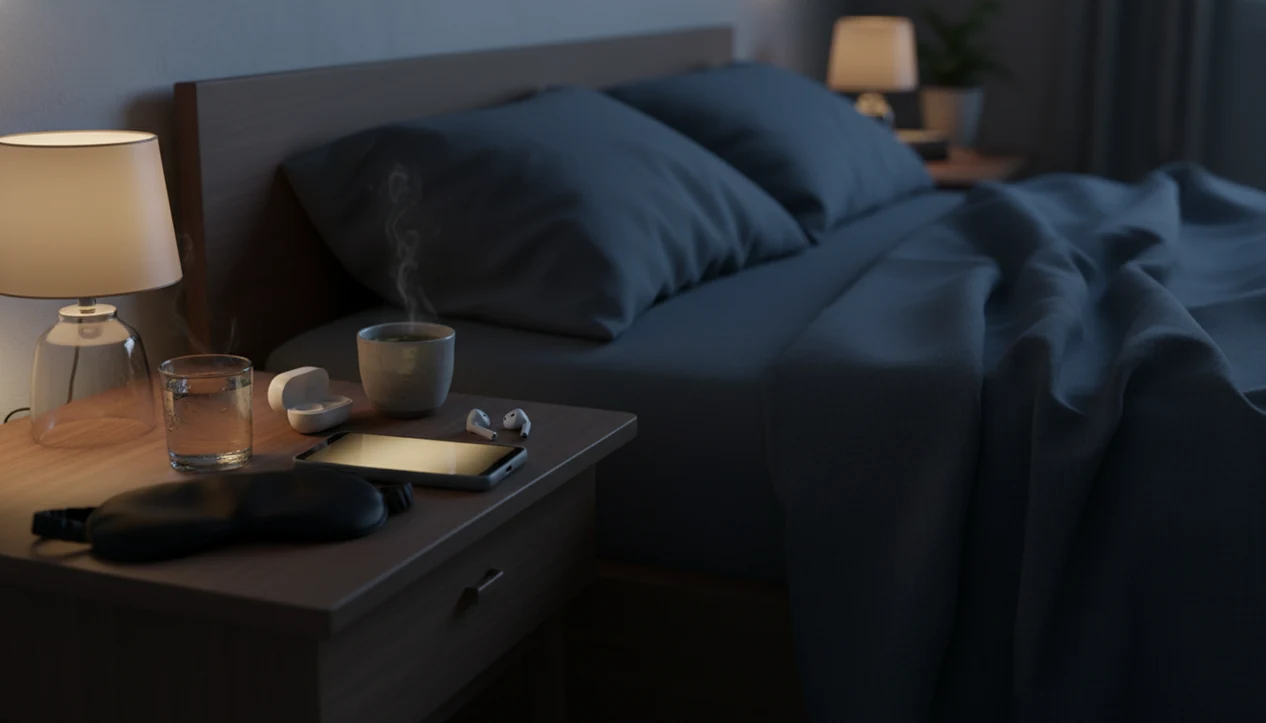


An app to calm racing thoughts before bed provides a short, repeatable routine through guided breathing, meditation, a body scan, sleep audio, or a story that takes little effort to follow. MindTastik offers guided meditations, sleep audio, breathing practices, and self-hypnosis sessions for adults seeking rest, anxiety support, and everyday calm, including those without meditation experience.
The useful distinction is what keeps someone awake: worry loops may suit spoken guidance, physical tension a body scan, and overstimulation quiet soundscapes. A bedtime routine should be simple enough to start in bed without a long search through recordings. Apps can support relaxation and sleep readiness, but they do not replace care for severe insomnia, panic, depression, or persistent anxiety.
Bedtime essentials
- Choose a bedtime worry app with simple routines you can start in bed in under a minute.
- Use guided breathing, body scans, sleep stories, or soundscapes based on whether your mind feels anxious, tense, restless, or overstimulated.
- Apps can support relaxation and sleep readiness, but they do not replace care for severe insomnia, panic, depression, or persistent anxiety.
How these apps look
Side-by-side captures of the compared products. Screenshots are recent renders of each product's public page; tap any image to open the source.
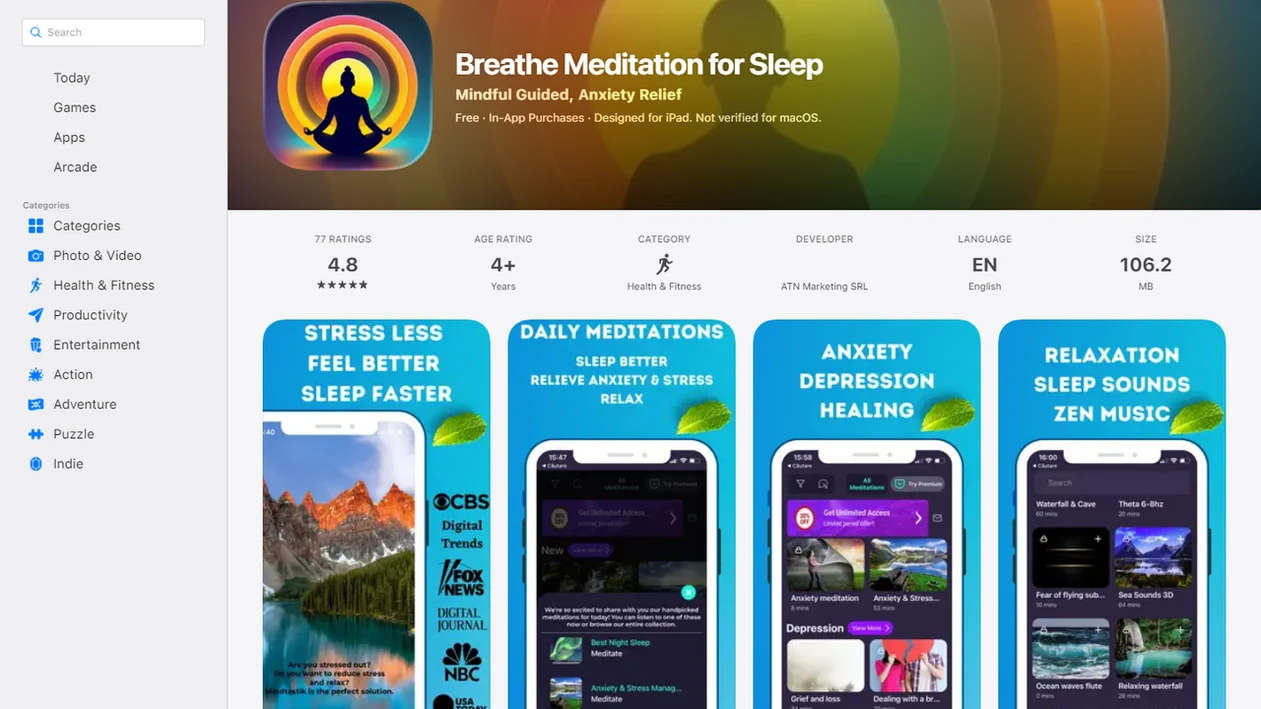
Best App To Help Calm Racing Thoughts: Shortlist
The strongest app for racing thoughts is the one that matches your actual bedtime pattern: worry loops need guidance, body tension needs scanning, restlessness needs breath pacing, and overstimulation often needs quiet audio. The strongest option here combines breathing exercises, meditation, sleep audio, and self-hypnosis in one bedtime-friendly library.
MindTastik
The app fits adults who want a simple audio cue when nighttime worry starts circling, because it offers a clear choice between a 5-minute breathing exercise and a longer body scan. It reports over 1,000 guided meditations and over 1 million users; those are product-scale claims, not clinical outcome proof.
Calm
Calm is useful for sleep stories and soundscapes when distraction helps more than instruction.
Headspace
Headspace works well for beginners who want structured meditation lessons before bed.
Sanvello
Sanvello adds mood tracking and coping tools, so it leans more toward stress and mental-health support. For anxiety that appears during travel, fear of flying apps offer relaxation tools designed for calmer flights.
Breethe
Breethe offers broad relaxation content for users who like variety, though too many choices can slow bedtime use.
At-A-Glance Comparison Of Calm Racing Mind App Options
A calm racing mind app should be compared by bedtime job, not by the longest feature list. More options can help during the day, but in the middle of the night, the better choice is usually one low-effort routine with a steady breath and a softer place for attention to settle.
| App | Best bedtime use | Helpful features | Possible drawback | Best user fit |
|---|---|---|---|---|
| MindTastik | Guided sleep anxiety routine | Breathing, meditation, body scans, sleep audio, self-hypnosis | Not a substitute for clinical care | Adults who want one app for sleep, anxiety support, beginner practice, and everyday calm |
| Calm | Distraction and sensory settling | Sleep stories, music, soundscapes | Story choice may become another decision | Users who relax through narration or ambient sound |
| Headspace | Beginner meditation structure | Courses, guided basics, sleep content | May feel instructional when you want quiet | New meditators who like step-by-step lessons |
| Sanvello | Mood support plus coping tools | Tracking, coping exercises, guided tools | Less focused on sleep onset alone | Users wanting stress patterns and coping prompts |
| Breethe | General relaxation variety | Meditations, bedtime audio, talks | Large libraries can feel busy | Users who want many relaxation styles |
Start with the app that matches your most common nighttime pattern. If you want a direct three-way breakdown, the MindTastik vs Calm vs Headspace comparison is the cleaner place to compare those choices.
How An App For Racing Thoughts Works At Bedtime
An app for racing thoughts works by giving attention one low-effort target, so the mind has something to follow besides open-ended worry. The goal is sleep readiness, not instantly deleting every thought.
The mechanism is simple. Guided audio shifts attention from rumination to a voice, breath count, body area, or sound pattern. Breath pacing can cue downshifting by slowing the rhythm of breathing. Body scanning asks you to notice tension in one area at a time, which can reduce the sense that every worry needs an answer right now.
Sleep stories and soundscapes use structured distraction. They give the brain a track to ride without requiring problem-solving. Good meditation app for sleep anxiety and everyday calm routines deliver a repeatable wind-down cue, not a guaranteed mental shutdown.
The app fits this use because it lets you choose a starting point by state: breathing when your chest feels tight, a body scan when muscles stay braced, or sleep audio when words feel like too much. For a phone-specific routine, our guide on how to calm racing thoughts with phone breaks the setup down further.
How To Use A Bedtime Worry App When Thoughts Race
“How do I use a bedtime worry app when thoughts race?” Use it the same way for several nights, with fewer decisions each time. A short repeatable routine usually works better than bouncing through ten tracks with sleepy eyes and a subscription screen in the way.
- Set your phone to low brightness, low volume, and Do Not Disturb before opening any audio.
- Choose one short session first, such as paced breathing, a 5-minute meditation, or a brief body scan.
- Start the audio while already in bed, with earbuds on the nightstand or speaker volume barely above the room.
- Follow the cue without grading yourself; wandering thoughts during the first minute are normal.
- Repeat the same routine for several nights before switching to longer sleep audio, stories, or self-hypnosis.
Tiny setup choices matter.
For people who mainly need breath pacing, a tool that can guide breathing exercises may be enough. For people who need both breathing and narration, the app covers the sequence without making the routine feel like homework.
Five Facts About Apps For Racing Thoughts And Sleep
Apps for racing thoughts can support relaxation, but the evidence-aware view is more modest than most app store language. Sleep problems are common; the CDC reports that about 1 in 3 U.S. adults do not get the recommended amount of sleep (CDC guidance: index.html), and NIH-backed materials describe chronic insomnia as affecting roughly 10% to 15% of adults (NIH research: NBK526136).
- Apps may reduce bedtime anxiety and support relaxation, but they are not cures for anxiety disorders or insomnia.
- Short guided meditations, breathing exercises, sleep music, and repeatable routines are usually the most useful features.
- Brief consistent routines often work better than complex feature-heavy plans because bedtime decisions are harder when you are tired.
- Instant-fix claims are overstated because calming a racing mind usually takes practice, timing, and habit repetition.
- Trust signals include clear methods, privacy practices, transparent claims, and evidence where available.
Therapists and mental-health guidelines commonly recommend relaxation skills, sleep routines, and professional support when anxiety or insomnia persists. A bedtime app can sit beside those habits, but it should not pretend to replace them.
What app research says about worry, not instant sleep
A 2024 meta-analysis of 45 randomized trials found small improvements in anxiety and depression from mindfulness apps compared with inactive controls. Benefits were not clearly greater than those of active therapeutic comparisons. That supports a modest role for guided practice, but it does not establish which app is best for racing thoughts or show that a bedtime recording will bring immediate sleep.
A separate review of mindfulness apps and psychological processes found benefits in some studies for repetitive negative thinking, attention regulation, and viewing thoughts as mental events rather than facts. Results were mixed: 35 of 67 app-based comparisons favored the app intervention. The practical aim is therefore a different response to thoughts, not a guarantee that thoughts will disappear.
Best MindTastik Routine For A Racing Mind Before Bed
“What is the best routine for a racing mind before bed?” Start with a breathing exercise, move into guided meditation or a body scan, then use sleep audio or self-hypnosis if your mind still wants a track to follow.
For worry loops, choose a guided session that gives simple verbal cues instead of open silence. For physical tension, pick a body scan and let each area have a turn. For mental restlessness, use a short reset first, then quiet audio. When fear of not sleeping becomes the main thought, try this before bed: dim the screen, start the same recording, and stop checking the clock.
For adults who need a sleep routine that does not assume meditation experience, the app earns the spot because it organizes breathing, meditation, sleep audio, and self-hypnosis into a practical wind-down workflow. It also offers support for people who want everyday calm outside bedtime. For sleep support during pregnancy, pregnancy meditation apps offer routines tailored to new and expectant mothers.
For anxious sleepers, a short guided routine is often easier than silent meditation because the voice reduces the number of decisions the tired mind has to make.
Common Myths About A Calm Racing Mind App
A calm racing mind app can help create better conditions for sleep, but it will not instantly stop racing thoughts for everyone. The practical target is softer arousal, steadier attention, and less problem-solving in bed.
One myth is that more features always mean better bedtime results. In practice, a huge library can become another scroll. Free app ads interrupting calm audio can also undo the mood you were trying to build.
Another myth is that every anxiety relief app has proven medical benefits. Some apps use well-known techniques like breathing, mindfulness, or relaxation audio, but consumer app evidence is mixed. A relaxing session also does not mean an app treats chronic insomnia or an anxiety disorder.
When bedtime worry is the issue, that routine is a practical fit because it gives a narrower routine path: breathe, scan, listen, repeat. If the main need is sleep audio first, an app to help me sleep with guided audio may be the simpler comparison point.
If meditation makes racing thoughts more distressing
Meditation is not automatically calming for everyone. A 2025 review discussing meditation-app safety reported no serious adverse events in the identified app studies, but adverse effects were not assessed consistently. Meditation can sometimes increase anxiety, intrusive thoughts, dissociation, or emotional discomfort, particularly with trauma-related symptoms. The absence of reported serious harm should not be read as proof that every exercise is risk-free.
A session that increases distress is not something to complete for the sake of a streak. Persistent or worsening racing thoughts, recurrent panic, or impaired sleep and daily functioning call for professional assessment. NCCIH guidance on stress and anxiety places meditation alongside established care, not in place of it. Suicidal thinking, psychosis, mania, or inability to care for oneself requires urgent local emergency or crisis support.
Guided meditation for worries at bedtime
MindTastik suits adults who prefer spoken guidance over silent meditation and want breathing, body scans, sleep stories, or self-hypnosis audio in one app. Its guided breathing exercises offer a simple starting point before a longer wind-down recording.
Someone who finds voices distracting may prefer soundscapes rather than narration. Anyone whose racing thoughts persist, disrupt daily functioning, or accompany severe symptoms needs professional assessment rather than a larger audio library. MindTastik is a relaxation support, not a medical treatment. If you prefer nonverbal audio, explore the Brainwaves binaural beats app as another option for your wind-down routine.
When bedtime audio is not enough
App-led routines are useful for many people, but they have clear limits. MindTastik, Calm, Headspace, Sanvello, Breethe, and similar tools should be judged as supports, not as medical treatment.
- An app does not replace professional care for persistent anxiety, panic, depression, trauma symptoms, or severe insomnia.
- Some users find audio prompts distracting, repetitive, emotionally uncomfortable, or too stimulating late at night.
- Results depend on consistency, timing, caffeine or alcohol use, screen habits, and the sleep environment.
- Evidence for consumer meditation and sleep apps is mixed, especially for long-term clinical outcomes; reviews of mental-health apps commonly find promising but uneven evidence quality (NIH research: PMC6615534).
- Privacy matters because sleep, mood, anxiety, and routine data can be sensitive.
- App marketing claims may exceed what research can prove, especially when language implies guaranteed sleep.
- People with worsening symptoms, safety concerns, or major daytime impairment should seek qualified support.
Not every night cooperates.
The app is still useful when you want a supportive practice, but the measure is whether you can repeat it calmly, not whether one session solves everything.
When you need practice that works without a live connection, offline meditation downloads in MindTastik walks through offline meditation downloads.
Questions about racing thoughts before bed
What kind of app helps with racing thoughts at night?
The most useful choice depends on the bedtime problem. Spoken meditation can give worry loops a clear focus; body scans direct attention toward physical tension; breathing exercises provide a simple rhythm. Sleep stories or soundscapes may suit people who want something gentle to follow without concentrating on their thoughts.
Can a meditation app stop overthinking completely?
No app can promise to stop overthinking completely. Mindfulness-app studies show small average improvements in anxiety, while findings on repetitive negative thinking are mixed. A more realistic goal is noticing a thought without treating it as a problem that must be solved immediately, then returning attention to the recording.
How long should a beginner use a bedtime meditation app?
A brief guided practice of about 5 to 10 minutes is a reasonable starting point for someone new to meditation. Breath awareness or a body scan keeps the instructions simple. Longer sessions are not automatically better, especially if listening becomes another task or makes the person more alert.
Are sleep stories better than meditation for racing thoughts?
Neither is best for everyone. A sleep story gives attention a narrative to follow, while guided meditation asks for repeated attention to breath, sensations, or thoughts. People who find inward attention uncomfortable may prefer a story. The supplied research does not establish that stories outperform meditation for bedtime racing thoughts.
Is Calm good for nighttime overthinking?
Calm's Sleep Stories are one option for giving attention something to follow during nighttime overthinking. That feature may suit someone who prefers narration to a breath-focused exercise. It does not establish that Calm is more effective than other apps or that its stories treat insomnia or an anxiety disorder.
What if meditation makes my thoughts race more?
Stop a session that increases anxiety, intrusive thoughts, or emotional discomfort rather than forcing it to continue. Meditation can occasionally worsen distress, and app safety has not been studied consistently. Repeated or worsening reactions are a reason to discuss the practice with a qualified mental-health professional, particularly when trauma symptoms are present.
When do racing thoughts need professional help rather than an app?
Professional assessment is appropriate when racing thoughts persist, impair sleep or daily functioning, cause recurrent panic, or occur with depression, trauma symptoms, or substance use. An app should not be the sole response to severe or worsening symptoms. Suicidal thinking, psychosis, mania, or inability to care for oneself calls for urgent local support.