
Mindfulness Exercise Before Sleep: A Simple Bedtime Practice
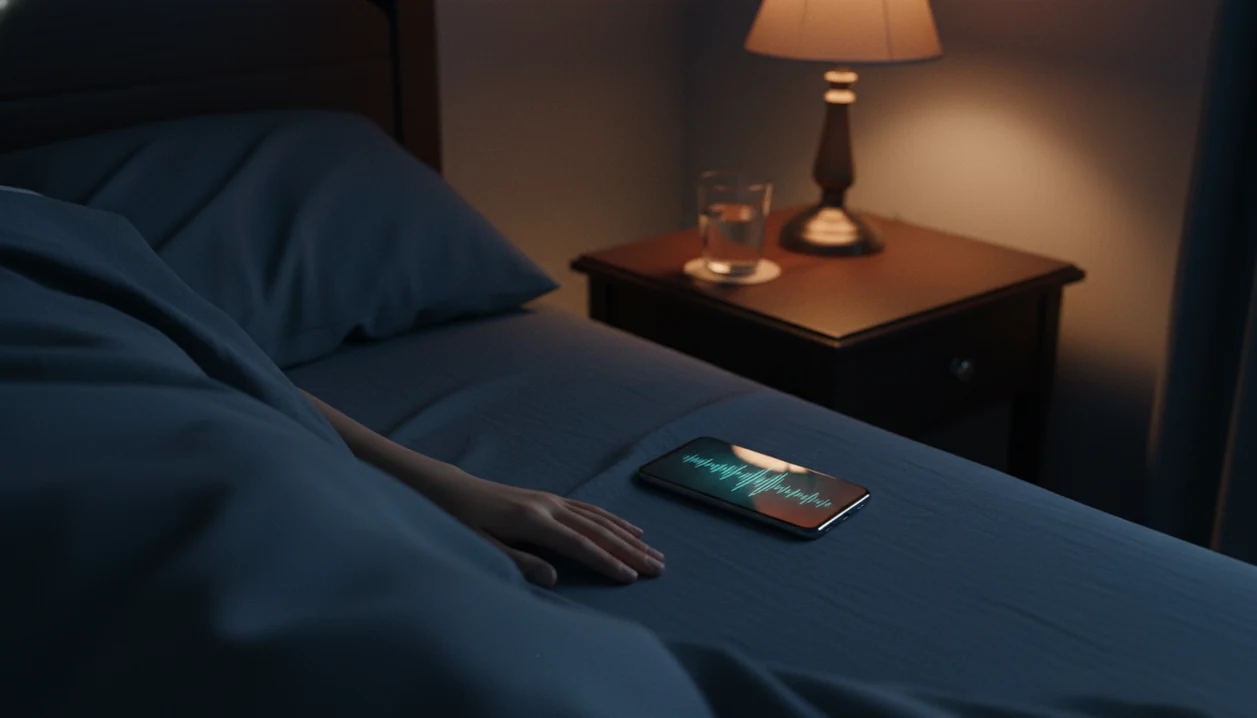


A simple mindfulness exercise before sleep is a short body-breath scan: lie down, take three slow breaths, move attention through the body, and let thoughts pass without trying to force sleep. This bedtime practice uses nonjudgmental attention to breathing, body sensations, and passing thoughts to help the mind and body wind down. The task is to notice and return, not to empty the mind.
Keep the practice familiar rather than choosing a new technique every night. Guided meditation, breathing audio, or a sleep story can provide an anchor when silence leaves room for planning and worry. MindTastik offers these formats, but audio is optional. A brief scan can also be done quietly, with attention returning to the next body area whenever thoughts interrupt.
The bedtime essentials
- Use one simple body-breath scan in bed instead of trying many techniques at once.
- Mindfulness for sleep is about noticing and softening, not emptying your mind or forcing sleep.
- Guided audio can make the practice easier for beginners, especially when sleep anxiety or racing thoughts show up.
5-minute body-breath scan for sleep tonight
The simplest practice to try tonight is a 5-minute body-breath scan: lie in bed, close or soften your eyes, take three slow breaths, then move attention gently from your face to your feet. The aim is relaxation and awareness, not making sleep happen on command.
Start with your jaw, shoulders, chest, belly, hips, legs, and feet. At each area, notice tension without turning it into a problem. If the mind starts planning tomorrow, name it quietly as “thinking” and come back to the next breath.
A late-night check-in feels gentler when you have one familiar practice waiting to guide you back to rest. On nights when appreciation feels comforting, gratitude meditation for sleep and calm can offer another gentle focus before resting.
After the lights are out, when thoughts keep circling, MindTastik fits people who need a guided starting point because its bedtime audio can lead the body-breath scan without asking you to choose every next step.
4 bedtime mindfulness options for different sleep needs
Use the body-breath scan as the default choice tonight, then compare other options once you know what kind of support your mind responds to. MindTastik supports guided meditation, sleep audio, breathing exercises, and self-hypnosis sessions, so the format can match the problem rather than the other way around.
For this use case, MindTastik is an option for people who want guided bedtime audio, breathing tracks, and sleep stories in one place rather than a silent timer alone.
- Body-breath scan: Best for racing thoughts and body tension. Not for people who dislike noticing physical sensations.
- Guided sleep meditation: Best for beginners who want a calm voice. Not for nights when any talking feels too stimulating.
- Calming sleep story: Best for mental chatter that needs a soft anchor. Not for users who get hooked by plot details.
- Slow breathing audio: Best for quick settling. Not for anyone who feels strained by counted breathing.
For beginners who want a calming track to follow when the mind feels busy, MindTastik can be a practical fit because it offers voice-led sleep formats instead of only silent timers. Calm, Headspace, and mindful.org also cover sleep or mindfulness education, so compare your options if audio style matters.
Mindfulness and sleep: how breath attention reduces rumination
Mindfulness is paying attention to thoughts, feelings, body sensations, and surroundings without judgment, a definition Mayo Clinic uses in its overview of mindfulness exercises Mayo Clinic health overview: art 20046356. Before sleep, that means noticing the mind instead of wrestling with it. The useful mechanism is attentional redirection: you give the mind a repeatable anchor, then practice returning to it when worry, planning, or self-monitoring appears.
Breath attention works by giving rumination a quieter competing focus. In plain terms, you stop feeding the mental loop and give the nervous system a repeated cue: bedtime is for winding down. Habit loops matter here. If the same short practice happens most nights, the bed, lowered lights, and slow breathing can start to feel linked. During the day, mindful gratitude practices can reinforce attentive pauses by helping you notice small moments of appreciation.
Not magic. A cue.
MindTastik supports this kind of routine because guided bedtime audio can reduce the “what do I do now?” moment. For wider daytime practice, our guide to mindfulness exercises and techniques explains how breath, body, and attention practices fit together.
What sleep studies show, and what a five-minute scan cannot promise
Research on mindfulness and sleep usually examines structured programs, not one brief recording played at bedtime. A systematic review of randomized trials found improvements in sleep quality compared with nonspecific active controls, but no clear advantage over specific active treatments. That distinction matters: evidence that a program helps does not establish that a five-minute body scan will shorten the time it takes to fall asleep tonight.
For chronic insomnia, mindfulness is better framed as additional support than as a replacement for established treatment. A 2025 review comparing psychological treatments for sleep problems found a clearer benefit for cognitive behavioral therapy for insomnia, or CBT-I, than for mindfulness interventions. A bedtime scan can remain part of a calming routine while treatment addresses persistent sleep difficulties.
5 steps for the body-breath mindfulness exercise before sleep
Use these five steps in bed, then set the phone aside once the audio begins. Keep the effort light enough that the practice still feels doable in a quiet room with a soft voice and an easy breath.
- Set your position by lying down and letting your hands rest somewhere easy.
- Take three slow breaths, letting each exhale be a little longer than the inhale.
- Scan from the forehead to the feet, noticing one body area at a time.
- Notice thoughts with the phrase, “thinking is here, and I can return to breathing.”
- Return to the breath or the next body area whenever you drift.
If your priority is a low-effort wind-down routine, MindTastik fits because a guided session can carry these steps while you stay in bed. For people who want even shorter daytime resets, one minute mindfulness exercises can help build the habit before bedtime.
5 facts about mindfulness for sleep and anxiety
- Simple practices usually work better at bedtime than complex routines. A tired brain often needs fewer choices, not more instructions. - Mindfulness is not about clearing the mind. The practice is noticing thoughts and returning gently, again and again. - Guided audio can help beginners stay with the practice. A calm voice can reduce the need to monitor every step yourself. - A steady 5-minute practice often beats an ambitious 30-minute plan that gets skipped. Mindfulness may improve sleep quality, but it is not a guaranteed insomnia cure. A meta-analysis of mindfulness meditation and sleep quality found benefits compared with nonspecific active controls, but no clear advantage over specific active treatments.
For anxious beginners, a short guided exercise is often easier than silent meditation because the voice gives attention somewhere safe to land. MindTastik uses that same idea in bedtime guided audio, breathing tracks, and self-hypnosis sessions.
Guided meditation, sleep stories, breathing audio, and self-hypnosis compared
Different sleep audio formats solve different bedtime problems.
| Format | Best for | Not for | Bedtime use case |
|---|---|---|---|
| Guided meditation | Beginners who want step-by-step support | People who find voices distracting | Follow a body scan or breath practice in bed |
| Sleep stories | Busy minds that need a gentle narrative | People who stay alert for plot | Anchor attention away from rumination |
| Breathing exercises | Quick physical settling | People who feel stressed by counts | Use slow exhales before sleep |
| Self-hypnosis sessions | Users who like suggestion-based relaxation | Anyone uncomfortable with hypnosis language | Pair calming phrases with body relaxation |
Anyone dealing with anxious decision-making at bedtime may prefer voice-led audio because it removes the need to design a practice at night. MindTastik, Calm, and Headspace all offer audio-led options, but the right choice depends on whether you prefer instruction, story, breath pacing, or suggestion.
Selection criteria for this bedtime mindfulness exercise
We recommend the body-breath scan because it works in bed, asks for little thinking, needs no equipment, suits beginners, and pairs well with guided audio. Those criteria matter more at night than novelty.
Long lists can backfire. Choosing between a 5-minute breathing exercise and a 20-minute body scan is already a lot when your shoulders are tense against the mattress. Short can be better than long when the user is tired, worried, or watching the minutes pass.
The body-breath scan also fits sleep anxiety because it is repeatable and non-judgmental. You do not have to decide whether you are “doing it right.” You notice, soften, and return.
For people who need emotional language before bed, emotional awareness exercises can add gentle naming. For most nights, though, the body-breath scan keeps the task small enough to repeat.
Choosing bedtime audio without adding more decisions
MindTastik’s guided meditation library suits beginners who prefer spoken instructions for a body scan rather than remembering each step. Breathing sessions offer another option when counting or scanning feels like too much work, while sleep stories provide a narrative focus for a busy mind.
People who find voices distracting may prefer a silent practice or soundscape. Those who become more uncomfortable when focusing on bodily sensations can choose a different anchor. Persistent insomnia needs assessment and appropriate treatment, not simply a different recording.
What a bedtime body scan cannot treat
Mindfulness before sleep can support relaxation, but it has limits. A good bedtime routine should lower pressure, not create another performance test.
- Mindfulness is not a replacement for care for chronic insomnia, sleep apnea, depression, anxiety disorders, or other health concerns. - Some people feel more aware of thoughts at first, especially when the room gets quiet. - A single night may not show results. Routine usually matters more than one attempt. - Bright screens can undermine calming audio, even when the content itself is relaxing. The Sleep Foundation notes that evening screen use and light exposure can interfere with sleep timing and sleep quality: Sleep Foundation guide: how electronics affect sleep. - Longer or more complex practices can increase pressure and frustration around sleep. - Sleep apps should not claim to solve insomnia with one audio track. - Guided audio may feel irritating on nights when the mind wants silence. - If bedtime practice turns into monitoring, pause and simplify.
For adults who want a softer evening reflection, gratitude meditation can be useful, but it should still feel calm and optional. Best Meditation App for Sleep is a helpful category only when the app stays honest about support versus treatment.
When the body scan becomes a test of falling asleep
A bedtime mindfulness exercise tends to work best when it becomes a cue for settling down, not a test you have to pass. If you are checking whether you feel sleepy every few breaths, forcing a perfect body scan, or getting irritated when thoughts appear, the practice may be turning into another form of effort. The goal is not to win sleep; the goal is to make the next slow exhale easier to return to. If frustration appears, try self-compassion exercises for calm to meet wandering attention with kindness rather than criticism.
Bedtime mindfulness questions
How do I do a mindfulness exercise before sleep?
Lie comfortably, take three slow breaths, and move attention from the face toward the feet. Notice sensations without trying to correct every tense area. When thoughts interrupt, label them briefly as thinking and return to breathing or the next body area. Finishing every part of the scan is not the goal.
How long should a bedtime body scan last?
Five minutes is a practical starting point, not a proven minimum or an ideal dose for everyone. Keep the practice short enough to repeat without making bedtime feel demanding. Research generally evaluates structured mindfulness programs, so it cannot establish an exact number of minutes that will make someone fall asleep.
What should I do when thoughts keep returning during the scan?
Use a brief label such as planning, worrying, or remembering, then return to the next breath or body area. Repeated thoughts do not mean the exercise has failed. The practice is returning attention without debating each thought, rather than making the mind blank or checking constantly for sleepiness.
Should I stay in bed meditating if I cannot sleep?
Not if staying there turns into frustrated waiting. CBT-I principles generally favor leaving bed for a quiet activity in dim light when wakefulness becomes increasingly frustrating, then returning when drowsy. Mindfulness can support this approach, but it should not replace the other parts of treatment for chronic insomnia.
Are sleep stories the same as mindfulness meditation?
A sleep story provides a narrative focus, while mindfulness meditation explicitly practices noticing thoughts and sensations without judgment. Both can be bedtime audio options, but they are not identical exercises. A story may suit someone who finds body scanning uncomfortable, though an engaging plot can also keep some listeners alert.
Can I practice mindfulness before sleep while lying down?
Yes, lying down is a comfortable option for bedtime mindfulness. Choose a position that lets your body relax without strain, and notice sensations such as the pillow beneath your head or the blanket against your skin. You do not need to maintain a formal meditation posture. If you drift off, there is no need to restart.
Is it better to meditate before or after my bedtime routine?
Either can work, but practicing after brushing your teeth and finishing other tasks may make it easier to settle without interruptions. Try placing mindfulness near the end of your routine, with lights dimmed and notifications silenced. If that feels inconvenient, practice earlier in the evening. A routine you can comfortably repeat matters more than exact timing.
Can I use sounds instead of breathing for bedtime mindfulness?
Yes, sounds can serve as your focus during bedtime mindfulness. Notice a steady, gentle sound, such as a fan, rainfall, or quiet background noise, without trying to analyze it. When your attention wanders, return to listening. Keep any audio at a comfortable volume, and avoid sounds that feel stimulating or make you anticipate what comes next.