
Pregnancy Meditation Before Bed: A Calm Nighttime Routine


Pregnancy meditation before bed is a short, gentle relaxation practice that uses breathing, body awareness, affirmations, or soft audio to help an expecting parent wind down. It can give racing thoughts a quieter focus and help the body settle, but it is not a treatment for pregnancy insomnia or mood symptoms. The aim is a calmer bedtime, not forced sleep.
A practical routine starts with a comfortable position and 5 to 15 minutes of low-stimulation audio. Voice tone, pacing, length, and permission to move matter more than a track’s title. Gentle breathing, a brief body scan, or one reassuring phrase can be enough for a tired evening. Persistent sleep loss, severe anxiety, loud snoring, or mood symptoms need clinical attention rather than a longer meditation.
Bedtime essentials
- Keep the routine short, soft, and repeatable: 5-15 minutes is enough for many tired listeners.
- Choose pregnancy sleep support audio by voice tone, pacing, length, and comfort cues, not only by title.
- Use meditation as bedtime support, not as a replacement for medical advice when sleep loss, anxiety, snoring, or mood symptoms are severe.
Get ready for labour with breathing drills and audio from our best hypnobirthing apps guide.
If kick counts matter for your care plan, Baby Kicks App makes logging quick. Structured hypnobirthing audio from Zen Pregnancy can sit alongside the breathing practice on this page.
Pregnancy Bedtime Meditation Routine at a Glance
A useful pregnancy bedtime meditation routine is low-stimulation, short, and comfortable enough to repeat on tired nights. A simple order works well: settle your position, breathe slowly, release body tension, listen to guided audio, then end with one steady affirmation.
Try 5 to 15 minutes first. More than that can feel like homework when the room is dark and your hips already need another pillow.
Poor sleep is common during pregnancy: Sleep Foundation summarizes National Sleep Foundation polling that 78% of pregnant people reported more disturbed sleep during pregnancy (Sleep Foundation guide: pregnancy). That makes a calm routine a practical support, not a personal failure. If you want a more sleep-focused routine, our pregnancy sleep meditation guide goes deeper into bedtime audio choices.
Small and repeatable beats ambitious.
How Pregnancy Meditation Before Bed Works
Guided meditation before bed in pregnancy works by giving the mind one calm focus, which reduces the number of decisions you make at night. Instead of choosing whether to scroll, worry, reposition, or check the time, you follow a voice, breath count, or body scan.
Slow breathing can cue the body away from daytime alertness. Body scan attention gives restless thoughts somewhere neutral to land. Soft narration also helps when the brain keeps looping through tomorrow’s appointment, baby names, or the 2:13 a.m. lock-screen check.
Mindfulness pregnancy research supports this calm-focused use, but the evidence is not sleep-specific. A randomized trial reported lower perceived stress and fewer prenatal distress symptoms after a mindfulness intervention (PubMed research: 24767980). A systematic review also found improvements in anxiety and stress outcomes across pregnancy mindfulness studies, although evidence quality varied (PubMed research: 28575056).
Meditation for pregnancy before bed is best understood as relaxation support, not a guaranteed sleep treatment.
What pregnancy sleep trials say about mindfulness
Research on pregnancy sleep offers some support for mindfulness, but it does not establish that a single bedtime recording treats insomnia. A 2025 randomized trial of a digital mindfulness intervention found greater improvement in insomnia symptoms than the control group during pregnancy, with an effect size of 0.46. The benefit was not observed postpartum. That distinction matters when choosing between a calming nightly habit and treatment for an ongoing sleep problem. For calm routines after birth, postpartum meditation support offers practices that can adapt to new parenting demands.
The stronger behavioral treatment evidence is for cognitive behavioral therapy for insomnia, or CBT-I. A 2026 review of 11 randomized trials found improved perinatal sleep with CBT-I, while mindfulness evidence was smaller and preliminary. For persistent insomnia, a useful question for an obstetric or primary-care clinician is whether CBT-I is appropriate and available. Meditation can remain part of the wind-down routine without carrying the whole treatment burden.
How to Use Guided Meditation Before Bed in Pregnancy
Use guided meditation before bed in pregnancy as a short wind-down routine, not a performance. Side-lying comfort and position changes are normal, especially later in pregnancy.
- Set up pillows before pressing play, including support between the knees, under the belly if helpful, and behind the back if you like a tucked-in feeling. If someone shares your bedtime routine, partner pregnancy meditation support can offer simple ways to help you settle.
- Choose a short audio track that runs 5 to 15 minutes, with a calm voice and no dramatic music.
- Slow the breath by lengthening the exhale gently, without forcing deep breathing or holding the breath.
- Scan the body from jaw to shoulders, belly, hips, legs, and feet, softening one area at a time.
- Let the audio fade without checking the phone, even if you need to shift position or restart the same track.
Dimming the phone screen before starting matters. Bright menus can wake the brain back up right when the routine is trying to do the opposite.
Best Pregnancy Sleep Support Audio for Different Nighttime Needs
The best pregnancy sleep support audio depends on what is keeping you alert. Choose by voice tone, pacing, length, and comfort cues, not only by a track title that says “pregnancy.”
| Audio style | Best for | May not suit |
|---|---|---|
| Short body scan | Physical tension, jaw tightness, shoulder bracing | Anyone who dislikes attention on body sensations |
| Soft breathing track | Mental clutter and a busy evening brain | Anyone who feels pressured by breath instructions |
| Pregnancy affirmations | Reassurance, tenderness, emotional steadiness | Anyone who finds repeated phrases too sentimental |
| Minimal-music sleep audio | Low-stimulation listening under blankets | Anyone who needs spoken guidance to stay focused |
| Self-hypnosis-style relaxation | Letting go through repeated cues and imagery | Anyone who dislikes trance-like pacing |
Tools like MindTastik can help with this sorting because Apps such as Calm and Headspace may also offer bedtime libraries, so compare your options by how the audio feels at 10 p.m., not how polished the menu looks.
Good meditation app for sleep anxiety and everyday calm should deliver clear guided sessions and low-effort routines, not medical promises or pressure to meditate perfectly.
Pregnancy Nighttime Calm Setup: Position, Pillows, and Room Cues
Comfort is part of pregnancy nighttime calm, not a separate issue. If the body feels unsupported, the mind has to keep monitoring every ache, twist, and blanket tug.
- Side-lying support: Many pregnant listeners prefer side-lying for bedtime audio, but follow your clinician’s guidance for any personal restrictions.
- Pillow between knees: A knee pillow can reduce the feeling of hips stacking or pulling.
- Belly support: A small pillow or folded blanket under the bump may make stillness easier.
- Neck alignment: Keep the head supported so the guided voice does not compete with neck strain.
- Permission to shift: Moving during meditation is not failure. It is just pregnancy at night.
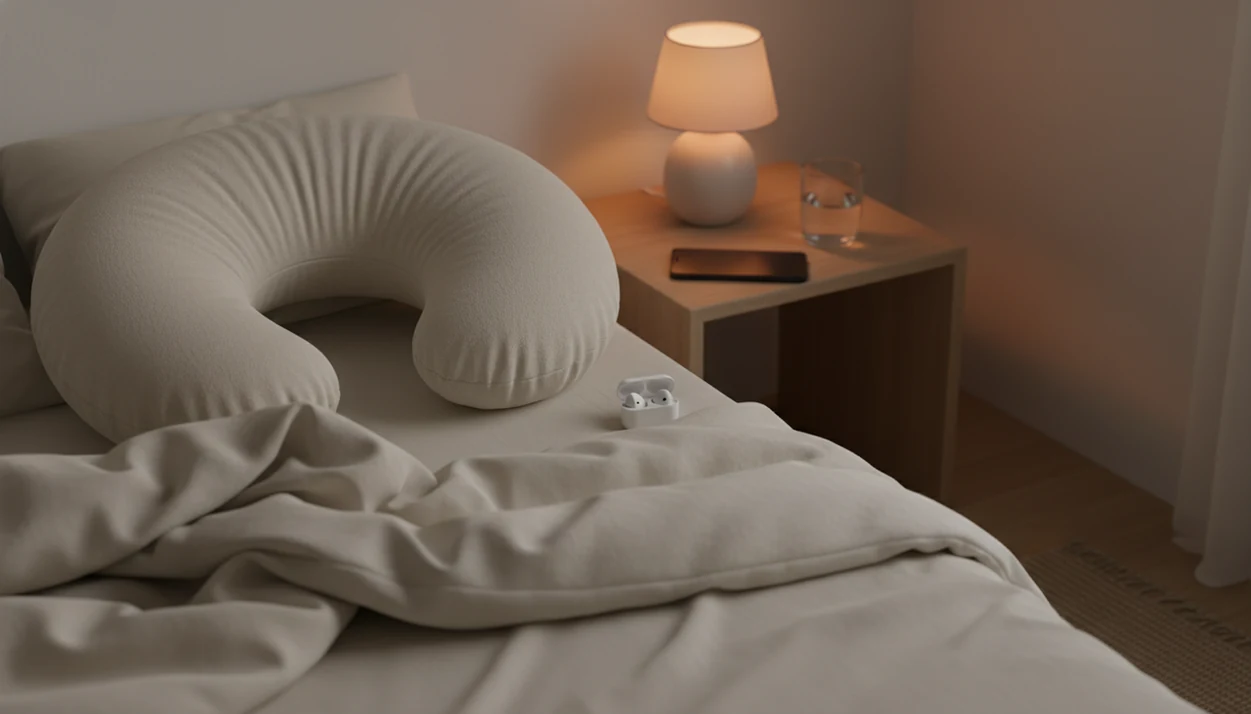
Keep the room cool, the volume low, and the light soft. Earbuds on a nightstand, one side slightly tangled around a charging cable, are fine if they help you start without searching.
For trimester-specific comfort ideas, meditation for pregnancy first trimester may be useful earlier in pregnancy.
Best For and Not For: Pregnancy Bedtime Meditation Fit
Pregnancy bedtime meditation fits people who want a repeatable calm routine, especially when thoughts get loud after the lights go off. It is not the right tool for urgent symptoms, diagnosis, or serious sleep and mood concerns that need professional care.
| Best for | Not for |
|---|---|
| Mental clutter at bedtime | Urgent medical symptoms |
| General nighttime calm | Severe ongoing sleep deprivation |
| Wanting the same routine nightly | Untreated mood symptoms |
| Preferring audio instead of screens | Loud snoring or breathing concerns |
| Needing a gentle transition to rest | Needing diagnosis or medical treatment |
The CDC notes that depression during and after pregnancy is common, and published estimates vary by population and measurement method (CDC guidance: index.html). That range is a reminder to keep bedtime calm tools supportive and honest. If worry feels intense or constant, pregnancy anxiety meditation support can be one gentle layer, but it should not replace a clinician, therapist, or emergency support.
For expecting parents with ordinary nighttime mental clutter, a short guided routine is often easier than silent meditation because there is less to decide in the dark.
Common Pregnancy Meditation Before Bed Mistakes
The most common pregnancy meditation before bed mistake is choosing audio that asks too much from a tired brain. A 35-minute track with dramatic music, layered imagery, or complex instructions can keep you engaged instead of sleepy.
Longer is not automatically better. Many listeners do better with one familiar 8-minute track repeated nightly. Boring can help here.
Not all meditation audio is pregnancy-friendly, either. Some cues mention lying flat, tightening the belly, visualizing intense scenes, or breathing in ways that feel uncomfortable. Skip those without overthinking it.
Practical fixes are simple: lower the volume, pick a shorter track, avoid complex visualizations, and repeat the same audio for several nights. If you use a pregnancy meditation app, save one bedtime track so you are not scanning playlist names under blankets.
MindTastik audio for a quieter pregnancy bedtime
MindTastik’s pregnancy sessions, breathing exercises, and guided meditation library offer options for a short bedtime routine. A gentle session with simple instructions may suit someone who prefers a voice to follow; sleep stories or soundscapes may suit someone who finds body-focused instructions distracting. Choose by the actual voice and pacing, not the label alone. Persistent insomnia or significant mood symptoms call for clinical assessment, not an app subscription.
What bedtime meditation cannot fix during pregnancy
Meditation before bed may support calm in pregnancy, but it has real limits. It should be treated as a supportive practice, not a sleep cure.
- Meditation may help you feel calmer, but it is not proven to fix pregnancy insomnia on its own.
- Pregnancy sleep can be affected by hormones, reflux, bathroom trips, discomfort, anxiety, snoring, and other factors meditation cannot remove.
- Results vary. Some people relax quickly, while others feel more aware of discomfort once the room gets quiet.
- Some guided audio is too stimulating for bedtime, especially if the voice is intense or the music keeps changing.
- A 2017 systematic review found improvements in anxiety and stress outcomes across pregnancy mindfulness studies, although evidence quality varied.
- Contact a healthcare professional for severe sleep loss, intense anxiety, depression symptoms, breathing concerns, safety concerns, or symptoms that feel unusual for you.
Clinicians typically recommend raising severe or persistent sleep, mood, or breathing concerns during pregnancy rather than relying on self-guided relaxation alone.
If hypnosis-style audio fits your goal better than mindfulness alone, start with MindTastik self-hypnosis sessions.
Pregnancy bedtime meditation questions
Is meditation before bed safe during pregnancy?
Gentle breathing, soft audio, and a comfortable body scan can be used as relaxation support during pregnancy. Avoid instructions that require forced breathing, breath holds, belly tightening, or an uncomfortable position. Follow any personal restrictions from a clinician, and stop a practice that feels distressing or physically uncomfortable.
How long should pregnancy meditation before bed last?
Start with 5 to 15 minutes. That is a practical routine length, not a proven treatment dose for insomnia. A shorter familiar recording may be easier to repeat on tired nights than a long visualization. There is no need to finish the track if moving, resting quietly, or stopping feels better.
Can bedtime meditation help pregnancy insomnia?
It may help with winding down, and trials of structured mindfulness programs show some improvement in pregnancy sleep. That does not mean a bedtime track will treat insomnia. Persistent sleep difficulty or substantial daytime impairment deserves clinical assessment. CBT-I has stronger behavioral treatment evidence for perinatal insomnia.
What position should I use for pregnancy bedtime meditation?
Use a comfortable position that follows any guidance from a clinician. Side-lying with support between the knees, under the belly, or behind the back may make listening easier. Stillness is not required. Change position when needed rather than following a recording’s instruction to lie flat or remain motionless.
Should I choose a body scan or pregnancy affirmations for sleep?
A brief body scan may suit physical tension, especially around the jaw and shoulders. Affirmations may suit a need for reassurance, provided the wording feels believable rather than sentimental. If attention to body sensations increases discomfort, choose simple narration or minimal-music audio instead. Neither format guarantees sleep.
When should pregnancy sleep problems be discussed with a clinician?
Seek assessment when sleep problems persist, cause severe fatigue or substantial daytime difficulty, or occur with depression, panic, loud snoring, or breathing concerns. Meditation should not delay care. Suicidal thoughts, psychosis, or immediate concerns about safety require urgent emergency evaluation rather than another attempt at relaxation.