
Partner Pregnancy Meditation Support for Calm, Connection, and Sleep
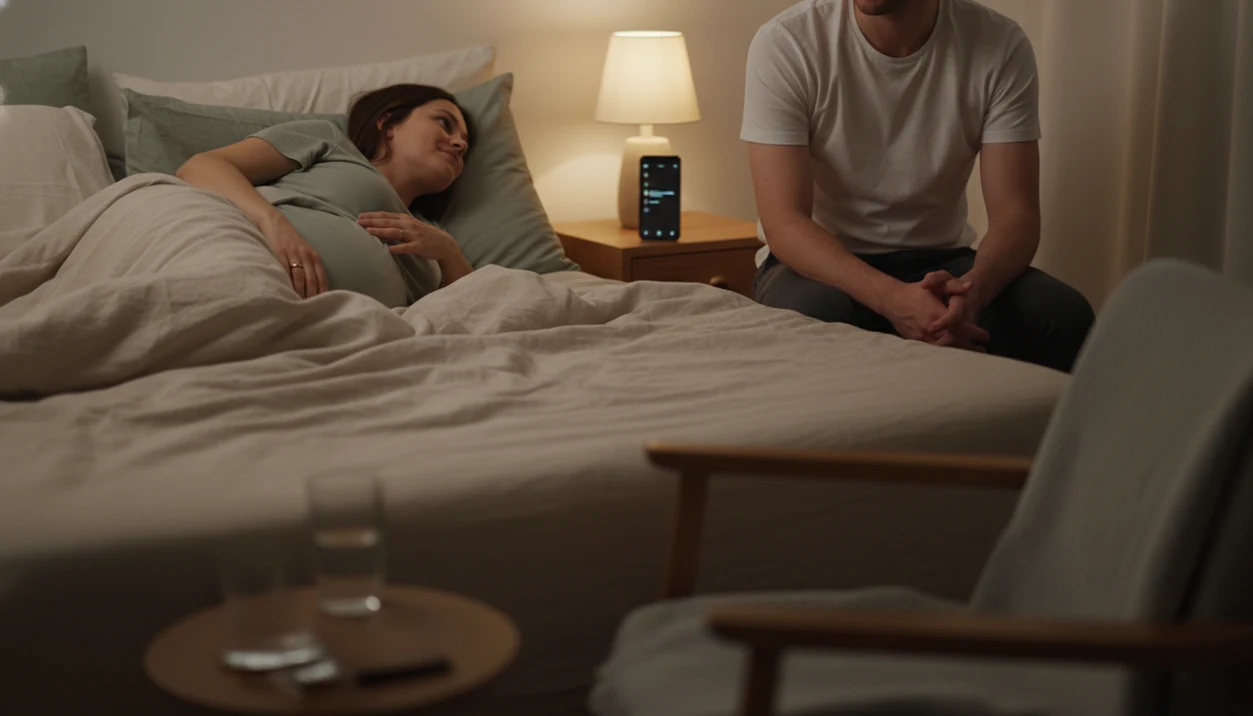


Partner pregnancy meditation support is a shared practice in which the pregnant person and their partner use guided meditation, gentle breathing, or relaxation audio for calm, connection, and bedtime support. Both people follow the same session, but they do not need to sit alike or match every breath. The partner’s role is to offer company, not instruction.
A short routine of 5 to 15 minutes can fit before sleep, after a stressful day, or before an appointment. Seated or side-lying positions with pillows keep comfort central, and either person can stop at any time. This is everyday support, not medical treatment, a childbirth class, or a promise of easier labor. Shared audio should remain optional, especially when quiet rest feels better.
The essentials
- Use short 5- to 15-minute couple sessions at bedtime, after stressful days, or before appointments.
- Choose comfortable pregnancy-safe positions, especially side-lying or seated options after the first trimester.
- A guided audio app can support the habit with meditation, sleep audio, breathing exercises, and gentle relaxation sessions for everyday calm.
Explore pregnancy and labour audio tools in our best hypnobirthing apps roundup.
When you want pregnancy info outside meditation alone, pregnancyapp.com is a useful companion. For daily movement tracking in later pregnancy, consider Baby Kicks App.
What partner pregnancy meditation support means for expecting couples
Partner pregnancy meditation support means both people follow the same guided audio, breath pattern, or visualization at the same time. It gives the partner an active role without asking them to become the “teacher” in the room.
In practice, pregnancy meditation for couples might happen before sleep, after a tense appointment, or during a quiet Sunday reset. One person may be side-lying with pillows; the other may sit nearby with a hand on the blanket. The point is shared attention, not performance.
It complements prenatal care and childbirth education, but it does not replace either. A guided session can help a couple talk about fear, rest, and support. It cannot check blood pressure, assess symptoms, or prepare every medical decision.
Small counts.
For couples who feel awkward starting, shared audio is often easier than silent meditation because neither partner has to invent the words.
Five facts about pregnancy meditation for couples
- Couple practice usually combines three tools: guided breathing, body relaxation, and visualization. The audio gives both partners the same pace to follow.
- Perinatal mindfulness research is encouraging: a 2022 review of a mindfulness mobile app trial notes reductions in depression, anxiety, and stress across related perinatal studies PMC research article: PMC9516517.
- Partner involvement matters: shared practice can help the non-pregnant partner feel included instead of waiting outside the emotional center of pregnancy.
- Short routines are more realistic: nausea, fatigue, back discomfort, and late-pregnancy restlessness often make 5 to 15 minutes more manageable than long sessions.
- Safety modifications matter: pregnancy guidance commonly advises avoiding flat-on-back positions and long breath holds from the second trimester onward babylist reference: pregnancy meditation.
A couple choosing between a 5-minute breathing exercise and a 20-minute body scan should usually start short. The repeatable routine wins more often than the ambitious one.
What the studies show, and what they do not show about couples
The findings depend partly on which studies are included. A 2016 review of 17 perinatal mindfulness studies found no significant overall post-treatment benefits in the more rigorous controlled studies. A 2025 review of nine randomized trials, involving 1,024 participants, found a significant reduction in anxiety, but effects on depression, stress, and mindfulness remained uncertain because results varied substantially. Neither finding establishes that practicing with a partner adds benefits beyond individual practice.
App use also needs a separate evidence check. A 2022 observational study of pregnant Calm subscribers described users and their meditation habits, rather than comparing randomly assigned groups. It cannot show that the app caused better sleep, less anxiety, stronger bonding, or improved pregnancy outcomes. For a couple choosing shared audio, the practical aim is a comfortable, repeatable pause, not a clinically proven effect on pregnancy or the baby. Research on mindfulness during pregnancy considers possible benefits for babies, but it does not establish added benefits from partner practice.
Before you start partner pregnancy meditation support
Before you start partner pregnancy meditation support, make sure the practice is wanted, comfortable, and easy to stop. The pregnant person’s preference leads the routine; shared audio is helpful only if it feels better than silence or simple rest.
- Ask first, even if meditation helped last night. Some days call for a guided voice together, and some days call for quiet, sleep, or no extra input at all.
- Choose a supported position, such as seated, side-lying, or reclined with pillows under the bump, knees, back, or shoulders. Comfort matters more than looking meditative.
- Keep it brief when nausea, fatigue, heartburn, pelvic pressure, or back discomfort is present. A 3-minute reset can still count.
- Avoid strain, including intense breathwork, long breath holds, forced deep breathing, or any pressure from the partner to finish the track.
- Stop promptly if there is severe pain, bleeding, reduced fetal movement, dizziness, faintness, shortness of breath that feels unusual, or distress that escalates. Contact a clinician when symptoms feel concerning or outside normal pregnancy patterns.
How partner breathing during pregnancy works
Partner breathing during pregnancy works by giving both people a shared attention anchor. The breath, guided voice, and body awareness cues tell the nervous system, “We are pausing now.”
The technical idea is co-regulation. In plain language, one calm rhythm can help the other person settle, especially when both partners know what comes next. A predictable routine also creates shared emotional language. “Let’s do the three-minute breathing track” is easier than “I don’t know what to do with this stress.”
The research base is stronger for perinatal mindfulness in general than for couple-specific meditation trials. That distinction matters. Clinicians typically recommend using meditation as a supportive practice alongside prenatal care, not as a way to prevent complications or control birth outcomes.
How to use guided meditation for expecting parents together
Guided meditation for expecting parents works best when the routine is simple enough to repeat on tired days. Don’t wait for the room to feel calm first.
- Set a realistic time, such as bedtime, after work, or before a prenatal appointment. If your routine includes coffee, consider decaf coffee while pregnant and check total caffeine intake with your prenatal clinician.
- Choose a short guided meditation, sleep audio, or breathing exercise, ideally 5 to 15 minutes.
- Adjust positions for comfort, using side-lying, seated, or pillow-supported options.
- Breathe gently together, without forcing deep breaths, breath retention, or intense breathwork.
- Close with one sentence each about what felt calming or difficult.
- Repeat the same routine for a week before changing the audio or timing. After birth, postpartum meditation support can help you adapt shared quiet time to changing routines and comfort needs.
The 2:13 a.m. lock-screen check is a real moment for many expecting parents. If sleep is the main issue, a dedicated pregnancy sleep meditation routine may fit better than a daytime focus track.
Common mistakes with partner pregnancy meditation
Common mistakes with partner pregnancy meditation usually come from trying too hard, going too long, or missing the pregnant person’s comfort cues. The safest routine is the one that stays gentle, adjustable, and easy to stop.
- Start shorter than you think, especially in the evening. A tired body may receive 5 minutes better than a 25-minute session that turns rest into another task.
- Treat breathing as support, not a skill test. If counting, syncing, or “doing it right” creates pressure, return to normal breathing and let the audio be a soft background.
- Change positions early, before discomfort builds. Once flat-on-back rest feels heavy, dizzying, breathless, or awkward, shift to side-lying, seated, or pillow-supported recline.
- Protect the quiet after the track, instead of turning the end into a long debrief. One sentence can be enough; sometimes silence is the more caring follow-up.
- Stop immediately when warning signs appear, including dizziness, distress, pain, overwhelm, faintness, or breathing that feels wrong. Pausing is not failure. It is part of making the practice safe.
Best pregnancy calm routine for partners by time of day
The best pregnancy calm routine for partners depends on when stress shows up. Use the shortest routine that matches the moment, then repeat it often enough to feel familiar.
| Time of day | Session length | Suggested audio type | Partner role |
|---|---|---|---|
| Bedtime | 10 to 15 minutes | Sleep meditation or body relaxation | Dim lights, start audio, stay nearby |
| After work | 5 to 8 minutes | Stress reset or breathing exercise | Put phones away and breathe together |
| Before appointment | 3 to 5 minutes | Gentle grounding meditation | Keep the pace slow and reassuring |
| Weekend connection | 10 to 20 minutes | Guided visualization or gratitude practice | Share one feeling after the session |
Apps such as Calm, Headspace, and pregnancy-focused audio libraries can help couples select short guided audio and reminders without turning the routine into another task. If anxiety before scans or appointments is the main pattern, pregnancy anxiety meditation support may offer a more targeted starting point.
Best for and not for partner pregnancy meditation support
Partner pregnancy meditation support is best for couples who want a low-pressure way to share calm. It is not the right tool for urgent symptoms, serious mood changes, or medical concerns.
| Best for | Not ideal for |
|---|---|
| ✓ A gentle bedtime wind-down routine | ✕ Severe pain, bleeding, or reduced fetal movement |
| ✓ Shared calm after stressful days | ✕ Severe anxiety, depression symptoms, or intrusive thoughts |
| ✓ Beginner-friendly partner breathing | ✕ Trauma-triggering practices without professional support |
| ✓ App-guided structure when neither person wants to lead | ✕ Couples who feel more stressed by guided audio |
| ✓ Repeatable support between prenatal visits | ✕ Replacing prenatal diagnosis, therapy, or medication |
That kind of app can support consistency, but it cannot provide prenatal diagnosis or therapy.
Pregnancy meditation positions and breathing safety for couples
Pregnancy meditation positions should favor comfort, circulation, and easy breathing. Side-lying, seated, or pillow-supported positions are usually better choices once lying flat becomes uncomfortable.
Guidance commonly advises avoiding supine flat-on-back positions and long breath holds from the second trimester onward. The NHS advises going to sleep on your side from 28 weeks because sleeping on the back late in pregnancy is associated with an increased risk of stillbirth. The reason is practical: the growing uterus can press on major blood vessels and affect comfort or blood flow. Gentle breathing is different from intense breathwork. Keep the breath natural, and stop if dizziness appears.
Stop the session and seek medical advice for severe pain, bleeding, reduced fetal movement, dizziness, faintness, or significant mood changes. Also stop if the practice brings up distress that feels too big to manage together.
For early pregnancy comfort, meditation for pregnancy first trimester may need different pacing than later pregnancy routines. Nausea days can be their own category.
Guided audio for pregnancy calm and bedtime support
Guided audio reduces the pressure on either partner to lead the meditation. That matters when both people are tired, unsure, or quietly anxious.
A useful app-based routine gives couples short sessions, bedtime sleep audio, breathing exercises, reminders, and repeatable tracks. The partner can press play, lower the volume, and stay present. Earbuds on a nightstand, one side slightly tangled around a charging cable, are often enough setup.
MindTastik can fit this role when couples want a familiar voice, simple categories, and short repeatable sessions. Pregnancy-related use should stay comfort-focused, calm, and complementary to prenatal care. For a broader app overview, the pregnancy meditation app guide compares ways to choose a starting point.
Image caption for partner pregnancy meditation support
An expecting couple uses guided audio for partner pregnancy meditation support during a short bedtime routine, with soft lighting, a dimmed phone screen, and comfortable side-lying or seated positions. The scene focuses on calm breathing, shared attention, and quiet connection before sleep, not medical care, labor preparation, or promised birth outcomes.
The partner sits close enough to hear the same audio. The pregnant person is supported with pillows and can change position at any time. Simple setup, low pressure.
Guided audio when neither partner wants to lead
MindTastik’s guided meditation library offers a starting point for couples who prefer following a recorded voice to giving each other instructions. Pregnancy sessions, gentle relaxation, and sleep stories can provide structure for a shared wind-down. The partner can handle the audio while the pregnant person chooses the position and pace.
Couples who find spoken guidance irritating may prefer silence or simple company. Anyone seeking labor instruction, treatment for persistent distress, or help with pregnancy symptoms needs childbirth education or clinical care rather than an audio session.
What partner meditation cannot promise during pregnancy
Partner pregnancy meditation support has real limits, and those limits should stay visible.
- There is limited high-quality research specifically on couple-based pregnancy meditation.
- Most evidence comes from broader perinatal mindfulness studies, not partner-specific trials.
- Meditation cannot prevent pregnancy complications or guarantee birth outcomes.
- Guided audio is not a substitute for prenatal care, emergency evaluation, therapy, or medication when needed.
- Some people find meditation uncomfortable, boring, emotionally activating, or physically difficult during pregnancy.
- Breathing exercises should stay gentle and should stop if dizziness, distress, pain, or discomfort appears.
- Couples should seek professional help for severe anxiety, depression symptoms, intrusive thoughts, or major relationship distress.
- A partner can support the routine, but they should not pressure the pregnant person to continue when rest, silence, or medical advice is needed.
If the practice starts feeling like another obligation, pause it. Support should feel supportive.
Labor-Ready Breathing
A five-minute shared practice can include one minute of gentle breathing together, three minutes of body scanning, and one minute of quiet rest. This can support familiarity with calm breathing without turning meditation into a rehearsal for a specific birth outcome. Labor-ready breathing works best when it feels like a shared signal for steadiness, not a performance test.
When shared audio, silence, or separate sessions fit better
- If partner prompts feel irritating, switch to guided audio and let the partner be present without speaking.
- If bedtime sessions keep turning into planning conversations, move the meditation earlier and keep sleep time protected. After birth, questions about soda while breastfeeding may also matter when reviewing caffeine habits alongside your family's sleep routines.
- If side-lying breath feels uncomfortable, adjust position or pause; comfort should guide the routine more than completion.
- If one partner wants silence and the other wants instruction, alternate nights rather than forcing one shared style.
- Meditation is not the best choice for urgent symptoms, medical concerns, or intense distress that needs professional support.
When you want audio-led suggestion rather than open meditation, MindTastik self-hypnosis sessions covers self-hypnosis sessions inside MindTastik.
Partner pregnancy meditation questions
How can a partner help with meditation during pregnancy?
A partner can ask whether company is wanted, start the audio, reduce distractions, and stay nearby without coaching. The pregnant person chooses the position, session length, and when to stop. Sharing a quiet pause matters more than matching breaths or completing the recording.
Do couples need to breathe at the same pace?
No. Both people can listen to the same guidance while breathing at their own comfortable pace. Trying to synchronize every breath can make the session feel like a task. Avoid forced deep breathing or breath holds, and return to ordinary breathing if counting creates pressure or discomfort.
What position is best for partner meditation during pregnancy?
Seated, side-lying, or pillow-supported positions can make shared practice more comfortable. The two partners do not need identical positions. The pregnant person can change position or stop whenever needed. Meditation should not require enduring back discomfort, pelvic pressure, dizziness, or difficulty breathing to finish a track.
How long should a shared pregnancy meditation last?
Five to 15 minutes is a practical starting range, not a required dose. A brief pause before an appointment may suit the day better than a longer bedtime session. During nausea, fatigue, or restlessness, shorten the practice or skip it. There is no need to make up missed sessions.
What if one partner dislikes guided meditation?
Shared meditation is optional. One person can listen while the other offers quiet company, or the couple can use separate sessions. If spoken prompts feel irritating, silence may be preferable. A useful support routine respects both people’s preferences rather than treating participation as proof of care or connection.
Can partner meditation help with pregnancy anxiety or sleep?
It may provide a calming pause or a bedtime routine, but specific benefits from partner-supported practice are not firmly established. General pregnancy mindfulness research has mixed findings, with some evidence for reduced anxiety. Persistent anxiety, panic, or distress that disrupts daily life needs clinical assessment, not just more meditation.
Can shared meditation replace childbirth classes or labor breathing instruction?
No. Shared meditation can make gentle breathing and relaxation more familiar, but it does not teach the full range of childbirth preparation or replace prenatal care. It also cannot guarantee easier labor or prevent complications. Couples seeking birth preparation should use childbirth education and guidance from their maternity care team.