


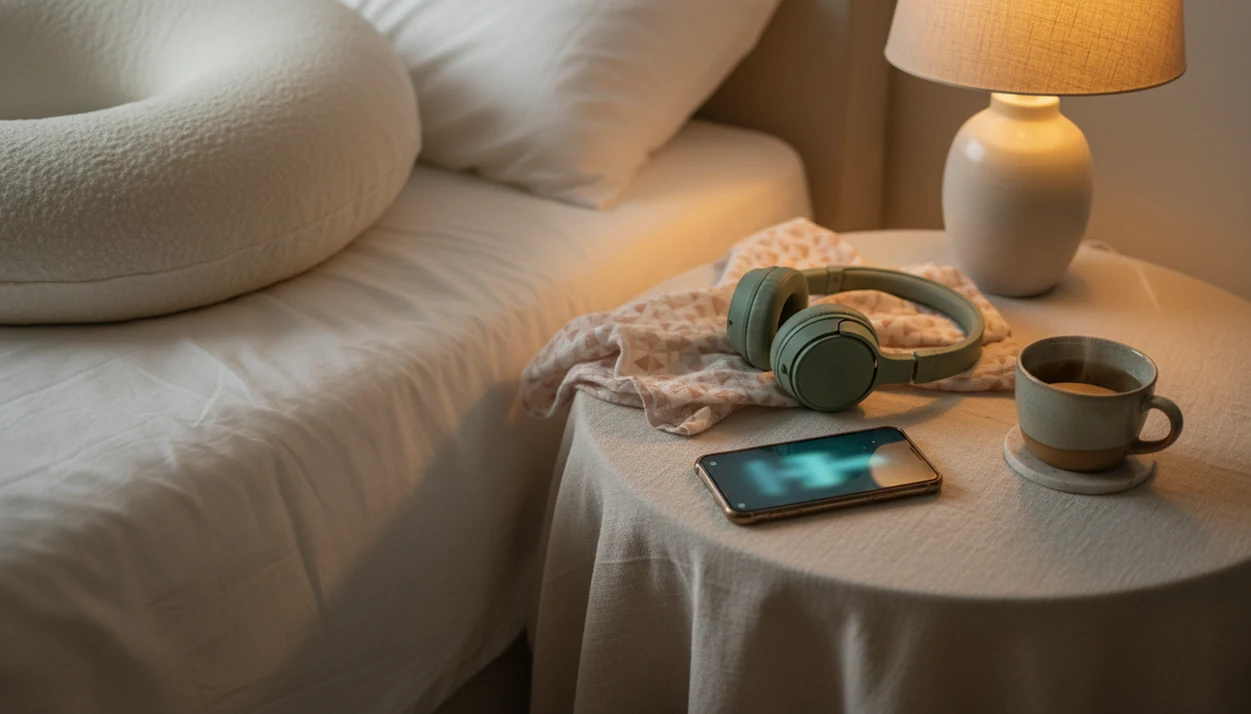
A meditation app for pregnancy calm provides guided audio, gentle breathing exercises, and relaxation sessions to support everyday stress management, sleep routines, and emotional wellbeing, without replacing prenatal medical care. The useful distinction is not how many tracks an app offers, but how comfortably its guidance fits pregnancy: manageable session lengths, reassuring language, and breathing cues that do not demand strain.
Choosing an app means checking both the audio and its limits. A quiet bedtime session may offer something simple to focus on, but it cannot diagnose anxiety or explain persistent sleep problems. Pregnancy-specific wording is helpful only when it comes with clear safety boundaries. The sections below compare practical features, explain the evidence, and identify when clinical support matters more than another recording.
What a Pregnancy Meditation App Actually Does
A pregnancy meditation app provides guided audio, breathing exercises, sleep sounds, and affirmations for everyday calm during pregnancy. It should support stress management and rest, not diagnose symptoms or replace prenatal treatment.
People often search for these apps when rest feels lighter, emotions sit near the surface, or the evening ends with a mind that will not settle. Pregnancy can make tomorrow’s appointment feel bigger once the room is quiet. A calm voice, a body pillow, and one gentle breath may help the night feel less crowded.
A 2024 U.S. survey found that 57% of adults meditate at least occasionally, according to Pew Research Pew Research report: meditation has grown in popularity in the u s. That matters because meditation is now a mainstream wellness habit, not a fringe practice. Good apps for sleep anxiety and everyday calm deliver repeatable cues, gentle structure, and lower stimulation, not medical certainty or birth outcome promises.
Pregnancy Meditation App Comparison Table: Key Features at a Glance
Use this table to compare whether an app is truly pregnancy-aware or simply offering general relaxation audio under a pregnancy search term. The difference shows up in session length, wording, breathing cues, and bedtime design.
| App | Session length | Sleep audio | AI personalization | Pregnancy-specific content | Breathing safety cues | Free vs. paid |
|---|---|---|---|---|---|---|
| MindTastik | Short to medium | Sleep-first guided audio | Mood, goal, and routine matching | Pregnancy calm can be paired with general sleep support | Gentle, low-intensity cues | Free and paid options may vary |
| Calm | Short to long | Strong general sleep library | Limited personalization | Mostly general meditation content | General breathing guidance | Free trial, paid library |
| Expectful | Pregnancy-focused | Pregnancy and postpartum sleep support | App-based recommendations | Dedicated pregnancy library | More pregnancy-aware framing | Paid emphasis |
| GentleBirth | Birth preparation focus | Some relaxation support | Program-based guidance | Pregnancy and labor content | Breathing and birth education focus | Paid emphasis |
For a broader category view, compare this page with a dedicated pregnancy meditation app guide before choosing.
How We Evaluated Pregnancy Meditation Apps
We evaluated pregnancy meditation apps by looking for pregnancy-aware support, gentle sleep design, and clear safety boundaries. The goal was to compare practical wellness tools without treating any app as medical care.
- Check the language for trimester-aware wording, reassuring tone, and visible reminders to seek clinical help for persistent anxiety, depression, panic, severe insomnia, or unusual symptoms.
- Review the sleep experience by weighing session length, bedtime friction, number of taps before playback, voice intensity, background sound, and whether the app works when someone is tired at night.
- Assess breathing cues for comfort and restraint, especially avoiding intense pacing, long breath holds, or instructions that may feel difficult later in pregnancy.
- Separate wellness from treatment claims by giving more trust to apps that describe calm, rest, and emotional support rather than promising to treat prenatal mental health conditions or improve birth outcomes.
- Compare the same criteria across MindTastik, Calm, Expectful, and GentleBirth so pregnancy-specific content, AI personalization, sleep audio, and pricing are judged consistently.
App availability, subscription pricing, free trials, and content libraries can change, so use this comparison as a decision framework rather than a permanent app-store snapshot.
Pregnancy mindfulness research is not proof that an app works
Research offers reasons to consider mindfulness as additional support, but results are mixed. A 2025 review of nine randomized trials involving 1,024 participants found a statistically significant reduction in anxiety. Effects on depression, stress, and mindfulness remained uncertain because studies varied substantially. An earlier pregnancy mindfulness review also found possible benefits, but pooled randomized-trial results did not consistently differ significantly from control groups.
Those findings do not establish that a particular consumer app produces the same effects. A 2022 study of pregnant Calm subscribers was observational, not a randomized comparison, so it could describe app use but could not show that the app caused better sleep, less anxiety, or improved pregnancy outcomes. The cited reviews also do not provide strong evidence for affirmations alone, partner-supported meditation, bonding, or nausea relief. Choose these features for comfort and preference, not promised maternal or infant benefits.
Five Things to Know Before Choosing a Guided Pregnancy Meditation App
- Short sessions are often easier to repeat. For pregnant users, a 5-minute breathing exercise may be more manageable than a 20-minute body scan, especially before bed or between appointments.
- Breathing cues should stay gentle. A pregnancy breathing app should avoid long breath holds or intense pacing. Late pregnancy can make deep breathing feel different, and comfort matters.
- The language should reassure without diagnosing. Helpful audio says, “notice what feels manageable.” It should not tell you it can treat prenatal anxiety, insomnia, or depression.
- AI personalization can reduce choice fatigue. An AI pregnancy meditation app may recommend sessions by mood, trimester, sleep goal, or available time. That is useful when you’re too tired to scroll through a library.
- Safety boundaries should be visible. The app should tell users when to talk to a clinician, especially for persistent low mood, panic, severe insomnia, or symptoms that feel unusual. For anxiety-focused routines, pregnancy anxiety meditation support can be a starting point, not a treatment plan.
How a Pregnancy Breathing App and AI Personalization Work
A pregnancy breathing app works by pairing voice guidance, pacing, and simple attention cues so the body has a repeatable signal to settle. The mechanism is not magic. It is structured downshifting: slower inputs, fewer decisions, and a predictable routine.
Breathing and Guided Audio Mechanisms
Guided audio uses voice tone, ambient sound, and careful pacing to ease stimulation before sleep. With a night light low and a water bottle nearby, a steady meditation track can make it easier to stay with rest instead of checking messages again.
Gentle breathing may support relaxation during pregnancy, but it should not be framed as treatment. A systematic review found mindfulness-based interventions in pregnancy were associated with reduced stress, anxiety, and depressive symptoms PubMed research: 28263057. One trial also found reduced fear of childbirth compared with usual care.
AI Session Matching for Pregnancy Calm
AI recommendation engines match sessions to inputs such as mood, time of day, trimester, and preferred length. If you choose “tired,” “third trimester,” and “10 minutes,” the app can surface a softer sleep session instead of an energizing focus practice.
For pregnant users, gentle session matching is often easier than browsing a large library because it removes one decision at the exact moment energy is low.
How to Use a Pregnancy Meditation App for Sleep and Everyday Calm
Use a pregnancy meditation app as a small routine, not a test you have to pass. The goal is repetition that feels safe, boring in a good way, and easy to restart.
- Set a nightly wind-down reminder 20 minutes before bed so the app opens before scrolling begins.
- Choose a guided sleep session or breathing exercise matched to your current trimester and energy level.
- Use a comfortable position such as side-lying or propped up, then start the audio with the screen dimmed.
- Log your mood or energy after each session so AI recommendations can improve future suggestions.
- Review weekly patterns and adjust session length, voice style, or content type as your pregnancy progresses.
Try this before bed.
If nighttime is the main concern, a focused pregnancy sleep meditation routine may be more useful than a general wellness playlist.
Best-For and Not-For: Who Benefits from an AI Pregnancy Meditation App
An AI pregnancy meditation app is best for expectant users who want sleep support, everyday calm, gentle affirmations, and simple bedtime routines. It can also help partners or support people share a short calming exercise without needing to know what to say.
Best for
- Expectant users who want a low-pressure wind-down routine
- People who like guided voice more than silent meditation
- Partners who want shared breathing or grounding audio
- Users comparing pregnancy meditation apps for practical daily sleep support, gentle breathing, and low-pressure calm routines
Not ideal for
- Moderate-to-severe prenatal anxiety, depression, panic, or insomnia
- Anyone seeking a replacement for therapy or prenatal appointments
- Users who feel worse during body scans, breathwork, or silence
The CDC reports that about 1 in 8 women with a recent live birth experience symptoms of postpartum depression CDC guidance: index.html. The WHO estimates anxiety disorders affected 301 million people globally in 2019 WHO report: anxiety disorders. Clinicians typically recommend professional support when symptoms are persistent, severe, or impair daily functioning. After birth, postpartum meditation support can offer a gentle wellness routine alongside any care recommended by your clinician.
What Competitors Miss About Pregnancy Meditation App for Sleep
Many pregnancy meditation comparisons list relaxing features but skip the safety boundaries that pregnant users actually need. A strong review should say when an app is enough for everyday calm, and when symptoms deserve a clinician.
Bedtime design is another gap. Audio length, voice brightness, background sound, and the number of taps before playback all matter when someone is tired. A guided session queued before the lights go out should not feel like managing another task.
Tools like Calm, Expectful, GentleBirth, and MindTastik can fit different needs, but the evaluation should be honest. For sleep-first use, look for gentle-voice guidance, low-tap bedtime playback, AI personalization, and explicit wellness-only framing. For first-trimester changes, meditation for pregnancy first trimester may need a different tone than late-pregnancy birth preparation.
MindTastik options for pregnancy calm and bedtime
MindTastik includes pregnancy sessions, guided meditations, breathing exercises, and soundscapes. Its sleep stories offer an alternative for evenings when following a narrative feels more manageable than focusing on the breath. These are wellness options, not treatments for prenatal anxiety or insomnia.
The library may suit someone who wants pregnancy content alongside general relaxation audio. Someone seeking treatment for persistent distress should start with a prenatal clinician, while someone seeking a structured childbirth course should check that a separate program covers those needs.
What pregnancy meditation apps cannot treat or promise
Meditation apps can support calm, but they are not proven substitutes for clinical care when a pregnant user has moderate-to-severe anxiety, depression, panic, or insomnia. That boundary should be easy to find inside the app and in any review of it.
- Meditation apps do not diagnose prenatal depression, anxiety disorders, insomnia, or medical complications.
- Claims about hypnobirthing, birth outcomes, or “calming the baby” are often stronger than the evidence supports.
- AI recommendations improve relevance, but they do not replace trimester-aware design or medical judgment.
- Some breathing exercises may feel uncomfortable late in pregnancy, especially those with long breath holds.
- App-store wellness language does not equal clinical validation.
- No app can replace a licensed prenatal care provider for diagnosis, treatment, medication decisions, or emergency support.
- If audio makes you feel more anxious, stop and choose a different support path.
For birth-specific breath practice, labor and birth breathing meditation should still be treated as support, not medical instruction.
Questions about pregnancy meditation apps
Are meditation apps safe to use during pregnancy?
Gentle meditation and relaxation can be used as supportive practices when comfortable, but a pregnancy label does not establish that every exercise suits every person. Look for low-pressure guidance and stop any exercise that feels uncomfortable. Ask a prenatal clinician about symptoms or individual restrictions rather than relying on app instructions.
Can a pregnancy meditation app help with sleep?
Guided audio can be part of a quiet wind-down routine and provide a simple focus at bedtime. However, the cited pregnancy research does not strongly establish that guided apps improve sleep specifically. Persistent or severe sleep problems deserve clinical advice, even if a recording makes evenings feel calmer.
Which breathing exercises should I choose during pregnancy?
Choose gentle breathing awareness that allows a comfortable, unforced rhythm rather than demanding long holds or intense pacing. Stop if the instructions feel uncomfortable. Breathing exercises are coping tools, not treatment for anxiety or a way to assess breathing symptoms. A prenatal clinician can advise on individual concerns.
Do pregnancy meditation apps need trimester-specific sessions?
Trimester-aware wording can make instructions more relevant as comfort and energy change, but it is not proof of effectiveness or safety. Check what the session actually asks participants to do. Gentle guidance, flexibility, and clear medical boundaries matter more than a trimester label on otherwise general relaxation audio.
Can meditation replace therapy for anxiety during pregnancy?
No. Meditation apps do not replace assessment or treatment for prenatal anxiety, depression, panic, or other mental health concerns. Research suggests possible benefits from mindfulness as additional support, with mixed results across studies. Persistent distress, difficulty functioning, or hopelessness calls for professional assessment rather than simply increasing meditation time.
When should I contact a doctor instead of using a calming app?
Contact a prenatal clinician when worry persists, panic occurs, sleep problems become severe, or distress interferes with daily functioning. Hopelessness, thoughts of self-harm, or concern about harming the baby require prompt professional assessment. Immediate safety concerns need urgent crisis help, not another meditation session.