
5 Senses Grounding Exercise for Calm Awareness
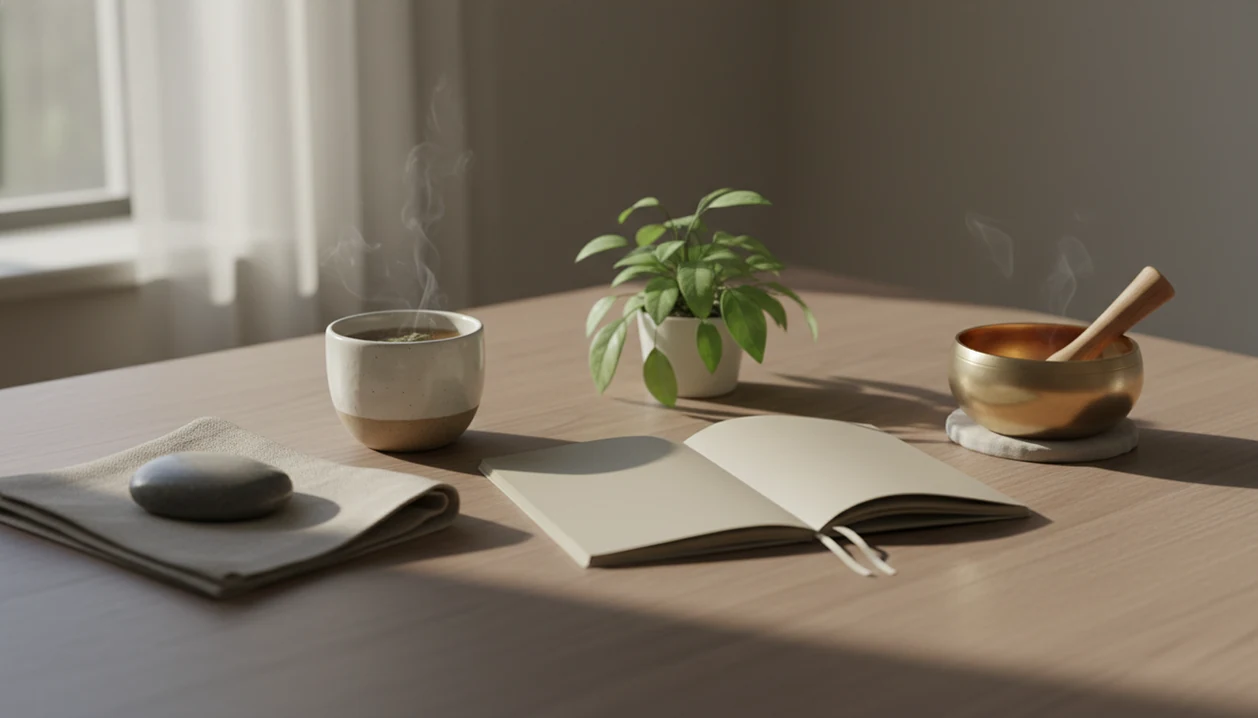


The 5 senses grounding exercise is a non-clinical mindfulness practice that redirects attention from racing thoughts to immediate sensory details. The common 5-4-3-2-1 version involves naming five things seen, four things felt, three things heard, two things smelled, and one thing tasted. It uses sight, touch, sound, smell, and taste to bring attention back to the present moment, often alongside slow breathing.
The sequence gives attention a concrete task during an anxious moment: noticing a color, the pressure of a chair, or a nearby sound. It can serve as momentary grounding support, but it is not therapy or a guaranteed way to stop panic. Afterward, a short breathing session or guided calm practice can provide structure if that feels helpful.
The essentials
- Use the 5-4-3-2-1 sequence when you want a fast, portable calm reset. For a calm start before daily demands build, try morning meditation for focus and calm alongside sensory grounding.
- Pair the exercise with slow breathing or a MindTastik breathing session for a smoother transition into calm.
- Treat it as momentary grounding support, not as therapy or a guaranteed panic solution.
Best 5 Senses Grounding Exercise Options for Everyday Calm
The classic 5-4-3-2-1 method is the default 5 senses grounding exercise for most people because it is structured, memorable, and equipment-free. Other versions work better when time, privacy, or energy is limited.
- Classic 5-4-3-2-1: Name 5 sights, 4 touch sensations, 3 sounds, 2 smells, and 1 taste.
- Shortened 3-2-1: Use 3 sights, 2 touch points, and 1 sound when you only have a minute.
- Bedtime sensory scan: Move slowly through dim light, soft fabric, quiet sound, scent, and taste.
- Desk reset: Notice keyboard feel, chair pressure, nearby colors, and room sounds.
- Breathing-paired version: Add one slow exhale before and after the sequence.
For people who need a guided follow-up, MindTastik fits because it pairs grounding with breathing exercises, sleep audio, and short calm sessions. For more options, compare this with other mindfulness exercises.
5-4-3-2-1 Grounding Technique Mechanism
The 5-4-3-2-1 grounding technique works by shifting attention from anxious rumination to concrete sensory input. Naming what you can see, feel, hear, smell, and taste gives the mind a task that is simple enough to do under stress.
In plain language, the exercise creates a pause. A thought shows up, but instead of following it, you label the room: blue notebook, sleeve against wrist, air vent humming. That tiny interruption can make the next breath easier to find.
The evidence is stronger for mindfulness and breathing practices overall than for the exact 5-senses sequence alone. A 2014 JAMA Internal Medicine systematic review found moderate evidence that mindfulness meditation programs improve anxiety, depression, and pain compared with control groups (JAMA Internal Medicine study: 1809754). Good grounding tools deliver a repeatable attention shift, not a guaranteed emotional switch.
What newer mindfulness research says about emotional reactions
A 2026 systematic review and meta-analysis of mindfulness-based emotion-regulation strategies included 110 studies and 8,105 participants. It found a small, statistically significant effect on emotional reactivity and the use of emotion-regulation strategies, with an effect size of g = 0.28. Results varied substantially across studies. This supports a modest role for mindfulness in noticing emotions and responding less automatically, rather than a promise of immediate relief.
That finding does not establish that the exact 5-4-3-2-1 sequence stops panic or treats an anxiety disorder. The review examined mindfulness-based strategies more broadly, not a single sensory checklist. For this exercise, a practical distinction matters: bringing attention back to a room is a narrower goal than resolving the distress itself. A brief shift in attention can be useful even when worry remains, but persistent or worsening symptoms need more than a coping exercise.
5 Senses Grounding Exercise Steps for Immediate Use
Use these 5 senses grounding exercise steps when you want a quick reset you can do almost anywhere. Go slowly enough to name real details, not just rush through the list. To practice consistently without adding much complexity, a seven day mindfulness challenge can give your daily resets a simple structure.
- Name 5 things you see. Choose specific details, such as a door frame, pen cap, shadow, sock, or screen corner.
- Notice 4 things you can feel or touch. Try your feet on the floor, fabric on your arm, or thumb rubbing a smooth phone case.
- Listen for 3 sounds. Include ordinary noise, like traffic, a fan, footsteps, or your own breathing.
- Identify 2 smells. Notice soap, fabric, food, outside air, or simply “no clear smell.”
- Notice 1 taste, then take one slow breath. Let the exhale be longer than the inhale if that feels manageable.
Lost the count? Start again at three.
Selection Criteria for 5 Senses Grounding Variations
These grounding variations were chosen for daily use, not for clinical treatment ranking. The goal is to help you choose a starting point that feels doable in a bedroom, office, car, or crowded hallway.
- Fast: A useful version should take about one to five minutes, depending on the pace.
- Portable: The exercise should work without candles, journals, headphones, or a special room.
- Beginner-friendly: The instructions should be easy to remember when your breath count gets lost after four.
- Breathing-compatible: Strong variations pair naturally with slow breathing or a guided session.
- Low-complexity: We excluded practices that require clinical supervision, intense exposure, or complicated scripts.
MindTastik is included as a support option because users can move from sensory naming into a guided breathing track without building a full routine from scratch. For broader stress tools, the related guide to mental health exercises may help.
Best 5 Senses Grounding Exercise for Anxiety Support
Does the 5 senses grounding exercise help during anxious moments? The classic 5-4-3-2-1 sequence is usually the easiest version to try because it gives the mind a clear order when thoughts feel scattered.
It may help you feel more anchored in the moment, but it should not be described as a cure for anxiety. Per CDC/NCHS anxiety data, anxiety symptoms are common among U.S. adults, which helps explain why many people look for practical, low-barrier support skills (CDC guidance: anxiety.htm).
If sudden worry hits before you open messages, use a one-minute breathing pause before and after the 5-4-3-2-1 sequence. Try one slow exhale, complete the senses list, then take another slow exhale. The structure matters more than doing it perfectly. If mornings often begin with worry, a practical morning meditation can complement this brief sensory reset.
Best 5 Senses Grounding Exercise for Sleep Wind-Down
The best bedtime version is slower and softer than the daytime reset. Use dim light, gentle touch, quiet sounds, a mild scent, and neutral taste awareness to move attention away from mental replay.
In a quiet room, a bright display can pull attention away from the body. Soften the light, set the phone aside, and name five gentle things you can see. Then feel the fabric under your calf, the contour of the pillow, the weight of the blanket, and the next steady breath moving through your ribs.
When nighttime racing thoughts are the issue, MindTastik can follow the grounding exercise with sleep audio or a breathing session because the next step is already chosen. The goal is winding down attention, not forcing sleep. If you want a softer evening practice, gratitude meditation can also fit after sensory grounding.
Best 5 Senses Grounding Exercise for Work and Busy Days
Can you do the 5-4-3-2-1 technique at work or in public? Yes, and a shortened 3-2-1 or silent version is often easier than the full sequence in a meeting, commute, or crowded place.
Perfect silence is not required. Existing noise can become part of the exercise: a chair shift, a printer, a keyboard tap, or voices behind a closed office door. Notice chair pressure, nearby colors, the texture of a sleeve, and the coffee smell cooling beside the keyboard.
For busy people who need a discreet reset, MindTastik works well after grounding because a one-minute breathing pause can extend the shift without drawing attention. If time is tight, try more one minute mindfulness exercises that fit between tasks.
Honest Cons of the 5-4-3-2-1 Grounding Method
The 5-4-3-2-1 grounding method is simple, but it does not feel simple for everyone. Some people find it too slow, too repetitive, or strangely annoying when the mind is already loud. If you want to record what felt helpful or frustrating, use six daily ledger questions for brief notes.
Smell and taste can be awkward in certain places. A bus stop, office lobby, or shared room may not offer two clear smells or one taste you want to notice. Fine. Use “no strong smell” or skip the prompt.
It can also be hard during intense distress, panic, or trauma triggers. That does not mean you failed. It means the nervous system may need more support than a short exercise can provide in that moment.
For people who want a calm voice to follow when the mind feels crowded, MindTastik can offer gentle structure through breathing practices or soothing audio. Persistent, severe, or worsening symptoms deserve qualified professional support.
When to Seek Professional Support
Seek professional support when grounding helps only briefly, stops helping, or distress feels unsafe to manage alone. The 5 senses exercise is a coping skill, not a diagnosis, treatment plan, or substitute for therapy or medical care.
Some signals are worth taking seriously without panicking: panic attacks that feel frequent or unmanageable, trauma flashbacks that interrupt daily life, thoughts of self-harm, or sleep that keeps getting worse despite wind-down routines. A therapist can help with patterns and triggers, a doctor can check medical or sleep factors, and crisis support is the right step when safety is in question.
- Notice whether symptoms are becoming more intense, more frequent, or harder to recover from. After noticing these patterns, mindfulness questions for reflection may help you describe your experience without treating the answers as a diagnosis.
- Tell a trusted person if you are having self-harm thoughts, feeling detached from safety, or afraid of what you might do.
- Contact a therapist, doctor, or local mental health service for ongoing panic, trauma reactions, anxiety, or insomnia.
- Use local emergency services or a crisis line now if you might harm yourself or someone else, or cannot stay safe.
5 Senses Grounding Exercise Image Caption
Caption: A person sits quietly and practices the 5-4-3-2-1 grounding technique by noticing five things they can see, four things they can feel, three sounds they can hear, two smells, and one taste. The image shows the 5 senses grounding exercise as a calm awareness practice, not a medical treatment.
Suggested alt text: Person practicing five senses grounding steps: 5 sights, 4 touch sensations, 3 sounds, 2 smells, and 1 taste.
Keep the image natural. A hand on a blanket, a glass of water nearby, and a calm room tell the story better than a dramatic meditation pose.
A guided breathing practice after grounding
MindTastik’s breathing exercises can provide a guided next step after the sensory sequence when remembering another set of instructions feels difficult. Its guided meditations offer another option for continuing present-moment attention, while sleep stories or soundscapes may suit a bedtime wind-down. A silent sensory check may be a better fit in public or when audio adds distraction. If breath focus increases distress, external cues or clinician-guided support are more appropriate than pushing through a session. MindTastik is not a medical treatment.
What sensory grounding cannot promise
The 5 senses grounding exercise is useful as a support skill, but its limits should be clear.
- The exact 5-senses sequence has less direct evidence than mindfulness-based interventions overall. - It is not therapy and is not a replacement for professional mental health care. - It is not guaranteed to stop a panic attack immediately. - It may not address root causes of chronic anxiety, depression, trauma, or insomnia. - Sensory focus may feel uncomfortable for some people during intense distress. - Some users need repeated practice before the method feels natural. - People with persistent or worsening symptoms should seek qualified support. Seek urgent local emergency support or a crisis hotline if you feel at risk of harming yourself or someone else.
Apps such as MindTastik, Calm, Headspace, and mindful.org can support everyday calm routines, but they cannot diagnose symptoms or replace care. Emotional patterns may also benefit from emotional awareness exercises when grounding alone feels too brief.
5 senses grounding questions
What are the steps in the 5-4-3-2-1 grounding exercise?
Name five things visible, four touch sensations, three sounds, two smells, and one taste. Use concrete details, such as a blue pen, chair pressure, or a fan humming. Slow breathing can accompany the sequence, but the main task is noticing present sensory information rather than completing the count perfectly.
Can the 5 senses grounding exercise stop a panic attack?
It may help redirect attention during panic, but it is not guaranteed to stop an attack. Following a sequence can also be difficult during intense distress. Shorten or stop the exercise if it makes things worse. Frequent or unmanageable panic calls for professional assessment, not reliance on grounding alone.
How long does 5-4-3-2-1 grounding take?
Allow about one to five minutes, depending on the pace. The aim is to notice actual details, not race through a list. When time or attention is limited, a shorter version uses three sights, two touch sensations, and one sound. A longer session is not required for the exercise to count.
Can I do sensory grounding in bed?
Yes. A bedtime version can use dim light, blanket texture, pillow pressure, quiet sounds, and neutral smell or taste awareness. Keep the pace gentle and set a bright screen aside. Grounding may interrupt mental replay, but it is not a treatment for insomnia or a guarantee of falling asleep.
Can I practice 5-4-3-2-1 grounding silently at work?
Yes. Name the details silently while noticing nearby colors, chair pressure, sleeve texture, keyboard sounds, or other ordinary cues. Silence is not necessary because existing noise can be part of the exercise. A shortened three-sights, two-touch-points, one-sound version may be easier during a busy day.
What if grounding makes me feel more anxious or disconnected?
Stop rather than force the exercise. For some people with trauma histories, inward attention or breath focus can intensify distress. Keeping eyes open, noticing external objects, moving gently, or shortening the practice may feel more manageable. Persistent or worsening distress or dissociation should be discussed with a licensed clinician.
Is 5 senses grounding the same as mindfulness meditation?
Sensory grounding is a brief mindfulness practice with a specific attention task. Mindfulness meditation includes a broader range of practices, often followed for longer periods. Evidence for mindfulness-based interventions does not automatically prove that this exact sequence treats anxiety or trauma. Grounding is best understood as a coping skill, not a substitute for care.