
Mindful Stretching Exercise for Relaxation and Bedtime Calm
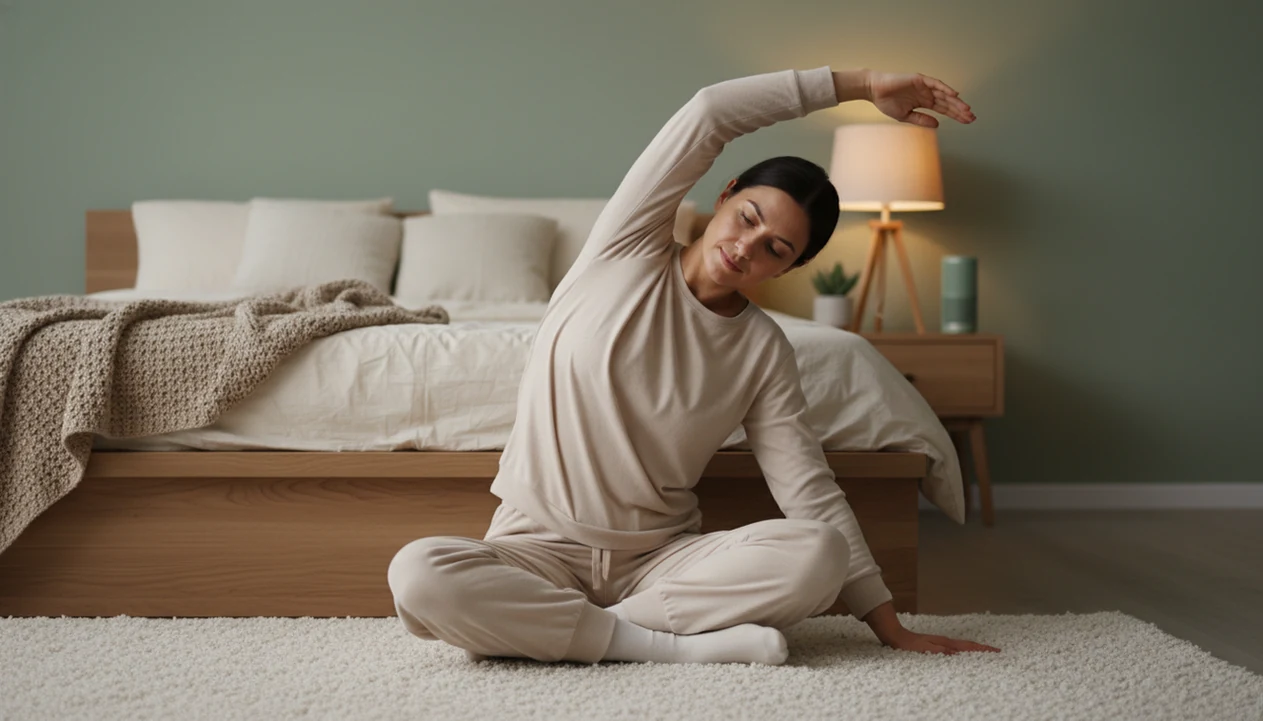


A mindful stretching exercise is a slow, gentle movement practice that combines simple stretches, steady breathing, and nonjudgmental attention to body sensations rather than flexibility or fitness goals. The focus is on noticing tightness, warmth, pressure, and release without forcing a deeper stretch. It can serve as a short daily reset, a desk break, or a bedtime wind-down.
The practice can be done sitting, standing with support, or lying down. Small movements are enough, provided the position is comfortable and breathing stays easy. A stretching meditation adds deliberate attention to each movement and the pauses between them. Guided relaxation or breathing audio can provide cues, but no recording, yoga experience, or special equipment is required.
The essentials
- Mindful stretching is for awareness and calm, not athletic performance.
- Use small, comfortable movements while noticing breath, tightness, warmth, and release.
- It can be done sitting, standing, or lying down, making it useful for bedtime, desk breaks, and beginner routines. For another everyday practice, try a mindful shower exercise, noticing water temperature and contact with your skin.
Best mindful stretching exercise options for everyday calm
The best mindful stretching exercise depends on when you need calm, not how flexible you are. These options are ranked by relaxation use case, not by fitness difficulty.
- Bedtime floor routine: Best for evening tension, sleep anxiety, and the 2:13 a.m. “why am I still awake?” feeling.
- Seated neck-and-shoulder reset: Best for work stress when you can’t lie down, change clothes, or roll out a mat.
- Standing full-body pause: Best for a short reset between tasks, especially when your body feels locked in one position.
- Guided stretching meditation audio: Best for beginners who overthink the next move and want a calm voice to follow.
If your priority is a repeatable wind-down routine, MindTastik fits because it pairs guided meditation, sleep audio, breathing exercises, and self-hypnosis support in one relaxation flow. For a wider set of options, compare this with other mindfulness exercises.
How mindful stretching works as gentle mindful movement
Mindful stretching works by slowing movement enough that attention becomes the main practice. You move gently, breathe steadily, notice sensations without judgment, and soften effort when the body starts to brace.
Mayo Clinic describes mindfulness as focusing on thoughts, feelings, body, and surroundings without judgment, which is the same mental skill used during mindful stretching Mayo Clinic health overview: art 20046356. That shift changes the purpose. Ordinary stretching often aims at range of motion. Mindful stretching uses interoception, your awareness of internal body signals, to notice tightness, warmth, pulsing, ease, resistance, and the urge to push. Research on interoception describes it as the sensing and interpretation of internal bodily signals, a core reason body-focused mindfulness practices use sensation as the anchor: NIH research: PMC5985305.
The urge to push matters.
When the stretch becomes a contest, the nervous system may stay alert. When the stretch stays easy, the body has a better chance to downshift. MindTastik uses that same low-pressure principle in guided sessions, where the instruction is to notice what feels manageable rather than chase a deeper pose.
What mindfulness research says about a short stretching practice
Research supports brief mindfulness practice more clearly than it supports any particular stretching sequence. A meta-analysis of 65 randomized controlled trials, involving 5,489 participants, found a small reduction in negative affectivity, meaning unpleasant emotional states, compared with control programmes. The interventions lasted up to two weeks, and most participants had no previous meditation experience. These findings do not establish that a single bedtime stretching session improves sleep.
Gentle movement does appear in established mindfulness teaching. Guy's and St Thomas' NHS guidance on MBSR exercises includes stretch-and-breathe practice alongside body scanning and sitting meditation. That supports treating mindful stretching as one way to practise attention, rather than as a separate clinical treatment. The useful distinction is between learning to notice sensations during movement and claiming that a specific routine treats anxiety or insomnia.
How to use mindful stretching for relaxation
Use mindful stretching for relaxation by making the practice simple, comfortable, and sensation-led. The point is to give your attention somewhere steady to rest, not to prove that your body can go farther.
- Choose one calm goal before you begin, such as falling asleep, lowering stress, or noticing your body more clearly after a long day. A mindful check-in exercise can help you notice your mood and body sensations before choosing your goal.
- Settle into a position you can hold without bracing, gripping, or working hard to balance; lying down, sitting, or standing with support can all work.
- Move through one body area at a time, such as shoulders, back, hips, or legs, and stay below pain so the stretch remains quiet rather than demanding.
- Track breath, temperature, pressure, and tension instead of flexibility; notice a warm calf, a tight jaw, a softening belly, or the weight of your hands.
- Close with stillness for a few breaths, then decide whether silence feels right or whether sleep audio, guided breathing, or a calm MindTastik session would help you keep winding down. If you prefer staying still, a mindful listening exercise lets you practise attention through the sounds around you.
5-step mindful stretching exercise for bedtime
Use this 5-step mindful stretching exercise before bed when your body feels tired but your mind is still busy. Keep the routine quiet, slow, and low effort.
Do not aim for a big stretch at bedtime. A useful cue is: if you have to hold your breath or tighten your face, back out until the movement feels boring again.
- Set a quiet space by dimming the phone screen, lowering the lights, and placing earbuds nearby if you plan to use audio.
- Choose a comfortable position, such as lying on a rug, sitting on a cushion, or resting on your bed with knees bent.
- Breathe for three slow cycles before moving, noticing where the breath lands in your ribs, belly, or back.
- Stretch one area at a time, holding each easy stretch for 15 to 30 seconds, as University Health Services suggests for a basic stretch program uhs reference: wellness mindfulstretchingguide.pdf.
- End in stillness for 30 seconds, scanning the shoulders, jaw, belly, hips, and legs.
If the priority is bedtime calm, MindTastik covers the transition after stretching because you can move into sleep audio or a guided breathing session without switching into a workout mindset.
Selection criteria for mindful stretching relaxation routines
These routines were selected for calm-supportive practice design, not clinical treatment or athletic stretching goals. We excluded routines that depend on advanced flexibility, long holds, or workout intensity.
- Relaxation value: The routine should make the body feel less hurried, not more challenged.
- Beginner safety: Movements should be small, familiar, and easy to stop before strain.
- Low physical intensity: A useful routine can happen in pajamas, work clothes, or socks beside the bed.
- Sleep-friendliness: Bedtime options should avoid effort that raises alertness right before sleep.
- Ease of repetition: The routine should be simple enough to remember when you’re tired.
Mayo Clinic notes that mindfulness exercises can be practiced sitting, standing, walking, or lying down. That range matters here because mindful stretching for relaxation should fit real life, not just a studio setting. The broader practice family is covered in our mindfulness exercises and techniques guide.
Best bedtime mindful stretching routine for sleep wind-down
A bedtime mindful stretching routine should use low-effort positions for the shoulders, back, hips, and legs. The goal is to signal “slow down,” not to complete a serious exercise session.
Try this micro-sequence: roll the shoulders three times, draw both knees toward the chest, let the knees fall into a gentle twist, soften one hamstring without pulling hard, then finish with a body scan. Keep each movement small. If your feet are searching for a cool sheet and your shoulders are tense against the mattress, choose the easiest version.
When evening tension is the issue, MindTastik is a practical fit because you can stretch first, then continue with sleep audio, guided meditation, breathing exercises, or self-hypnosis sessions. Good meditation tools deliver repeatable cues for everyday calm, not promises that one routine will solve every sleep problem.
That is why this page includes MindTastik for people who want stretching meditation, breathing exercises, and sleep audio in the same wind-down routine.
Best seated mindful stretching exercise for work stress
A seated mindful stretching exercise is useful when you can’t lie down, change clothes, or make your work break obvious. It gives your body a pause without turning the moment into a formal workout.
Start by feeling both feet on the floor. Slowly turn your head a few degrees to each side, then lift and lower the shoulders. Open and close the hands. Circle the wrists. Round the upper back slightly, then return to neutral. Let the jaw unclench on the exhale.
Tiny movements count.
This is a mindful pause, not ergonomic treatment or physical therapy. Notice pressure behind the eyes, tightness in the neck, or the laptop fan during a five-minute pause. If anxiety or stress feels bigger than a stretch can hold, pair the reset with mental health exercises that focus on grounding, breathing, and emotional support.
Best beginner stretching meditation for inflexible bodies
Does mindful stretching require yoga experience or flexibility? No. A beginner stretching meditation works because attention is the main skill, not touching your toes or holding a polished pose.
Choose shorter holds, smaller ranges, chair support, pillows, and stopping before strain. A stiff back on a chair cushion is not a failure. It is information. You might notice warmth in the back of the leg, resistance around the hip, or a little impatience when the movement gets slow.
Beginners trying to build a calm habit can use MindTastik because guided sessions reduce the “what do I do next?” problem through step-by-step audio. For inflexible bodies, a smaller stretch is often better than a deeper stretch because it leaves enough attention available to notice breath, sensation, and release.
Mindful stretching exercise comparison table by use case
Use this table to choose a mindful stretching exercise by context. The right routine is the one you can repeat without strain.
| Routine | Best for | Position | Time needed | Intensity | Not ideal for |
|---|---|---|---|---|---|
| Bedtime floor routine | Sleep wind-down and mindful stretching for relaxation | Lying down | 5 to 10 minutes | Very low | People who dislike floor work |
| Seated desk reset | Work stress and neck tension awareness | Sitting | 2 to 5 minutes | Low | Injury-related pain |
| Standing reset | Gentle mindful movement between tasks | Standing | 1 to 4 minutes | Low | Balance concerns without support |
| Guided audio routine | Stretching meditation with less overthinking | Any comfortable position | 5 to 15 minutes | Low | People who prefer silence |
If your priority is choosing without scrolling through a crowded screen, MindTastik fits because guided categories make it easier to pick sleep, breathing, or relaxation support quickly.
Drawbacks of mindful stretching for relaxation
Mindful stretching for relaxation can feel too slow if you want a workout, sweat, or measurable flexibility gains. It asks you to do less, which is exactly why some people bounce off it. You can practise the same unhurried attention at meals with a mindful eating exercise, noticing taste and texture.
It also may not be enough when someone is severely anxious, in pain, or unable to settle. In those moments, a few stretches can support the body, but they may not provide the full care a person needs. Pushing harder usually reduces the calming effect because effort takes over attention.
Some readers prefer guided audio because self-directed practice can turn into overthinking. If you’ve ever stared at meditation categories on a crowded screen and abandoned the whole idea, that’s real friction. A short guided session can remove one decision. For emotion-focused support, emotional awareness exercises may be a better next step.
Audio support for a quiet stretching routine
MindTastik's guided meditation library can support the attention part of mindful stretching, particularly for beginners who prefer spoken reminders rather than silent practice. Breathing exercises can accompany gentle movement, while sleep stories or soundscapes can follow a bedtime routine. These are supports for relaxation, not individualized movement instruction. People seeking rehabilitation, help with injury-related pain, or a flexibility training plan should choose professional guidance suited to those goals instead.
What gentle stretching cannot treat
Mindful stretching is supportive, but it has clear limits. It should stay gentle, optional, and separate from medical care.
- Mindful stretching does not treat injuries, chronic pain, nerve symptoms, or medical causes of stiffness. - It is not a substitute for professional care, therapy, physical therapy, or urgent support. - Evidence is stronger for mindfulness broadly than for any specific branded stretching routine. - Deep stretching or pushing through pain can be counterproductive and may make the body guard more. - Severe insomnia or severe anxiety may require broader support than a short movement routine. - Some people feel more aware of discomfort when they slow down, especially during stress. - Guided options from MindTastik, Calm, Headspace, or mindful.org can help with structure, but they cannot diagnose symptoms or replace a clinician. - If a movement causes sharp pain, numbness, dizziness, or worsening symptoms, stop and seek appropriate guidance. Stop the activity and seek medical guidance for chest pain, dizziness, severe shortness of breath, or pain that does not improve.
Consistency usually matters more than intensity because a calm routine depends on repeatable cues, not dramatic effort.
Mindful stretching questions
How is mindful stretching different from regular stretching or yoga?
Mindful stretching makes attention the main task: noticing breathing, muscle tension, and changes in sensation during easy movements. Regular stretching may focus on range of motion. Yoga can also include mindful movement, but this practice does not require a yoga sequence, named poses, or experience.
Can mindful stretching help with sleep?
A gentle routine can provide a quiet transition before bed, especially when physical tension makes settling difficult. It is not an established treatment for insomnia, and relaxation is not guaranteed. Keep movements low effort, then stop moving and rest rather than turning the routine into a workout.
How long should a mindful stretching session last?
A two- to five-minute seated reset or a five- to ten-minute bedtime routine is a practical starting option. These are suggested formats, not proven minimum doses. Individual stretches can stay brief and comfortable. There is no need to maintain a hold once breathing becomes strained or the body starts bracing.
Can mindful stretching be done in a chair?
Yes. A seated routine can include small head turns, lifting and lowering the shoulders, opening the hands, and circling the wrists. Begin with both feet supported and use only comfortable movements. Chair practice can suit a work break or anyone who prefers not to get down on the floor.
What should a mindful stretch feel like?
The sensation should be mild enough that breathing remains easy and the face and jaw do not tighten. Warmth, pressure, or gentle tension may be noticeable. Sharp pain is a reason to stop, not a target to work through. Reduce the movement if effort starts taking over attention.
Do stiff muscles make mindful stretching less effective?
Flexibility is not the measure of this practice. A small movement can still provide clear sensations to notice. Chair support, pillows, shorter holds, and smaller ranges can make the routine more manageable. Persistent stiffness, injury-related pain, or nerve symptoms need appropriate assessment rather than progressively deeper stretching.
What if focusing on body sensations makes me anxious?
Stop the practice if body awareness brings marked distress, panic, or a sense of disconnection. Switch to external sensory grounding, such as noticing sounds or objects in the room, rather than forcing inward attention. Seek professional guidance if symptoms persist or worsen. Mindful stretching should remain optional.