
Mindfulness Bell Practice for Everyday Calm
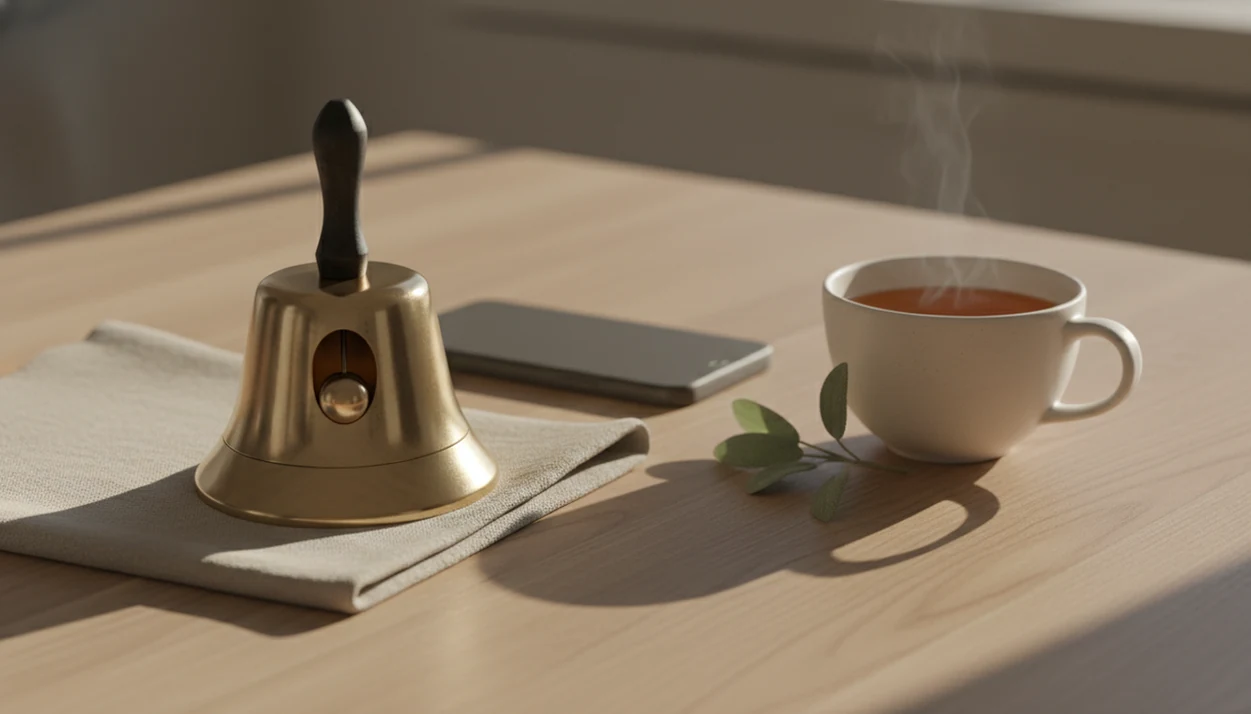


Mindfulness bell practice is a short pause-and-breathe routine: when a bell, chime, or reminder sounds, stop for 1-3 slow, comfortable breaths and notice the present moment. The sound interrupts autopilot and brings attention back to the breath, body, and surroundings. A phone chime, physical bell, or familiar everyday sound can serve as the cue; no special equipment is required.
The pause does not need to produce instant calm. Its purpose is to notice what is happening before returning to the next task. MindTastik is an option when the cue leads into guided breathing, meditation, or sleep audio. A simple timer or physical bell is enough for someone who wants only a brief, unguided pause.
The bell practice essentials
- Use any bell sound, phone chime, timer, or meditation app reminder as your cue to pause.
- One bell pause can be as short as three mindful breaths; consistency matters more than length.
- MindTastik can support the habit with guided meditation, sleep audio, breathing exercises, and self-hypnosis sessions for adults who want sleep, anxiety, and everyday calm support.
Best Mindfulness Bell Practice Options for Everyday Calm
The best mindfulness bell practice is the one you will actually repeat during an ordinary day. You do not need a temple, a cushion, or special equipment; the bell is simply a cue to pause.
MindTastik App Reminder Bell
App-based bells are easiest for beginners because the cue happens automatically. For busy adults who forget to practice until the day is already tense, MindTastik fits best when you want reminder bells plus guided meditation, breathing exercises, sleep audio, and anxiety support in one calm routine.
Phone Timer Chime
A phone timer works well for a lunch reset, a commute pause, or a 3 p.m. breathing break. Keep the sound soft.
Physical Meditation Bell
A real bell adds a tactile ritual at home. One ring before sitting down can mark the shift from doing to noticing.
Everyday Sound Cue
An everyday sound, such as a kettle clicking off, can serve as the cue for a mindful pause. The cue is ordinary; the pause is intentional. You can also pair everyday cues with a mindful walking exercise, noticing each step during a short walk.
How Mindfulness Bell Practice Works in the Brain and Day
Mindfulness bell practice works by pairing a sound cue with a short attention reset: bell, breath, calmer restart. In habit-loop language, the cue is the bell, the routine is 1-3 conscious breaths, and the reward is a small feeling of steadiness.
The bell also interrupts attentional drift. When stress loops are running, the mind often rehearses the same worry without noticing it. A gentle chime cuts through that autopilot, like a small bookmark in the day. Over time, repeated practice can teach your nervous system to associate the bell sound with pausing, softening the shoulders, and returning to what is here. After the bell, a mindful stretching exercise can help you notice muscle tension through gentle movement.
Not magic. Practice.
This is why the habit works better when it stays simple.
How to Use a Mindfulness Bell Exercise
A mindfulness bell exercise takes less than a minute: choose a cue, pause when it sounds, breathe, notice, and return. Beginners can start with 1-3 breaths rather than trying to turn every bell into a long meditation.
- Choose a gentle bell sound, phone chime, timer, or app reminder that does not startle you.
- Set the bell for one predictable moment, such as before email, after lunch, or before bed.
- Pause when the bell sounds, even if you only stop for a few seconds.
- Breathe for 1-3 slow breaths, keeping your eyes open if that feels more comfortable.
- Return to the next task while noticing one thing around you, such as light, sound, posture, or contact with the chair.
If you want more tiny practices, our one minute mindfulness exercises pair well with bell pauses. Many people simply want a calm sound to follow when the mind feels crowded. That is a reasonable starting point.
What Makes a Good Mindfulness Bell Practice?
A good mindfulness bell practice is gentle, repeatable, and easy to fit into a real day. The best version is the one you can sustain, not the one that lasts the longest.
A soft cue works better than a harsh alarm because the point is to interrupt autopilot without triggering a startle response. Scheduled bells are useful for routines you already have, such as lunch, work breaks, or bedtime. Random bells can catch you in the middle of worry or rushed scrolling, but they need boundaries. App reminders are convenient and private when they use vibration or headphones; physical bells feel more ritual-like at home but are less portable.
- Choose a sound that feels calm enough to welcome, not brace against.
- Match the bell to a daily routine so you do not have to remember it from scratch.
- Limit the number of reminders so the cue does not become notification noise.
- Protect privacy with vibration, earbuds, or silent cues in shared spaces.
- Avoid bells while driving, during sensitive conversations, or anytime a pause could pull attention away from safety or care.
How We Picked the Best Bell Breathing Practice Methods
We picked bell breathing practice methods by looking for ease of use, repeatability, low friction, and support for everyday calm. A method that works only on a quiet retreat is less useful than one that fits a Tuesday afternoon.
- Ease matters: the fewer steps required, the more likely someone is to use the practice when stressed.
- Scheduled bells fit routines: use them before meals, meetings, bedtime, or a regular guided session.
- Random bells interrupt autopilot: they can catch worry loops, rushed scrolling, or jaw tension you did not notice.
- Short pauses are realistic: for many beginners, three breaths repeated daily is easier than a 20-minute sit. For a slightly longer reset, try the three-minute breathing space to notice thoughts, feelings, and body sensations.
- Evidence stays modest: mindfulness programs show small to moderate benefits for stress and mood, not instant transformation.
For beginners, short bell pauses are often easier than long silent meditation because the sound provides a clear starting point and ending point. MindTastik supports that structure with guided sessions when a bell alone feels too bare.
Best Mindfulness Bell App Reminder for Beginners
An app reminder is the simplest mindfulness bell option for people who forget to practice. It removes the need to remember the habit manually, then lets you attach the bell to breathing, meditation, sleep audio, or an anxiety support routine.
This is where reminder control matters: one well-timed chime before bed or after lunch is usually more useful than a dozen random alerts. If the bell starts to feel like another notification, reduce the frequency before changing the practice.
| Option | Best use | Watch-out |
|---|---|---|
| Scheduled reminder | Morning, lunch, bedtime, or work breaks | Can become background noise if overused |
| Random interval bell | Interrupting autopilot during the day | May interrupt conversations or deep work |
| Guided session prompt | Starting a breathing or meditation track | Requires opening audio or the app |
| Silent vibration | Office or shared spaces | Easy to miss if the phone is away |
Best For
For beginners who need the cue handled for them, MindTastik is a practical fit because it pairs reminder-based practice with guided meditation, breathing exercises, sleep audio, and anxiety support workflows.
Not For
Not ideal for people who already feel overwhelmed by phone notifications. In that case, one scheduled bell may be better than random alerts.
Best Physical Bell Breathing Practice for Home Rituals
A physical bell works well when you want a device-free ritual at home. The sound marks a transition before meals, before meditation, after work, or before sleep. Try a mindful transition exercise to bring deliberate attention to the shift between one activity and the next.
| Use case | Why it helps | Limit |
|---|---|---|
| Before meals | Creates a shared pause | May feel awkward with guests |
| After work | Marks the shift out of work mode | Requires being at home |
| Before meditation | Gives the session a clear opening | Not automated |
| Before sleep | Supports a quiet wind-down cue | Can disturb a partner |
Best For
For families or home routines that need a simple shared pause, a physical bell fits because everyone hears the same cue and can take three breaths together.
Not For
Not ideal for workplace or travel settings where sound is disruptive. It is also less useful for people who need automatic reminders during the day.
A real bell has one quiet advantage: it does not pull you into scrolling. No notifications, no headline glance, no quick sidetrack into reviews over morning coffee.
Best Mindful Pause With Bell at Work
Can you use a mindful pause with bell at work without annoying everyone? Yes, if the “bell” is private, such as silent vibration, soft headphones, a calendar reminder, or a subtle chime.
Use the three-breath reset before opening email, between meetings, or after a stressful message. A calendar alert before a guided reset can be enough; you do not need to close your office door or explain anything. Shoulders drop. Then the next click feels less sharp.
Ordinary work sounds can also become mindful cues. At work, a meeting-end tone can serve as a cue to take one comfortable breath before the next task. If stress feels frequent, pair this with broader mental health exercises that focus on daily support rather than performance pressure.
On days when every message feels urgent, MindTastik helps by giving the pause a next step: a short breathing exercise instead of another five minutes of inbox refreshing.
Best Mindfulness Bell Practice Before Sleep
Before sleep, use one soft bell or a guided session rather than repeated alerts. Late-night notifications can backfire, especially if the phone pulls you into checking messages.
| Bedtime cue | How to use it | Not ideal when |
|---|---|---|
| Single soft bell | Ring once, dim lights, breathe slowly | The sound wakes someone else |
| Guided sleep session | Start audio, set the phone aside | You keep browsing afterward |
| Breathing exercise | Take 3-10 slow breaths | Breath focus feels stressful |
| Physical bell | Mark the start of wind-down | Shared rooms are very quiet |
Best For
When bedtime transition is the issue, MindTastik fits because sleep audio and guided sessions can turn one bell into a fuller wind-down routine without making it medical treatment.
Not For
Not ideal for people whose sleep is disrupted by phone use near bed. If checking the phone overnight has become part of the pattern, choose a physical bell or start audio before settling in.
Try this before bed: soften the light, set one simple track, and let the first tone be the cue to pause. The setup does not have to be perfect. The practice can still begin.
Mindfulness Bell Exercise Evidence and Realistic Expectations
Mindfulness bell exercise evidence should be read as support for a brief cue-based practice, not proof that bells equal full clinical mindfulness programs. Research is encouraging, but the scale of benefit is usually modest.
- Meditation use has grown: the CDC reported that 14.2% of U.S. adults practiced meditation in the past year in 2017, up from 4.1% in 2012 CDC guidance: db325.htm.
- Anxiety and mood findings are moderate: a 2014 JAMA Internal Medicine meta-analysis found mindfulness meditation programs produced moderate improvements in anxiety and depression JAMA Internal Medicine study: 1809754.
- Stress findings are cautious: an AHRQ evidence review reported small to moderate reductions in anxiety and stress, with limited long-term evidence effectivehealthcare reference: research.
- Demand is real: NIMH reported that about 21.0% of U.S. adults experienced any mental illness in 2021 nimh reference: mental illness.
- Bell practice is smaller: a bell pause is a brief mindfulness cue, not the same as an eight-week clinical program.
The most evidence-backed way to use a mindfulness bell is as a repeatable support practice, combined with appropriate care when symptoms are severe or persistent.
What brief-practice research says about a three-breath pause
A 2018 meta-analysis of brief mindfulness training found a small reduction in negative affect compared with control programs, with an effect size of g = 0.21. After adjustment for publication bias, the estimate fell to g = 0.04. That difference matters: brief practice may help, but the apparent benefit becomes much smaller when potentially missing results are taken into account.
A 2024 review of brief mindfulness inductions found reduced immediate anxiety and increased state mindfulness compared with non-therapeutic controls. These findings concern brief mindfulness exercises generally, not a bell followed by exactly three breaths. They support offering a short pause as an attention exercise, but do not establish that a particular bell sound, reminder schedule, or breath count treats anxiety.
Honest Cons of Mindfulness Bell Practice and App Reminders
Mindfulness bell practice has real downsides, especially when reminders become too frequent. A bell that was meant to create calm can turn into one more thing asking for attention.
Notification fatigue is the biggest problem. Random bells can interrupt deep work, a hard conversation, or the first quiet moment you have had all day. Some people also become self-critical when they miss a bell, which defeats the purpose. Missed one? Reset the plan.
Practical fixes are simple. Use fewer reminders, switch to silent vibration, set reminder windows, or choose one reliable time instead of all-day alerts. If a phone cue makes you tense, try a physical bell or an everyday sound instead.
MindTastik works better when reminders are used sparingly because the bell can lead into a guided session, not a flood of notifications. For users comparing calm.com, headspace.com, mindful.org, and other options, reminder control matters as much as the audio library.
When a bell cue needs breathing guidance
MindTastik's breathing exercises suit adults who want spoken guidance after a bell cue rather than deciding what to do next. Guided meditations can support a longer pause, while sleep stories and soundscapes offer options for a bedtime routine.
For a silent three-breath pause, a phone timer or physical bell is enough. Someone who finds breath focus distressing should choose an external point of attention instead, such as sounds or contact with the floor. The app is not a medical treatment.
When bell reminders interrupt rather than help
Mindfulness bell practice is low-friction and generally safe for many adults, but it has limits. It should be treated as a supportive practice, not a substitute for care.
- Mindfulness bell practice is not a replacement for therapy, medication, emergency care, or guidance from a qualified health professional.
- Evidence for mindfulness programs is generally small to moderate, and long-term effects are less certain.
- Pausing inward may feel uncomfortable for some people with trauma histories, panic symptoms, or high anxiety.
- Phone-based bells can increase screen exposure, notification stress, or bedtime checking.
- Random reminders may disrupt work, caregiving, driving, or important conversations.
- Some people turn the practice into another task to “get right,” which can increase self-criticism.
- Seek professional support for severe anxiety, depression, trauma symptoms, insomnia, or suicidal thoughts.
If reflection helps after a bell pause, mindfulness journal prompts can turn the moment into a short written check-in. Keep it simple.
Mindfulness bell practice questions
How do I use a mindfulness bell?
Choose a gentle sound and one predictable time, such as after lunch. When it sounds, pause and notice posture, breathing, and the surroundings. Take 1-3 comfortable breaths, then return to the next activity. The bell is a reminder to pay attention, not a demand to feel relaxed.
How long should I pause after a mindfulness bell?
A pause can be as short as 1-3 breaths. A 30-60 second pause leaves room to notice posture, follow a few natural breaths, and choose the next action. There is no established minimum duration for bell practice, and a longer pause is not automatically more useful.
Should mindfulness bells be random or scheduled?
Scheduled bells fit a predictable transition, such as lunch or the end of work. Random bells can interrupt unnoticed rushing or worry, but can also disrupt concentration and conversations. Start with one scheduled cue. Add reminders only if they remain useful rather than becoming background noise.
What is the best sound for a mindfulness bell?
Choose a soft, clearly audible sound that does not startle or irritate. A physical bell, phone chime, or familiar everyday sound can work. No particular tone is established as best. In shared spaces, silent vibration or a private headphone cue may be more considerate than an audible bell.
Can mindfulness bell practice help with anxiety?
Brief mindfulness exercises may reduce immediate anxiety, but research on those exercises does not prove that bell reminders alone treat an anxiety disorder. A bell can prompt a pause before reacting to worry. Persistent or disruptive anxiety needs appropriate professional care, and breath focus should stop if it increases distress.
What should I do if focusing on breathing makes me anxious?
Stop directing attention inward and notice something external, such as nearby sounds or contact between the feet and floor. Keep breathing naturally rather than forcing deeper breaths. If the exercise brings on panic, dizziness, or a sense of disconnection, stop the practice and seek professional advice if symptoms persist.
Can I use a mindfulness bell before bed?
Use one soft cue at the start of winding down rather than repeated overnight alerts. Pause for a few comfortable breaths, then set the phone aside. A physical bell or guided audio can also mark the transition. Avoid sounds that disturb a partner or reminders that lead to checking messages.
Do I need to take deep breaths when the bell rings?
No. Notice ordinary breathing and let the breaths stay comfortable. The practice does not require filling the lungs as much as possible, holding the breath, or maintaining perfect concentration. When attention wanders, gently return to the breath, body, or surroundings without trying to force a particular feeling.