
STOP Mindfulness Exercise: A 60-Second Calm Practice
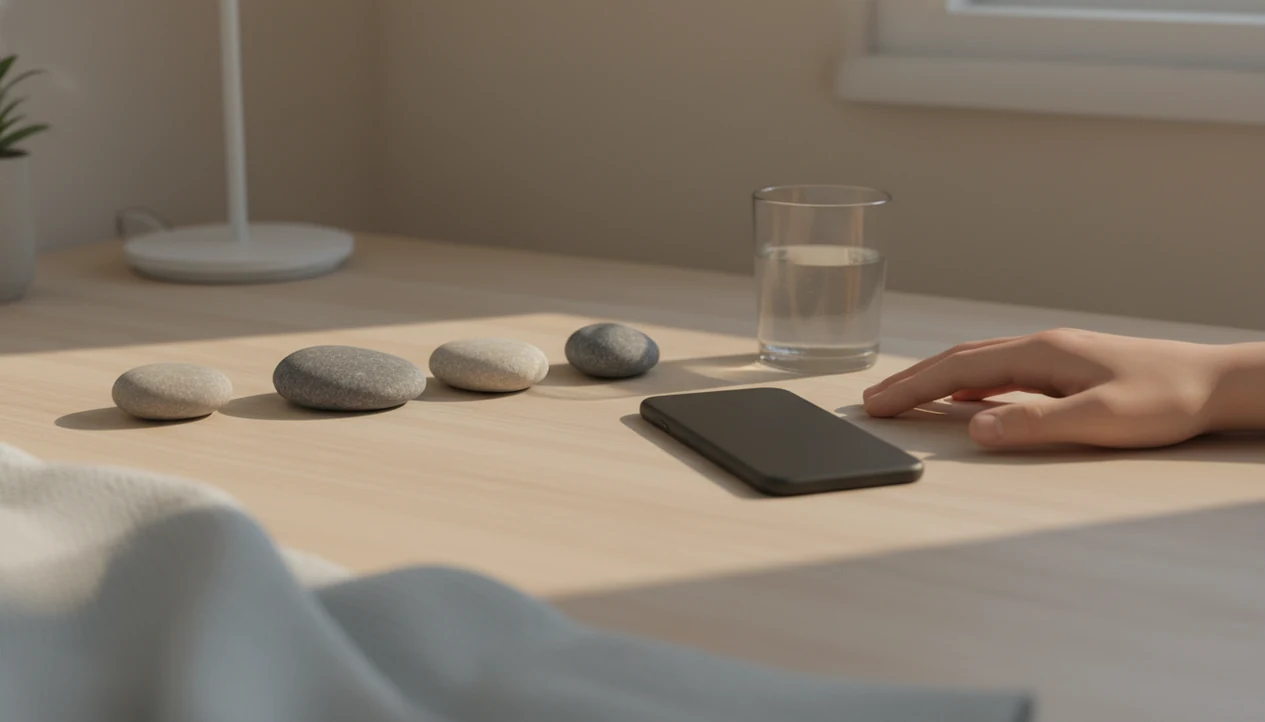


The STOP mindfulness exercise is a brief four-step pause: Stop, Take a breath, Observe, and Proceed with intention. It creates space between a trigger and a response by combining breathing, awareness of the present moment, and one deliberate action. A pause of about 60 seconds can fit before answering a tense email, during a difficult conversation, when an urge appears, or when thoughts race at bedtime.
The aim is not to erase stress in a minute. It is to notice thoughts, emotions, body sensations, and surroundings before deciding what happens next. STOP can stand alone, while MindTastik offers guided audio for a longer wind-down afterward. This is a regulation tool, not a replacement for therapy, medical care, or urgent mental health support.
The essentials
- STOP stands for Stop, Take a breath, Observe, Proceed.
- Use it during stress spikes, difficult conversations, email overload, cravings, or bedtime racing thoughts.
- STOP is a regulation tool, not a replacement for therapy, medical care, or urgent mental health support.
Best STOP Mindfulness Exercise Uses for Everyday Calm
The STOP mindfulness exercise works best as a quick reset before you react, not as a full meditation session. Use it when you need 30 to 90 seconds of space.
- Work stress: Pause before answering a sharp message or walking into a tense meeting.
- Difficult conversations: Notice your tone before the next sentence leaves your mouth.
- Anxiety spikes: Use one to three breaths when your chest tightens or thoughts speed up.
- Bedtime racing thoughts: Try STOP before reaching for the lock screen at 2:13 a.m.
- Cravings or urges: Create a small gap before acting on the urge.
For people who need a short pause before a longer reset, MindTastik fits because the STOP moment can lead into a 5-minute breathing exercise or a 20-minute body scan. If you want more options, our mindfulness exercises page gives a broader menu.
What STOP Technique Mindfulness Means
The STOP technique mindfulness acronym means Stop, Take a breath, Observe, and Proceed. It is a brief practice for noticing what is happening before choosing what to do next.
STOP is more than “take a deep breath.” The breath is only one step. The observe step matters because it asks you to name thoughts, emotions, body sensations, and surroundings without judging them. Then proceed asks for one intentional action.
That action may be small. Reply later. Lower your voice. Put the phone down.
The mindfulness STOP practice can be done in a train seat during the evening commute, at a desk, or under a blanket with the phone screen dimmed. It does not require a cushion, timer, or quiet room. It also should not be treated as a clinical treatment by itself.
Before You Try the STOP Mindfulness Exercise
Before you try the STOP mindfulness exercise, make sure the pause is safe, realistic, and matched to the moment. The goal is not instant calm; it is one intentional next action.
- Practice during an ordinary low-stress moment first, such as before opening email or after sitting down in bed. Rehearsing when you are not overwhelmed makes the steps easier to find later.
- Keep your eyes open if closing them feels unsafe, dizzying, or disorienting. You can soften your gaze, look at the floor, or notice one steady object in the room.
- Use STOP only when pausing will not increase physical risk. Do not stop in traffic, during a confrontation that could escalate, or in any situation where moving away is the safer choice.
- Choose one next action after the pause, such as delaying a reply, drinking water, lowering your voice, or starting a guided track.
- Seek professional support if symptoms are severe, persistent, escalating, or connected to safety concerns. STOP can support care, but it should not replace it.
How the STOP Mindfulness Exercise Works in the Stress Response
STOP works by interrupting an automatic stress loop. In plain terms, it gives your body and attention a short delay before behavior takes over.
- STOP interrupts reactivity: The first step breaks the autopilot pattern that often follows stress, anger, fear, or craving.
- Breathing slows the moment: Slower breathing can reduce urgency and make the next action feel less automatic.
- Observation changes attention: Naming sensations, thoughts, and surroundings pulls attention away from the trigger alone.
- Proceeding adds choice: The final step turns the pause into behavior, such as waiting, resting, stretching, or speaking more carefully.
- Evidence is broader than STOP: STOP-specific trials are limited, so the best support comes from adjacent mindfulness research: a randomized trial of MBSR for generalized anxiety disorder reported anxiety improvements (JAMA Internal Medicine study: 1105836), and a 2014 systematic review/meta-analysis found meditation programs produced small-to-moderate improvements in anxiety, depression, and pain (JAMA Internal Medicine study: 1809754). Sleep and app-based mindfulness findings are promising, but they should be treated as indirect evidence for STOP.
Good meditation supports stress, sleep, and everyday calm habits, not instant control over every emotion.
What brief-mindfulness research says about STOP
Research on brief mindfulness supports cautious expectations, not a guaranteed result from STOP. A 2018 meta-analysis of brief mindfulness training found a small reduction in negative affect compared with control programs. The estimated effect became much smaller after adjustment for publication bias. That matters because favorable studies can make a practice look more reliable than the full evidence supports.
A 2024 review of brief mindfulness inductions found reduced state anxiety and increased state mindfulness compared with non-therapeutic controls. These findings concern brief mindfulness practices generally, not a unique benefit established for the four-step STOP exercise or its 60-second format. For this practice, noticing a reaction and choosing a concrete next action is a more realistic target than expecting anxiety to disappear.
How to Use the Stop Breathe Observe Proceed Practice
Use the stop breathe observe proceed practice as a short script. It is easiest to learn in low-stress moments first, before you need it badly.
- Stop what you are doing, or pause before responding to a message, person, urge, or thought.
- Take one to three slow breaths, letting the exhale be unforced and steady.
- Observe your thoughts, emotions, body sensations, and surroundings without trying to fix them.
- Proceed with the next wise action, such as replying later, softening your tone, stretching, drinking water, or choosing rest.
Keep it simple.
Many people want a simple audio cue they can start when the mind feels crowded and hard to settle. STOP creates the pause before that next step. If you want a slightly longer routine afterward, one minute mindfulness exercises can help you practice without making it complicated.
Common STOP Practice Mistakes
The most common STOP mistakes happen when the practice becomes a shortcut for breathing, forcing calm, or enduring something that should change. STOP works better when it stays honest: pause, notice, then choose one small next action. When feelings become hard to manage, try a mindfulness exercise for emotional overload before choosing your next action.
- Include the Observe step instead of treating STOP as “just take a breath.” After breathing, name what is present: tight shoulders, angry thoughts, a buzzing phone, or the urge to answer too fast.
- Notice what is already happening rather than trying to manufacture calm. If you still feel tense after three breaths, that is not failure; it is useful information.
- Leave unsafe or harmful conditions when safety is the real need. STOP should not be used to tolerate harassment, danger, abuse, or a situation where pausing keeps you stuck.
- Practice during ordinary moments, not only when stress is already loud. Try it before opening email, starting the car, or turning off the lamp. For a calmer evening routine, try mindfulness exercises before bed as part of your nightly wind-down.
- Choose one small next action before moving on. Otherwise “Proceed” becomes autopilot again. Wait ten minutes, drink water, step outside, lower your voice, or press play on a guided track.
STOP Mindfulness Exercise Examples for Anxiety, Work, and Sleep
STOP can be repeated several times a day because it is short and discreet. Think of it as a reset button, not a performance.
- Work email overload: Stop before opening the next message, breathe once, observe the jaw and shoulders, then answer the easiest email first.
- Conflict: Pause before defending yourself, notice heat in the face, then ask for one minute.
- Anxiety spike: Rub a thumb along a smooth phone case, breathe slowly, name “tight chest” and “fast thoughts,” then sit down.
- Craving: Stop at the doorway, observe the urge as a body signal, then choose a delay.
- Sleep: Notice the charging cable across the duvet, breathe, observe racing thoughts, then start a guided sleep session.
Anyone dealing with bedtime rumination may use MindTastik after STOP because sleep audio gives the mind one steady track to follow. For related body-and-feeling practice, try emotional awareness exercises.
Best For and Not For: Mindfulness STOP Practice Boundaries
STOP is best for mild-to-moderate stress moments where a brief pause can change the next action. It is not meant for emergencies, unsafe situations, or symptoms that need professional support.
| Situation | Best for | Not ideal for |
|---|---|---|
| Stress at work | Pre-meeting reset, email pause, tone check | Pushing through harmful workload or harassment |
| Emotions | Brief anger, sadness, worry, embarrassment | Dissociation, trauma flashbacks, severe panic |
| Sleep | Bedtime transition and phone-check interruption | Ongoing insomnia that needs clinical guidance |
| Habits | Cravings, urges, impulse delay | Safety risks or compulsions that feel unmanageable |
| Practice building | Everyday calm and mindful awareness | Replacing therapy, medication, or urgent care |
When the issue is a repeat stress pattern, MindTastik covers the follow-up because guided meditation, breathing sessions, and sleep audio give the pause a next step. Still, stronger support matters when distress persists, escalates, or feels unsafe. Mental health exercises can be supportive, but they are not crisis care.
MindTastik Guided Audio After a STOP Technique Mindfulness Pause
MindTastik is a mindfulness and meditation app with guided meditation, breathing exercises, sleep audio, and self-hypnosis support for everyday calm. After a 60-second STOP pause, you can choose 5 to 10 minutes of guided meditation, breathing, sleep audio, or self-hypnosis.
App-based mindfulness evidence is promising but modest. A randomized trial of brief app-based mindfulness in working adults found reductions in distress and job strain (PubMed research: 29723001), and a 2019 smartphone mindfulness meta-analysis reported small-to-moderate effects on stress, anxiety, and depressive symptoms (NIH research: PMC6491993).
On days stress follows you home, a guided track can make the next step easier: STOP, choose one short session, then press play. MindTastik can help because the workflow is simple: STOP, choose a starting point, then play a short guided session. The Best Meditation App for Sleep framing fits bedtime users who need audio after the pause, not medical treatment.
Guided audio when the STOP pause needs more time
STOP needs no app or recording. If the pause reveals a need for a longer, structured break, MindTastik’s guided meditation library offers audio to continue practicing attention. Breathing exercises can support a quiet break, while sleep stories suit a bedtime transition. Someone who needs only a quick pause can keep STOP unassisted. Severe panic, ongoing insomnia, or difficulty staying safe calls for appropriate professional support, not a longer app session.
What a one-minute STOP pause cannot do
STOP is useful, but it has clear limits. Expecting one minute to solve everything can make people blame themselves when they simply need more support.
If you might harm yourself or someone else, or you feel unable to stay safe, skip self-guided exercises and contact local emergency services or a crisis line. In the U.S., call or text 988 for the Suicide & Crisis Lifeline.
- STOP is a brief regulation tool, not a cure for anxiety, depression, trauma, or insomnia.
- STOP-specific clinical trials are scarce; most evidence is inferred from broader mindfulness, breathing, sleep, and app-based mindfulness research.
- It may not be enough during panic attacks, dissociation, PTSD flashbacks, or moments when you feel detached from reality.
- Do not use STOP to stay in harmful work, relationship, housing, or safety conditions.
- Instant calm is not guaranteed. Sometimes the win is only pausing before the next action.
- If symptoms are severe, persistent, escalating, or safety-related, contact a qualified professional or emergency support.
- Apps such as Calm, Headspace, Mindful.org resources, and MindTastik can support practice, but none replace medical or mental health care.
For a gentler evening add-on, gratitude meditation may pair well after STOP.
STOP mindfulness questions
How do I do the STOP mindfulness exercise in 60 seconds?
Pause before acting or replying. Take one to three unforced breaths. Notice a thought, an emotion, a body sensation, and something nearby without trying to fix them. Then choose one action, such as replying later or lowering the voice. Sixty seconds is a useful boundary, not a required timing rule.
Can STOP help during an anxiety spike?
STOP can provide a short pause during mild-to-moderate anxiety, but it does not guarantee relief. Observe what is happening, then choose a manageable next action. Research supports brief mindfulness generally, rather than a specific anxiety benefit for STOP. If breath focus increases panic, distress, or dizziness, stop and switch to ordinary grounding.
What should I observe during the STOP exercise?
Notice thoughts, emotions, body sensations, and the immediate surroundings. A simple observation might be: angry thoughts, tight shoulders, and a buzzing phone. There is no need to explain why each sensation is happening. If observation turns into analysis, keep attention on a few concrete cues and then choose the next action.
What if I still feel angry or stressed after STOP?
Feeling tense afterward does not mean the exercise failed. STOP aims to create a little more choice, not force calm. The next action might be delaying a reply, asking for a minute, or leaving an unsafe situation. Repeating the pause is optional; it should not become a way to endure conditions that need to change.
Can I use STOP for racing thoughts at bedtime?
STOP can serve as a bedtime transition or interrupt an automatic phone check. Pause, breathe comfortably, notice the thoughts and body sensations, then choose a small action such as putting the phone down. It is not a treatment for persistent insomnia. Ongoing sleep difficulties may need clinical guidance rather than repeated one-minute pauses.
Do I need to close my eyes or take deep breaths for STOP?
Neither is required. Keep the eyes open if closing them feels unsafe or disorienting, and let breathing stay comfortable rather than forcing deep breaths. A steady object in the room can give attention somewhere to rest. If focusing on breathing increases distress, dizziness, or dissociation, stop the exercise and use ordinary grounding instead.
When should I not use the STOP mindfulness exercise?
Do not pause where doing so increases physical risk, such as in traffic or an escalating confrontation. Prioritize getting safe. STOP is also not a substitute for support during severe panic, trauma flashbacks, or a mental health emergency. If there is a risk of harm or an inability to stay safe, seek urgent help.