
Yoga Poses for Meditation: Comfortable Positions for Sleep, Anxiety, and Focus
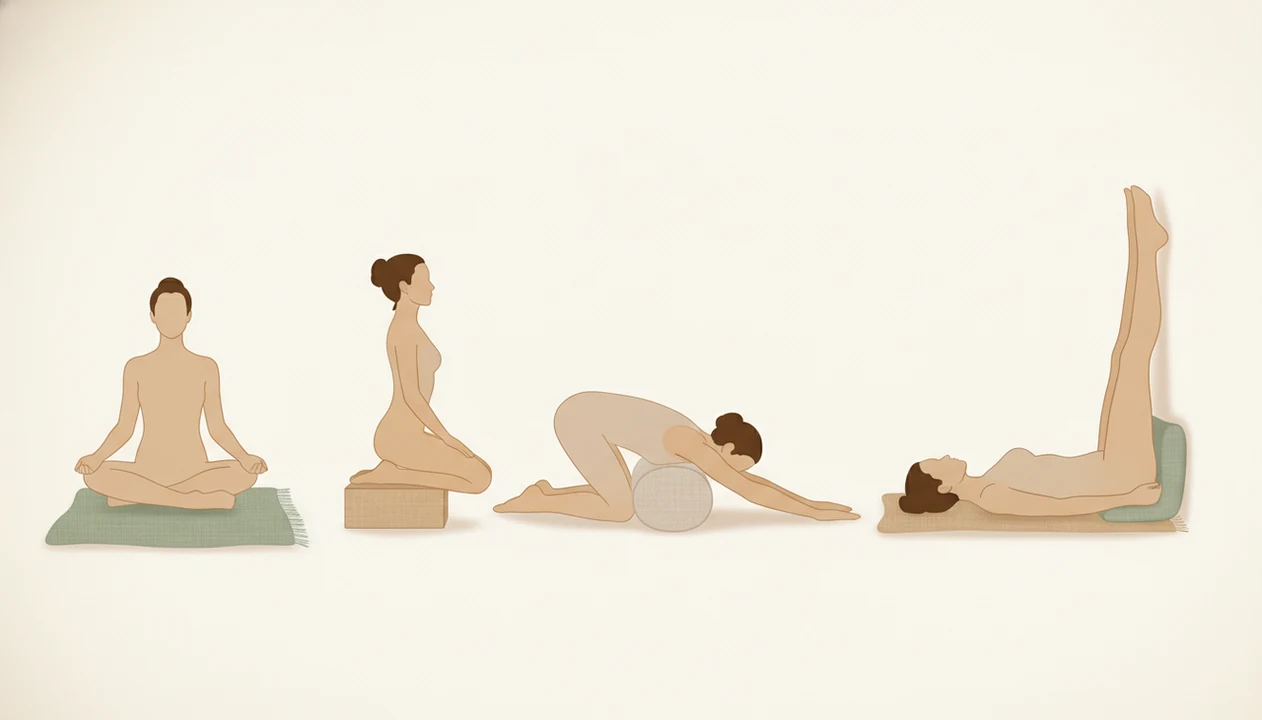


The best yoga poses for meditation are stable, comfortable positions that reduce physical tension and make stillness easier. Easy Pose, Hero Pose, Child’s Pose, Legs Up the Wall, and Savasana are useful starting points, not a required sequence. These seated, kneeling, folded, or reclined positions should allow relaxed breathing without pain or constant effort.
Cushions, blocks, blankets, and a wall can support the hips, knees, back, or legs so attention is less occupied by discomfort. Upright positions suit alert focus; folded or reclined positions can suit calming practice; supported rest suits sleep preparation. The useful choice is the low-effort pose that stays comfortable, not the most advanced shape or the one that looks most traditional.
The essentials
- Choose low-effort poses that support stillness, not advanced shapes that create strain.
- Use props under the hips, knees, back, or legs so posture feels steady and breathable.
- Match the pose to the goal: upright for focus, folded or reclined for calm, and supported rest for sleep preparation.
5 best yoga poses for meditation at a glance
The most useful yoga poses for meditation are the ones you can hold without pain, bracing, or constant fidgeting. If your knees complain after 90 seconds, that pose is not “better” because it looks traditional.
| Pose | Position type | Best for | Prop tip |
|---|---|---|---|
| Easy Pose | Seated cross-legged | Beginner comfort, breath awareness | Sit on a folded blanket so knees drop lower than hips |
| Hero Pose | Kneeling seated | Focus, upright posture | Place a block or cushion between the heels |
| Child’s Pose | Folded kneeling | Decompression, anxiety support | Put a bolster under chest or forehead |
| Legs Up the Wall | Reclined supported | Evening calm, tired legs | Keep hips a few inches from the wall |
| Savasana | Reclined rest | Sleep preparation, body scan | Place a cushion under knees |
For many beginners, Easy Pose with support works better than chasing lotus. The real test is boring but useful: can you breathe, soften your jaw, and stay there? For men exploring a comfortable starting practice, mindfulness for men offers context beyond choosing a seated pose.
Body mechanics behind yoga poses for meditation
Yoga poses for meditation work by reducing avoidable body noise, so the mind has fewer physical interruptions to track. A stable base, relaxed breathing, and lower muscle tension make it easier to return attention to the breath.
Posture matters because the body keeps sending signals. A slumped spine may make breathing feel shallow. A forced upright spine may create jaw, back, or hip tension. The middle path is a long but relaxed spine, supported hips, and enough softness in the belly to let the breath move.
Yoga poses for meditation work when the position is steady enough to reduce repeated micro-adjustments; in plain terms, you stop negotiating with your knees every few seconds.
Research supports cautious expectations. A 2014 JAMA Internal Medicine review found moderate evidence that meditation programs reduce anxiety symptoms (JAMA Internal Medicine study: 1809754), and a 2018 Frontiers in Psychiatry review reported small-to-moderate anxiety symptom reductions from yoga interventions (frontiersin reference). That does not mean a pose treats anxiety, pain, or insomnia by itself.
5 setup steps for yoga poses before meditation
Use this five-step setup before meditation so the pose supports the practice instead of becoming the practice. Keep it simple, especially if you are choosing between a 5-minute breathing exercise and a 20-minute body scan in an app library.
- Set the space by clearing the floor, dimming the phone screen, and placing your timer or guided audio within reach.
- Choose one pose based on your goal: seated for focus, folded for decompression, reclined for sleep preparation.
- Support your body with a cushion, blanket, wall, block, or bolster before discomfort starts.
- Breathe for three slow rounds and notice whether your ribs, belly, and shoulders can soften.
- Adjust early if you feel sharp pain, numbness, dizziness, or strain.
Tools like MindTastik can pair the pose with guided meditation, sleep audio, breathing exercises, or self-hypnosis sessions.
Yoga poses for meditation by sleep, anxiety, and focus goals
Match the pose to the job you want it to do. Upright poses tend to support alert attention, while folded or reclined poses often feel more useful when the body needs a downshift.
For focus meditation
Easy Pose and Hero Pose are good starting points for focus meditation because they keep the spine upright without requiring balance. For breath awareness, an upright seated posture usually works best when the hips are supported and the shoulders can relax. The steady attention practiced in an upright seat can also support mindful active listening during everyday conversations.
For anxiety support
Child’s Pose and Legs Up the Wall can help create a short reset when the body feels keyed up. Picture fingers tracing a jacket zipper before practice, then settling the arms down once the pose feels safe.
For sleep preparation
Savasana fits body scan meditation, bedtime audio, and quiet wind-down routines. MindTastik can support these positions with guided sessions for sleep, anxiety, and everyday calm, but it should not replace therapy, medication, or urgent care. If you want a related nighttime method, progressive muscle relaxation for sleep pairs well with Savasana.
When stillness or body attention feels overwhelming
A comfortable pose does not make inward attention suitable for everyone. During anxiety or trauma-related distress, focusing closely on bodily sensations may feel overwhelming rather than calming. A 2022 review of body-scan meditation found low-quality, varied evidence and limited support for broader health benefits. It does not establish that a body scan is the right next step after every yoga pose, or that body-focused practice is universally helpful.
Practical adaptations include keeping the eyes open or using a soft gaze, looking around the room, and choosing an external anchor such as a sound instead of the breath or bodily sensations. A shorter practice with permission to move can be more manageable than prolonged stillness. These are safety adaptations, not proven treatments for trauma. If sensations become overwhelming, stop the practice rather than treating endurance as progress. If inward focus feels uncomfortable, mindful listening practice offers a way to notice sounds around you instead.
Cushion and blanket tips for yoga poses for meditation
Props are not cheating. They often make meditation more effective because they reduce the strain that pulls attention away from the guided session.
- A folded blanket under the hips can help the pelvis tilt forward, which makes Easy Pose less effortful.
- A cushion under the knees can reduce lower-back pull in Savasana or seated practice.
- Wall support can make Legs Up the Wall feel steady without forcing the hamstrings.
- A bolster under the back, chest, or legs can make restorative poses feel less exposed.
- Sharp pain, tingling, or numbness means change the pose; do not “breathe through” warning signs.
Image caption guidance: supported seated yoga poses for meditation with a cushion under the hips, relaxed shoulders, and an upright spine.
A quiet room, a rolled blanket, and a phone set to soft guided audio. That can be enough to ease into a meditation posture.
Common mistakes with yoga poses for meditation
The biggest mistakes are choosing a pose for how it looks, ignoring body signals, and starting before the setup is ready. A meditation pose should make attention easier, not turn into a contest with your hips, knees, or sleepiness. When posture becomes frustrating, learning how to be more compassionate can help you respond to yourself with less criticism.
- Skip full lotus or deep hip rotation unless it already feels natural and pain-free. Traditional-looking does not mean safer or more meditative.
- Raise your seat if your knees hover high or your hips grip. A folded blanket can change the whole practice by giving the pelvis room to settle.
- Stop when numbness, tingling, dizziness, or sharp joint pain appears. Change position, add support, or end the session rather than trying to outlast symptoms.
- Choose an upright pose when the goal is alert focus. Savasana and other reclined shapes can be perfect at bedtime, but they may invite sleep during concentration practice.
- Place props, water, earbuds, and guided audio within easy reach before pressing play. Starting, pausing, and searching for a cushion can make the body feel rushed before meditation even begins. Away from the mat, mindful driving applies attentive awareness to everyday travel, without closing your eyes or using distracting audio.
Best for and not for: yoga poses for meditation
Yoga poses for meditation are best for people who need a physical bridge into stillness. They are not ideal when a position creates pain, pressure, or symptoms that need professional guidance.
| Best for | Not ideal for |
|---|---|
| Beginners who want a clear starting position | People with sharp pain in knees, hips, ankles, back, or neck |
| People who fidget during meditation | Anyone with numbness, dizziness, or nerve-like symptoms |
| Adults using meditation for everyday calm | People forcing full lotus despite joint discomfort |
| People who want a short transition before guided audio | Pregnancy concerns, injuries, severe pain, or persistent sleep/anxiety symptoms without guidance |
For a quick practice day, one supported pose plus a short guided session is often easier than a full yoga sequence because it removes decisions. If you need shorter options, short meditation techniques can help you choose a starting point.
Evidence behind yoga poses for meditation benefits
The evidence is encouraging, but it supports modest expectations rather than guaranteed results. Yoga poses can support comfort and readiness for meditation, but individual outcomes vary.
- In a 2016 randomized trial of 160 adults with chronic low back pain, yoga participants had greater improvement in pain-related function at 12 weeks than standard care alone PubMed research: 26970066.
- In the same trial, pain medication use in the yoga group dropped from 44.6% at baseline to 22.4% at 12 weeks.
- A 2014 JAMA Internal Medicine review found moderate evidence that meditation programs reduce anxiety symptoms source.
- The same review found low evidence for reductions in pain, depression, and stress compared with active controls or usual care source.
- A 2018 Frontiers in Psychiatry review reported small-to-moderate anxiety symptom reductions from yoga interventions source.
Clinicians typically recommend professional care for persistent pain, anxiety, depression, or sleep disruption, with self-guided practices used as support. For technique variety, the meditation techniques library can help you compare options.
Pair a supported pose with simple audio guidance
MindTastik’s guided meditation library can provide a verbal anchor once the body is comfortably supported. Breathing exercises and focus sessions suit an upright seat, while sleep stories can accompany reclined rest before bed. The audio supplies guidance, not posture assessment. People who need help adapting poses around an injury should seek individual instruction or clinical advice instead. Persistent anxiety or sleep problems also need more than a comfortable position and an app.
What meditation poses cannot treat
Yoga poses for meditation can be helpful, but they have real limits. The pose is a support, not the whole answer.
- Yoga poses for meditation do not treat anxiety, insomnia, chronic pain, or depression by themselves.
- Full lotus and deep hip-opening poses can be unsuitable for knee, hip, or ankle issues.
- Restorative poses may feel calming, but they are not a substitute for medical care when symptoms are severe or persistent.
- One “best” pose for everyone is an overstated claim because anatomy and injury history vary.
- Meditation can feel difficult during anxiety spikes; stillness may make sensations feel louder at first.
- Sharp pain, numbness, dizziness, or pressure means you should stop and modify.
- Use MindTastik as supportive guided practice, not as therapy, diagnosis, or emergency care.
In the middle of the night, noticing every minute pass can make rest feel farther away. When that pattern repeats, a supportive practice may complement care rather than replace it.
When you want app-based guidance rather than reading steps alone, MindTastik guided meditation app collects the core guided library in one place.
Questions about meditation positions
What is the best yoga pose for meditation beginners?
Easy Pose with the hips raised on a folded blanket is a useful starting point if cross-legged sitting feels comfortable. Savasana is another option when sitting takes too much effort. The deciding factors are relaxed breathing and a position that does not cause pain, bracing, or repeated adjustments.
Do I need to sit in lotus pose to meditate?
No. Lotus pose is not necessary for meditation, and forcing deep hip rotation can create strain in the knees, hips, or ankles. Easy Pose, supported Hero Pose, or a reclined position can provide a stable base. A traditional appearance does not make a pose safer or more effective.
Can I meditate lying down in Savasana?
Yes. Savasana reduces the effort needed to hold an upright posture and can suit relaxation or sleep preparation. Support under the knees may reduce lower-back pull. If lying down repeatedly leads to sleep when alert attention is the goal, a supported upright seat is a more suitable choice.
Which yoga pose is best before sleep meditation?
Savasana or supported Legs Up the Wall can suit a quiet transition before bed. Choose the position that requires fewer adjustments and allows comfortable breathing. These poses support rest rather than treat insomnia. Persistent sleep problems deserve professional attention rather than a longer or more demanding pose routine.
Which meditation pose can help when I feel anxious?
Supported Child’s Pose or Legs Up the Wall may feel calming, but there is no single best pose for anxiety. If inward attention feels uncomfortable, keep the eyes open and use a sound or the room as an anchor. Stop if distress increases; a pose is not an anxiety treatment.
How long should I hold a yoga pose during meditation?
There is no required hold time. Start with a short practice and let comfort determine whether to continue, rather than staying until a timer ends. Pain, tingling, numbness, or dizziness are reasons to change position or stop. A shorter comfortable session is preferable to prolonged stillness with strain.
Why do my knees hurt when I sit cross-legged to meditate?
Cross-legged sitting may ask more of the hips and knees than feels comfortable. Raising the hips on a folded blanket can reduce strain, but it is not a reason to tolerate joint pain. Change to another supported position if pain continues, and seek guidance for persistent or sharp symptoms.
What props help make meditation poses more comfortable?
A folded blanket can raise the hips in Easy Pose, while a block or cushion between the heels can support Hero Pose. A bolster can support the chest or forehead in Child’s Pose. In Savasana, support under the knees may reduce lower-back pull. Props should reduce effort, not force alignment.