
5 Ways to Take Your Home Yoga Practice to the Next Level


The five ways to improve home yoga practice are to set aside a clear space, follow a repeatable schedule, use props and modifications, include breathwork and meditation, and track progress without pushing through pain. The aim is a steadier routine, not harder poses or longer sessions. A mat-sized corner and a short, familiar sequence can be enough to make practice easier to start.
Breathing before movement and a body scan afterward can give each session a clear beginning and ending. For evening practice, sleep audio can provide a transition toward rest. MindTastik offers guided meditation, breathing practices, sleep audio, and self-hypnosis for adults seeking support with rest and everyday calm. These tools do not replace instruction: practicing alone means there may be no teacher to check alignment or suggest adjustments.
Five practical changes
- A stronger home yoga practice starts with consistency, not longer sessions or advanced poses.
- Pairing yoga with breathwork, meditation, and sleep audio can deepen the calming benefits of practice.
- Safe progression matters at home because you may not have a teacher correcting alignment in real time.
At-a-glance guide to 5 ways to take your home yoga practice to the next level
A better home yoga practice usually comes from safer repetition, clearer focus, and fewer start-up barriers. It does not require forcing splits, arm balances, or poses your joints dislike.
| Upgrade | What to do | Why it helps |
|---|---|---|
| Space | Keep a mat and props visible | Lowers the “should I start?” hurdle |
| Schedule | Practice 10 to 20 minutes often | Builds rhythm without needing a full hour |
| Props | Use blocks, blankets, straps, walls, or chairs | Supports alignment and comfort |
| Breath and meditation | Add breathing before or after movement | Helps attention settle |
| Reflection | Note mood, sleep, energy, and body signals | Shows progress beyond flexibility |
Guided meditation, breathwork, and sleep audio can support everyday calm between yoga sessions. The Best Meditation App for Sleep should give you repeatable wind-down sessions, not a promise to fix medical or mental health conditions.
Five facts about home yoga practice, stress, sleep, and meditation
- Around 14.3% of U.S. adults practiced yoga in the past 12 months in 2017, up from 9.5% in 2012, according to NCCIH NCCIH mindfulness overview: yoga what you need to know.
- In a national survey, 86% of yoga users reported stress reduction, 82% reported better overall health and wellness, and 67% said yoga made them feel better emotionally, according to Yoga Alliance survey data yogaalliance reference: 2016YogaInAmericaStudy.
- Research on chronic insomnia has found that structured yoga programs may improve sleep quality and reduce insomnia severity in some adults PubMed research: 22817701.
- A 2018 systematic review and meta-analysis reported moderate reductions in anxiety symptoms among people with anxiety disorders who practiced yoga compared with usual care or wait-list controls PubMed research: 30244175.
- Meditation use among U.S. adults more than tripled from 4.1% in 2012 to 14.2% in 2017, per CDC national survey data CDC guidance: db325.htm.
For most people, yoga works better as a repeatable support practice than as a dramatic once-a-week effort. If you find yourself wide awake before sunrise, a quiet room, steady breath, and simple guided audio can make calming routines easier to reach when settling down feels difficult.
Yoga may ease stress without reducing caregiving demands
For adults fitting yoga around caregiving, the distinction between feeling better and having fewer demands matters. A 2025 systematic review of yoga-based interventions for caregivers reported significant improvements in quality of life, depression, stress, anxiety, and self-compassion, but no statistically significant improvement in caregiver burden. That finding supports yoga as a possible stress-management practice, not as a replacement for practical help or respite.
This evidence concerns caregivers and yoga-based programs, so it does not establish what any particular home sequence or meditation app will achieve. A useful reflection after practice separates two questions: did tension or mood change, and are daily demands still manageable? A calmer session can be valuable even when the workload remains unchanged. Persistent caregiving pressure calls for support beyond adding more time on the mat.
How a home yoga practice works for calm, consistency, and body awareness
A home yoga practice works by combining movement, breath regulation, attention, and repetition into a familiar routine. Over time, the same mat, corner, playlist, or time of day becomes a habit cue, which means your brain needs less debate before starting.
The mechanism is partly behavioral and partly body-based. Habit loops help repeat the routine; interoception helps you notice internal signals like breath, tension, fatigue, and ease. Slower breathing and mindful attention can encourage nervous system downshifting, a plain way to say the body may move out of high-alert mode.
Guided meditation and body scans can extend the mental side of yoga after movement ends. If you want simple options, a Meditation Techniques Library can help you compare breathing, body scan, mantra, and grounding practices.
Still, keep the boundary clear. Yoga and meditation are wellness supports, not replacements for medical care, therapy, emergency help, or treatment for serious symptoms.
Way 1: Build a dedicated home yoga practice space
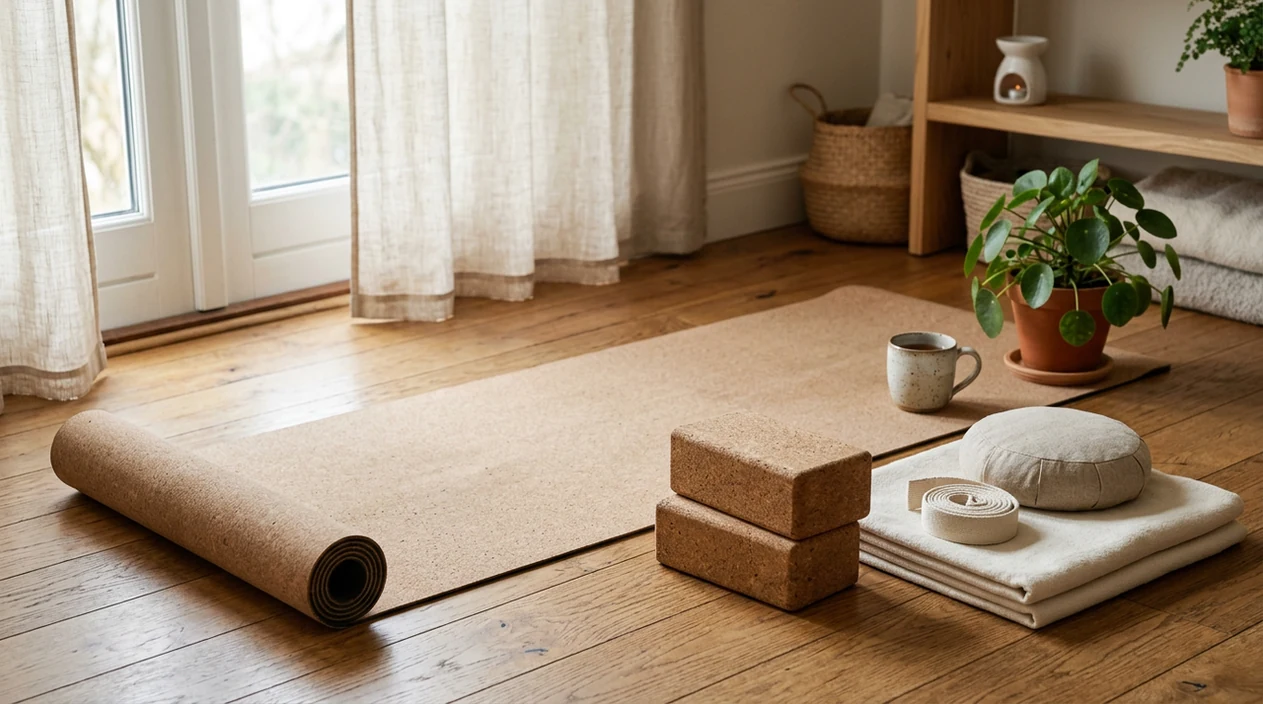
A dedicated home yoga space can be one corner, one mat-width beside a bed, or a cleared strip of floor near a window. A full room is nice, but it is not required. If your practice space overlooks trees or sky, exploring why we feel awe may add perspective to those quiet moments.
Start by removing the objects that make practice feel like a chore: laundry piles, loose cables, unopened packages, and the chair that collects everything. Keep your mat visible if possible. Store blocks, a blanket, strap, headphones, and a small towel within reach so you do not wander off before starting.
Phones are tricky. Silence notifications, tell family members your practice window, and accept that pets may still investigate the mat. That happens.
Do not make aesthetics the main upgrade. Candles and plants can be pleasant, but the real win is fewer decisions. Mat down. Props close. Begin.
Image caption: a small home yoga corner with props and meditation audio ready
A quiet corner with a yoga mat, blanket, blocks, strap, and headphones placed nearby for movement, breathwork, and meditation.
Way 2: Use a consistent home yoga schedule instead of random sessions
Consistency matters more than session length when you want a home yoga routine that lasts. Ten to 20 minutes can be enough, especially on weekdays when a long class will never happen.
Choose a time that already has a built-in cue. Try after waking, before showering, after work, or before bed. Some readers do better with a calendar alert before a guided reset; others need the mat waiting by the door after they take off their shoes.
Keep the reminder simple. A phone notification, sticky note, watch alarm, or app cue can work. Apps such as MindTastik, Calm, and Headspace can help if you like guided breathwork before or after movement, but the schedule should not depend on one tool.
Missed days are reset points, not proof that you failed. For busy weeks, short meditation techniques can keep the habit alive when movement has to be brief.
Way 3: Add props and modifications to your home yoga practice
Props are alignment tools, comfort tools, and nervous system tools. They are not signs that you are doing “less real” yoga.
- Blocks: Put blocks under your hands in lunges, triangle, or standing forward folds so your spine does not collapse toward the floor.
- Strap: Use a strap when your hands cannot comfortably reach your foot, especially in hamstring or shoulder stretches.
- Bolster: Support restorative poses so your body can soften without gripping.
- Blanket: Place a folded blanket under knees, hips, or wrists when hard flooring creates pressure.
- Wall or chair: Use stable support for balance, standing poses, or modified flows.
Bent knees in forward folds often protect the low back. A blanket under the knees can change a pose from irritating to manageable.
Stop if you feel sharp pain, numbness, dizziness, or joint discomfort that worsens. Consult a qualified yoga teacher or clinician if you have injuries, pregnancy, balance issues, chronic pain, or medical conditions. Safer progression usually beats faster progression because it lets you keep practicing.
Way 4: Pair home yoga with guided meditation and breathwork
How can meditation and breathwork improve a home yoga practice? Breathwork before yoga can help attention settle, and guided meditation after yoga can help the calm feeling carry into the next part of the day. For another perspective on attention under pressure, learn how military mindfulness training brings these practices into demanding settings.
Before practice, try two minutes of slow breathing. It gives the mind one job before the body starts moving. After practice, a short body scan can help you notice what changed: jaw, ribs, hips, forehead, mood. Small data. Useful data.
Evening yoga pairs well with sleep audio when the goal is a wind-down routine. Dimming the phone screen before starting bedtime audio is a tiny cue, but it tells the brain this is not scrolling time. For readers who need a softer landing after practice, progressive muscle relaxation for sleep can fit well.
A guided meditation app can provide sleep audio, breathing exercises, body scans, and self-hypnosis sessions for adults who want sleep, anxiety, and everyday calm support. These tracks can be calming tools, not treatment for anxiety disorders.
Way 5: Track your home yoga practice with reflection and gentle feedback
Tracking a home yoga practice should make you more observant, not more self-critical. Write down the date, duration, energy level, mood, sleep quality, and one body sensation after practice.
Set one intention before you begin. It can be plain: “steady breath,” “soft shoulders,” or “do not rush.” Afterward, write one reflection. Maybe your balance was off. Maybe your breathing felt easier than yesterday. Maybe you stopped early and still felt better. To carry steadier attention into relationships, practice taking nothing personally when another person's reaction leaves you feeling unsettled.
Occasional filming can help you notice alignment, but do not turn every session into a performance review. Watch for patterns, not angles. Many people are looking for a calm voice to guide them back into the practice when their mind feels crowded. When mental fatigue makes indoor practice difficult, a walk in nature can offer a change of pace.
Progress may look like easier breathing, better consistency, less reactivity, or a smoother sleep routine. Simple reminders and progress notes can support that habit, especially when paired with grounding meditation techniques after practice.
How to use this 5 ways to take your home yoga practice to the next level guide
Use this guide as a one-week reset, not a total life renovation. Add one or two upgrades first, then build from there.
- Set up the space by clearing one mat-sized area and placing your mat, blanket, and blocks where you can see them.
- Choose a time that connects to an existing habit, such as after waking, after work, or before bed.
- Select a short sequence of 10 to 20 minutes with poses you can repeat safely without guessing.
- Add a short meditation or breathing track before practice for focus or after practice for wind-down support.
- Review progress at the end of the week by noting duration, mood, sleep, energy, and one body sensation.
For beginners, steady repetition is often easier than variety because fewer choices make practice less mentally expensive. If you are still learning the basics, meditation techniques for beginners can help you choose a starting point for the mental side of practice.
Common mistakes in home yoga practice upgrades
Advanced shapes are not the same as advanced practice. A steady, pain-aware, breath-led 15 minutes can be more useful than copying a pose that was filmed by someone with years of training.
Social media clips often remove context. You do not see the warm-up, the failed attempts, the teacher feedback, or the person’s injury history. That matters when you are alone in a living room with no one checking your knees.
Tiny homes and busy households do not make practice impossible. They do require smaller plans. Socked feet on a bedroom rug, screen paused after a restless start, still counts if you return to the breath and move safely. When indoor space feels limiting, consider the mental health benefits of nature walks as another way to support calm.
Another common mistake is skipping breathwork and meditation because they feel less visible than poses. For calming benefits, the quieter parts often matter. Once you know a sequence, consider low-screen or screen-free practice so your attention stays with your body.
Audio support before and after the mat
MindTastik’s guided meditations and breathing sessions suit the quiet portions of a home yoga routine: settling attention before movement or finishing with a body scan. Its breathing exercises offer a focused option when a full meditation feels like too much to add. Sleep stories or soundscapes can follow an evening session. Someone who needs pose instruction, alignment checks, or help adapting movement should choose a qualified yoga teacher rather than rely on meditation audio. MindTastik is not a medical treatment.
What home yoga cannot replace
Home yoga can be supportive, but it has real limits. Use these boundaries before increasing intensity, frequency, or pose difficulty.
- Home yoga without live feedback can increase alignment, balance, and overuse risks.
- Yoga and meditation are not replacements for professional care for severe anxiety, depression, trauma, insomnia, or other sleep disorders.
- Progress is gradual and non-linear; some weeks will feel stiff, distracted, or inconsistent.
- App-based support requires consistent use and honest self-reflection to be useful.
- Specific research on yoga plus one named meditation app, including any single meditation app, is limited.
- Get medical clearance if you have injuries, chronic pain, pregnancy, dizziness, cardiovascular concerns, fainting, neurological symptoms, or other health conditions.
- Stop and seek guidance if a pose causes sharp pain, numbness, chest pain, unusual shortness of breath, or symptoms that worsen after practice.
- Clinicians typically recommend professional evaluation when pain, sleep disruption, anxiety, or mood symptoms interfere with daily life.
The most common medically supported way to address persistent symptoms is professional care combined with safe self-management practices, not self-guided wellness routines alone.
For structured sessions beyond this page, MindTastik guided meditation app is the main MindTastik hub for guided meditation.
Home yoga practice questions
How can I improve my yoga practice at home?
Start with the part that makes practice difficult to repeat: setup, timing, pose choices, or distractions. Clear one mat-sized area, choose a familiar short sequence, and connect practice to an existing habit. Add props where needed, then record one observation about breath, tension, or energy rather than judging pose depth.
How long should a home yoga session be?
A 10 to 20 minute session is a practical starting point, especially when longer classes are difficult to fit in. It is not a required dose or a guarantee of results. Choose a length that leaves enough time to move without rushing and finish calmly. Shorten the sequence rather than hurry through it.
Can beginners safely learn yoga at home?
Beginners can start with simple, familiar movements and clear instruction, but practicing alone leaves gaps in feedback. Props can make poses more accessible; they do not confirm that alignment is appropriate. A qualified teacher is the better option when a pose feels confusing, balance is uncertain, or modifications are difficult to choose.
Do I need to practice yoga every day to improve?
Daily practice is not a requirement. A repeatable schedule matters more than a streak that encourages pushing through discomfort or fatigue. Choose sessions that fit ordinary weekdays, and review consistency over time. Improvement can mean steadier breathing, earlier recognition of tension, or fewer barriers to starting, not just greater flexibility.
What props do I need for yoga at home?
Choose props for the poses being practiced rather than buying a complete set. Blocks can bring the floor closer to the hands, a strap can help with reach, and a folded blanket can cushion pressure points. A stable wall or chair can support balance. Props should make a position more comfortable, not force a deeper stretch.
Should I meditate before or after yoga?
Either can serve a different purpose. Before yoga, a brief breathing practice gives attention a simple focus before movement begins. Afterward, a body scan provides time to notice changes in tension, breath, and mood. Start with one rather than adding both if extra steps make the routine harder to repeat.
Is evening yoga a good way to prepare for sleep?
A gentle evening session can be part of a wind-down routine, particularly when it ends with quiet breathing or meditation. Avoid flows that leave the body feeling more alert. Keep expectations modest: a relaxing routine is not treatment for persistent insomnia or another sleep disorder, which may need professional assessment.
When should I stop a home yoga session?
Stop rather than push through pain, strain, or a position that feels unstable. Reduce the range of movement or leave the pose instead of treating discomfort as proof of progress. If the same problem returns, seek qualified feedback before repeating it. Finishing early is a sensible adjustment, not a failed practice.