
Free Morning Meditation to Start Your Day
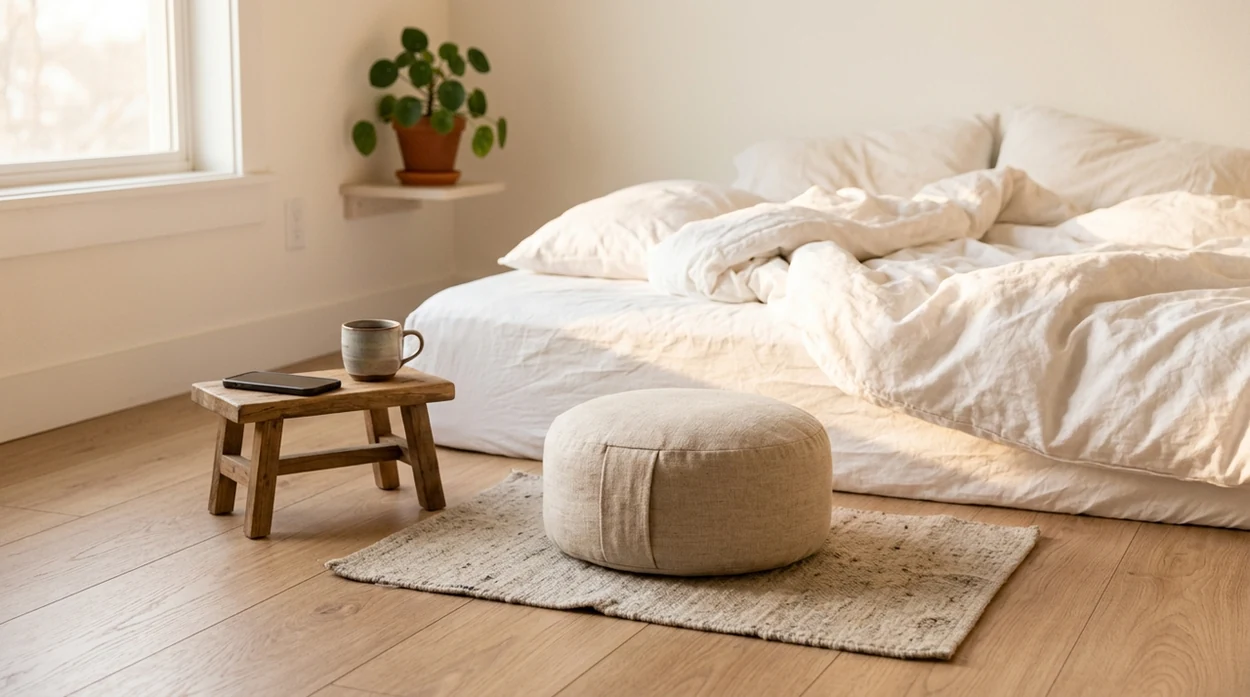


A free morning meditation is a short guided or silent practice after waking that steadies attention, brings awareness to breathing, and sets a calm intention before daily demands begin. Five to ten minutes is a practical starting point, with gentle guidance for beginners. The task is not to clear the mind, but to notice thoughts and return attention to the breath, body, or sounds.
Repeat the practice most mornings for several weeks rather than expecting one session to change everything. The strongest support comes from regular, structured mindfulness programs, not morning timing alone. MindTastik offers guided mindfulness, calming sleep audio, breathing practices, and self-hypnosis audio. These are wellness supports for rest and everyday stress, not replacements for mental health care, crisis care, or medical treatment.
The morning routine at a glance
- A useful morning meditation can be as short as 5 minutes and does not require clearing your mind.
- The strongest-supported benefits come from regular practice over several weeks, especially structured mindfulness routines.
- Morning meditation is a wellness support tool, not a replacement for mental health care, crisis care, or medical treatment.
Free Morning Meditation to Start Your Day: At-a-Glance Routine
A free morning meditation to start your day is usually a 5-15 minute practice done soon after waking. It may use guided audio, mindful breathing, a short body scan, or one clear intention for the day.
The point is not to become a different person before breakfast. It is to notice your first mental weather before messages, errands, and work demands take over. For many people, that means sitting on the edge of the bed, lowering the screen brightness, and choosing a short track before the day starts pulling.
Use it for calm, focus, and emotional regulation, not an instant cure for anxiety, poor sleep, or burnout. A guided audio library can help you follow structured free sessions when you do not want to decide what to practice from scratch.
Keep the first version almost too easy.
5 Facts About a Free Morning Meditation to Start Your Day Guide
- Five to ten minutes is enough to begin. Beginners often do better with a short reset than a long session that feels like another task.
- Regular practice matters more than session length. For a morning routine, repeating 5 minutes most days usually beats doing 30 minutes once and quitting. For a simple way to build consistency, try the 7 Day Mindfulness Challenge and keep each session short.
- Meditation means noticing thoughts, not deleting them. If tomorrow’s meeting starts looping before you even stand up, the practice is noticing that and returning to breath.
- Research shows moderate benefits for anxiety, mood, stress, and pain. A JAMA Internal Medicine meta-analysis found mindfulness meditation programs produced moderate reductions in anxiety, depression, and pain (JAMA Internal Medicine study: 1809754).
- Safety boundaries matter. People with severe trauma symptoms, active psychosis, severe depression, or worsening distress should use meditation carefully and seek professional guidance.
For more options beyond morning practice, our meditation techniques library explains common styles in plain language.
How Free Morning Meditation Works in the Mind and Body
Free morning meditation works by training attention and emotional regulation before the day’s usual triggers arrive. In simple terms, you practice returning to breath, sound, or body sensations each time the mind wanders.
That return is the “rep.” Attention training is not dramatic, but it is specific. You notice a thought, feel the pull to follow it, and choose a steadier anchor. Over time, that can help you pause before reacting to stress, messages, or a tense commute.
Morning cueing also matters. Linking practice to waking creates a habit loop: wake up, sit or stand, breathe, name the day’s intention. The cue makes the routine easier to repeat.
Research on structured mindfulness programs reports anxiety reduction after multi-week practice. An 8-week mindfulness training study was also associated with increased gray matter density in the hippocampus, a brain area tied to learning and memory (NIH research: PMC3004979).
How to Use a Free Morning Meditation to Start Your Day
Use a free morning meditation by making the first version short, repeatable, and hard to avoid. The routine should fit a real morning, including alarms, tired eyes, and the urge to check notifications.
- Set a 5-10 minute timer or choose a short guided track before opening email or social apps.
- Sit, lie down, or stand comfortably with your back supported enough that you can breathe without strain.
- Breathe naturally and return attention when your mind moves to plans, worries, or unfinished chores.
- Name one intention for the day, such as “move slowly,” “listen first,” or “take one task at a time.”
- Repeat the routine for several weeks and track how mornings feel in one sentence. To record your morning practice, use 6 Questions for Daily Ledger as prompts for a brief daily entry.
A small notebook beside a cushion can help, but your phone notes app works fine. For busy schedules, short meditation techniques may be easier than a full guided session.
Best Free Morning Meditation Techniques for Beginners
The best free morning meditation technique for a beginner is the one that matches the morning you actually have. Choose a starting point based on energy, stress level, and how much stillness feels manageable.
- Mindful breathing. Use this for rushed or anxious mornings. Count a few natural breaths, then restart when you lose track.
- Body scan. Try this when you wake tense, especially around the jaw, shoulders, or stomach. Move attention slowly from face to feet.
- Intention setting. Pick one phrase that guides the next few hours. Keep it plain, not grand.
- Walking meditation. Use this if sitting still makes you restless. Feel each step while moving through a hallway or quiet sidewalk.
- Affirmation-based practice. Choose believable words. “I can take the next step” usually lands better than a phrase you do not trust.
Beginners who want more structure can compare meditation techniques for beginners before settling on one routine.
What Research Says About Morning Meditation Benefits
Research supports meditation as a helpful wellness practice, but most stronger findings come from structured programs, not one calm morning. Clinicians typically recommend meditation as a supportive practice alongside appropriate care, not as a replacement for therapy, medication, sleep care, or crisis support.
A randomized trial of mindfulness-based stress reduction for generalized anxiety disorder reported greater anxiety reduction than stress management education (PubMed research: 23541163). A JAMA Internal Medicine meta-analysis found moderate reductions in anxiety, depression, and pain across randomized controlled trials (source). Another 8-week mindfulness study found brain changes linked with learning and memory (source).
For beginners, repeating a short practice regularly matters more than making each session long. A single session may help you feel steadier for a short time, but study-level benefits are usually measured after weeks of practice.
For most beginners, a 5-minute daily meditation is often easier than a 30-minute weekly session because the cue becomes part of the morning routine.
What research says about a single short session
A short session can affect how someone feels immediately, but that is different from lasting symptom improvement. A 2024 review of brief mindfulness inductions found reduced state anxiety and increased state mindfulness compared with non-therapeutic controls. Evidence for better performance on attention tasks was limited but suggestive. These findings concern brief practices generally, not a special benefit from meditating after waking.
The size of the benefit also depends on the studies included. A 2018 meta-analysis of brief mindfulness training found a small reduction in negative affect, but the estimated effect became much smaller after adjustment for publication bias. That makes a modest goal more defensible: use the morning session to notice thoughts and settle attention, without treating immediate calm as guaranteed. After practice, use mindfulness questions for reflection to consider what you noticed and how you responded to distractions.
MindTastik Meditation App Support for Morning Calm
MindTastik is one option for people who want morning sessions, sleep audio, anxiety support, beginner meditation, and everyday calm in the same place. The useful move is to choose clearly free core tracks first, then explore paid or advanced content only if the routine is already helping.
Morning meditation can pair well with nighttime sleep meditations. If you used bedtime guided audio the night before, a short morning breathing exercise can make the routine feel connected rather than random. Good meditation app for sleep anxiety and everyday calm should deliver guided routines, breathing support, and clear choices, not cure claims or pressure to meditate perfectly.
Some mornings can stay simple: a short breathing session, a phone with guided audio, and a quiet room before the day starts moving. MindTastik, Calm, Headspace, and Mindful.org each offer different ways to find an easy first practice.
Morning Meditation Routine Mistakes That Reduce Benefits
“Why does morning meditation stop helping?” Usually, the problem is not that the person is bad at meditation. The routine is often too long, too irregular, or built around the wrong expectation.
Trying to empty the mind completely can make practice feel harder than it needs to be. Thoughts will still show up. That does not mean you are doing it wrong; it gives you something to notice and return from. Many people simply want a calm track that helps them settle when the mind feels busy. That is a reasonable place to begin.
Starting with sessions that are too long can also backfire. If 20 minutes makes you dread the cushion, choose 5 minutes instead. Judging every distracted moment as a failed meditation makes the routine feel like a test.
Meditation also should not be used to avoid needed sleep, therapy, medication, or medical care. And if practice happens twice a month, it is not realistic to expect the outcomes seen in structured multi-week studies.
Guided sessions for a short morning practice
MindTastik’s guided meditations, breathing exercises, and focus sessions suit adults who prefer spoken instructions to sitting silently. Its guided meditation library is one place to look for a manageable morning session. The app is free to download, with optional subscription content and a free trial; free download does not mean every session is free.
A silent practice may suit people who find a voice distracting. Walking or an ordinary grounding exercise may be a better choice when sitting still or focusing on breathing increases distress. The app is not a medical treatment.
What a short morning meditation cannot fix
Free morning meditation can be useful, but its effects are usually modest rather than miraculous. It may support stress awareness, steadier focus, and a calmer start, but it does not remove hard life conditions.
Important limits include:
- Benefits in studies often come from structured multi-week programs, not one or two sessions.
- Some people feel more agitated when sitting still and may do better with walking or movement-based meditation.
- People with severe trauma, active psychosis, severe depression, or worsening symptoms should seek professional guidance.
- Meditation is not a substitute for crisis support, therapy, medication, or medical care when those are needed.
- Some free meditations are ad-supported, low quality, or partly paywalled after a few sessions.
- Morning practice cannot make up for chronic sleep loss. At 2:13 a.m., when the lock screen says you are still awake, rest may matter more than another technique.
For body-based calming at night, progressive muscle relaxation for sleep may fit better than seated meditation.
Choose a morning practice by time and purpose
| Technique | Best for | Minutes |
|---|---|---|
| Guided breath meditation | starting with structure and a calm cue | 5-10 min |
| Silent intention setting | clear priorities before work or errands | 3-7 min |
| Body scan check-in | noticing tension before the day speeds up | 8-15 min |
For structured sessions beyond this page, MindTastik guided meditation app is the main MindTastik hub for guided meditation.
Morning meditation questions
How long should a beginner meditate in the morning?
Five to ten minutes is a practical starting point. A shorter session that fits the morning is easier to repeat than a long session that feels burdensome. There is no established daily duration that guarantees benefits, and a single session should not be expected to produce lasting change.
Can I meditate in bed after waking up?
Yes. Sitting on the edge of the bed or lying comfortably can work for a short practice. Choose a position that allows breathing without strain. If lying down makes it difficult to stay attentive, sitting up or trying a brief walking meditation offers another starting point.
Is guided or silent meditation better in the morning?
Guided meditation provides instructions and a clear point of return when attention wanders, which can help beginners. Silent meditation suits people who prefer fewer sounds or already know the routine. Research on digital mindfulness suggests guidance can influence outcomes, but it does not establish one format as best for everyone.
What should I do when thoughts keep interrupting meditation?
Notice that attention has moved to a thought, then gently return to breathing, body sensations, or sounds. Planning the day is not a failure of meditation. Repeatedly noticing and returning is the practice itself; perfect concentration and an empty mind are not requirements.
Can five minutes of morning meditation reduce anxiety?
Brief mindfulness practices can reduce immediate anxiety for some people, according to research on short mindfulness inductions. That does not mean five minutes every morning will treat an anxiety disorder. Use it as a supportive practice, and seek appropriate care when anxiety is persistent, severe, or disrupting daily life.
Is morning meditation better than meditating later in the day?
The research described here does not establish morning as the best time to meditate. Waking can provide a repeatable cue before messages and tasks begin. If mornings are rushed or uncomfortable, a brief pause before work, between activities, or in the evening may fit better.
What if focusing on my breath makes me feel panicky?
Stop the breath-focused exercise rather than forcing it. Shift attention to the room, ordinary sounds, or contact with the floor. Walking may feel more manageable than sitting still. If meditation brings worsening panic, dizziness, distress, or dissociation, seek professional guidance before continuing the same practice.