
How To Build Resilience With Everyday Calm Habits
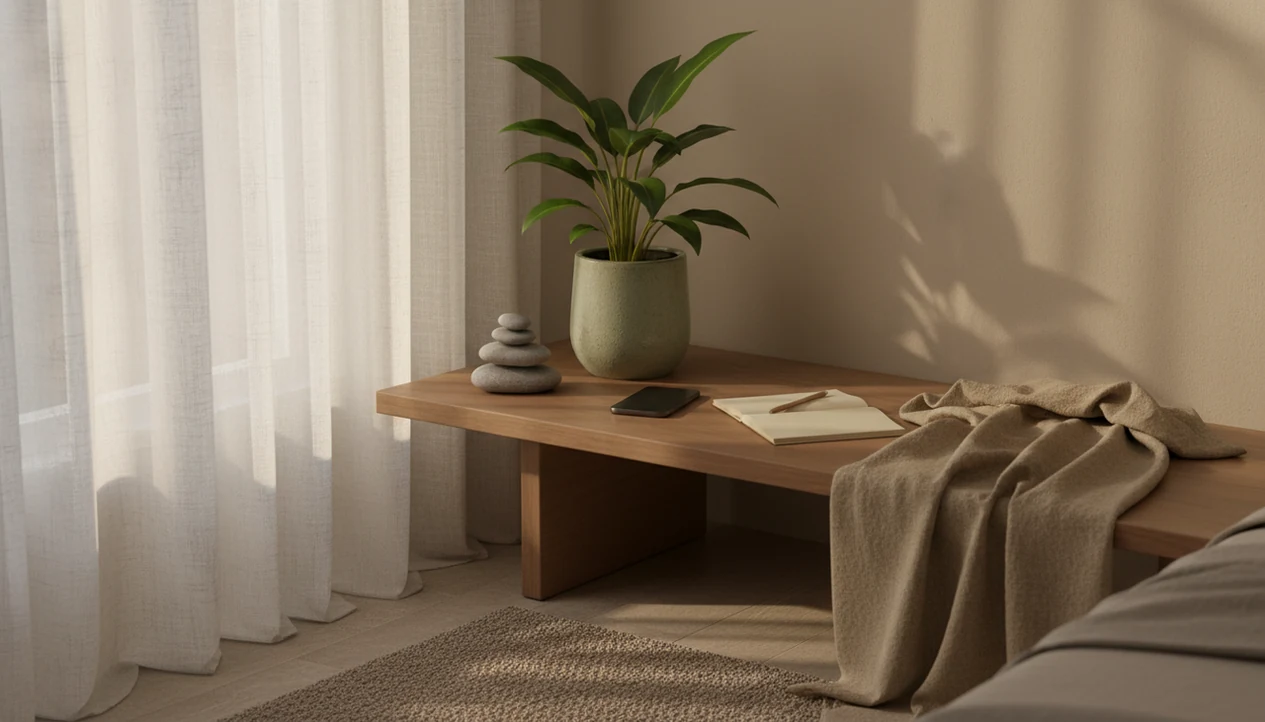


To build resilience, practice small daily habits that support recovery from stress: mindfulness, regular sleep routines, movement, supportive relationships, and kinder self-talk. Resilience is the learned capacity to adapt, recover, and respond more steadily during anxiety, setbacks, or change. It does not mean never feeling anxious or staying calm through every difficult moment. The aim is to recover more flexibly and take a useful next step.
A manageable starting point is five minutes of breathing or a body scan attached to an existing cue, such as lunch or bedtime. Name one stressor, identify what is controllable, and choose one small action. This guide explains how to combine that practice with everyday recovery habits, without treating meditation as a substitute for support or professional care.
The essentials
- Resilience is trainable, not a fixed personality trait.
- The highest-leverage habits are mindfulness, quality sleep, movement, social support, and cognitive reframing.
- Short practices of 5-15 minutes done consistently usually beat occasional long sessions.
How To Build Resilience: The 5-Minute Starting Plan
Start with one 5-minute breathing or body-scan practice each day, then attach it to a cue you already have. Waking up, lunch, and bedtime work because they happen without extra planning.
Here is the simplest version: sit down, slow your breathing, scan your body from forehead to feet, and name one stressor. Then choose one controllable next action. “I’m worried about tomorrow’s meeting” becomes “I’ll write three talking points before dinner.” Practicing mindfulness and body acceptance can mean noticing physical sensations without treating your body as a problem to fix.
Keep it small.
A guided session can help when silence feels too open-ended. Tools like MindTastik, Calm, and Headspace offer short sleep, anxiety, and everyday calm support, but the important part is repeatability. For beginners, a 5-minute practice done after brushing teeth is often easier than a 30-minute session saved for a “better” day.
Resilience Meaning For Stress, Anxiety, And Daily Life
Resilience is the learned capacity to adapt, recover, and respond with steadier behavior during stress, anxiety, setbacks, or change. In plain language, it means you still feel the hard thing, but you don’t stay as stuck inside it.
Resilient people are not calm every minute. They may feel tense before a hard conversation or lie in a quiet room wishing sleep would come sooner. The difference is that they keep practicing how to return to a steadier baseline.
Resilience is not just positive thinking. It includes noticing difficult thoughts, calming the body, asking for help, and choosing the next useful step.
The need is broad. About one in five U.S. adults experienced any mental illness in 2020, according to the National Institute of Mental Health nimh reference: mental illness. That does not mean everyone needs the same support, but it shows why practical stress skills matter.
Resilience Mechanisms In The Brain And Nervous System
Resilience works through attention, emotion regulation, and nervous-system recovery. Those are plain terms for noticing what is happening, settling the body, and choosing a response instead of reacting on autopilot.
Stress narrows attention. A repeated mindfulness practice trains the pause between trigger and response. Over time, that pause can feel like a small gap before sending the text, snapping at someone, or spiraling into “what if” thoughts.
A 2014 JAMA meta-analysis found that mindfulness-based interventions produced small-to-moderate improvements in anxiety, depression, and stress compared with control conditions JAMA Internal Medicine study: 1809754. A systematic review of meditation programs also concluded that mindfulness meditation improved psychological stress and well-being.
For people learning how to meditate, the mechanism is not mystical. It is repetition. Attention wanders, you notice, and you return. That tiny return is the training.
What research shows about mindfulness and resilience
A 2023 review of randomized controlled trials found that mindfulness-based interventions significantly improved resilience overall. Effects varied by population and intervention design, so the finding does not establish one best routine for everyone. It supports mindfulness as a possible part of resilience practice, rather than a guarantee that any meditation session will produce the same benefit.
Stress relief and resilience are also different outcomes. A 2020 review of 30 studies involving healthcare professionals found that mindfulness-based stress reduction generally reduced stress, anxiety, and depression, but did not consistently improve resilience or reduce burnout. Feeling calmer after practice can be useful without proving a broader change in coping. These reviews studied interventions, not the effectiveness of a particular meditation app.
5 Daily Steps For A Resilience Routine
Use this daily routine when you want a practical structure, not another vague promise. Five to fifteen minutes is enough to begin, especially if you repeat it most days.
- Set one cue for practice, such as after waking, during lunch, or before bed.
- Breathe for 5 minutes, using slow exhales or a short guided breathing session.
- Reframe one thought by asking, “What is the next workable step?”
- Connect with one person, even through a brief message or honest check-in. Research on meditation and empathy offers another perspective on how practice may support your connections with other people.
- Review what helped today, then choose one small adjustment for tomorrow.
Short guided meditation or breathing sessions work well because they lower the starting barrier. You don’t need a special room. You might be sitting in a parked car before pickup, with the engine off and three minutes to spare.
Resilience usually works best when practice is tied to daily cues, while willpower-only plans fit fewer people because stress disrupts memory and motivation. Small, repeatable actions offer a practical way to address the gap between wanting and living when motivation alone falls short.
5 Resilience-Building Habits With The Strongest Evidence
The strongest resilience habits are ordinary, but they work through repetition. Short consistent practice usually beats rare long sessions because the brain and body learn from repeated cues.
- Mindfulness: Mindfulness trains attention and lowers emotional reactivity, which helps you respond more steadily under stress. - Sleep: Sleep supports mood, focus, and stress tolerance; a bedtime wind-down routine makes recovery more likely. The CDC notes that insufficient sleep is associated with poorer mental health and reduced daily functioning: CDC guidance: how much sleep.html. - Movement: Regular physical activity helps the body discharge stress and can make anxious energy feel less trapped. The World Health Organization links regular physical activity with reduced symptoms of depression and anxiety: WHO report: physical activity. - Social support: Supportive relationships reduce isolation and give you another perspective when your thoughts tighten. - Cognitive reframing: Reframing helps you question harsh or catastrophic thoughts without pretending everything is fine.
Clinicians typically recommend combining stress-management skills with professional care when symptoms are severe or persistent. For sleep-related resilience, start with basics like consistent wake time, dim light, and a repeatable sleep hygiene routine.
The half-empty water glass by the bed tells the truth: recovery is built in small, repeatable moments.
Resilience Tips For Sleep, Anxiety, Focus, And Setbacks
Different stress patterns need different resilience habits. Match the problem to a small action, then choose a guided-audio option that fits the moment.
| Use case | Practical habit | Guided-audio option |
|---|---|---|
| Sleep stress | Dim the screen, set a bedtime cue, and stop problem-solving in bed | 10-minute sleep meditation or body scan |
| Anxious spirals | Name the fear, lengthen the exhale, and choose one next action | 5-minute breathing exercise |
| Poor focus | Clear one tab, set a timer, and restart with one task | Short focus meditation |
| Life setbacks | Write what happened, what is controllable, and who can help | Self-compassion or grounding session |
A simple resilience routine combines sleep, breathing, movement, and reflection.
If you are comparing options, a best meditation app for sleep anxiety guide can help you sort features without overthinking the download screen before bedtime.
Best-Fit Readers For This Resilience Guide
This guide fits adults who want a practical way to recover from everyday stress, not a dramatic personality overhaul. It is especially useful if you want everyday calm, beginner meditation, better sleep routines, or steadier responses during pressure.
| Best for | Not ideal for |
|---|---|
| Adults building a simple everyday calm routine | Crisis support or emergency mental health needs |
| Beginners who want guided meditation without guesswork | Severe symptoms without qualified professional care |
| People improving bedtime wind-down habits | Anyone seeking instant transformation |
| Busy adults who need 5-15 minute practices | Situations where safety, housing, or financial instability is the main stressor |
MindTastik can support meditation practice, including for readers comparing sleep-focused apps, but it is not therapy and should not replace professional mental health care.
Notice what feels manageable. That is the starting line.
Common Resilience Mistakes That Keep Stress Stuck
Resilience often stalls because people practice only after stress has already peaked. The fix is not more pressure; it is a smaller routine that starts earlier.
- Forced positivity: Telling yourself “it’s fine” can bury the feeling instead of helping you process it.
- Burnout waiting: Waiting until you are exhausted makes every calming skill harder to use.
- Recovery neglect: Poor sleep, skipped meals, and no downtime make emotional flexibility harder.
- Inconsistent practice: One long session after a bad week rarely builds the same skill as five short sessions.
- Isolation: Pulling away from everyone removes one of the strongest buffers against stress. If family estrangement is part of your isolation, learning how to reconnect with an estranged child may help you consider respectful next steps.
Hands unclench after a video call, but only if you notice they were clenched first.
If anxiety is the main pattern, a structured meditation app for anxiety support can provide short resets. Still, connection matters. A message that says “Can I vent for five minutes?” can be resilience too.
When To Seek Professional Help For Stress Or Anxiety
Seek professional help when stress or anxiety feels unmanageable, keeps returning, or starts changing how you sleep, work, connect, or function. Resilience practices can support care, but they do not diagnose symptoms or replace treatment from a qualified clinician.
Warning signs include panic attacks, trauma symptoms such as flashbacks or feeling constantly on guard, persistent low mood, intense irritability, numbness, dissociation, or fear that keeps shrinking your life. If a breathing practice, meditation, or body scan makes you feel more distressed, unreal, unsafe, or disconnected from yourself, stop and choose a more grounded support option.
- Call local emergency services or go to an emergency department if you might hurt yourself, might hurt someone else, or are in immediate danger.
- Contact a crisis line right away if suicidal thoughts are present, even if part of you feels unsure about needing help.
- Tell a trusted person what is happening so you are not managing risk alone.
- Schedule primary care or licensed therapy when symptoms are persistent, worsening, or interfering with daily life.
- Use resilience habits as support between appointments, not as proof that you should handle everything by yourself.
Guided sessions for a repeatable resilience routine
MindTastik’s guided meditation library suits adults who prefer spoken instructions for a short daily practice rather than deciding what to do in silence. Breathing exercises can provide a simple practice structure, while sleep stories offer an option for a bedtime wind-down. The useful choice is a session that fits a repeatable cue. People seeking treatment for persistent anxiety, trauma symptoms, or severe distress should choose qualified professional care, not an app alone.
What resilience habits cannot solve on their own
Resilience practices can support steadier coping, but they have limits. Honest boundaries matter more than motivational language here.
- Meditation and mindfulness can support resilience, but they do not replace professional mental health care.
- People with severe anxiety, depression, trauma symptoms, or suicidal thoughts should seek qualified support promptly.
- Meditation alone may not be enough for everyone, especially when symptoms are intense or long-running.
- Benefits depend on consistent use; sporadic practice may produce small or hard-to-notice changes.
- Instant transformation claims are not supported by strong long-term evidence.
- Apps cannot fix financial instability, discrimination, unsafe environments, caregiving overload, or other social determinants of mental health.
- Some people find closing their eyes or sitting still uncomfortable; movement, grounding, or therapy-guided approaches may fit better.
- If a practice makes distress worse, stop and choose a safer support option.
Guided-audio apps can help with sessions, reminders, and routine structure, but a phone app cannot assess risk, diagnose symptoms, or provide emergency care.
Questions about building resilience
Can adults learn resilience, or is it a personality trait?
Resilience can be learned and practiced; it is not simply a fixed personality trait. Useful skills include noticing stress, settling the body, asking for support, and choosing a workable next action. Being resilient does not mean feeling calm all the time or recovering without help.
What is a simple daily exercise for building resilience?
Set aside five minutes at a familiar time, such as after lunch. Follow a gentle breathing practice or body scan, name one current stressor, and identify one controllable action. For a difficult meeting, that action might be writing three talking points. Keep the routine small enough to repeat.
How long does it take to build resilience?
There is no reliable deadline that applies to everyone. Mindfulness research finds benefits, but results vary across populations and programs. Early practice can focus on repeating one habit and noticing the response to ordinary stress, rather than expecting a dramatic change after a set number of days.
How do I build resilience after a setback?
Separate what happened from what can be done next. Write down the setback, one part that is controllable, and someone who could offer support. A brief calming practice can come before that step, but should not replace a needed conversation, boundary, or practical response to the problem.
What is the difference between resilience and suppressing emotions?
Resilience allows difficult feelings to be acknowledged while choosing a useful response. Suppression tries to push those feelings away or insist that everything is fine. A resilient response might be admitting disappointment, taking time to settle, and asking for help rather than forcing a positive interpretation.
What if meditation makes stress or anxiety worse?
Stop the practice if it increases distress or leaves a feeling of being unreal, unsafe, or disconnected. There is no need to push through to prove resilience. Choose a more grounded form of support, such as contact with a trusted person, and seek qualified help when symptoms persist or disrupt daily functioning.