
How To Be Kinder To Yourself: A Practical Self-Compassion Guide


Being kinder to yourself means noticing harsh self-talk, responding with the respect offered to a close friend, and taking practical care of thoughts, body, mistakes, and needs. It is a learnable response to stress and tiredness, not self-indulgence or a reason to ignore problems. The aim is realistic compassion: acknowledging what went wrong without turning it into a judgment of personal worth.
Small daily practices make that response easier to repeat. These can include labeling a critical thought as a thought rather than a fact, slow breathing, a hand-on-heart phrase, guided meditation, or a calmer bedtime routine. Self-kindness can support responses to anxiety and sleep difficulties, but it is a habit to build, not a one-time mindset change or a replacement for care.
The essentials
- Start by labeling self-critical thoughts as thoughts, not facts.
- Use short practices such as breathing, hand-on-heart compassion phrases, guided meditation, and sleep routines.
- Self-kindness works best as a daily habit, not a one-time mindset shift.
What How To Be Kinder To Yourself Means In Daily Life
How to be kinder to yourself means changing the way you respond to pain, mistakes, and stress. It is the daily practice of meeting difficulty with steadiness instead of instant self-attack.
Self-kindness is one part of self-compassion, along with common humanity and mindful awareness. Common humanity means remembering that struggle is not proof you are broken. Mindful awareness means noticing the thought without letting it run the whole room.
It is not the same as self-esteem, self-pity, laziness, or ignoring problems. Self-esteem often rises and falls with success. Self-kindness is available when you miss the deadline, snap at someone, or feel tired before noon. Learning how to like yourself can begin with basic respect, even when confidence feels out of reach.
A kinder response can still include accountability, boundaries, rest, and repair. Instead of “I always mess up,” try, “This is hard, and I can take the next step.”
Small sentence. Big difference.
Five Facts About How To Be Kinder To Yourself Guide Readers Need
- In a large international sample of more than 24,000 adults across 23 countries, higher self-compassion was associated with lower depression, anxiety, and stress symptoms. Source: PubMed research: 22720996
- Noticing the inner critic is the first skill because self-judging thoughts often arrive with the force of facts. That same habit of noticing assumptions can support bias awareness through meditation, including judgments you make about others.
- Brief mindfulness and loving-kindness practices can interrupt shame spirals during stressful moments.
- Consistent short practices over weeks are usually more useful than occasional long sessions because repetition trains the response.
- Self-kindness often requires boundaries, sleep, realistic planning, and saying no to overcommitment.
For most people, self-kindness gets practical before it gets emotional. You may not feel warm toward yourself at first. You can still put the phone down, unclench your jaw, and answer yourself with less cruelty.
Before You Start Practicing Self-Kindness
Before you start practicing self-kindness, choose a small, safe place to begin. The goal is not to solve your hardest pain today; it is to build a repeatable response you can actually use.
- Pick one recurring self-critical moment, such as checking email, making a mistake at work, looking in the mirror, or lying awake at night. Start with a familiar pattern, not the biggest problem in your life.
- Choose a quiet two-minute window you can repeat daily. It might be after brushing your teeth, before opening your laptop, or when you get into bed.
- Decide what support you will use if strong feelings show up. That could mean texting a trusted person, stepping outside, grounding through your senses, or stopping the practice for the day.
- Use professional help when distress is intense, trauma-linked, unsafe, or disabling. Self-kindness can support care, but it should not replace crisis support, therapy, medical advice, or emergency services when you need them.
Small and steady is the right starting point.
How Being Kinder To Yourself Works In The Brain And Body
The inner critic can be understood as a learned threat-response pattern, not a fixed identity. Your mind may use harshness to prevent failure, rejection, or embarrassment, even when that harshness makes you feel worse.
Mindfulness creates a pause between a self-critical thought and your reaction to it. In plain language, you get a few seconds to choose. That pause can lower rumination and support emotional regulation, especially when paired with compassionate self-talk. Pausing before reacting also shows how mindfulness helps others, by making room for more considerate responses.
Sleep plays a real role in self-kindness. When the body is worn down, the mind can react faster and judge harder, so a quiet room, dim light, and a few steady breaths may help soften the next thought instead of feeding it. Research on mindfulness-based stress reduction has found increased self-compassion and reduced perceived stress after an 8-week program. Source: PubMed research: 16008716
Meditation apps can support repetition through structured audio, reminders, and progressive sessions. Good meditation app for sleep anxiety and everyday calm options deliver repeatable cues and guided practice, not medical diagnosis or guaranteed emotional change.
How To Use Self-Kindness Tips In A Five-Step Daily Practice
Use this five-step practice when your thoughts turn sharp. It works well after a mistake, before bed, or during a tense workday.
- Notice the self-critical sentence without arguing with it: “I am having the thought that I failed.”
- Name the feeling underneath the criticism, such as fear, shame, tiredness, or disappointment.
- Breathe slowly for 60 to 90 seconds and soften your shoulders, belly, and jaw.
- Replace the attack with a realistic compassionate response: “I can learn from this without tearing myself apart.”
- Choose one small next action, such as rest, apology, a focus block, a walk, or guided meditation.
For beginners, a guided track can make the pause easier because you are not inventing the words alone. A meditation app or recorded breathing exercise can support this routine with guided meditation, breathing cues, sleep audio, or self-hypnosis-style relaxation sessions, but it should not be treated as diagnosis or therapy.
For a more basic sitting routine, our how to meditate guide keeps the steps simple.
Best Self-Kindness Practices For Sleep, Anxiety, Focus, And Burnout
The most useful self-kindness practice depends on the situation. A racing mind at bedtime needs a different response than a distracted afternoon or a week of burnout.
| Situation | Kind response | Simple practice | When to use it |
|---|---|---|---|
| Sleep | “I can let the day end without solving everything.” | Guided sleep meditation, body scan, calming audio | When bedtime rumination starts |
| Anxiety | “This is fear, not a command.” | Slow breathing, grounding, labeling thoughts | Before calls, travel, or uncertainty |
| Focus | “Distraction happened. Restart with one task.” | Set a 10-minute focus block | After scrolling or task switching |
| Burnout | “Recovery is part of responsibility.” | Shorter list, rest, boundary, earlier bedtime | When everything feels urgent |
For sleep, reducing rumination often starts with boring consistency. Dim the screen, choose the audio, and stop negotiating with the clock. A structured guided-audio routine can help, and the broader sleep hygiene basics still matter.
How To Be Kinder To Yourself When Your Inner Critic Is Loud
How do you be kinder to yourself when your inner critic is loud? The goal is not to silence every negative thought. The goal is to stop obeying every negative thought.
Try this three-line script:
- “This is self-criticism.”
- “I am having a hard moment.”
- “What would help me take one kind next step?”
Place one hand on your chest if that feels comfortable. Silently repeat, “May I be kind to myself,” or “May I meet this moment with steadiness.” The pressure of the hand can become a physical cue to slow down.
Avoid toxic positivity. “Everything is amazing” may feel fake when you made a real mistake. A better work example is: before, “I ruined that meeting.” After, “I spoke too fast in one answer. I can send a clearer follow-up.”
Not magic. Usable.
Responding to body criticism without forced praise
Body criticism is one situation where kindness need not mean convincing someone to love their appearance. A systematic review and meta-analysis of self-compassion and body image found that higher self-compassion was associated with fewer body-image concerns and more positive body image. The review also found improvements in body image and eating-related outcomes from self-compassion interventions compared with control conditions. Those findings do not guarantee that a brief exercise will change an individual’s experience.
A practical response can stay neutral and concrete: “I am having a harsh thought about my body. I do not need to settle my worth by looking in the mirror.” The next step might be returning to an ordinary activity or meeting a basic need, rather than arguing for a positive appearance judgment. This follows the research notes’ emphasis on accurate, compassionate, action-oriented self-talk, without demanding praise that feels untrue.
How To Be Kinder To Yourself Without Becoming Self-Indulgent
Self-kindness is not doing whatever feels good in the moment. It is honest support for long-term wellbeing, especially when short-term comfort would keep you stuck. When harmful habits involve substance use, mindfulness meditation for addiction may offer additional support alongside professional treatment.
Comfort restores you. Avoidance shrinks your life. Going to bed on time is kind; revenge bedtime scrolling usually leaves you more exhausted. Taking a break can be responsible; abandoning every hard task may create more stress tomorrow. Setting a boundary is different from withdrawing from everyone without explanation.
Research on a brief online self-compassion program found that three weeks of training reduced self-criticism and depression compared with a waitlist control. Source: PubMed research: 24887547 That matters because people often fear kindness will remove motivation.
For many people, compassionate accountability is more sustainable than shame-based motivation because it leaves energy for repair. If you want more examples of practice styles, the meditation techniques library compares breathing, body scans, mindfulness, and loving-kindness approaches.
Common Mistakes When Trying To Be Kinder To Yourself
Self-kindness can feel fake or ineffective when it becomes a script instead of real support. The fix is to make it honest, embodied, accountable, and appropriately supported.
- Use realistic compassion instead of forced positivity. “This hurts, and I can respond carefully” usually lands better than “Everything is fine” when everything is not fine.
- Support your body while you practice. Kind phrases help less when you are skipping sleep, food, movement, medication routines, or basic boundaries.
- Keep accountability in the room. Self-kindness should not become a way to avoid apologizing, repairing harm, giving feedback, or having the hard conversation you already know matters. When someone else has hurt you, learning how to forgive others need not mean abandoning boundaries or accountability.
- Repeat the practice after it feels awkward. Most people do not sound natural the first time they speak to themselves differently. Treat the awkwardness as a sign of newness, not failure.
- Ask for more help when symptoms are bigger than a self-help practice. If distress is intense, trauma-linked, unsafe, or interfering with daily functioning, professional support is part of kindness, not proof that you failed.
The goal is not perfect softness. It is steady care that still faces reality.
Best For And Not For: App-Supported Self-Kindness
App-supported self-kindness can help when you want structure, reminders, and guided audio for sleep, anxiety support, beginner meditation, focus resets, and everyday calm. It should stay in the self-help lane, especially when symptoms are intense, persistent, or unsafe.
| Best for | Not for |
|---|---|
| Adults who want guided meditation for sleep, anxiety support, beginner meditation, focus resets, and everyday calm | People seeking emergency help, diagnosis, trauma treatment, or crisis care |
| People who benefit from reminders, short audio sessions, and gentle progression | Anyone who needs a replacement for therapy, medication, or medical advice |
| Beginners who feel unsure what to say or do during practice | People whose symptoms make daily functioning unsafe or unmanageable |
| Users choosing between a 5-minute breathing exercise and a 20-minute body scan | Anyone expecting one session to fix long-standing distress |
A structured app can reduce decision fatigue. If app choice is part of your routine, compare features in our best meditation app for sleep anxiety guide.
Self-Kindness Image Caption For A Mindful Living Guide
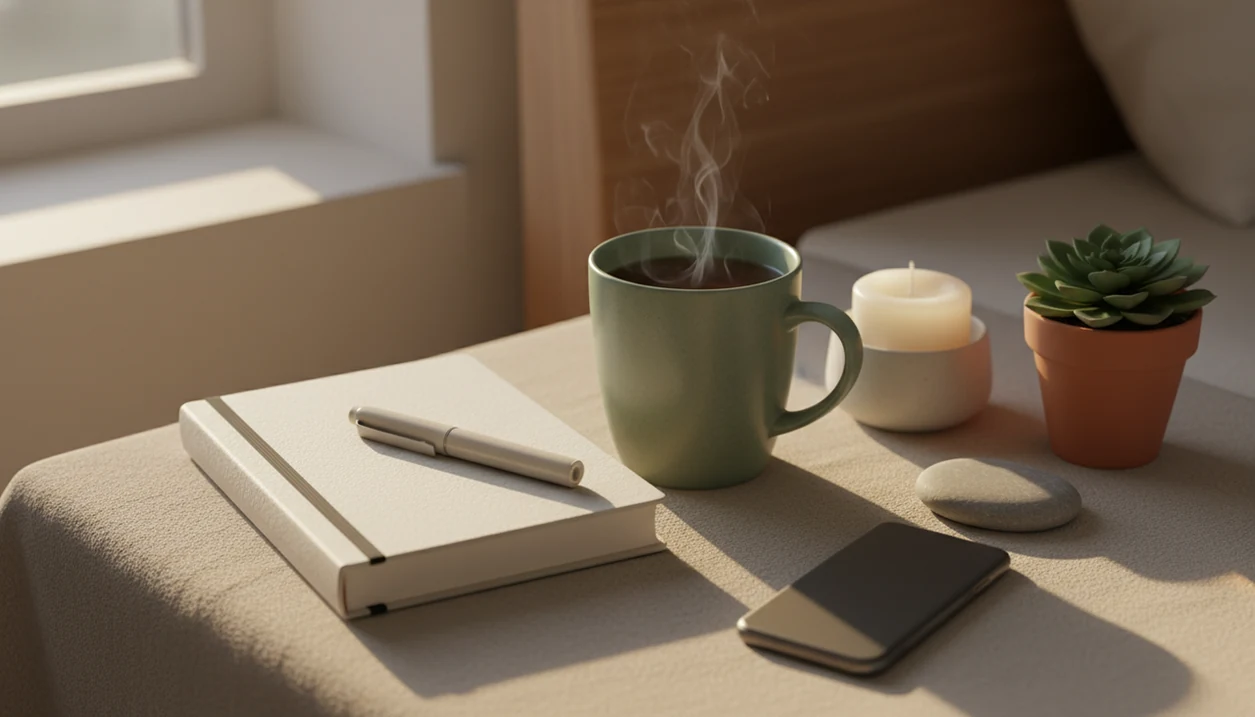
Use a calm, realistic image for this guide: a person sitting quietly with one hand on the chest, a journal nearby, and a phone playing a guided meditation. The scene should feel ordinary, not staged. Think dim natural light, relaxed posture, and a lived-in room.
Visible caption text: “Self-kindness begins with one pause, one breath, and one gentler response to yourself.”
Alt text suggestion: “Person practicing how to be kinder to yourself with one hand on the chest, a journal nearby, and guided meditation playing on a phone.”
Avoid clinical imagery, exaggerated bliss, and dramatic before-and-after transformation claims. Self-kindness usually looks quiet from the outside.
Guided audio for harsh self-talk and bedtime replay
MindTastik’s guided meditation library is an option for adults who prefer a spoken practice to sitting alone with harsh self-talk. Breathing exercises can provide a simple pause, while sleep stories offer a bedtime activity that does not involve reviewing the day’s mistakes. These are self-help options, not medical treatment. Persistent depression, panic, trauma-related distress, or unsafe feelings call for professional support rather than an app-only approach.
When self-kindness needs support beyond daily practice
Self-kindness is useful, but it has limits. It should support care, not replace care.
- Self-kindness practices are not a quick fix for severe depression, trauma, panic, or crisis situations.
- Meditation apps, including MindTastik, are self-help tools and not regulated medical treatments.
- Some people feel more emotional distress when first turning toward painful feelings.
- Benefits usually require consistency over weeks or months, not one session.
- Different people respond better to different methods, such as journaling, breathing, body scans, therapy, or social support.
- People with intense symptoms, self-harm thoughts, or inability to function should seek qualified professional or emergency support.
- Sleep audio and meditation can support rest, but they cannot solve all causes of insomnia or anxiety.
Clinicians typically recommend professional support when distress is persistent, disabling, linked to trauma, or connected with thoughts of self-harm.
Small responses to conversation replay, rest guilt, and mistakes
- If you replay conversations after they happen, try a three-minute breathing exercise before deciding what the moment “means.” A calmer body may make the story feel less final.
- If you are kind to others but harsh with yourself, use the close-friend test: write one sentence you would say to someone you love, then say it to yourself.
- If rest makes you feel guilty, schedule the smallest acceptable pause rather than waiting until you feel “deserving.” Recovery is easier to repeat when it does not need a debate.
- If you tend to overcorrect after mistakes, pair accountability with repair: name what happened, choose one next step, and stop the punishment loop there.
- If you abandon routines quickly, choose one anchor you already do daily, such as washing your hands or making tea, and attach a 30-second self-kindness cue to it.
Questions about being kinder to yourself
How do I start being kinder to myself?
Start with one recurring moment, such as a work mistake or bedtime replay. Notice the critical sentence, name the feeling underneath it, and choose one realistic response: “This is difficult, and I can take one useful step.” A small daily cue is easier to repeat than a complete change in self-talk.
Why am I kind to others but so hard on myself?
Harsh self-talk can be a learned attempt to prevent failure, rejection, or embarrassment. That does not make it accurate or helpful. The close-friend comparison can expose the difference: write the response a friend would receive after the same mistake, then use similarly respectful language without removing responsibility.
How can I be kind to myself after making a mistake?
Separate the event from a judgment about identity. “I missed the deadline” describes something that can be addressed; “I ruin everything” does not. A compassionate response includes acknowledging the impact, apologizing or repairing harm when needed, and choosing a practical next step. Continued punishment is not the same as accountability.
Can being kinder to myself help me sleep?
Research has linked self-compassion with less bedtime procrastination and better sleep-related outcomes, but that does not prove a particular exercise will improve sleep. A practical evening response is to write down one unresolved concern and one next-day action, then let bedtime be for rest rather than judging the whole day.
What if self-compassion meditation makes me feel worse?
Some people experience more distress when turning attention toward painful feelings. A practice does not need to continue simply because it is labeled compassionate. Stop, shift to an ordinary grounding activity, or contact a trusted person. Intense, persistent, or unsafe symptoms need professional support rather than longer meditation sessions.
What is the difference between self-compassion and self-esteem?
Self-esteem is how positively you evaluate yourself, often based on achievements, appearance or feedback. Self-compassion means treating yourself with care when things are difficult, even when you do not feel confident or successful. You can practice it by acknowledging your feelings, remembering that struggle is human and choosing a supportive response.
How can I be kinder to myself when I struggle with perfectionism?
Start by noticing when your standards leave no room for learning, rest or ordinary mistakes. Decide what a realistic, good enough result looks like before beginning a task. When self-criticism appears, describe what happened without judging your worth. Recognizing effort and progress can help you pursue goals without demanding perfection.
Is setting boundaries a way to practice self-compassion?
Yes. Setting boundaries can protect your time, energy and emotional well-being. Being kind to yourself may mean declining a request, taking a break or asking for space. Keep your words clear and respectful, without overexplaining. Feeling guilty does not automatically mean your boundary is wrong, especially when you are used to prioritizing everyone else.