
How to Build a Better Relationship With Yourself
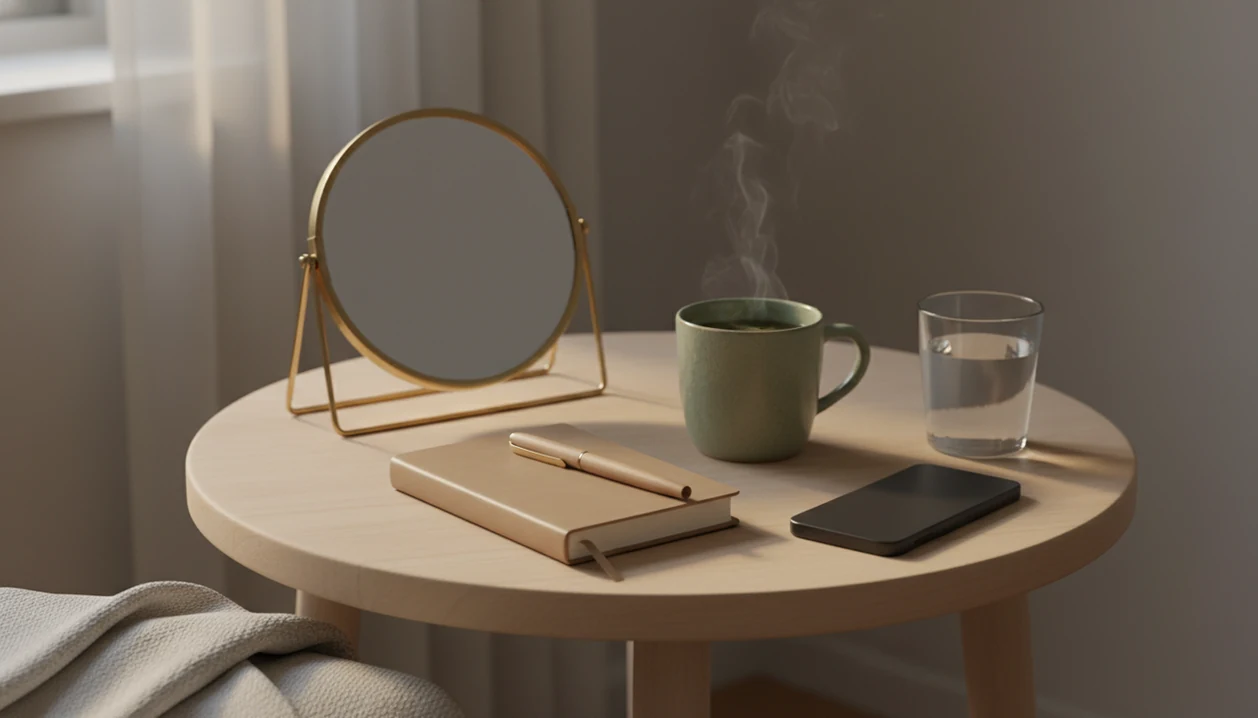


A better relationship with yourself starts with noticing self-talk, responding to mistakes with balance, and keeping small routines that support sleep, calm, and focus. It means treating thoughts, emotions, needs, and mistakes with honesty, care, and accountability rather than automatic self-criticism. The goal is not constant confidence or approval of every choice. It is being able to acknowledge a problem without turning it into a judgment about personal worth.
Start with the tone of the inner voice, then choose one manageable practice: mindful breathing, a short journal entry, quiet time, or a consistent bedtime routine. Guided meditation and sleep audio can support that routine, but they cannot replace practical repair, support from others, or care for persistent mental health difficulties.
What matters most
- Start by noticing the tone of your inner voice before trying to change everything at once.
- Use small daily practices such as mindful breathing, journaling, sleep routines, and quiet time to build emotional steadiness.
- Guided meditation, sleep audio, and breathing exercises can support calm, sleep, anxiety, and focus, but they work best as part of a broader routine rather than as a cure-all.
Better Relationship With Yourself Meaning in Daily Life
A better relationship with yourself means you can be honest about what you feel, need, avoid, and regret without turning every mistake into proof that something is wrong with you. It is about trust, self-talk, emotional honesty, and care, not constant positivity.
In daily life, this might look like noticing, “I’m overwhelmed,” before snapping at someone. It can also mean apologizing after you do snap, then repairing the pattern instead of replaying it all night. Accountability still belongs here.
Common signs of a strained self-relationship include harsh inner criticism, weak boundaries, avoidance, and reactive stress. A quiet room, tense shoulders, and a restless pause can be useful information rather than proof that something is wrong with you. When the inner dialogue feels intense, the next gentle choice matters.
Small repairs count.
Before You Start: Check Your Support Needs
Before you begin, check whether this is a good moment for a self-guided routine or whether you need more support. A five-step practice can help with ordinary stress, but it should not carry the weight of serious sleep loss, panic, depression, or feeling unsafe.
Use this quick readiness check before turning self-care into another task to fail at:
- Notice whether sleep loss, panic symptoms, low mood, or loss of interest are disrupting daily life. If they are persistent, intense, or worsening, consider professional support before relying on a routine alone.
- Choose a quiet five-minute window instead of designing an ambitious morning or bedtime overhaul. Small and repeatable is safer than impressive and abandoned.
- Pick one simple tracking method, such as a notes app, paper journal, or calendar mark. Do not track in three places.
- Decide who you can contact if things feel bigger than self-help: a trusted person, therapist, primary care clinician, or local urgent support option.
- Start only with the next manageable step, then reassess tomorrow.
Support is not a sign that the practice failed. It is part of caring for yourself honestly.
Five Better Relationship With Yourself Facts to Know First
These five facts are the starting point for a better relationship with yourself, especially when stress, sleep, and self-criticism feed each other.
- Self-talk matters: Repeated inner language shapes how quickly you recover from stress, shame, and disappointment.
- Balance beats forced positivity: “I struggled today, and I can choose one next step” is more useful than pretending nothing hurts.
- Habits compound: A five-minute pause, a short journal note, or a steady wind-down routine becomes more believable through repetition.
- Sleep and stress affect self-view: In a 2023 APA survey, 51% of adults said stress affected behavior, and 44% reported lying awake at night because of stress at least once in the past month APA research: understanding stress report.pdf.
- Meditation is a support tool: It can help you notice thoughts, but it does not replace therapy, rest, honest conversations, or medical care. Research on whether meditation can change genes examines biological questions, not proof that a brief routine transforms health.
A 2023 review of self-compassion and self-esteem reported that self-compassion remained associated with well-being and psychological symptoms after accounting for its overlap with self-esteem.
How a Better Relationship With Yourself Works
A better relationship with yourself works by changing the loop between what you tell yourself, how your body handles stress, what you do next, how you sleep, and whether you trust yourself afterward. The mechanism is not one perfect morning routine; it is many small responses that teach your brain, “I can meet this moment differently.”
Emotional regulation means noticing a feeling, naming it, and choosing a response before the feeling drives the whole car. Mindfulness supports that skill by creating a small gap between a thought and an action. In that gap, “I ruined everything” can become “I’m upset, and I need one steady next step.”
The loop often looks like this:
- Notice the first harsh thought or body signal, such as tight shoulders or a racing mind.
- Pause long enough to breathe, lower stimulation, or name the emotion plainly.
- Choose one small behavior that supports repair, rest, food, movement, or honesty.
- Repeat the response often enough that self-trust grows through evidence, not pressure.
Small repetitions matter because trust is built from kept promises, especially on ordinary days.
Self-Talk, Stress, Sleep, and Self-Trust Loop
Self-relationship works through a loop: thoughts influence nervous system arousal, arousal shapes behavior, behavior affects sleep, and sleep changes how much self-trust you feel the next day. The technical term is emotional regulation. In plain language, it is your ability to notice what is happening inside before reacting automatically.
One harsh thought rarely changes everything. Repeated responses do. If stress leads to scrolling, skipped meals, late nights, and self-blame, the loop tightens. If stress leads to one breath, one honest sentence, or one repaired boundary, the loop softens.
Mindfulness helps by creating a gap between a thought and your next action. You can notice “I’m failing” without treating it as an instruction. A U.K. NHS-linked guideline review notes that mindfulness-based approaches can reduce anxiety and depression symptoms in some people nice reference.
For many beginners, guided practice is easier than silent willpower because the next step is spoken aloud. If you prefer personal guidance, learning how to find a mindfulness teacher can help you choose appropriate support.
Five-Step Better Relationship With Yourself Guide
Use this better relationship with yourself guide as a low-friction starting point, not a personality makeover. For beginners, one repeatable routine is often easier than a long self-improvement plan because it gives your brain fewer decisions.
- Notice your self-talk. Write down one harsh phrase you repeat, without editing it.
- Name your needs. Ask, “Do I need rest, food, space, reassurance, movement, or help?”
- Set one calm routine. Choose a five-minute breathing exercise, a bedtime audio track, or a short journal check-in.
- Repair one pattern. Apologize, reset a boundary, or take the practical step you have been avoiding.
- Review progress weekly. Look for one moment where you responded with more care than usual.
The most useful self-relationship routine is one you can repeat when life is ordinary, not only when you feel motivated. For beginners, guided audio can reduce friction with meditation prompts, sleep cues, breathing exercises, and short everyday calm sessions. If you are brand new, a simple how to meditate guide can help you choose a starting point.
A bedtime check-in without grading the whole day
Bedtime can become another occasion to judge unfinished tasks and mistakes. A 2018 observational study of self-compassion and sleep found associations with less bedtime procrastination, fewer difficulties falling asleep within 30 minutes, and better sleep quality. These findings do not establish that self-compassion causes better sleep, but they give a reason to consider the tone of a bedtime review.
Keep the review brief and practical: write down one unresolved concern and one action for tomorrow, then acknowledge one effort made during the day. A balanced sentence such as “That conversation was difficult, and I can follow up tomorrow” leaves room for repair without evaluating personal worth. A short self-compassion meditation can be part of this routine, but no single bedtime exercise is universally effective.
Better Relationship With Yourself Tips for Self-Talk
How do you improve self-talk without lying to yourself? Start by separating self-criticism, self-compassion, and self-excusing. Self-criticism says, “I always fail.” Self-excusing says, “Nothing was my fault.” Self-compassion says, “I struggled today, and I can choose one next step.”
That middle sentence matters. It leaves room for responsibility, apologies, and growth. Better self-talk should not erase consequences. It should help you stay present long enough to respond well.
Try a ten-second pause before reacting. Put one hand on your chest if that feels natural, or just lower your eyes from the screen. Then write one balanced sentence in a notes app or small notebook beside your bed. Not profound. Just true.
For self-talk practice, guided meditation techniques can give structure when your mind keeps arguing back.
Self-compassion is not the same as high self-esteem
Feeling good about yourself and responding kindly to difficulty are related, but they are not identical. A 2023 review of self-compassion and self-esteem reported that self-compassion remained associated with well-being and psychological symptoms after accounting for its overlap with self-esteem. This suggests that a supportive response to mistakes may matter even when confidence is low, without requiring an inflated view of personal ability.
The broader evidence is encouraging but does not promise a result for every person. A 2015 meta-analysis of 79 samples, involving 16,416 participants, found a moderate positive association between self-compassion and well-being. An association does not establish that a particular exercise causes improvement. The useful distinction is between learning to respond constructively to difficulty and trying to feel impressive or successful all the time.
Common Mistakes When Improving Your Relationship With Yourself
The most common mistakes are treating self-compassion like a free pass, changing too much at once, and expecting one calm day to undo years of practice. A better self-relationship grows through honest repair, repeatable habits, and basic care for the body.
- Separate kindness from avoidance. You can speak to yourself gently and still listen to feedback, apologize, pay the bill, send the message, or change the behavior.
- Choose one habit to practice first. If you try to fix sleep, food, exercise, journaling, meditation, boundaries, and your entire personality by Monday, consistency usually collapses.
- Use meditation as a pause, not an escape hatch. A breathing exercise can help you calm down before a hard conversation, but it does not replace the conversation or the repair.
- Expect repetition instead of instant relief. One peaceful morning matters, but old self-talk may return at 2:13 a.m. That does not mean you are back at zero. When self-doubt makes your practice feel inauthentic, learning about imposter syndrome in mindfulness may offer a useful perspective.
- Check the basics. Poor sleep, skipped meals, no movement, chronic pain, or untreated anxiety can make self-trust harder. Get practical or professional support when needed.
Best-Fit and Poor-Fit Self-Relationship Routine
A self-relationship routine fits best when you want calmer habits, less automatic self-criticism, and more steady daily choices. It is not a substitute for clinical care, trauma support, or emergency help.
| Best for | Not for |
|---|---|
| People who want calmer habits during ordinary stress | Replacing therapy, medication, medical care, or crisis care |
| People trying to reduce harsh self-talk | Treating severe anxiety or depression alone |
| People building better sleep routines | Bypassing trauma care or deeper mental health support |
| People who want focus support during the workday | Avoiding responsibility, feedback, repair, or apologies |
| Beginners who prefer guided mindfulness | Expecting instant confidence from one practice |
Apps such as MindTastik, Calm, and Headspace may help if silence feels too unstructured. For sleep-specific comparisons, our best meditation app for sleep anxiety guide explains what to look for.
App-Based Support for a Better Relationship With Yourself
MindTastik offers guided meditation, sleep audio, breathing exercises, and self-hypnosis sessions for adults who want sleep, anxiety, and everyday calm support. App-based guidance can help people who sit down to meditate, hear silence, and immediately wonder what they are supposed to do next.
A guided session gives you a track to follow. That can make consistency easier, especially in the evening when the lights are low and a phone with guided audio is set within reach. Choosing the session, settling your breath, and letting the voice lead can become part of the routine.
Guided sessions can support a bedtime wind-down, an anxious morning reset, a focus break, or a compassionate self-talk practice. It is not a diagnosis tool, medical treatment, therapy replacement, or guaranteed fix. If you want app-based support, compare options that fit your sleep and calm routines.
Guided support when quiet time becomes self-criticism
MindTastik’s guided meditation library offers a format for adults who prefer spoken guidance to an open-ended silent practice. Breathing exercises can provide a brief pause before reacting, while sleep stories offer an option for a bedtime wind-down.
These sessions fit a small daily routine, not a plan to solve every source of distress. People dealing with persistent panic, depression, serious sleep loss, or trauma-related difficulties should seek appropriate professional support rather than rely on audio alone.
What self-care cannot resolve on its own
A better relationship with yourself is built through practice, support, and honest repair, but self-help has limits. Keep these caveats close.
- Meditation and mindfulness do not replace therapy, medical care, crisis care, or treatment for severe anxiety or depression.
- Progress is usually gradual. Inconsistent practice often brings limited results, even when the advice is sound.
- Silent meditation can feel uncomfortable for highly anxious people. Guided breathing may feel more manageable at first.
- Positive thinking alone may not address trauma, chronic stress, poor sleep, financial pressure, grief, or deeper patterns.
- Building self-relationship does not mean ignoring feedback, avoiding responsibility, or never feeling insecure.
- Apps can support routines, but they cannot know your full history, risk level, relationships, or medical needs.
- If stress is disrupting sleep most nights, a broader sleep hygiene plan may be more useful than meditation alone.
If you feel unsafe or unable to cope, contact local emergency services or a qualified health professional. That is not failure. It is care.
Breathing for reactive moments, self-compassion for replayed mistakes
- Start with breathing if your main pattern is rushing, bracing, or reacting before you have time to think.
- Start with a guided self-compassion practice if your main pattern is replaying mistakes or speaking to yourself harshly.
- Use a repeatable cue, such as after lunch or after shutting your laptop, because a routine attached to an existing moment is easier to keep.
- Pick a practice that feels slightly too easy for the first week; early confidence often matters more than depth.
- If a practice makes you overanalyze yourself, switch to something more physical, such as breath counting or a calming audio track.
Questions about self-talk and self-trust
What does having a better relationship with yourself mean?
It means being honest about feelings, needs, choices, and mistakes without treating every difficulty as proof of personal failure. It includes basic care, realistic self-talk, boundaries, and accountability. A useful sign is being able to admit a mistake and take a repair step rather than avoiding it or repeatedly attacking yourself.
How do I stop being so hard on myself after a mistake?
Separate what happened from a judgment about who you are. Replace “I always ruin things” with a specific description, such as “I missed a deadline.” Then identify one repair step. The aim is not to excuse the mistake, but to make the response accurate enough to support useful action.
How can I rebuild trust in myself?
Choose one small commitment that fits an ordinary day, such as a five-minute check-in or a consistent wind-down cue. Review it weekly rather than treating each missed day as failure. Self-trust includes acknowledging a lapse, adjusting an unrealistic commitment, and returning to the practice without making another sweeping promise.
What is the difference between self-compassion and making excuses?
Self-compassion acknowledges difficulty while keeping responsibility intact. Making excuses avoids the consequence or repair. “I was overwhelmed, and I still need to apologize” is a compassionate, accountable response. Kindness does not require ignoring feedback, unpaid bills, broken agreements, or behavior that needs to change.
How long does it take to build a better relationship with yourself?
There is no fixed deadline. Progress is usually gradual and depends on the pattern being addressed, consistency, and support needs. A weekly review can focus on concrete changes: noticing criticism sooner, keeping a small commitment, asking for help, or repairing a mistake. Constant confidence is not a necessary measure of progress.
Why does my self-talk get worse at bedtime?
Stress, poor sleep, and repeated review of unfinished tasks can feed harsh nighttime self-talk. Try recording one concern and one next-day action rather than evaluating the whole day. Self-compassion is associated with better sleep in observational research, but this does not prove that a bedtime exercise will resolve ongoing sleep difficulties.