
Military Mindfulness Training Guide


Military mindfulness training is secular mental skills practice that uses breath, body awareness, and attention exercises to help service members notice stress and respond deliberately. Short, repeatable sessions train the ability to recognize distraction, return attention to a chosen anchor, and notice tension or irritation before it shapes the next action. The aim is steadier attention and emotional control, not an empty mind.
A practical starting point is 10 to 12 minutes several days per week, attached to an existing routine. Common uses include focus before planning, sleep wind-down, anxiety support, and post-mission decompression. Guided audio can provide structure, but mindfulness is not a replacement for military medical or behavioral health care, particularly when symptoms are severe or safety is at risk.
Key points for service members
- Short daily practice matters more than long sessions; Walter Reed Army Institute of Research describes brief mindfulness practice as performance-focused mental training (wrair reference), with benefits noted with as little as 12 minutes per day, a few days per week.
- The strongest use cases are attention, working memory, emotional regulation, sleep wind-down, anxiety support, and post-mission decompression.
- A guided meditation app can support the daily habit with sleep audio, breathing exercises, and short sessions, but it should not replace military medical or behavioral health services.
Military Mindfulness Training Facts Service Members Should Know
- Military mindfulness is mental skills training, not relaxation culture. The goal is to notice stress, distraction, and emotion early enough to choose the next action.
- Evidence is promising but modest. A 2024 review reported small-to-moderate improvements in attention and working memory in military mindfulness studies.
- Short practice fits real schedules. Ten to twelve minutes before a brief, after duty, or at lights-out is more realistic than a long silent retreat.
- It complements care. PTSD, depression, severe anxiety, suicidality, and sleep disorders need medical or behavioral health support when symptoms are serious.
- App delivery is now common. Many service members and Veterans use guided sessions because a phone is easier to fit around shifts, travel, and interrupted sleep.
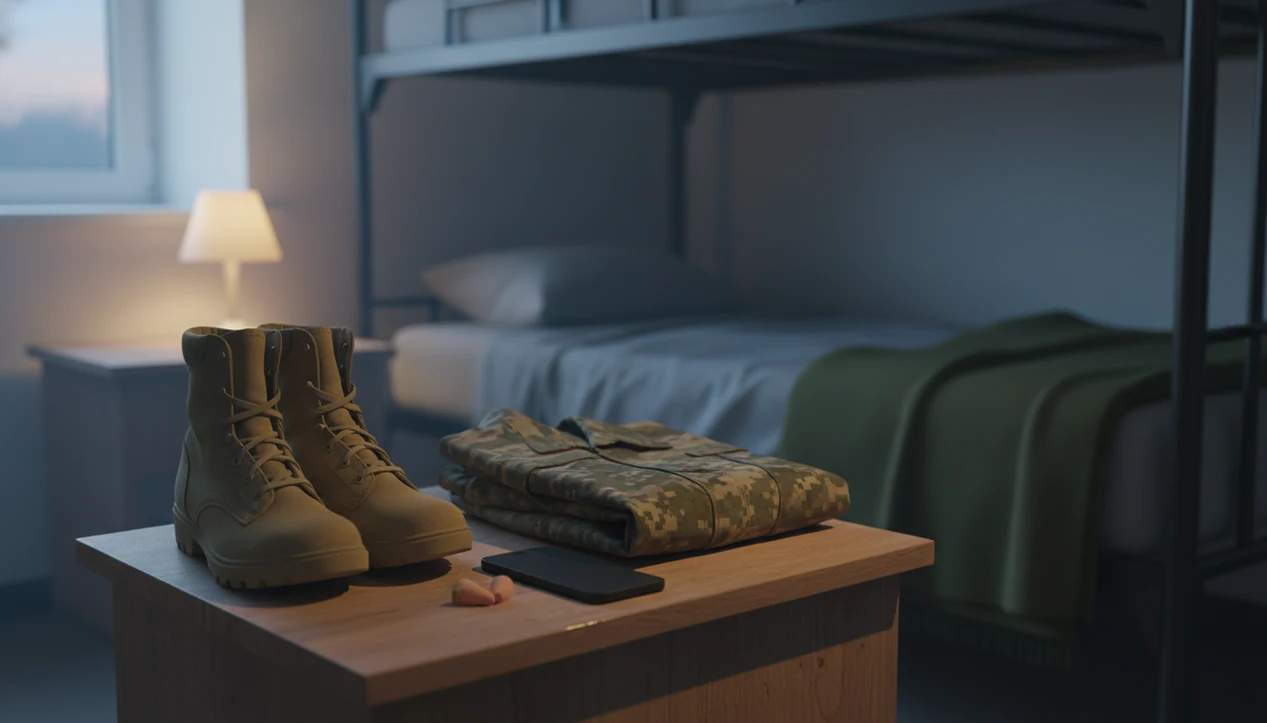
In a quiet room under dim light, a brief guided routine can offer a steadier place to return to, without pretending it solves everything. During off-duty time outdoors, understanding why we feel awe can add context to moments of calm and perspective.
How Military Mindfulness Training Works Under Stress
Military mindfulness training works by training attentional control: you notice distraction, return to a chosen anchor, and repeat that cycle under manageable stress.
The anchor can be breath, sound, posture, or contact with the floor. Breath and body awareness also help identify early stress signals, such as jaw tension, shallow breathing, tunnel focus, or fast irritation. In plain terms, the practice gives the nervous system a pause before the next decision. If back discomfort distracts from practice, mindfulness for back pain offers a related approach to discuss with your clinician.
Repeated practice may support working memory, emotional regulation, and decision clarity. Walter Reed Army Institute of Research guidance notes that daily exercises can improve focus, mood, and performance when practiced consistently. That language matters. This is not spiritual instruction; it is a trainable attention drill.
For beginners who want the basic mechanics first, a plain how to meditate guide can make the first session less awkward.
Evidence for Military Mindfulness Training
Military mindfulness training has the clearest evidence for attention control and working memory, with promising but not dramatic results. Military-specific studies and Walter Reed summaries generally describe small-to-moderate gains, not guaranteed clinical change.
That distinction matters. Civilian mindfulness and sleep research can suggest useful mechanisms, but it should not be treated as proof that every service member, unit, or deployment setting will improve. The military evidence base is narrower and often focuses on performance under stress, attention lapses, mood, and working memory rather than diagnosing or curing PTSD, insomnia, or anxiety disorders. VA education materials and PubMed-indexed trials describe mindfulness as a skills practice that may support coping when used consistently, especially in brief repeatable formats. For persistent physical symptoms, research on meditation for chronic pain provides context, without making it a substitute for medical care.
A practical way to read the evidence is:
- Expect attention and working-memory effects to be modest, not transformational.
- Separate performance findings from clinical treatment claims.
- Practice briefly and repeatedly, because benefits usually depend on consistent short sessions.
- Use medical or behavioral health care when symptoms are severe, persistent, or unsafe.
In plain terms: the habit is the active ingredient.
What military education and Veteran studies measured
A 2026 military training study reported increased mindfulness and resilience alongside reduced perceived stress. These are useful outcomes, but they are not the same as fewer operational errors, better combat performance, or recovery from a psychiatric condition. The finding supports mindfulness as a training option without establishing that the same results apply across units, deployments, or training formats.
Program design also matters. A 2024 review of 25 predeployment resilience-intervention studies found cautious evidence of improved resilience, with cognitive-behavioral and mindfulness approaches among those showing benefits. No single method consistently worked best across populations and settings. This argues against treating one breathing drill or one app as a standard solution for every service member's needs.
Clinical research asks a different question. A 2024 review of mindfulness-based stress reduction in military veterans, covering 13 studies and 1,131 participants, found medium-sized reductions in PTSD and depressive symptoms. Those findings concern a structured intervention, not simply listening to a short meditation recording. They support discussing mindfulness-based options with a clinician, not replacing PTSD treatment with self-directed practice.
How to Use Military Mindfulness Training in a Daily Routine
Use military mindfulness training by attaching a short session to a routine that already exists. A 10- to 12-minute practice is a better starting point than waiting for a quiet weekend that never arrives.
- Choose one daily window, such as wake-up, pre-brief, post-mission, or lights-out.
- Start with 10 to 12 minutes of breath focus, body scan, or guided meditation. When physical discomfort affects a session, meditation for pain relief may offer complementary strategies alongside appropriate medical care.
- Pair the session with a cue, like boots off, phone face-down, or the last gear check.
- Adjust the practice if breath or body focus feels uncomfortable; use sounds or visual grounding instead.
- Repeat several days per week before judging whether it helps.
A guided meditation app can provide sleep audio, breathing exercises, or short guided sessions when a self-led routine feels too loose. Keep it simple. One repeatable practice beats five saved sessions you never open.
Military Mindfulness Training Tips for Sleep, Anxiety, and Focus
The right military mindfulness training exercise depends on the problem in front of you. Sleep wind-down, anxiety spikes, and focus demands usually need different session types.
| Goal | Useful practice | When to use it | Practical note |
|---|---|---|---|
| Sleep wind-down | Body scan or sleep audio | Lights-out, travel, post-shift | Dim the screen first and keep the session boring on purpose. |
| Anxiety support | Paced breathing or breath focus | Before a call, brief, or difficult transition | If breath focus worsens panic, switch to sounds or grounding. |
| Focus | Open monitoring or sounds-and-surroundings practice | Before planning, study, or watch | Notice distractions without chasing them. Return to the task. |
| Decompression | Guided body awareness | After mission, training, or conflict | Use it before scrolling, not after an hour of scrolling. |
A meditation app can provide guided meditation, sleep audio, breathing exercises, and self-hypnosis sessions for adults who want sleep, anxiety, and everyday calm support.
Best Military Mindfulness Training Apps and Support Tools
Several tools can support military mindfulness training, and the right choice depends on whether you need military-specific language, Veteran support, or general everyday calm.
- Pushups for the Mind.mil: A military-tailored performance app effort connected with WRAIR, built around short mental fitness exercises for warfighter performance.
- VA Mindfulness Coach: Designed for Veterans and service members, with education and guided practices from VA: mobile reference: mindfulness coach.
- Chill Drills: A military-relevant relaxation resource often used for breathing, grounding, and brief reset practices.
- MindTastik: A gentle commercial companion for sleep, anxiety support, beginner meditation, and everyday calm when someone wants guided sessions outside formal programs.
A guided session queued before takeoff feels different from an open-ended “go meditate” instruction. If app choice is the barrier, compare session style, offline access, privacy, and whether the voice helps you stay with the practice.
Best Fit and Poor Fit for Military Mindfulness Training
Military mindfulness training is a good fit for people who want practical attention and stress-regulation skills. It is a poor fit when someone expects fast relief from severe symptoms without clinical support.
| Fit | Who it describes | Better next step |
|---|---|---|
| Strong fit | Service members seeking focus, sleep wind-down, stress regulation, irritability reduction, or routine-based calm | Start with short guided practice several days per week. |
| Strong fit | Beginners who can practice for a few minutes consistently | Use a simple breath, sound, or body anchor. |
| Poor fit | People expecting a fast cure for PTSD, severe anxiety, suicidality, or insomnia | Use medical, behavioral health, or crisis support. |
| Poor fit | People triggered by body-focused practices | Ask a clinician about safer grounding options. |
Best for
✓ Focus before planning or study ✓ Sleep wind-down after irregular duty days ✓ Short reset practice when stress rises ✓ Beginners who need structure and repetition through short, repeatable practice.
Not for
✗ Replacing PTSD treatment ✗ Managing suicidal thoughts alone ✗ Forcing body scans that feel unsafe ✗ Fixing unit-level stressors or poor leadership that individual meditation practice cannot resolve.
For service members with irregular sleep, mindfulness usually works best as part of sleep hygiene, not as a stand-alone fix.
When to Seek Military Behavioral Health or Crisis Support
Seek military behavioral health, command medical, or emergency support when symptoms feel unsafe, severe, or are getting worse despite coping skills. Mindfulness can support steadiness, but it cannot diagnose, treat, or manage a crisis by itself.
- Contact a clinician or military medical resource if PTSD symptoms, panic, depression, nightmares, rage, substance use, or insomnia are disrupting duty, relationships, safety, or basic functioning.
- Use emergency support now if there are suicidal thoughts, plans, weapons access with intent, self-harm, unsafe driving, violence risk, hallucinations, or loss of control.
- Call or text 988 in the U.S. for urgent crisis help; Veterans, service members, and families can press 1 for the Veterans Crisis Line.
- Pause mindfulness if breath focus, silence, body scans, or closing the eyes increases panic, flashbacks, dissociation, or the feeling of being trapped.
- Switch to safer grounding while waiting for support: keep eyes open, name five things in the room, press feet into the floor, hold a cold drink, listen for external sounds, or orient to exits and light. If ringing in the ears makes silence uncomfortable, meditation for tinnitus explores adapting practice without replacing hearing or medical care.
A meditation app can be a useful routine tool. It is not a stand-in for behavioral health care, command medical guidance, or crisis response.
Common Military Mindfulness Training Mistakes
The most common mistake is waiting for quiet, ideal conditions. Military life rarely offers that, so the practice has to survive noise, fatigue, shared rooms, and changing schedules.
Another mistake is treating mindfulness as passivity. It is not “checking out.” A mental push-up is active: notice the mind moved, return to the anchor, repeat. Again. That repetition is the training.
Many people also try one long session after a bad night or crisis, then quit when it feels useless. Short, repeated practice is more reliable. For service members, 10 minutes tied to lights-out or post-mission decompression is often easier than a 40-minute session once a week.
Do not force body scans if they feel unsafe or triggering. Use external sounds, feet on the floor, or eyes-open grounding. Apps also work better with a specific goal, such as sleep wind-down or anxiety support, not vague self-improvement. For more options, use mindfulness exercises and techniques that match the situation.
Guided sessions for focus and off-duty wind-down
MindTastik's guided meditation library, focus sessions, breathing exercises, and sleep audio can support short practice before planning or during off-duty wind-down. A guided session suits beginners who prefer spoken instructions to an open-ended silent sit.
Service members seeking military-specific instruction may prefer the military and VA resources listed below. Anyone seeking treatment for PTSD, severe anxiety, or persistent insomnia needs clinical support rather than a commercial meditation app. MindTastik is not a medical treatment.
Limits in combat settings, trauma care, and unit-level stress
Military mindfulness training has real limits, and those limits matter.
- Active combat and pre-deployment evidence is still limited compared with general stress and attention research.
- Not every study shows large or lasting effects; some benefits are small and depend on practice quality.
- Results depend on consistency, and many app users do not sustain the habit after the first few weeks.
- Some trauma histories make breath focus, silence, or body scans uncomfortable without clinician guidance.
- Mindfulness does not fix leadership problems, under-resourcing, deployment tempo, moral injury, or organizational stressors.
- Severe insomnia, panic, PTSD symptoms, depression, or suicidal thoughts require medical, behavioral health, or crisis support.
- Commercial apps are self-guided tools, not substitutes for military medical or behavioral health care.
Clinicians typically recommend using mindfulness as a coping and skills practice alongside appropriate care, not as the only plan when symptoms are severe. If the practice makes distress worse, stop and get support. For urgent suicide or crisis support in the U.S., call or text 988 and press 1 for the Veterans Crisis Line, or use veteranscrisisline reference. If symptoms include suicidal thoughts, severe panic, unsafe behavior, or inability to sleep for multiple nights, use professional or emergency support rather than a self-guided mindfulness routine.
Military mindfulness questions
What does military mindfulness training involve?
It involves choosing an attention anchor, such as breath, sound, or contact with the floor, noticing when attention moves, and returning to that anchor. Body awareness can also help identify tension and irritation. The purpose is deliberate attention under stress, not suppressing thoughts or ignoring operational demands.
How long should service members practice mindfulness each day?
Ten to twelve minutes several days per week is a practical starting point. Attach practice to a predictable transition, such as waking up, finishing duty, or preparing for sleep. A shorter session can make starting easier, but neither session length nor consistency guarantees a particular benefit.
What is a mental push-up in mindfulness training?
A mental push-up is the cycle of noticing that attention has wandered and bringing it back to the chosen anchor. Each return is a repetition. Thoughts do not have to disappear for the exercise to count. The skill being practiced is recognizing distraction and redirecting attention.
Does mindfulness improve military performance under stress?
Evidence is promising for attention, working memory, stress regulation, and resilience, but results vary across studies and settings. An improvement on a questionnaire or attention task does not establish better combat performance. Mindfulness is best treated as one mental skill within broader training, not a guarantee of operational readiness.
Can military mindfulness training help with PTSD?
Research on structured mindfulness-based stress reduction in military veterans has found reductions in PTSD and depressive symptoms. That does not mean a brief self-guided exercise replaces treatment. PTSD symptoms that disrupt sleep, duty, relationships, or safety warrant clinical support, especially when breath focus or body awareness increases distress.
Can mindfulness help with sleep after irregular duty hours?
A quiet guided session, body scan, or sleep audio can support wind-down after duty. Keep the routine low-stimulation and avoid judging it by a single night's sleep. Mindfulness cannot correct deployment tempo or scheduling problems, and persistent insomnia or disruptive nightmares need medical or behavioral health assessment.