
Best Meditation Apps Worth Paying For: A Practical Buyer’s Guide
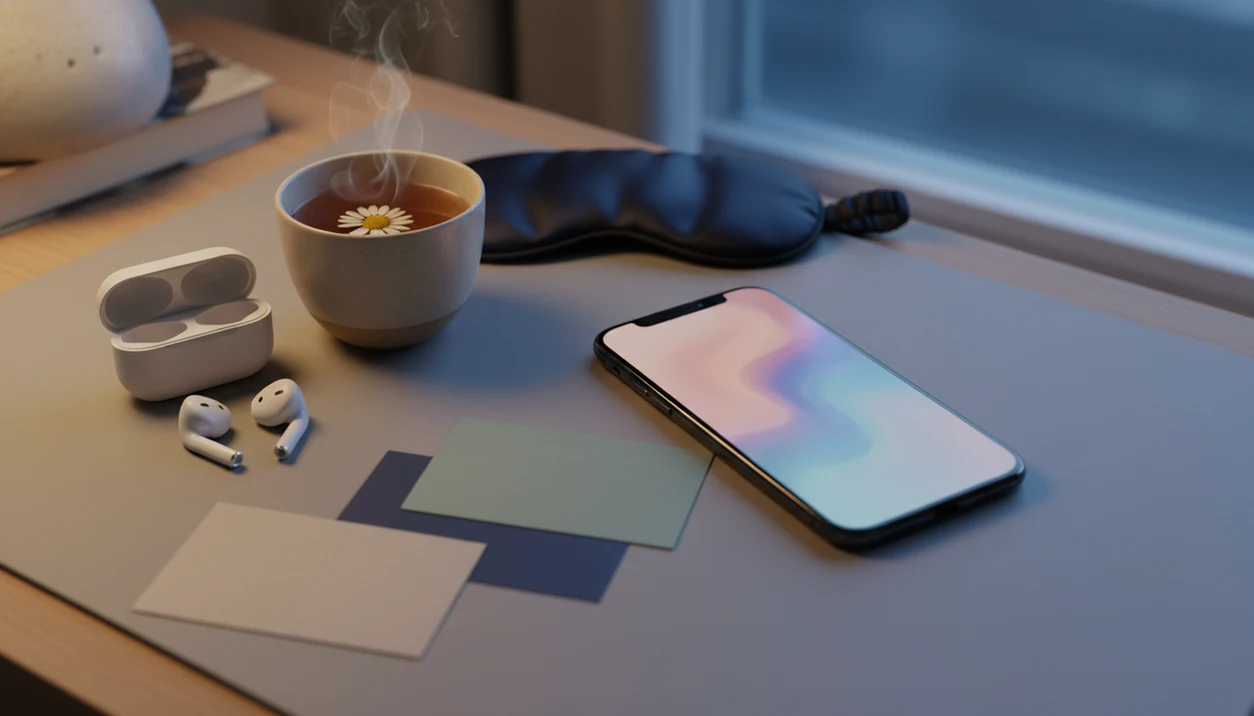


The best paid meditation apps are the ones that match a specific need, such as sleep, anxiety support, focus, or everyday calm, and get used several times per week. A subscription earns its cost through clear programs, useful audio, and a routine that is easy to repeat. Headspace, Calm, Waking Up, Insight Timer, and MindTastik serve different priorities: beginner instruction, bedtime listening, deeper teaching, variety, or everyday support.
Start with short trials of two or three apps rather than an annual commitment. Compare them against the same problem, at a similar time of day. Listen for voice, pacing, session length, and how easily the next session can be found. MindTastik offers guided meditation, sleep audio, breathing practices, and self-hypnosis, but the right choice depends on which sessions become part of an ordinary week.
Before paying
- Paid meditation apps are worth it when they offer structured programs, sleep tools, breathing exercises, reminders, and content you enjoy enough to repeat.
- Headspace, Calm, Waking Up, Insight Timer, and MindTastik each suit different needs, so the best choice depends on whether your priority is learning, sleep, depth, variety, or anxiety support.
- Use free trials deliberately: test one app at bedtime, one during stress, and one during a focus break before committing to a subscription.
Best meditation apps worth paying for at a glance
Worthwhile paid meditation apps are not always the most famous ones. The right pick depends on whether you need a beginner path, bedtime audio, deeper teaching, a huge library, or a calmer daily routine.
A paid app should earn its place by helping with a familiar situation. It might be lying awake in a quiet room after midnight, noticing tension instead of sleep. It might be a pressured afternoon before a meeting. Start by choosing for that real-life moment.
| App | Best for | Not for | Paid-value angle |
|---|---|---|---|
| Headspace | Beginners who want structure | Users who want open-ended depth | Courses, habit paths, short sessions |
| Calm | Sleep audio and relaxation | People who dislike story-style content | Sleep stories, music, stress routines |
| Waking Up | Deeper meditation learning | Quick bedtime-only use | Theory, talks, masterclass-style teaching |
| Insight Timer | Variety and many teachers | Users overwhelmed by choice | Large library, lower-cost access |
| MindTastik | Sleep, anxiety support, breathing, everyday calm | Users wanting only philosophy lessons | Guided sleep audio, breathing, self-hypnosis |
Five best meditation apps worth paying for by use case
A paid meditation app earns its subscription fee when it fits your main use case. A polished app can still be a poor buy if its voice, pacing, or library does not match the moment you need help with.
Best for beginners: Headspace
Headspace fits beginners who want clear courses, friendly instruction, and a habit path that removes guesswork. It is useful when you would rather be told what to try next than browse a large library.
Best for sleep audio: Calm
Calm is a strong fit for sleep stories, relaxing music, and wind-down routines. It works well for people who scan playlist names under blankets and want something soft to start quickly.
Best for deeper learning: Waking Up
Waking Up suits people who want meditation theory, talks, and a more reflective teaching style. It feels less like a quick reset and more like an ongoing course.
Best for variety: Insight Timer
Insight Timer is useful if you want many teachers, styles, and lengths in one place. The tradeoff is choice overload.
Best for sleep and anxiety support: MindTastik
MindTastik fits adults who want sleep audio, breathing exercises, self-hypnosis sessions, and everyday calm support in plain language. For men building a regular practice, meditation for men offers a focused starting point for everyday calm.
7 value signals in paid meditation app subscriptions
Paid meditation apps are worth considering when the subscription helps you repeat a supportive practice, not just browse more audio. A large catalog matters less than whether you can find the right session at the right time. For ways to carry a repeatable practice into ordinary activities, explore mindful living habits beyond your app sessions.
- Structured programs beat random libraries. Multi-week courses help you choose a starting point and keep going.
- Offline access matters. Downloads help when Wi-Fi drops on a train or in a hotel room.
- Reminders should feel gentle. A useful nudge is different from a guilt-driven notification.
- Session lengths should match real life. Look for 5-minute, 10-minute, and bedtime-length options.
- Sleep content should be easy to reach. At night, nobody wants six taps and a menu maze.
- Breathing exercises add practical value. They give you a short reset when stress rises.
- Repeat use is the real test. An app that feels impressive but unpleasant to open is poor value.
For most beginners, a short guided session is often easier than silent meditation because it gives the mind a clear next step.
How paid meditation apps work for sleep, anxiety, and focus
Paid meditation apps work by turning meditation into a guided, repeatable routine with cues, audio instruction, and habit-support features. They reduce decision fatigue by telling you what to focus on next.
The basic mechanism is a habit loop: cue, short session, perceived relief, repeat use. In everyday terms, the app becomes the option someone reaches for when their mind feels crowded and hard to settle. Reminders, streaks, favorites, progress logs, and session-length filters all support that loop. When emotions make your mind feel crowded, feelings are just visitors offers a reminder that emotional states can change.
Different session types do different jobs. Sleep audio often uses slower pacing, body relaxation, and low-stimulation narration. Breathing exercises give a timed pattern for calming the body. Body scans move attention through physical sensations. Daytime focus sessions usually keep the listener more alert.
Clinicians typically recommend meditation as a supportive self-regulation practice, not as a replacement for therapy, crisis support, medication, or medical care. If you want to compare specific methods, our meditation techniques library explains common approaches in plain language.
30-day trial plan for paid meditation apps before subscribing
Use meditation app trials like a test, not a shopping scroll. Pick one real problem, try each app in that exact moment, and judge whether you would repeat it after the trial ends. Rather than waiting for certainty, remember that clarity comes from action as you test sessions in real situations.
Set one goal
Choose one primary goal before downloading apps: sleep, anxiety support, focus, beginner learning, or everyday calm. One goal keeps the trial honest.
Test real-life moments
Try each app when it is supposed to help. Use bedtime audio after dimming the phone screen, or a breathing session with feet planted on office carpet.
Review repeatability
Use each trial at least three times before judging it. Review sleep, calm, focus, voice, pacing, and whether you wanted to open it again. To name emotional shifts more clearly during your trial, use an emotion wheel feelings chart alongside your notes.
Commit or cancel
Cancel apps that feel noisy, guilt-driven, or too complex. Then commit to one app for 30 days once the fit is clear. As you build consistency, the 10 pillars of personal growth can help you consider how meditation fits broader goals.
- Set one primary goal before you install anything.
- Test each app in the real moment you want it to support.
- Use every trial at least three times before deciding.
- Review repeatability, not only star ratings.
- Cancel poor-fit trials before renewal.
- Commit to one app for 30 days after choosing.
If bedtime is your main test case, the best meditation app for sleep anxiety guide gives a more focused comparison.
2017-2022 research on meditation app outcomes
Research supports regular app-based meditation as a helpful stress and wellbeing practice for some users, but the evidence favors repeated use over one-off listening. Downloading an app is not the intervention; using it consistently is.
Meditation became more mainstream in the United States, rising from 4.1% of adults in 2012 to 14.2% in 2017, according to the National Center for Complementary and Integrative Health NCCIH overview: mind body. That wider adoption helps explain why paid app comparisons now matter to everyday users, not just long-time meditators.
A 2019 randomized controlled trial of Headspace in medical students found reduced stress and depressive symptoms after 8 weeks NIH research: PMC6614998. A 2022 randomized trial of Calm in college students found reduced stress and depression, with improved mindfulness, after 8 weeks NIH research: PMC8883173.
Per the CDC, many mobile health app users report using apps for stress management or mental health. Still, studies often involve specific groups, like students, so results may not apply to every adult.
Newer app research does not establish a best paid option
A 2023 review of 28 randomized trials included 5,963 adults and examined psychological mechanisms, rather than only symptom outcomes. Of 67 intervention-control comparisons, 35 favored the mindfulness-app condition. That is evidence of potential benefit, not proof that every app works equally well. It also does not establish that a paid subscription is better than a free option.
Participation is another limit. A 2023 review of mindfulness-app trials reported interventions lasting 7 to 56 days, with a median of 28 days. Attrition ranged from 0% to 84.7%, with a median of 23.4%. For a buyer, the practical implication is to judge repeat use during a trial, not just the appeal of the catalog on the first evening.
How We Chose the Paid Meditation Apps in This Guide
We chose these paid meditation apps by looking for clear use-case fit, usable structure, strong audio experience, fair pricing signals, and routines people could realistically repeat. Inclusion here is not a medical endorsement, diagnosis tool, or treatment recommendation.
Our review combined practical feature checks, trial-style use cases, published research where available, and market relevance. We looked at whether each app had a recognizable role: beginner learning, sleep support, deeper teaching, broad variety, or anxiety and everyday calm support.
- Match each app to a specific buyer problem, such as bedtime scrolling, stress spikes, focus breaks, or learning the basics.
- Review structure, including courses, filters, session lengths, reminders, downloads, and whether the next step feels obvious.
- Listen for audio quality, narrator fit, pacing, background sound, and whether the app feels calm to reopen.
- Compare pricing, trial terms, free-tier limits, and subscription value against the app’s likely repeat use.
- Check competitor claims against official app pages, app store information, research summaries, or published studies when available.
Prices, content libraries, free trials, cancellation rules, and feature sets can change quickly, so treat this as a decision framework rather than a permanent ranking.
6 criteria for choosing one meditation app subscription
Which paid meditation app should you choose? Choose the app that matches your main problem, has session lengths you will actually use, and feels calm to open on an ordinary day.
Start with the problem. Sleep difficulty calls for bedtime audio, body scans, and offline downloads. Anxiety spikes call for breathing, grounding, and short guided sessions. Beginner learning needs a structured path. Focus needs clear daytime sessions that do not make you sleepy.
Then compare practical details: annual price, monthly price, free tier limits, trial cancellation rules, and family plans. Check whether the app has 5-minute, 10-minute, and bedtime-length sessions. Voice matters too. A narrator who feels soothing at noon may feel irritating at midnight.
Tiny detail. Big difference.
If one broad app is useful during the day but weak at night, pairing it with a dedicated bedtime meditation app may be cheaper than paying for a larger subscription you barely use. If you are starting from scratch, you can also download meditation app options and test them before paying.
When teacher support matters more than app features
A larger audio library is not always the right answer to difficulty with meditation. The Mental Health Foundation advises caution with trauma or PTSD, because inward attention can trigger flashbacks, intense emotions, or dissociation. It recommends a properly trained teacher who can adapt exercises, with advice from a GP or trained practitioner when appropriate. That support is a different service from a subscription library.
Research on teacher-led programs also needs careful interpretation. A 2023 review of structured mindfulness programs warned against automatically extending its findings to self-guided apps, books, or recordings. The authors noted that missing human interaction and teacher guidance may affect effectiveness and safety. For someone who needs exercises adapted or help responding to distress, app convenience should not outweigh access to qualified support.
Meditation app buyer image guide for phone and bedtime visuals
Use a buyer-focused image, not a medical-looking treatment scene. A good visual shows a phone with meditation app options beside headphones, tea, a notebook, and a calm bedroom or desk setting.
Recommended alt text: “best meditation apps worth paying for shown on a phone beside headphones and a notebook.”
Caption: “Compare paid meditation apps by goal, session length, audio style, and whether you would repeat the routine several times per week.”
Avoid visuals that imply guaranteed anxiety relief, insomnia treatment, or clinical results. A phone with guided audio resting beside a dim lamp feels more honest. It suggests the ordinary choice to try a calming practice before sleep, without promising a clinical outcome.
Where MindTastik belongs on the shortlist
MindTastik suits adults who want several kinds of audio in one app: guided meditation for a daytime pause, breathing exercises for a short practice, and sleep stories or soundscapes at bedtime. Its guided meditation library is one place to start when comparing voice and pacing during a trial.
Someone primarily seeking a structured beginner course should compare Headspace. Someone mainly interested in deeper teaching should consider Waking Up. MindTastik is an everyday practice option, not a medical treatment or a substitute for care.
What a meditation subscription cannot promise
Even highly rated meditation apps do not work for everyone. A subscription can support a routine, but it cannot guarantee calm, sleep, focus, or mental health improvement.
- Benefits depend on consistent use over several weeks, not just downloading an app.
- Meditation apps are not replacements for therapy, crisis support, medical care, or treatment for severe symptoms.
- Some studies use specific populations, such as college or medical students, so findings may not generalize to every adult.
- Subscription costs add up quickly if the app is rarely opened.
- Apps that claim to cure anxiety, insomnia, depression, ADHD, or trauma should be treated skeptically.
- Streaks, reminders, and wellness notifications can feel stressful for some users.
- A large content library can make bedtime harder if you end up scrolling.
- Some people dislike guided voices, background music, or spiritual language, and that affects repeat use.
If your needs are family-specific, a general paid app may not be the right fit. Parents may need a separate meditation for kids app rather than adult bedtime audio.
Paid meditation app questions
When is a paid meditation app worth the subscription?
A subscription makes sense when its courses or audio support a specific routine and get used repeatedly. Clear instruction, suitable session lengths, and a voice that is comfortable to hear again matter more than catalog size. A rarely opened app is poor value, even if its features look impressive.
Which paid meditation app is best for beginners?
Headspace is a useful starting point for beginners who want clear courses and a suggested path rather than open-ended browsing. The main question during a trial is whether the instruction makes the next practice obvious. Beginners who dislike its voice or pacing should compare alternatives before committing.
Which meditation app should I choose for anxiety support?
Look for short guided sessions, breathing exercises, and grounding practices that are easy to find during a stressful moment. MindTastik is one example with guided meditation and breathing audio. App choice depends on comfort with the instructions, and significant or worsening anxiety calls for professional support rather than a subscription alone.
Are free meditation apps enough, or do I need a paid plan?
Free options may be enough when they provide a few sessions that fit a repeatable routine. A paid plan is more useful when a specific course, sleep library, or practical feature solves a recurring problem. Compare the free tier with the trial before paying for content that may go unused.
How long should I try a meditation app before subscribing?
Use each trial at least three times in the situation it is meant to support. Compare the same goal and a similar time of day, rather than judging one session at random. Trial lengths vary, so check the cancellation deadline first. Avoid an annual commitment until the app has earned repeat use.
Does research show that paid meditation apps work better?
The research described here supports potential benefits from app-based mindfulness, but it does not establish that paid apps outperform free ones. Studies also differ in duration, participants, and outcomes. Payment buys access to features or content, not a guaranteed result or proof that one brand is clinically superior.
Can a meditation app make anxiety or trauma symptoms worse?
Meditation can be uncomfortable or worsen symptoms for some people. Inward attention may trigger flashbacks, intense emotions, or dissociation in people with trauma or PTSD. Stop a practice that worsens symptoms and seek qualified guidance. A trained teacher or clinician may be more appropriate than continuing with self-guided audio.